
Introduction
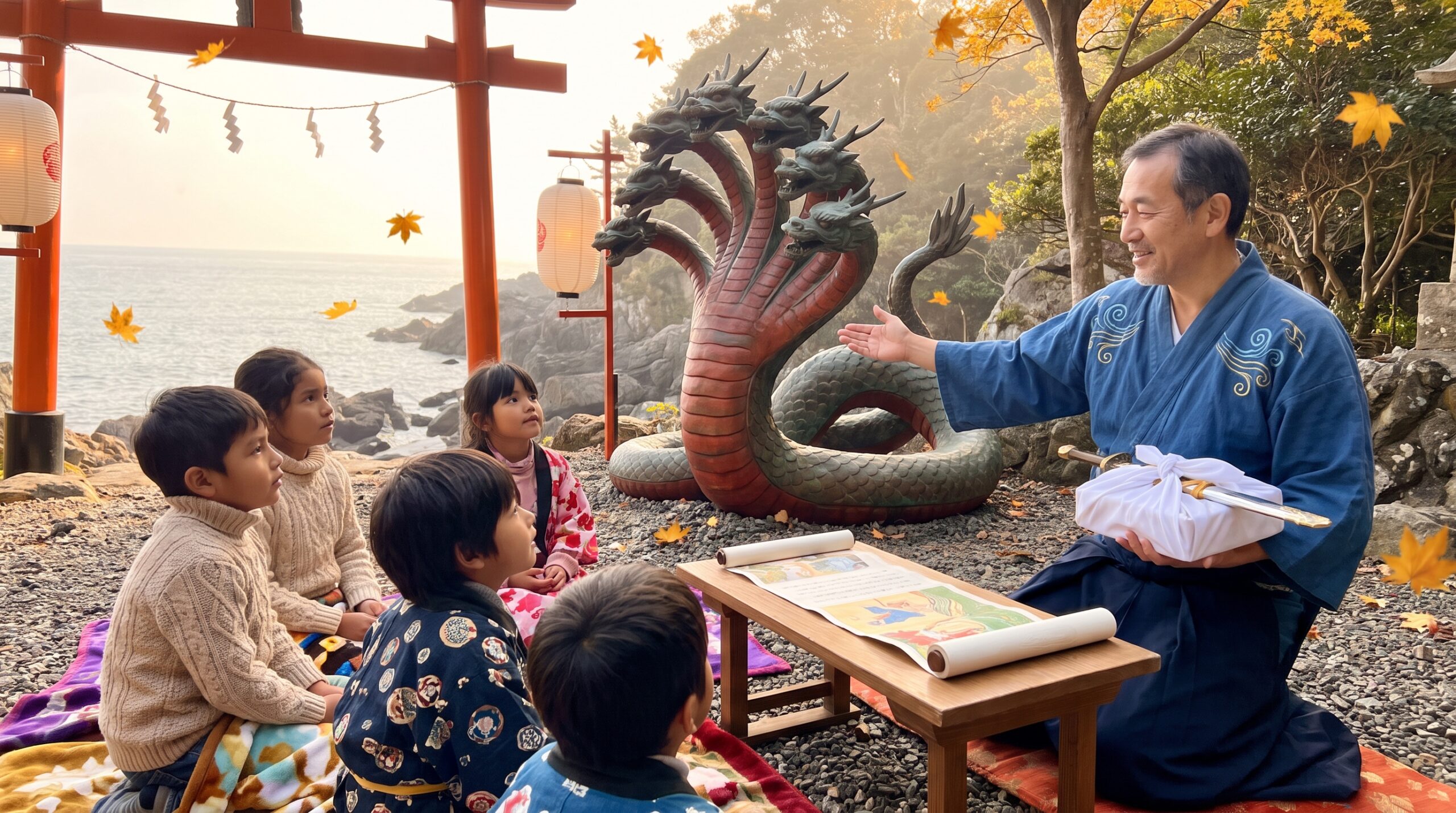
Susanoo and the Yamata no Orochi – Japanese is a dramatic early Shinto tale full of wonder. First recorded in the Kojiki and the Nihon Shoki, it packs thunder, grief, and a daring rescue into a memorable myth. The serpent Yamata no Orochi is described in the Kojiki (completed in 712 CE) as having eight heads and eight tails, with a body long enough to span eight valleys and eight mountains, emphasizing its mythical scale and nature.
Quick cast of characters
Meet the main figures from Susanoo and the Yamata no Orochi – Japanese. Each name carries a spark of story and local meaning.
- Susanoo-no-Mikoto: the storm and sea god; bold, rash, but clever.
- Amaterasu: the sun goddess and Susanoo’s sister.
- Ashinazuchi and Tenazuchi: an elderly couple in deep grief.
- Kushinada-hime: their daughter, later rescued and married.
- Yamata no Orochi: the eight-headed, eight-tailed great serpent.
Snapshot of the story
After exile from the High Plain of Heaven, Susanoo wanders the earth. Then he meets Ashinazuchi and Tenazuchi, who mourn many lost daughters.
Next, Susanoo offers to help. He asks the couple to brew strong sake and set out eight vats. Orochi drinks and grows very drowsy. Meanwhile Susanoo acts. He slices the serpent into pieces and finds a shining sword inside a tail. That sword is Ame-no-Murakumo-no-Tsurugi, later called Kusanagi-no-Tsurugi.
Finally Susanoo gives the sword to Amaterasu. This gift helps restore peace between the siblings. Also the sword later becomes one of the Three Imperial Regalia of Japan.
Why the tale matters
This myth links to Izumo, now Shimane Prefecture. Local shrines and kagura dances still honor the episode. Moreover artists and storytellers reuse the Orochi image in theater, prints, and modern pop culture.
Scholars also read the story as more than monster slaying. They see layers about rivers, harvests, and old political ties. In short, the tale holds cultural weight and lovely drama.
Sharing the story with kids
The original has violent moments, so many child retellings soften the slaying. Instead they highlight rescue, kindness to elders, and clever thinking. Try to focus on bravery and clever plans, not gore.
For visuals, show a simple map of Izumo and a stylized many-headed serpent. Also include a short glossary of names like Susanoo-no-Mikoto and Kusanagi-no-Tsurugi. These steps make the episode vivid but gentle.
Read or listen to a story about Susanoo and the Yamata no Orochi – Japanese now: For 3-5 year olds, For 6-8 year olds, For 8-10 year olds, and For 10-12 year olds.
In the end, Susanoo and the Yamata no Orochi – Japanese spark imagination. Tell the tale boldly, then slow down and ask curious questions. That mix of danger and wit charms young listeners and keeps the myth alive.