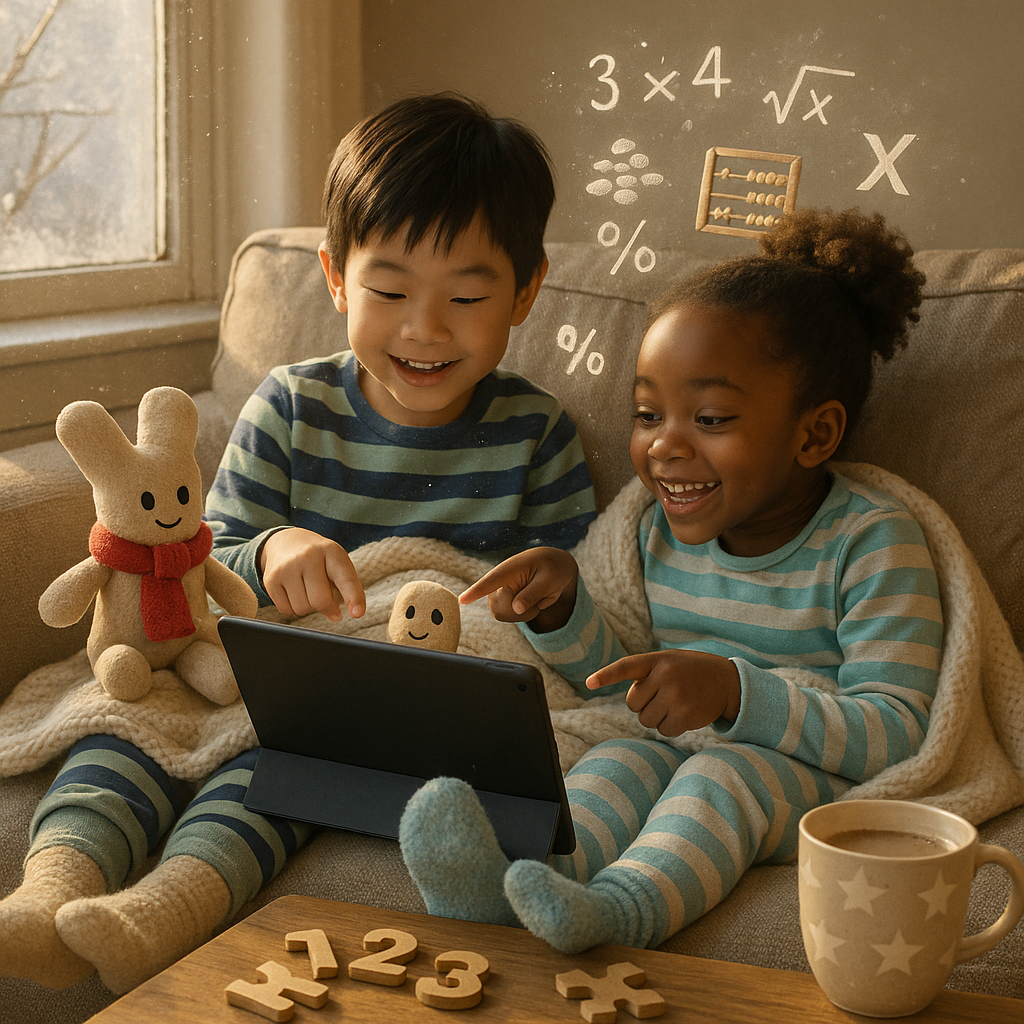
Variable for kids is a friendly idea that makes math feel playful. In simple words, a variable is a name that stands for a number or quantity that can change. For parents and teachers, this tiny concept unlocks many puzzles and moments of wonder.
Why Variable for Kids Matters
Kids meet change everywhere. For example, the number of cookies on a plate can go up or down. Therefore a variable helps children name that change. Using a variable makes problems less scary and more curious. It turns a missing number into a tiny mystery box to open.
Everyday examples that click
Think of temperature, game scores, or how tall a plant grows. In each case, the value can change. So these are variables in real life. In math, a variable shows up in expressions and equations. For instance, x + 3 = 5 tells us x is the missing number. Also letters like x, y, n, and t are common in school problems.
Quick, child-friendly history of the variable
The idea of the variable has a long and lively history. Long ago, Babylonian thinkers solved puzzle-like problems. Later writers used words or short symbols for unknowns. By the 1500s, mathematicians began using letters for quantities. Eventually the symbols we know became common. These steps made math neater and more adventurous.
Kinds of variables kids can meet
- Unknowns: the value we solve for, like x in 3 + x = 7.
- Independent variable: what you change, for example time during an experiment.
- Dependent variable: what changes as a result, such as distance walked.
- Parameter: a fixed number that sets the rule, for example the 2 in f(x) = 2x.
- Random variable: used in chance and statistics, usually written with a capital letter.
Variables beyond arithmetic
Variables appear in geometry, calculus, statistics, and computer code. In programming, a variable stores values like numbers or words. Then a program can update those values as it runs. Thus variables become practical tools for many fields. Kids who meet variables early gain helpful habits for future learning.
A playful mini activity
Try this simple puzzle together. Pose 3 + x = 7 and ask what x must be. Let kids guess and act it out with blocks. Next, track today s temperature and treat it like a story character that changes through the day. Activities like this make the variable feel alive and friendly.
Read or listen to a story about Variable now: Read or listen to a story about Variable now: For 3-5 year olds, For 6-8 year olds, For 8-10 year olds, and For 10-12 year olds.
Final thought
When you introduce a variable as a tiny mystery box, children lean in with curiosity. The idea is simple, the history is rich, and the examples are everywhere. Explore more on Storypie and watch curiosity grow brighter and bolder.