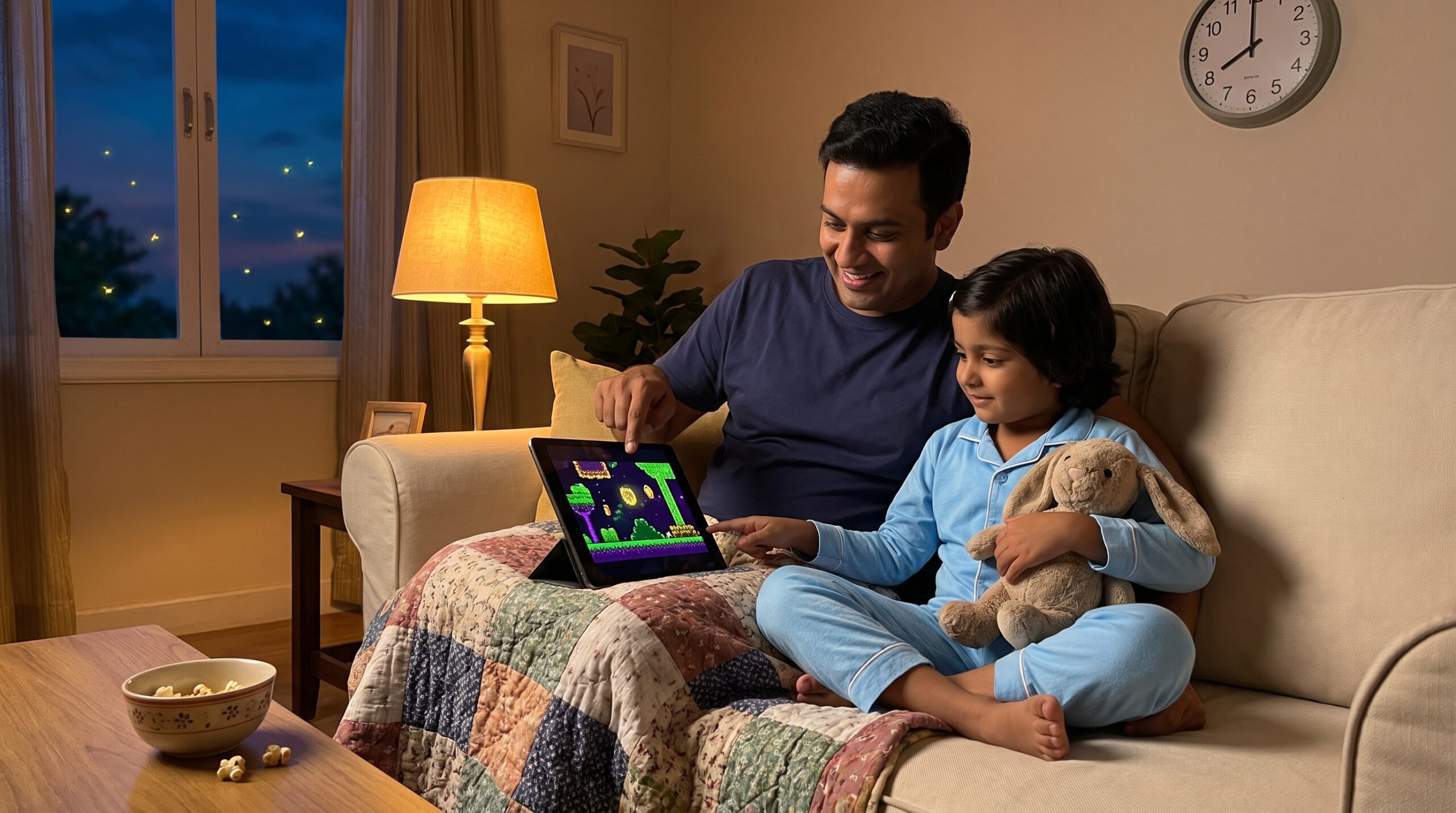
Video games for kids began as a bouncing dot in 1958. Today they are bright, tactile worlds children visit. They feel social, clever, and often quietly joyful. In fact, in 2025, approximately 190.6 million Americans aged 5–90 played video games for at least one hour per week, showcasing the extensive reach and demographic diversity of this beloved form of entertainment.
Video Games for Kids: Platforms at a Glance
First, think about where kids play. Consoles sit on the living room TV. Handheld devices and hybrid consoles fit couches and pockets. Phones and tablets made gaming everywhere. PCs host deeper worlds. Meanwhile, virtual reality headsets can feel intense and deserve careful choice.
Genres in a Nutshell
Next, spot game types by what they teach and how kids play. Puzzle games train attention and problem solving. Platformers focus on timing and rhythm. Sandbox games like Minecraft invite building and storytelling. Simulation and strategy teach planning. Role-playing games grow imagination and empathy. Racing and sports games are quick, social, and fun.
How Games Are Made
Small teams or solo creators make indie games with tools such as Unity or Godot. Big studios produce AAA titles with hundreds of people. Art, code, testing, sound, and design come together. As a result, the indie scene often offers surprising, gentle games that fit kids well.
Benefits to Watch For
Video games for kids can boost spatial skills and hand-eye coordination. They often nurture teamwork and creativity. In addition, games give practice at planning and puzzle solving. When chat is moderated, multiplayer play can teach cooperation.
Real Risks and What to Mind
However, some titles include violent content. Online chat can expose kids to strangers and toxic language. Microtransactions or loot boxes can gamble with attention and money. Also, too much play harms sleep and mood. Pay attention, and act early if you see trouble.
Ratings and Quick Vetting
First, check ESRB or PEGI ratings and read content descriptors. Then watch a short gameplay clip to see actual play. Also confirm whether a game is online, whether it has chat, and whether it uses in-app purchases.
Parental Controls and Simple Safeguards
- Use family accounts and password locks.
- Set time limits and bedtime cutoffs.
- Turn off or limit purchases.
- Disable cross-platform chat where possible.
- Review friend lists and use mute and report tools.
Accessibility and Friendly Picks
Look for subtitles, remappable controls, colorblind options, and adjustable difficulty. Try family-friendly titles such as Minecraft for creative play, Mario Kart for local races, Animal Crossing and LEGO games for gentle social play. These often include settings that make play easier for more kids.
Ratings, Picks, and a Tiny Ritual
After a session, ask for one favorite moment. Praise curiosity and small wins. Close play 30 to 60 minutes before bedtime so sleep can arrive. With care, video games for kids can be joyful and enriching. They make a perfect small evening story to share.
Read or listen to a story about Video Games now: For 3-5 year olds, For 6-8 year olds, For 8-10 year olds, and For 10-12 year olds.
Also, explore stories and tools on Storypie for quick shared moments and gentle conversation starters.