
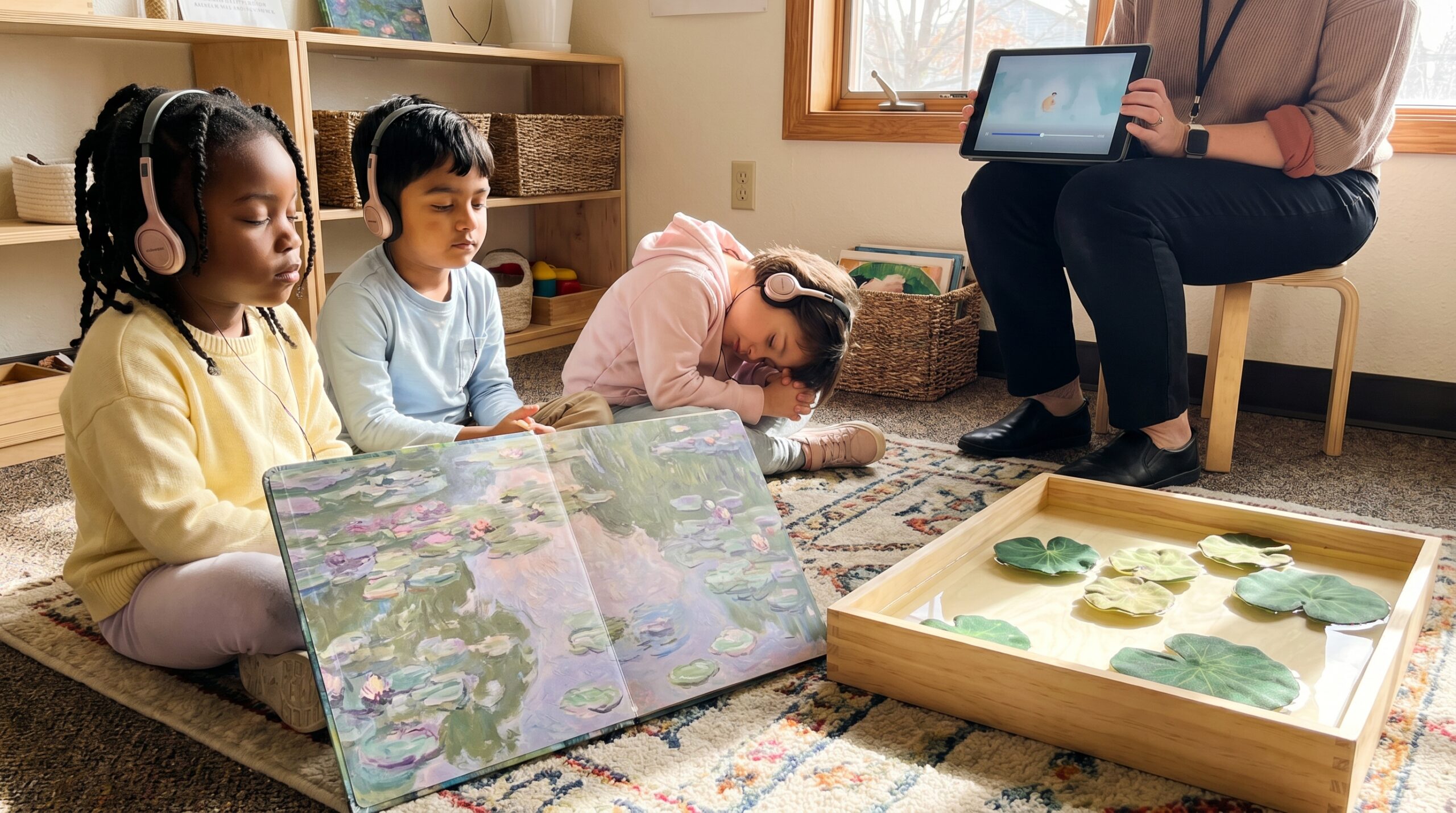
Water lilies for kids bring a little pond magic close to home. These floating plants belong to the family Nymphaeaceae and many garden favorites sit in the genus Nymphaea, which comprises approximately 65 accepted species of water lilies, according to the Royal Botanic Gardens, Kew. Parents and teachers will like the round leaves and open, fragrant flowers. They are easy for small hands and curious eyes to notice.
Water lilies for kids: leaves, flowers, and colors
Leaves are flat and round. Often they have a slit from edge to center. Because leaves float, the stomata sit on top so the lily breathes where air meets water. Flowers rise on short stalks. Some open in the day and others open at night. Colors range from white and pink to surprising blue and purple. The plant grows from a rhizome anchored in mud. Long petioles let each pad drift on the surface.
Where they live and how they grow
Water lilies prefer still or slow-moving water. Hardy varieties survive cold by keeping rhizomes below the freeze line. Tropical lilies need warm water year round and are often treated as annuals in cool climates. Plant them in heavy aquatic soil or pots. Then place them at the right depth for the species. Give them 4 to 6 hours of sun for best blooms. Containers keep them contained and child-safe in small garden ponds.
Life cycle and wildlife
Many lilies open and close with the sun. Insects such as bees, flies, and beetles pollinate the flowers. Lily pads shade the water and help reduce algae. Submerged stems and roots make small homes for fish and invertebrates. Some species are true showstoppers. For example, the Amazon water lily (Victoria amazonica) produces leaves that can reach up to 2.3 meters (about 7.5 feet) in diameter and can support approximately 45 kg when evenly distributed, according to the Royal Botanic Gardens, Kew. Additionally, a new giant water lily species, Victoria boliviana, was described in a taxonomic study published on July 4, 2022, with cultivated pads exceeding 2.8 meters in diameter; the largest recorded specimen measured 3.2 meters, demonstrating the fascinating diversity and potential of water lilies. This discovery was reported in Frontiers in Plant Science. Meanwhile, the tiny Rwandan water lily Nymphaea thermarum was listed as Extinct in the Wild in 2008 but was rediscovered on July 29, 2023, highlighting conservation efforts and the resilience of nature, a valuable lesson for children, as noted by Oryx.
Water lilies versus lotus
Lotus plants belong to a different family and lift leaves and flowers above the water. Water-lily leaves float on the surface. That simple difference makes an easy nature-spotting game for kids.
Monet, mindfulness, and a little magic
Claude Monet painted dozens of canvases of his Giverny pond, and those swirls of color invite slow looking. At Storypie we turned Monet’s Water Lilies into a gentle audio that swirls color and calm for little listeners. For families, this audio can help with quiet time and slow breathing.
Read or listen to a story about Water Lilies now: For 3-5 year olds, For 6-8 year olds, For 8-10 year olds, and For 10-12 year olds.
Also find the Water Lilies audio and more at Storypie: Read or listen to a story about Water Lilies now.
Growing at home – a simple starter kit
- Choose a wide, shallow container and heavy aquatic soil.
- Plant a hardy Nymphaea in a pot and lower it into 12 to 24 inches of water for many varieties.
- Keep maintenance simple: remove dead leaves and divide crowded rhizomes every few years.
- Watch for pests like snails and use fertilizer tablets made for aquatic plants to encourage blooms.
Child-friendly observation and safety
Make a color scavenger hunt, do leaf rubs with crayons, and practice slow breaths while tracing a pad edge. Pond-dipping with nets is thrilling but always supervised. Little pond neighborhoods are delightful, but safety comes first.
- Adult supervision always
- No running near water
- No climbing on pads
- Wash hands after contact
Conservation and final note
Check local rules before planting near wild waters because some species can be invasive. Water lilies have been cultivated worldwide for their aesthetic appeal, with many varieties developed for ornamental use in garden pools and conservatories, as noted by Encyclopaedia Britannica. Encourage native choices and learn from local garden centers. The reward is simple: a small watery world that invites return visits, quiet thinking, and bright, curious questions. Enjoy the wonder of water lilies for kids and watch curiosity bloom.