English

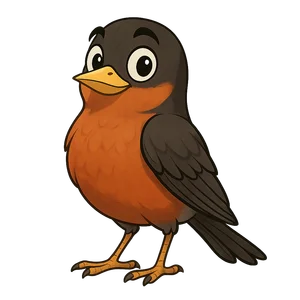
American Robin
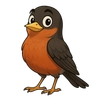
A common migratory songbird of the thrush family, known for its reddish-orange breast and cheerful song.
Reads at Grades 3–5 Listens at Grades 1–5
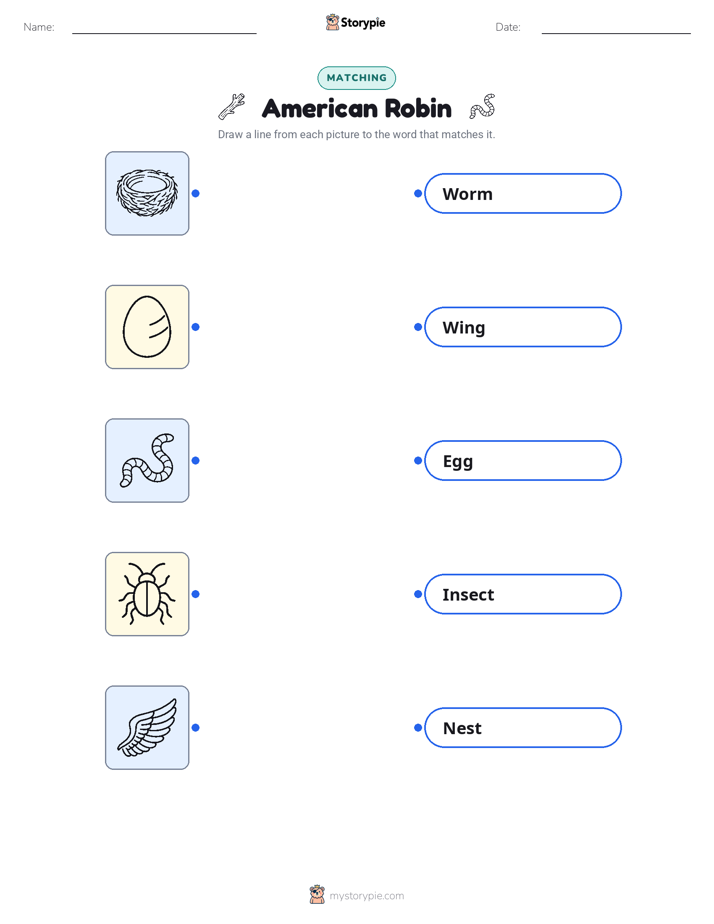
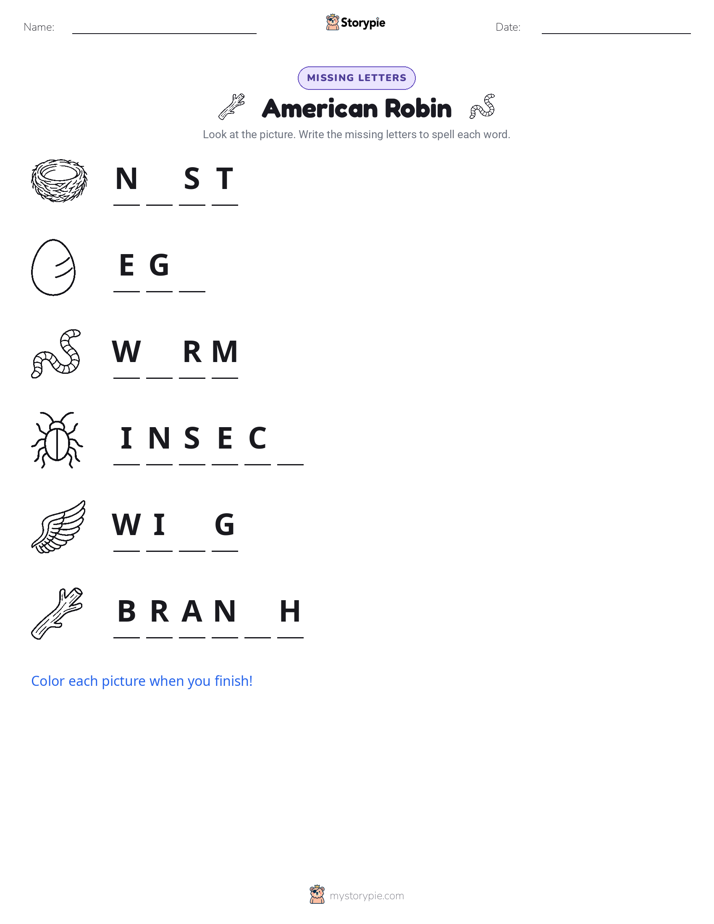
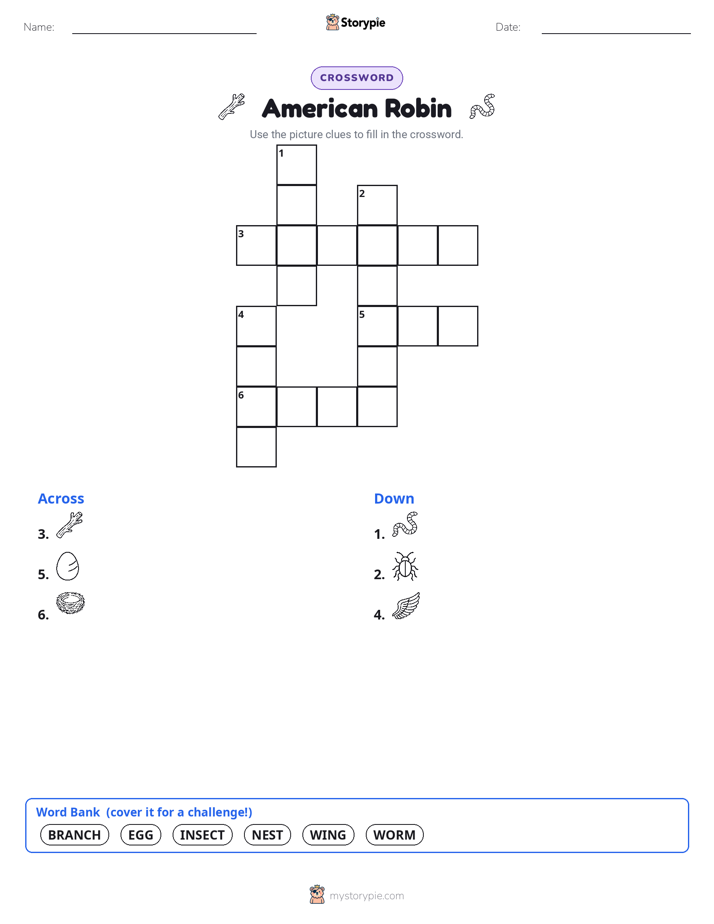
Print & create
Answer keys·No prep·Free with an account
28 worksheets · answer keys · full story · quiz · Ages 8-10 · CEFR B1
Plus adds 244,000+ more stories in 27 languages, audio for every one, and printables for all of them.
Just want American Robin?
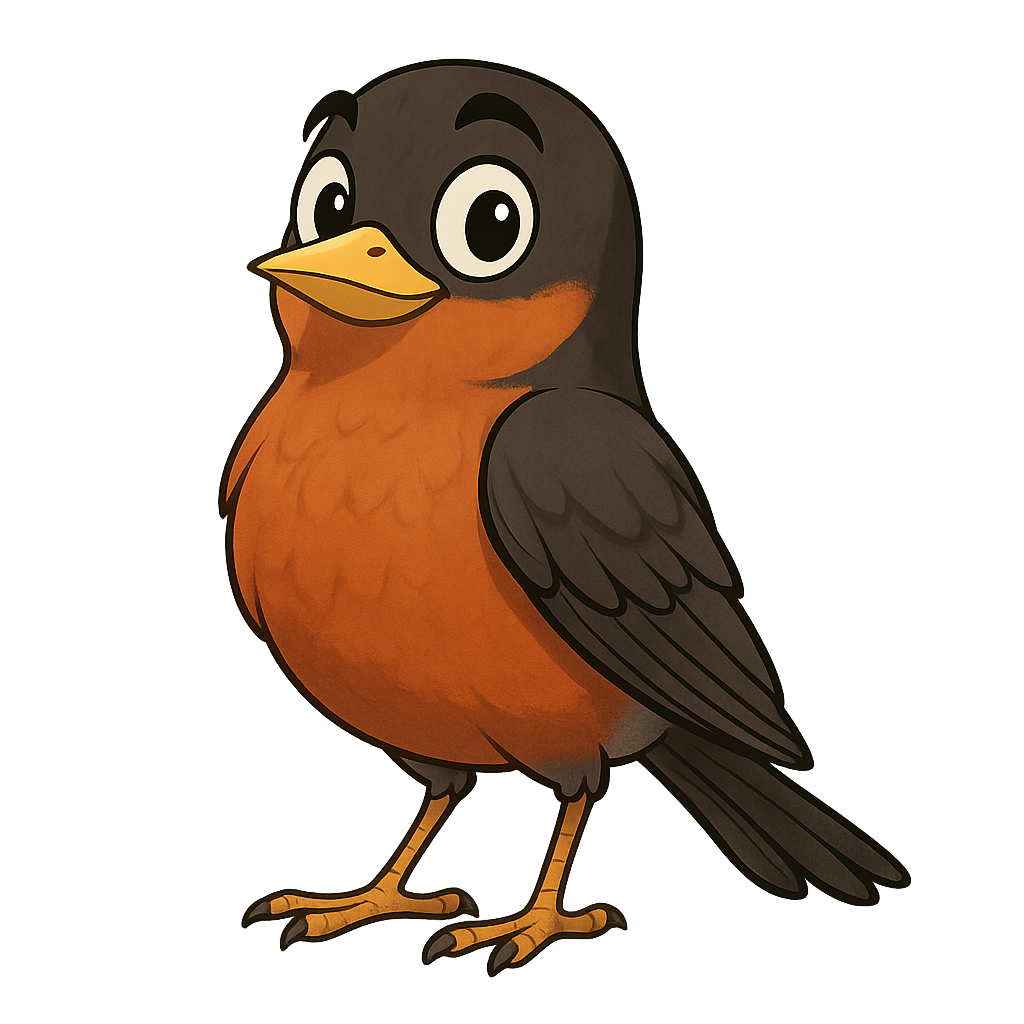
Hello! My name is Robin, and I’m an American Robin. You might recognize me by my bright, red breast and the cheerful song I sing, especially in the morning. My life began in the spring, when I hatched from a tiny, sky-blue egg. My first home was a cozy, cup-shaped nest my parents built. It was a safe place to grow strong with my siblings. Many people call me a robin, and that's my common name, but scientifically, I am a member of the thrush family. That means I’m related to other wonderful singers, like the bluebirds you might see.
After I grew big enough to leave the nest, my first big adventure was learning how to find my own food. My favorite breakfast is a juicy earthworm, but they can be tricky to find. I have a special technique I use to hunt them. I run across the grass for a few steps, then I stop very still and tilt my head to the side. I’m not just looking; I'm listening very carefully for the tiny sounds of worms moving underground. Once I hear one, I know exactly where to peck. Later in the day, my diet changes. I love to eat fruits and berries from bushes and trees. Because I eat both insects and plants, I am what is known as an omnivore.
When the air starts to get crisp and the leaves change color in autumn, I know it's time for my great journey south. I am a migratory bird, which means I travel long distances. I gather with large flocks of other robins, and together we fly to warmer places for the winter. A lot of people think we migrate because we don't like the cold, but the real reason is to find food. When the ground freezes up north, it’s impossible for me to find earthworms, and many of the berries are gone. So, we travel to places where insects and berries are still available. Scientists have been studying birds like me for a very long time. In fact, my species was officially given its scientific name, *Turdus migratorius*, by a famous scientist named Carl Linnaeus all the way back in the year 1766.
A Robin's Song
Hello! My name is Robin, and I’m an American Robin. You might recognize me by my bright, red breast and the cheerful song I sing, especially in the morning. My life began in the spring, when I hatched from a tiny, sky-blue egg. My first home was a cozy, cup-shaped nest my parents built. It was a safe place to grow strong with my siblings. Many people call me a robin, and that's my common name, but scientifically, I am a member of the thrush family. That means I’m related to other wonderful singers, like the bluebirds you might see.
After I grew big enough to leave the nest, my first big adventure was learning how to find my own food. My favorite breakfast is a juicy earthworm, but they can be tricky to find. I have a special technique I use to hunt them. I run across the grass for a few steps, then I stop very still and tilt my head to the side. I’m not just looking; I'm listening very carefully for the tiny sounds of worms moving underground. Once I hear one, I know exactly where to peck. Later in the day, my diet changes. I love to eat fruits and berries from bushes and trees. Because I eat both insects and plants, I am what is known as an omnivore.
When the air starts to get crisp and the leaves change color in autumn, I know it's time for my great journey south. I am a migratory bird, which means I travel long distances. I gather with large flocks of other robins, and together we fly to warmer places for the winter. A lot of people think we migrate because we don't like the cold, but the real reason is to find food. When the ground freezes up north, it’s impossible for me to find earthworms, and many of the berries are gone. So, we travel to places where insects and berries are still available. Scientists have been studying birds like me for a very long time. In fact, my species was officially given its scientific name, Turdus migratorius, by a famous scientist named Carl Linnaeus all the way back in the year 1766.
After a long winter in the south, the feeling of spring pulls me back north again. This is the time to find a mate and start a family of my own. Building a home is very important work. My mate and I work together to find the perfect materials. We gather dry grass and small twigs, weaving them together carefully. The most important part is adding a layer of mud. We use our beaks and bodies to shape the mud into a strong, sturdy cup. This mud layer helps our nest hold its shape and keep our eggs safe. I am very proud that people seem to like having me around. I was even chosen as the official state bird of Michigan in 1931, Connecticut in 1943, and Wisconsin in 1949.
As I go about my days, I feel happy knowing that I am a helper in the world. My role in the ecosystem is important. By eating so many insects, I help keep gardens and yards healthy by controlling pests that might damage plants. And when I eat berries, I don't just get a tasty meal. The seeds from the fruit pass through my body and are dropped in new places as I fly around. This helps spread the seeds, allowing new plants and trees to grow in different spots. My song is one of the first signs of spring for many people, and I am glad to be a helpful and cheerful neighbor in backyards and parks everywhere.
Wow facts
About
A common migratory songbird of the thrush family, known for its reddish-orange breast and cheerful song. It is found across North America and is often seen in early spring when it starts to break into smaller groups, set up its own space, and sing, which can mean that spring is coming.
Take a Quiz
Question 1 of 5
In the story, the robin says it is an 'omnivore.' What does the word omnivore mean?
Explore next



Want to do even more?
Go beyond exploring. Unlock tools that turn every story into real learning.

Storypie Plus for families
Full stories, quizzes, and printables. Nights and car rides, sorted.
- Unlimited audio stories
- Create Mode: your child stars in the story
- Offline downloads
- Printable worksheets & coloring pages

Why Storypie for Schools
Students engaged. Prep in seconds. Evenings back to you.
- Worksheets & Quizzes
- Classroom Management
- Formative Assessment
- Custom Curriculum & Lesson Plans
- 27 Languages

Why Storypie for Homeschool
Curriculum done. They'll ask for more. Hours back in your day.
- Worksheet Generator
- First-Person Audio Stories
- Built-in Comprehension Quizzes
- Custom Curriculum & Lesson Plans
- Print & Go Activities