English

Coyote
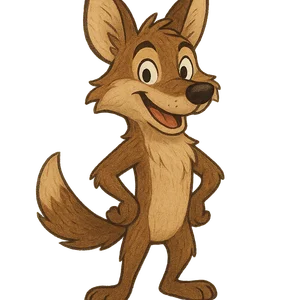
The coyote is a highly adaptable canine native to North America, known for its problem-solving abilities…
Reads at Grades 6–8 Listens at Grades 4–8
Print & create
Answer keys·No prep·Free with an account
28 worksheets · answer keys · full story · quiz · Ages 10-12 · CEFR B2
Plus adds 244,000+ more stories in 27 languages, audio for every one, and printables for all of them.
Just want Coyote?
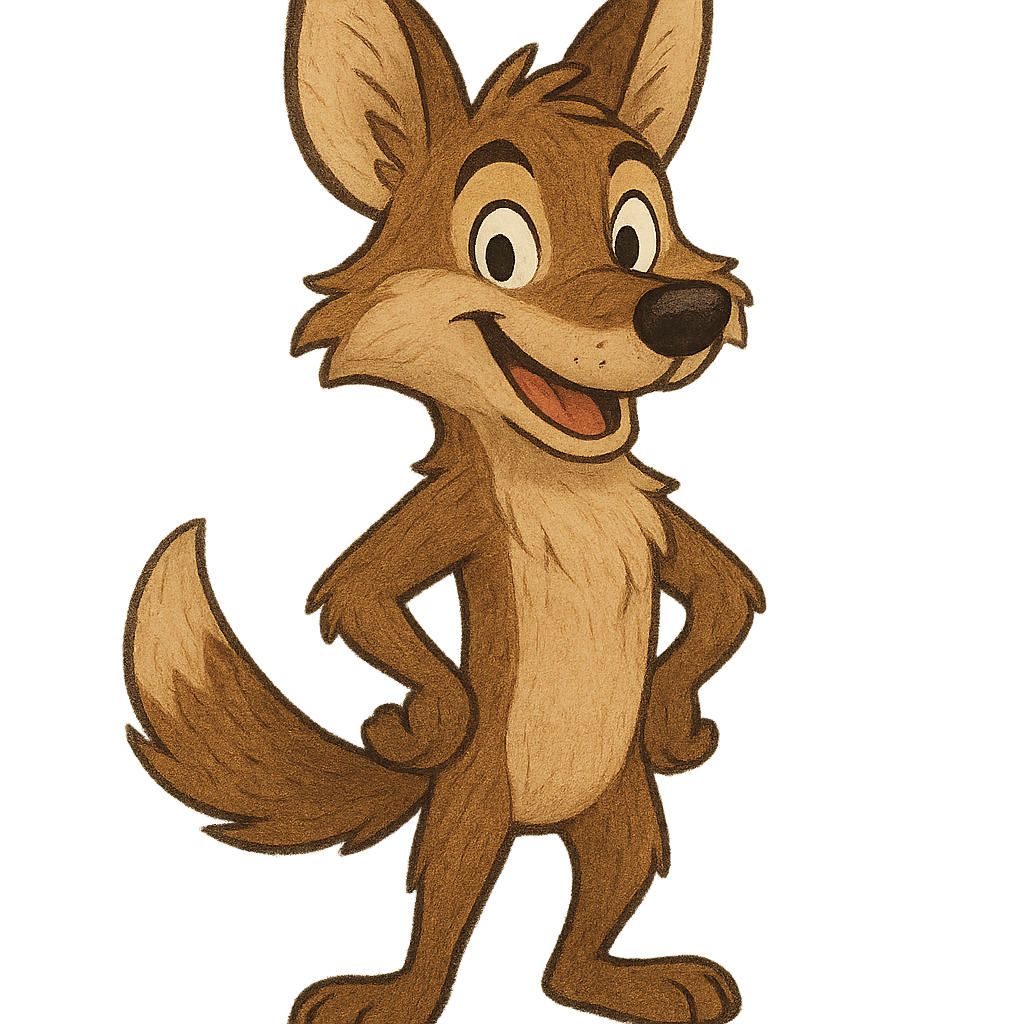
Hello, my name is often misunderstood. Humans gave my species the scientific name *Canis latrans*, which translates to 'barking dog,' and while we do bark, we are so much more. I am a coyote, a true native of North America. My ancestors are ancient, having evolved on this continent during the Pleistocene Epoch, more than a million years ago. We have roamed these lands long before the first cities were ever built. I was born a small, blind pup, nestled deep within a hidden den dug into the earth. I was part of a close-knit family pack, led by my parents. They were our alpha pair, our teachers, and our protectors. In the safety of our den, my siblings and I learned the first lessons of life. As we grew, our parents taught us everything we needed to know to survive: how to stalk a mouse in the tall grass, how to listen for the rustle of a rabbit, and how to use our voices to communicate across the vast landscapes we call home.
My species originally called the vast plains and deserts of the American West our home. For thousands of years, we shared this territory with our larger cousin, the gray wolf. But during the 1800s, a great change began to sweep across the continent. As human settlers moved westward, they altered the landscape and the balance of power among the animals. A major turning point came after the year 1900, when widespread efforts were made to remove gray wolves from nearly all of their original territories. While this was a difficult time for the wolves, it created an unexpected opportunity for my kind. With our main competitor gone, a new world opened up to us. This began the story of our species' incredible expansion. We embarked on a journey, moving out from the West to explore and colonize the rest of the continent. We learned to cross great rivers, navigate treacherous mountains, and find new homes in forests, farmlands, and even the suburbs that were beginning to appear.
Coyote: Song of the Survivor
Hello, my name is often misunderstood. Humans gave my species the scientific name Canis latrans, which translates to 'barking dog,' and while we do bark, we are so much more. I am a coyote, a true native of North America. My ancestors are ancient, having evolved on this continent during the Pleistocene Epoch, more than a million years ago. We have roamed these lands long before the first cities were ever built. I was born a small, blind pup, nestled deep within a hidden den dug into the earth. I was part of a close-knit family pack, led by my parents. They were our alpha pair, our teachers, and our protectors. In the safety of our den, my siblings and I learned the first lessons of life. As we grew, our parents taught us everything we needed to know to survive: how to stalk a mouse in the tall grass, how to listen for the rustle of a rabbit, and how to use our voices to communicate across the vast landscapes we call home.
My species originally called the vast plains and deserts of the American West our home. For thousands of years, we shared this territory with our larger cousin, the gray wolf. But during the 1800s, a great change began to sweep across the continent. As human settlers moved westward, they altered the landscape and the balance of power among the animals. A major turning point came after the year 1900, when widespread efforts were made to remove gray wolves from nearly all of their original territories. While this was a difficult time for the wolves, it created an unexpected opportunity for my kind. With our main competitor gone, a new world opened up to us. This began the story of our species' incredible expansion. We embarked on a journey, moving out from the West to explore and colonize the rest of the continent. We learned to cross great rivers, navigate treacherous mountains, and find new homes in forests, farmlands, and even the suburbs that were beginning to appear.
My greatest strength, the very key to my survival, is my adaptability. If I had a superpower, this would be it. A huge part of this is my diet; I am an omnivore, which means I can eat almost anything to survive. In the wild, I hunt for mice, voles, and rabbits. I’ll even eat insects or berries from a bush. In a farm’s orchard, I might snack on fallen fruit. This flexibility allowed me to thrive where other animals struggled. As human development continued into the 20th century, I faced a new and challenging world: the city. I learned to navigate places like Chicago and Los Angeles, treating sprawling city parks as my new hunting grounds and learning to move silently through backyards at night. This brought me into a complicated relationship with people. Since the early 20th century, there have been widespread efforts to remove us from these new territories. But our intelligence and resilience are deeply ingrained. Despite these pressures, our populations have not only survived but have continued to grow, a testament to our ability to learn, adapt, and endure.
Legacy & Remembering
Many people know me for my howl, a sound that echoes across the night. But it is not a lonely cry. It is a complex language, a song I use to speak with my family members, letting them know where I am and what I am doing. It is my way of announcing my presence to other coyotes, defining the borders of my territory. This is the song of the American wilderness, a sound that has carried through the ages. My ecological role is vital; by keeping rodent populations under control, I help maintain a healthy balance in the ecosystems I inhabit, from open prairies to urban parks. My ability to thrive in the heart of cities is a powerful reminder that nature is resilient, clever, and always finding a way. My story is one of survival against the odds, and my song is a promise that the wild spirit of North America is still very much alive.
Wow facts
About
The coyote is a highly adaptable canine native to North America, known for its problem-solving abilities, complex vocalizations, and its remarkable range expansion across the continent.
Take a Quiz
Question 1 of 5
In your own words, what were the main reasons the coyote was able to expand its territory across North America after the year 1900?
Explore next





Want to do even more?
Go beyond exploring. Unlock tools that turn every story into real learning.

Storypie Plus for families
Full stories, quizzes, and printables. Nights and car rides, sorted.
- Unlimited audio stories
- Create Mode: your child stars in the story
- Offline downloads
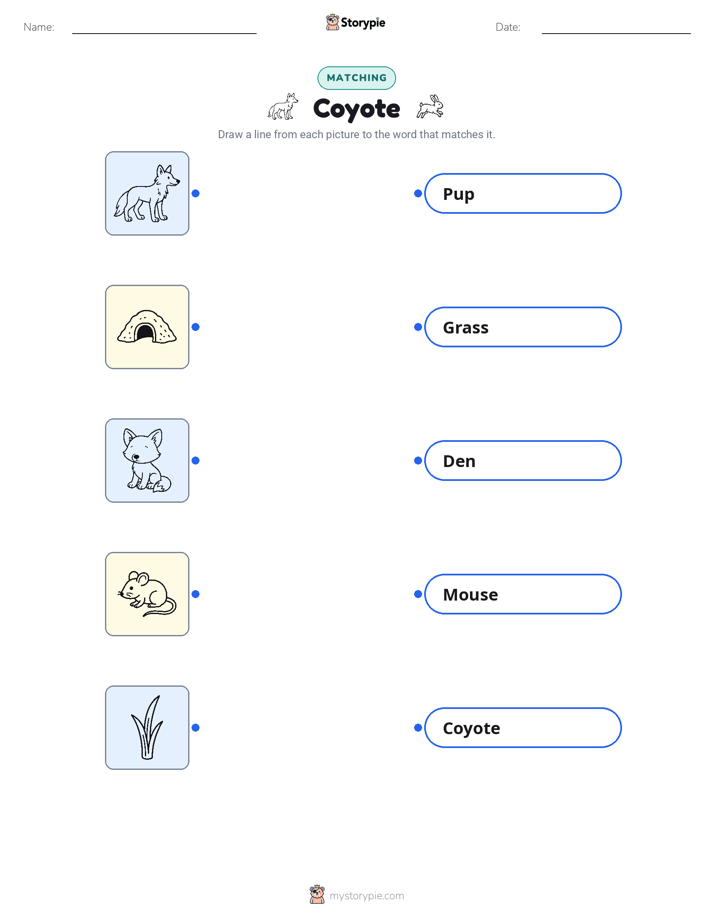
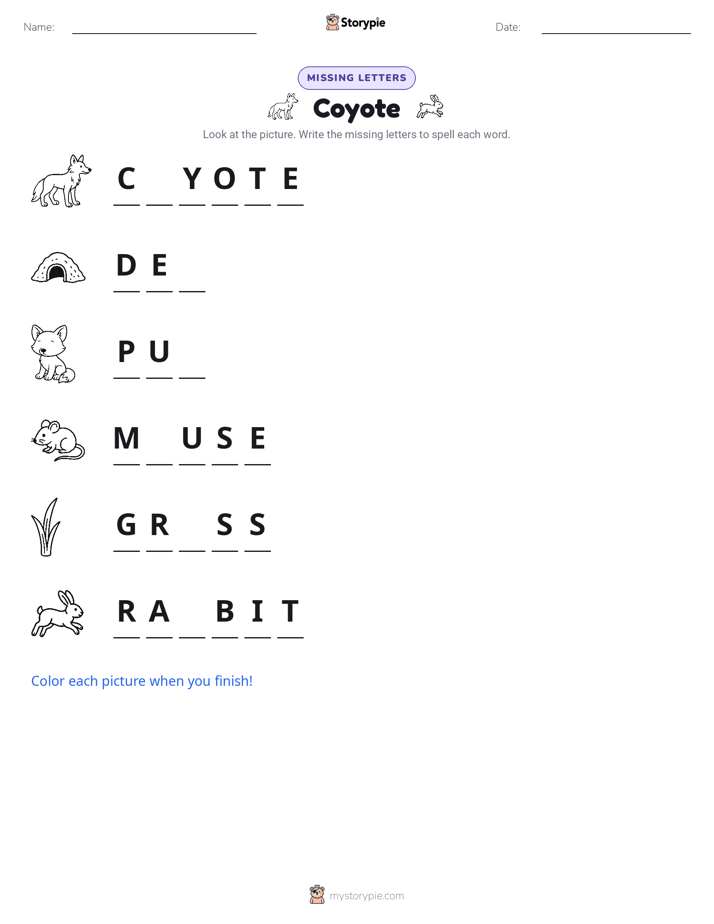
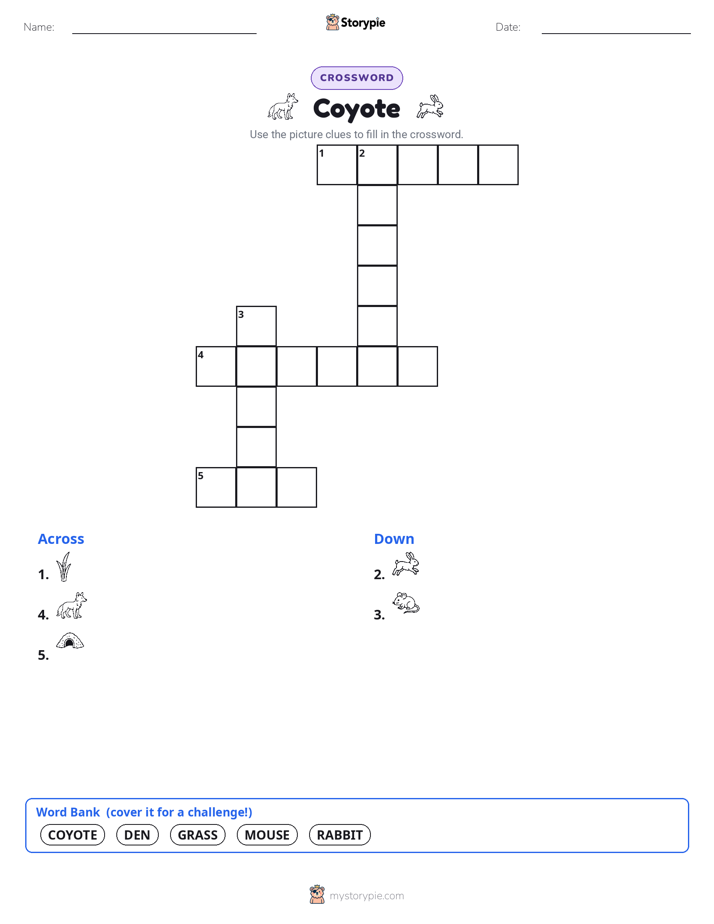
- Printable worksheets & coloring pages

Why Storypie for Schools
Students engaged. Prep in seconds. Evenings back to you.
- Worksheets & Quizzes
- Classroom Management
- Formative Assessment
- Custom Curriculum & Lesson Plans
- 27 Languages

Why Storypie for Homeschool
Curriculum done. They'll ask for more. Hours back in your day.
- Worksheet Generator
- First-Person Audio Stories
- Built-in Comprehension Quizzes
- Custom Curriculum & Lesson Plans
- Print & Go Activities