English

Coyote
The coyote is a highly adaptable canine native to North America, known for its problem-solving abilities…
Reads at Grades 3–5 Listens at Grades 1–5
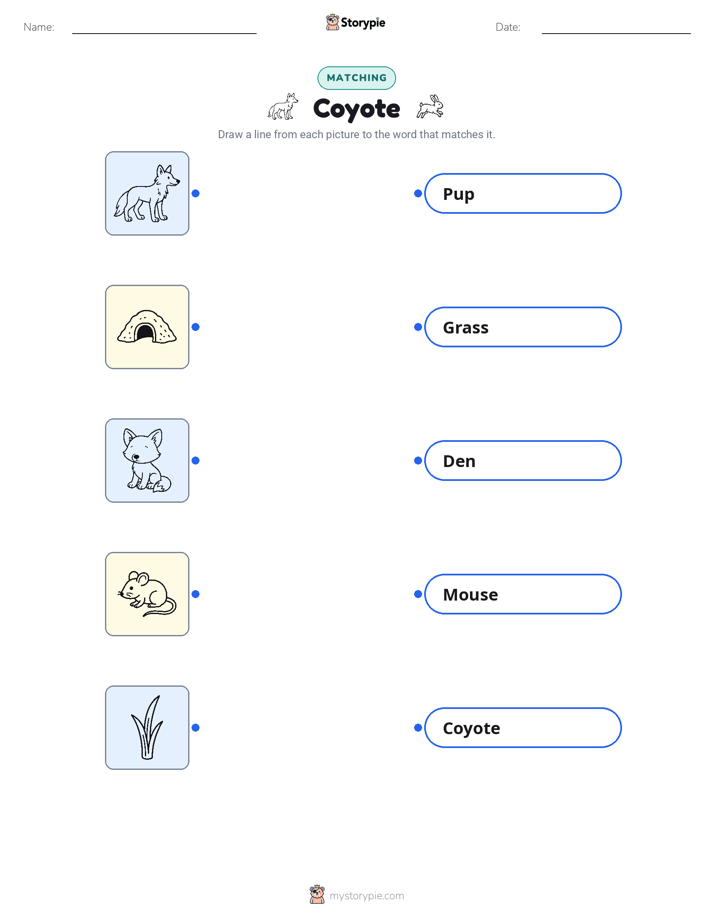
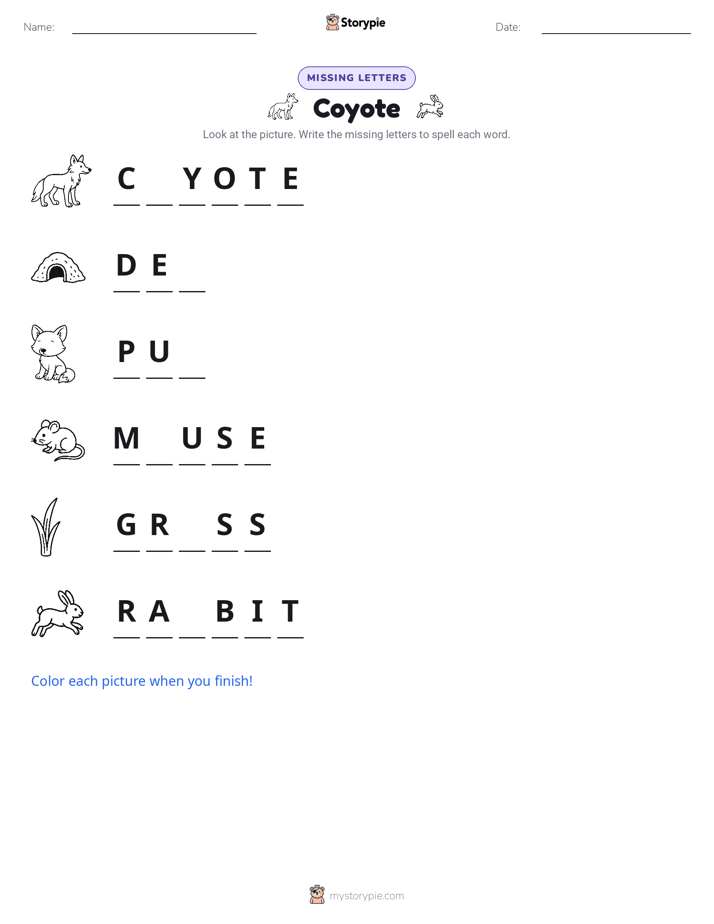
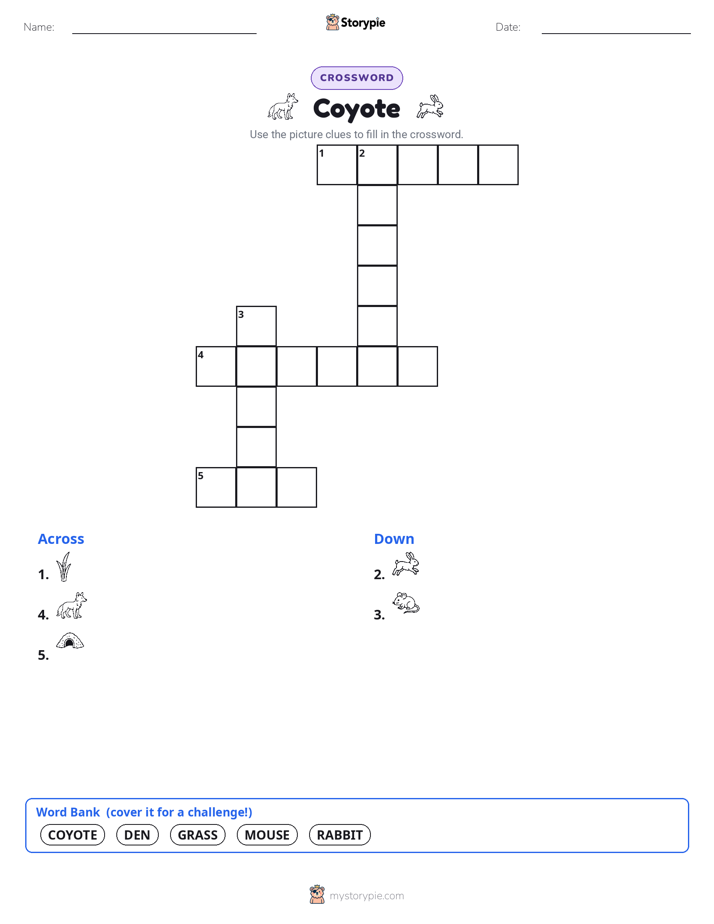
Print & create
Answer keys·No prep·Free with an account
28 worksheets · answer keys · full story · quiz · Ages 8-10 · CEFR B1
Plus adds 244,000+ more stories in 27 languages, audio for every one, and printables for all of them.
Just want Coyote?
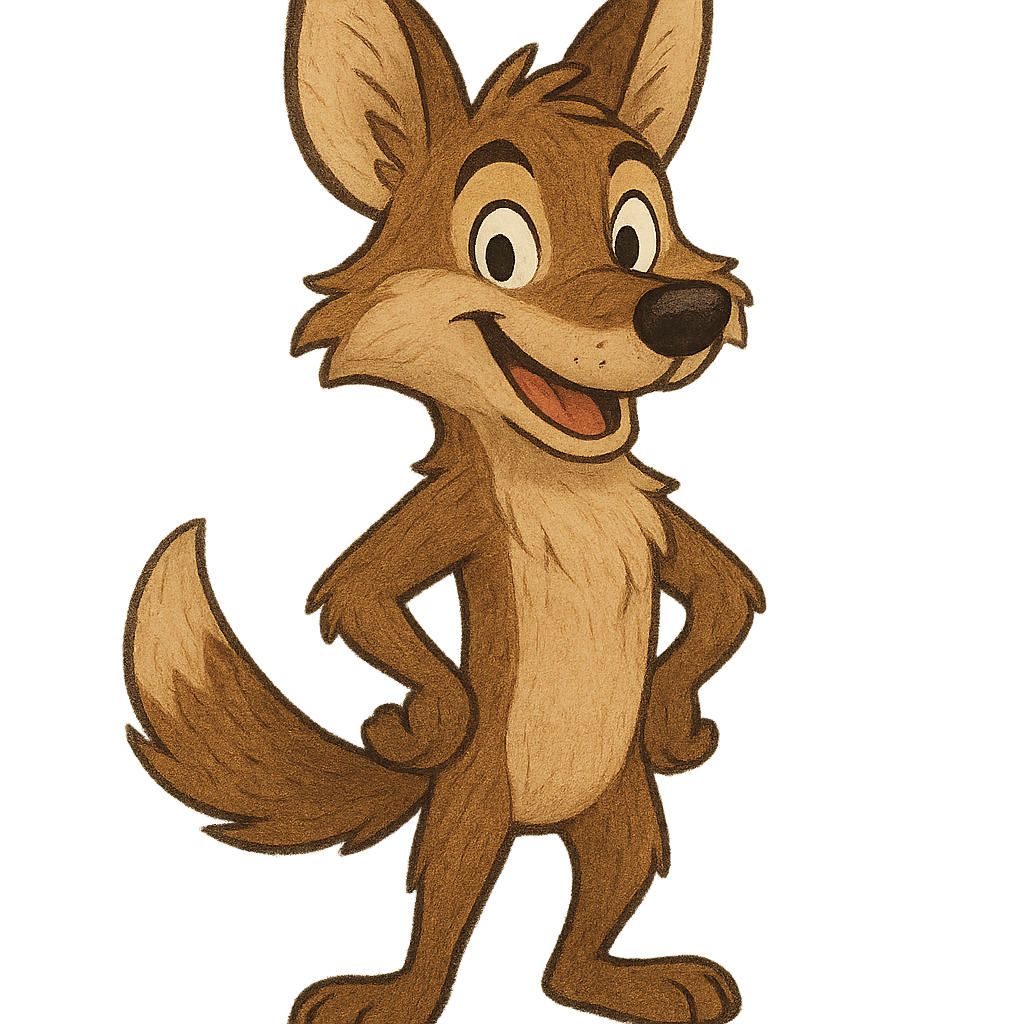
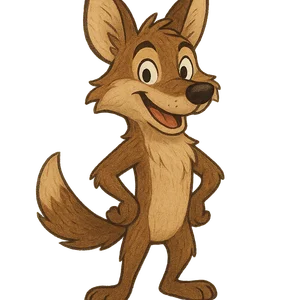
Hello there. My friends call me a coyote, and you can recognize me by my pointy ears and long, bushy tail. I am a clever and curious animal, always exploring the world around me. A long time ago, in 1823, a scientist named Thomas Say gave my species a scientific name: Canis latrans. He thought it was a good fit because it means 'barking dog,' and we certainly do love to communicate with our voices. But while my official name is from 1823, my family has a much longer story. My ancestors have roamed the lands of North America for over a million years, long before there were towns and cities. We have seen this land change in so many ways, and we have always found a way to change with it.
My own story began in the spring, when I was born with my brothers and sisters in a cozy den dug into the earth. The world outside was full of new smells and sounds, and I was eager to explore. My first home was in the wide-open prairies and deserts of the American West, where the sky was big and the land stretched out forever under the warm sun. My parents were wonderful teachers who prepared us for life in this vast landscape. They showed us how to be quiet and patient as we learned to hunt for our food. We’d practice stalking mice and rabbits that scurried through the tall grasses, learning to listen for the faintest rustle. My parents also taught us our special family language. It wasn't made of words, but of a whole orchestra of yips, barks, and howls. A short yip might mean 'I'm here!', while a long, lonely howl could travel for miles to connect with distant family. Each sound had a different meaning, telling our pack if there was danger, if food was found, or just to say hello across the plains. We were a close family, and through these lessons, we learned everything we needed to survive.
The Coyote's Song
Hello there. My friends call me a coyote, and you can recognize me by my pointy ears and long, bushy tail. I am a clever and curious animal, always exploring the world around me. A long time ago, in 1823, a scientist named Thomas Say gave my species a scientific name: Canis latrans. He thought it was a good fit because it means 'barking dog,' and we certainly do love to communicate with our voices. But while my official name is from 1823, my family has a much longer story. My ancestors have roamed the lands of North America for over a million years, long before there were towns and cities. We have seen this land change in so many ways, and we have always found a way to change with it.
My own story began in the spring, when I was born with my brothers and sisters in a cozy den dug into the earth. The world outside was full of new smells and sounds, and I was eager to explore. My first home was in the wide-open prairies and deserts of the American West, where the sky was big and the land stretched out forever under the warm sun. My parents were wonderful teachers who prepared us for life in this vast landscape. They showed us how to be quiet and patient as we learned to hunt for our food. We’d practice stalking mice and rabbits that scurried through the tall grasses, learning to listen for the faintest rustle. My parents also taught us our special family language. It wasn't made of words, but of a whole orchestra of yips, barks, and howls. A short yip might mean 'I'm here!', while a long, lonely howl could travel for miles to connect with distant family. Each sound had a different meaning, telling our pack if there was danger, if food was found, or just to say hello across the plains. We were a close family, and through these lessons, we learned everything we needed to survive.
For a very long time, my ancestors shared the land with our bigger, stronger cousins, the gray wolves. They were the rulers of the forests and mountains. But a time of great change began in the late 1800s, and it continued all through the 1900s. As more people settled across the continent, the world started to shift for many animals. Sadly, the gray wolves began to disappear from many of their old homes. This was a difficult time for them, as they were the top predators who kept many parts of the ecosystem in balance. For my family, however, this created an unexpected opportunity. With fewer wolves around, there were fewer competitors for food and territory. A whole new world opened up for us. We had the chance to leave our familiar prairies and deserts and explore places we had never lived before. It was as if a door had opened, inviting us to see what lay beyond the horizon. We were smaller than the wolves, but we were clever and quick to learn, and we were ready for a new adventure.
And what a journey it was. My species began one of the most amazing expansions ever seen, spreading out across the entire continent. From our original homes in the prairies, we traveled in every direction. Some of my relatives moved east, learning to live in the deep forests that were once the territory of wolves. Others headed north, figuring out how to survive in the cold and the snow. Still others journeyed south, finding new homes in warmer, more tropical lands. Our secret to success was our greatest skill: adaptability. This means we are very good at changing to fit new situations. If our usual food of mice and rabbits wasn't around, we learned to eat different things, like berries, insects, fish, or whatever we could find. We also learned to live in all sorts of new places. Most surprisingly, this included areas right on the edge of human towns and cities. This trend of living near people really started to grow after the 1950s. We discovered that these places offered new sources of food and shelter, and we learned how to navigate this new world carefully. We became the ultimate survivors, making a home for ourselves almost anywhere we went.
Today, I am a master of adaptation, a true symbol of resilience. You can find my family living almost everywhere, from the wildest mountains to the green spaces of bustling city parks. I play an important part in keeping my environment healthy. By hunting rodents like mice and rats, I help keep their populations in balance, which is good for the land and for people, too. My howl, which you might hear at dusk or dawn, is the song of the wild. It’s a powerful reminder that nature is clever, strong, and can always find a way to thrive, even in a changing world. In the wild, most of us live to be about 6 to 8 years old, always learning and exploring. My story shows that even a small animal can make a big impact.
Wow facts
About
The coyote is a highly adaptable canine native to North America, known for its problem-solving abilities, complex vocalizations, and its remarkable range expansion across the continent.
Take a Quiz
Question 1 of 5
According to the story, what does the scientific name Canis latrans mean?
Explore next




Want to do even more?
Go beyond exploring. Unlock tools that turn every story into real learning.

Storypie Plus for families
Full stories, quizzes, and printables. Nights and car rides, sorted.
- Unlimited audio stories
- Create Mode: your child stars in the story
- Offline downloads
- Printable worksheets & coloring pages

Why Storypie for Schools
Students engaged. Prep in seconds. Evenings back to you.
- Worksheets & Quizzes
- Classroom Management
- Formative Assessment
- Custom Curriculum & Lesson Plans
- 27 Languages

Why Storypie for Homeschool
Curriculum done. They'll ask for more. Hours back in your day.
- Worksheet Generator
- First-Person Audio Stories
- Built-in Comprehension Quizzes
- Custom Curriculum & Lesson Plans
- Print & Go Activities