English

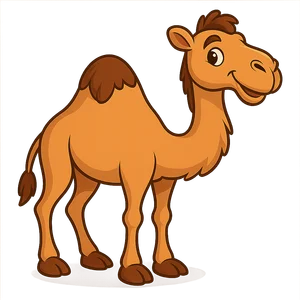
Dromedary Camel
A large, single-humped camel native to the arid regions of the Middle East and the Horn of Africa…
Reads at Grades K-2 Listens at K–3
Print & create
Answer keys·No prep·Free with an account
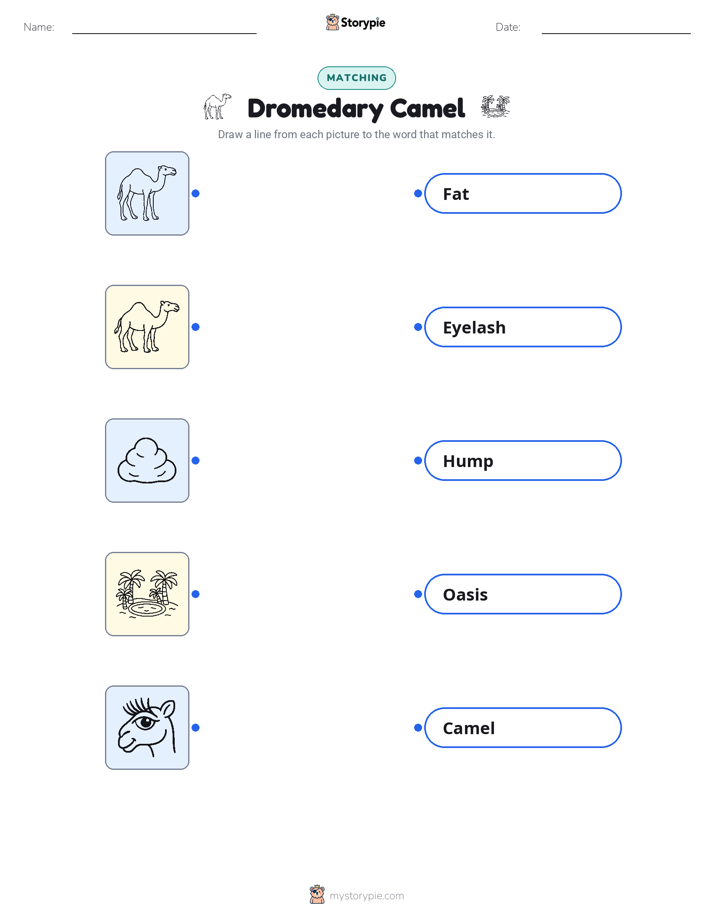
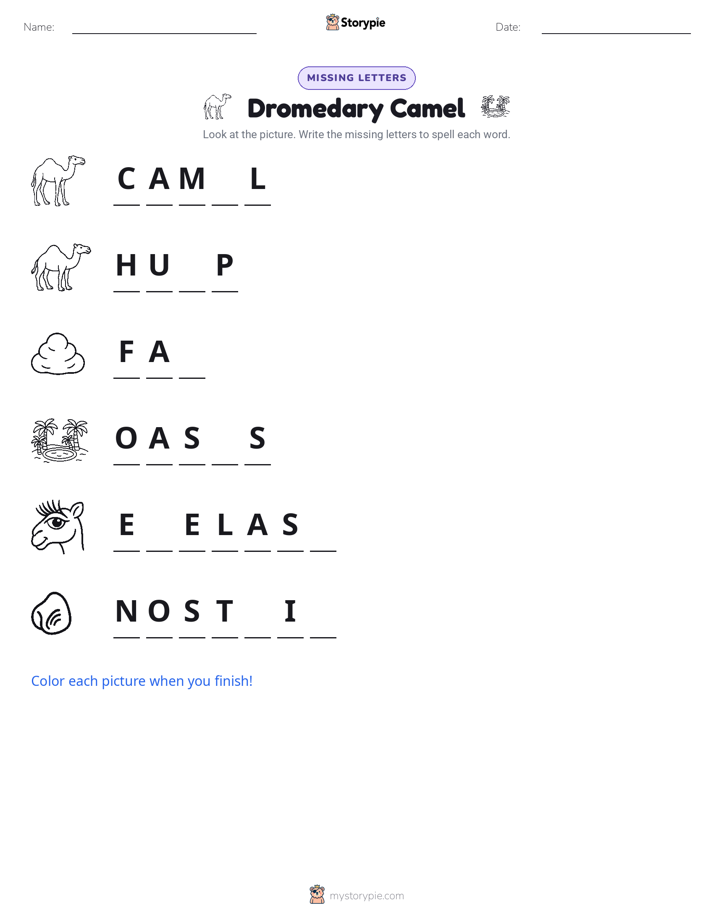
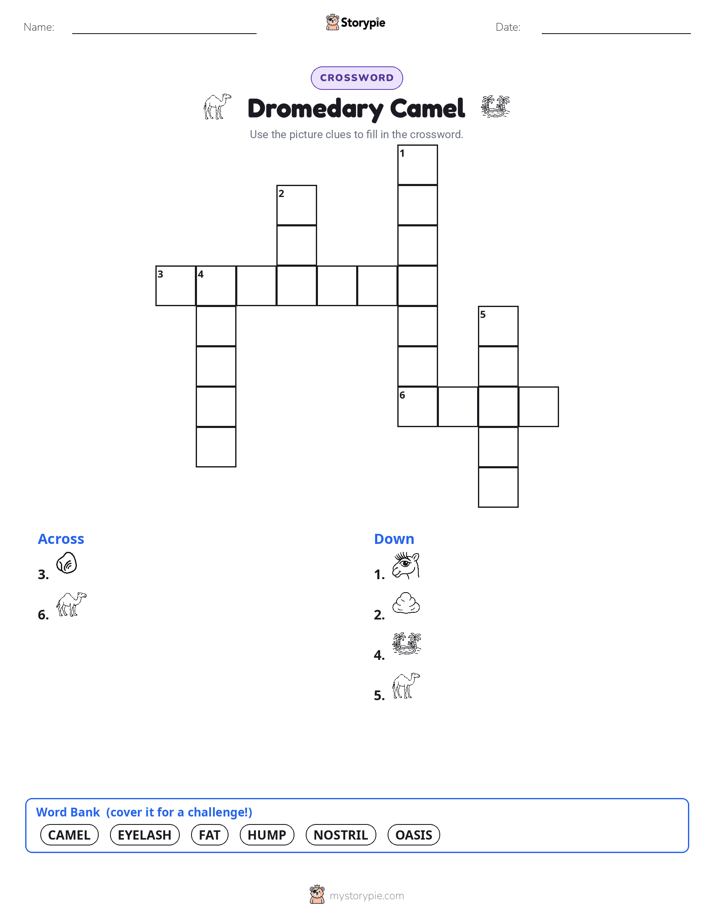
28 worksheets · answer keys · full story · quiz · Ages 6-8 · CEFR A2
Plus adds 244,000+ more stories in 27 languages, audio for every one, and printables for all of them.
Just want Dromedary Camel?
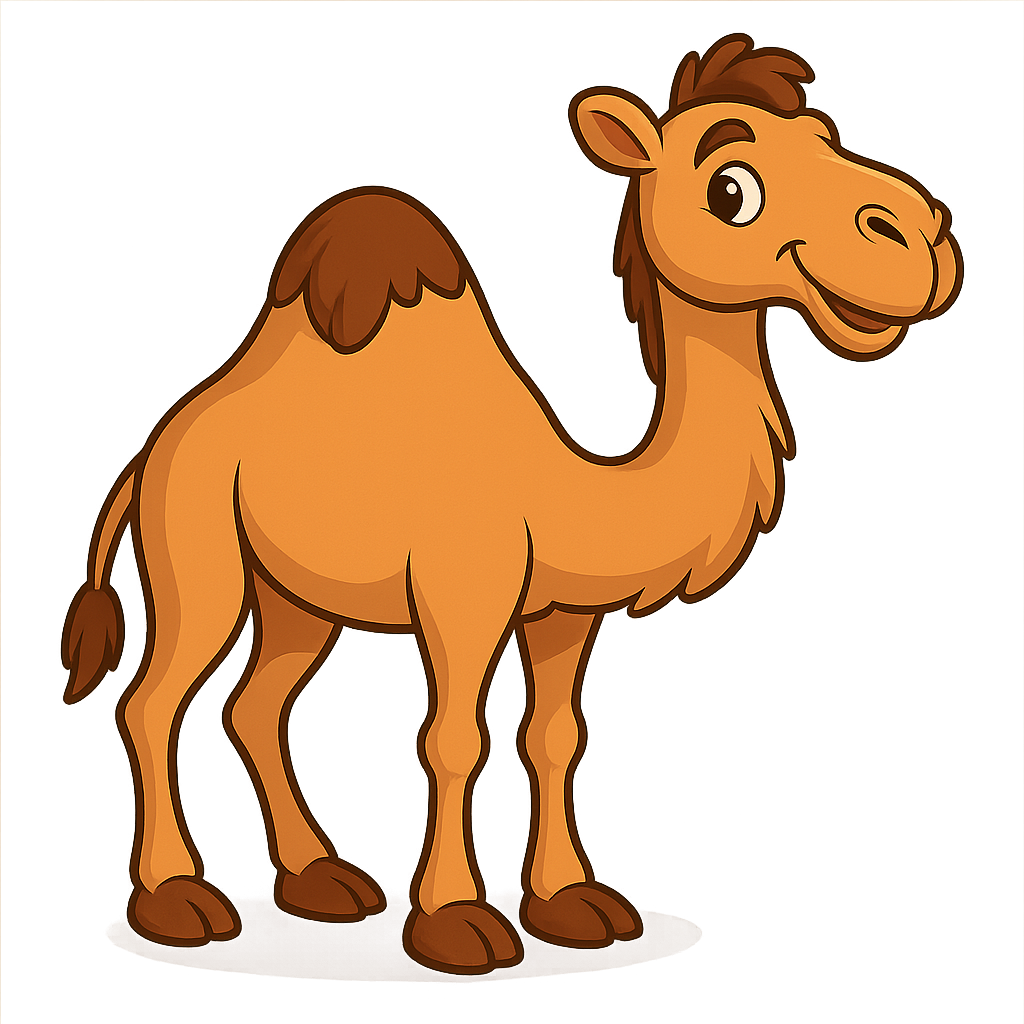
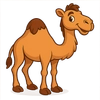
Hello there. My name is Dromedary, and I'm a dromedary camel. I live in the hot, sandy deserts of places like Africa and the Middle East. It’s very sunny here, and the sand stretches as far as you can see. Have you ever seen a picture of me? The first thing most people notice is the big bump on my back. That’s my hump. I only have one. Many people think my hump is filled with water, like a big water bottle, but that’s not true. It’s actually a big lump of fat. This fat is very important because it stores energy for me. When I walk for a long, long time and can’t find any food to eat, my body uses the fat from my hump to keep me going. It’s like carrying my own lunchbox on my back.
Living in the desert is an adventure, and my body is perfectly made for it. The sun is bright and the wind can blow sand everywhere, so I have special tools to protect myself. Look at my eyes. I have super long eyelashes, even longer than yours. They work like little brooms to sweep sand away and keep it from getting in my eyes. When a big sandstorm comes, I can do something amazing with my nose. I can close my nostrils up tight so I don't breathe in any sand. And what about my feet? They are big, wide, and flat. When I walk on the soft, deep sand, my feet spread out. This stops me from sinking down, kind of like how snowshoes help people walk on top of snow. Every part of me, from my eyes to my toes, helps me thrive in my sandy home.
My family has been friends with people for a very, very long time. My ancestors, the very first dromedary camels to work with humans, started this friendship way back around the year 2000 BCE. That was thousands of years ago, on a big piece of land called the Arabian Peninsula. People quickly learned that we are strong and can travel for many days across the huge, empty desert without needing much water or food. We could also carry heavy loads, like tents, food, and goods to trade. Because we could travel across the sandy sea of the desert so well, people gave us a special nickname. They called us the 'Ship of the Desert.' It’s a name I’m very proud of, because it shows how helpful we are.
A Camel's Tale: The Ship of the Desert
Hello there. My name is Dromedary, and I'm a dromedary camel. I live in the hot, sandy deserts of places like Africa and the Middle East. It’s very sunny here, and the sand stretches as far as you can see. Have you ever seen a picture of me? The first thing most people notice is the big bump on my back. That’s my hump. I only have one. Many people think my hump is filled with water, like a big water bottle, but that’s not true. It’s actually a big lump of fat. This fat is very important because it stores energy for me. When I walk for a long, long time and can’t find any food to eat, my body uses the fat from my hump to keep me going. It’s like carrying my own lunchbox on my back.
Living in the desert is an adventure, and my body is perfectly made for it. The sun is bright and the wind can blow sand everywhere, so I have special tools to protect myself. Look at my eyes. I have super long eyelashes, even longer than yours. They work like little brooms to sweep sand away and keep it from getting in my eyes. When a big sandstorm comes, I can do something amazing with my nose. I can close my nostrils up tight so I don't breathe in any sand. And what about my feet? They are big, wide, and flat. When I walk on the soft, deep sand, my feet spread out. This stops me from sinking down, kind of like how snowshoes help people walk on top of snow. Every part of me, from my eyes to my toes, helps me thrive in my sandy home.
My family has been friends with people for a very, very long time. My ancestors, the very first dromedary camels to work with humans, started this friendship way back around the year 2000 BCE. That was thousands of years ago, on a big piece of land called the Arabian Peninsula. People quickly learned that we are strong and can travel for many days across the huge, empty desert without needing much water or food. We could also carry heavy loads, like tents, food, and goods to trade. Because we could travel across the sandy sea of the desert so well, people gave us a special nickname. They called us the 'Ship of the Desert.' It’s a name I’m very proud of, because it shows how helpful we are.
Even today, I am still a very important friend to people who live in the desert. In many places, I help families move from one place to another, carrying their belongings on my strong back. I am a special part of desert life and culture, and people take great care of me. I am proud to be the 'Ship of the Desert' because my strength and ability to live in this tough place helps make life possible here. We help people survive and thrive in one of the toughest environments on Earth, and our partnership continues to be just as important as it was thousands of years ago.
Wow facts
About
A large, single-humped camel native to the arid regions of the Middle East and the Horn of Africa, famously domesticated for transport and known for its remarkable adaptations to desert life.
Take a Quiz
Question 1 of 4
What is a camel's hump really full of?
Explore next




Want to do even more?
Go beyond exploring. Unlock tools that turn every story into real learning.

Storypie Plus for families
Full stories, quizzes, and printables. Nights and car rides, sorted.
- Unlimited audio stories
- Create Mode: your child stars in the story
- Offline downloads
- Printable worksheets & coloring pages

Why Storypie for Schools
Students engaged. Prep in seconds. Evenings back to you.
- Worksheets & Quizzes
- Classroom Management
- Formative Assessment
- Custom Curriculum & Lesson Plans
- 27 Languages

Why Storypie for Homeschool
Curriculum done. They'll ask for more. Hours back in your day.
- Worksheet Generator
- First-Person Audio Stories
- Built-in Comprehension Quizzes
- Custom Curriculum & Lesson Plans
- Print & Go Activities