English

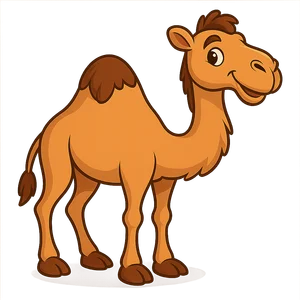
Dromedary Camel
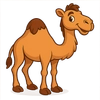
A large, single-humped camel native to the arid regions of the Middle East and the Horn of Africa…
Reads at Grades 3–5 Listens at Grades 1–5
Print & create
Answer keys·No prep·Free with an account
28 worksheets · answer keys · full story · quiz · Ages 8-10 · CEFR B1
Plus adds 244,000+ more stories in 27 languages, audio for every one, and printables for all of them.
Just want Dromedary Camel?
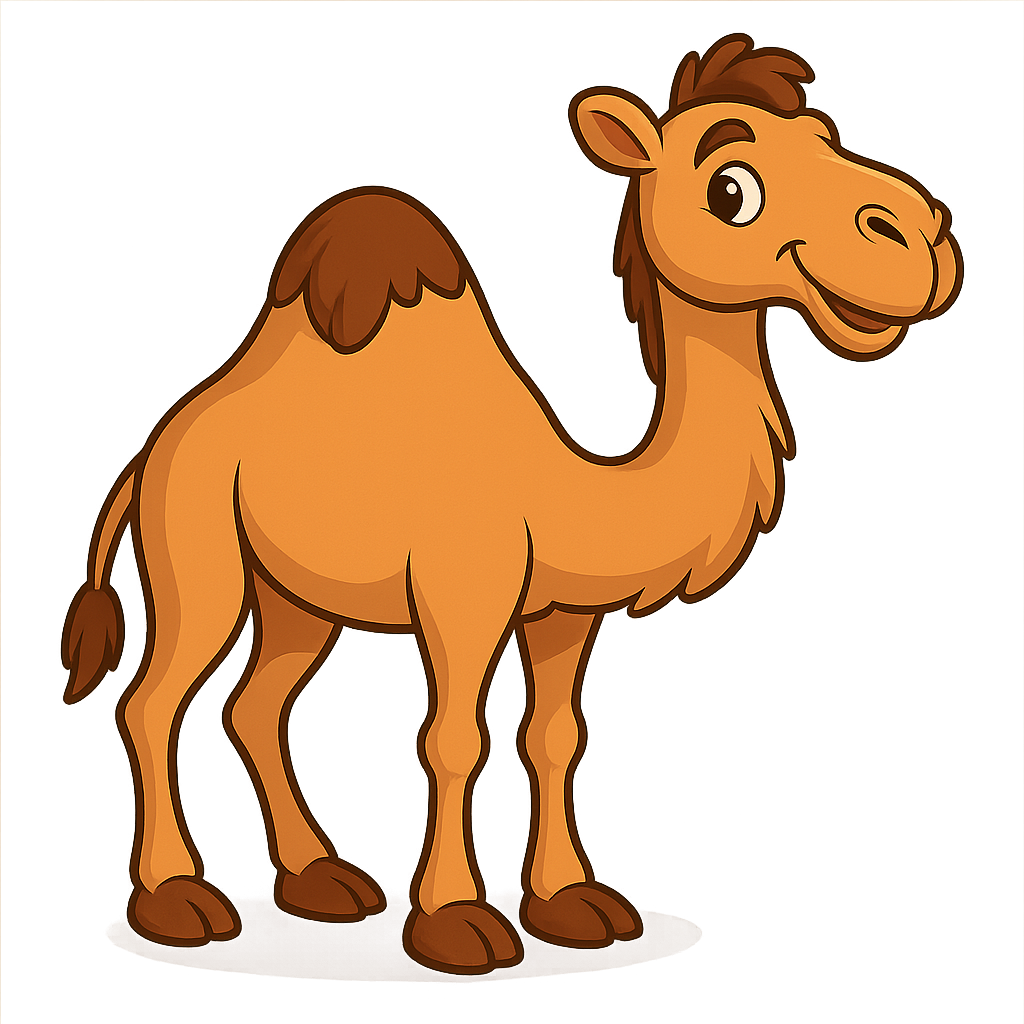
Hello from the desert. I am a Dromedary Camel, and this hot, sandy place is my home. The sun feels warm on my back, and the sand is always shifting beneath my feet. You have probably noticed my most famous feature: my single, large hump. Many people think I store water in it, but that is a common misunderstanding. My hump is actually a big lump of fat. This fat gives me energy when I am on long journeys and food is hard to find. It is like carrying my own personal pantry on my back, which is very useful in the vast desert where meals can be far apart.
My history with people is very long and important. It all started over 4,000 years ago, around 2000 BCE, when my ancestors were first domesticated on the Arabian Peninsula. This is when our partnership with humans began. Because we could carry heavy loads of goods across endless seas of sand, people gave us the nickname 'ships of the desert.' We were strong and reliable, making it possible for humans to travel and trade across difficult landscapes. Around the 3rd century CE, we were essential for the famous trade routes that connected different parts of the world, helping people exchange spices, silk, and other valuable items.
My body is perfectly built for this life. I have super-long eyelashes that work like tiny brooms, sweeping away sand to protect my eyes. When a big sandstorm kicks up, I can close my nostrils completely to keep from breathing in the dust. My feet are also special. They are wide and leathery, which helps me walk on top of the soft sand without sinking in. And if I find water, I can do something truly incredible. I can drink over 30 gallons in just a few minutes. This allows me to rehydrate quickly and helps me survive for long periods without another drink.
The Dromedary Camel's Journey
Hello from the desert. I am a Dromedary Camel, and this hot, sandy place is my home. The sun feels warm on my back, and the sand is always shifting beneath my feet. You have probably noticed my most famous feature: my single, large hump. Many people think I store water in it, but that is a common misunderstanding. My hump is actually a big lump of fat. This fat gives me energy when I am on long journeys and food is hard to find. It is like carrying my own personal pantry on my back, which is very useful in the vast desert where meals can be far apart.
My history with people is very long and important. It all started over 4,000 years ago, around 2000 BCE, when my ancestors were first domesticated on the Arabian Peninsula. This is when our partnership with humans began. Because we could carry heavy loads of goods across endless seas of sand, people gave us the nickname 'ships of the desert.' We were strong and reliable, making it possible for humans to travel and trade across difficult landscapes. Around the 3rd century CE, we were essential for the famous trade routes that connected different parts of the world, helping people exchange spices, silk, and other valuable items.
My body is perfectly built for this life. I have super-long eyelashes that work like tiny brooms, sweeping away sand to protect my eyes. When a big sandstorm kicks up, I can close my nostrils completely to keep from breathing in the dust. My feet are also special. They are wide and leathery, which helps me walk on top of the soft sand without sinking in. And if I find water, I can do something truly incredible. I can drink over 30 gallons in just a few minutes. This allows me to rehydrate quickly and helps me survive for long periods without another drink.
My family’s story has even traveled across the ocean. Starting in the 1840s, some of my relatives were brought to a new continent: Australia. People needed help exploring the vast, dry interior of the country, which is known as the Outback. My relatives were perfectly suited for the tough conditions there, which were very similar to our original desert homes. We did our job so well that a large population of my relatives now roams wild and free across the Australian Outback. It is the only place in the world where this is true.
Today, I am still a very important partner to people in many parts of the world. I help with transport, and I also provide milk, meat, and wool. My life isn't just about work, though. I also get to have fun participating in exciting camel races, which is a very popular sport in some places. My story is a reminder of how animals and humans can work together to achieve amazing things. It shows how wonderful it is to be perfectly suited for your home, from your special feet to the single hump on your back.
Wow facts
About
A large, single-humped camel native to the arid regions of the Middle East and the Horn of Africa, famously domesticated for transport and known for its remarkable adaptations to desert life.
Take a Quiz
Question 1 of 5
In the story, the camel says its ancestors were 'domesticated.' What does 'domesticated' mean in this context?
Explore next





Want to do even more?
Go beyond exploring. Unlock tools that turn every story into real learning.

Storypie Plus for families
Full stories, quizzes, and printables. Nights and car rides, sorted.
- Unlimited audio stories
- Create Mode: your child stars in the story
- Offline downloads
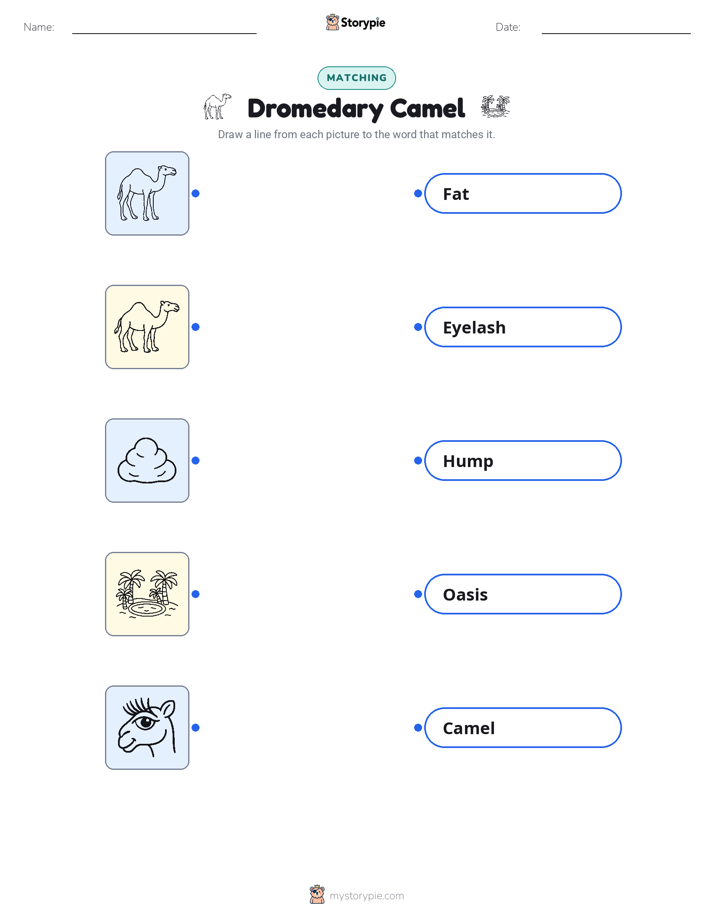
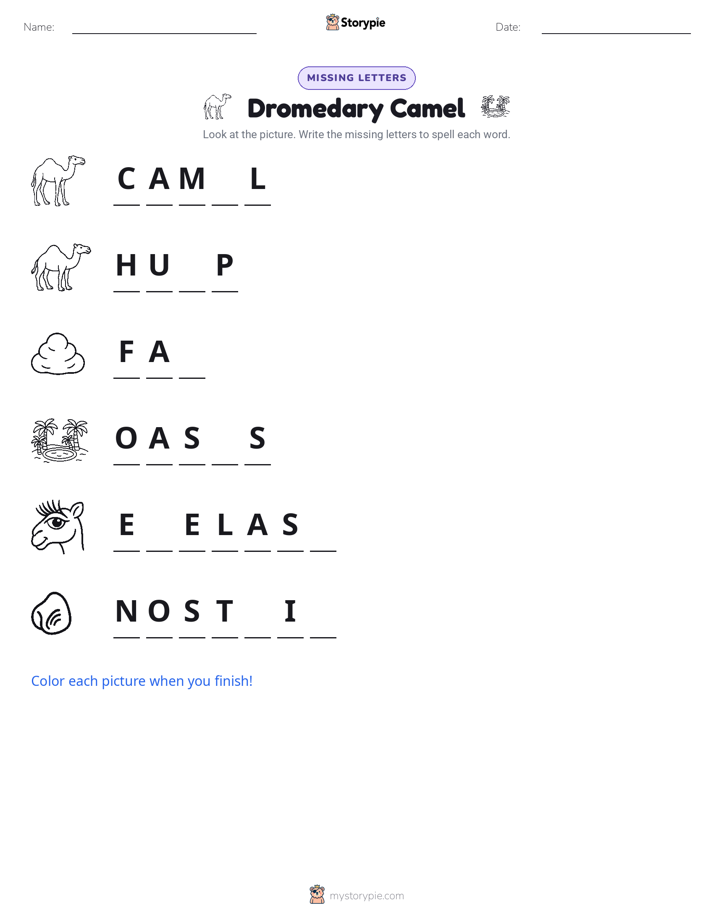
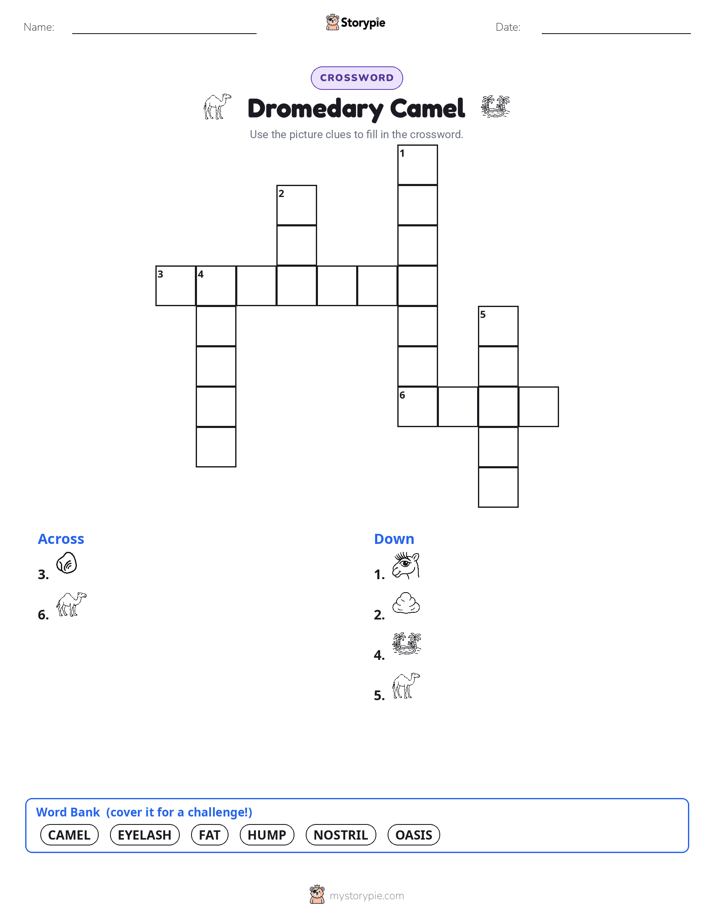
- Printable worksheets & coloring pages

Why Storypie for Schools
Students engaged. Prep in seconds. Evenings back to you.
- Worksheets & Quizzes
- Classroom Management
- Formative Assessment
- Custom Curriculum & Lesson Plans
- 27 Languages

Why Storypie for Homeschool
Curriculum done. They'll ask for more. Hours back in your day.
- Worksheet Generator
- First-Person Audio Stories
- Built-in Comprehension Quizzes
- Custom Curriculum & Lesson Plans
- Print & Go Activities