English

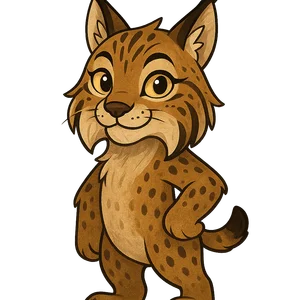
Iberian Lynx
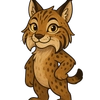
The Iberian Lynx is a wild cat species native to the Iberian Peninsula.
Reads at Grades 6–8 Listens at Grades 4–8
Print & create
Answer keys·No prep·Free with an account
28 worksheets · answer keys · full story · quiz · Ages 10-12 · CEFR B2
Plus adds 164,000+ more stories in 27 languages, audio for every one, and printables for all of them.
Just want Iberian Lynx?
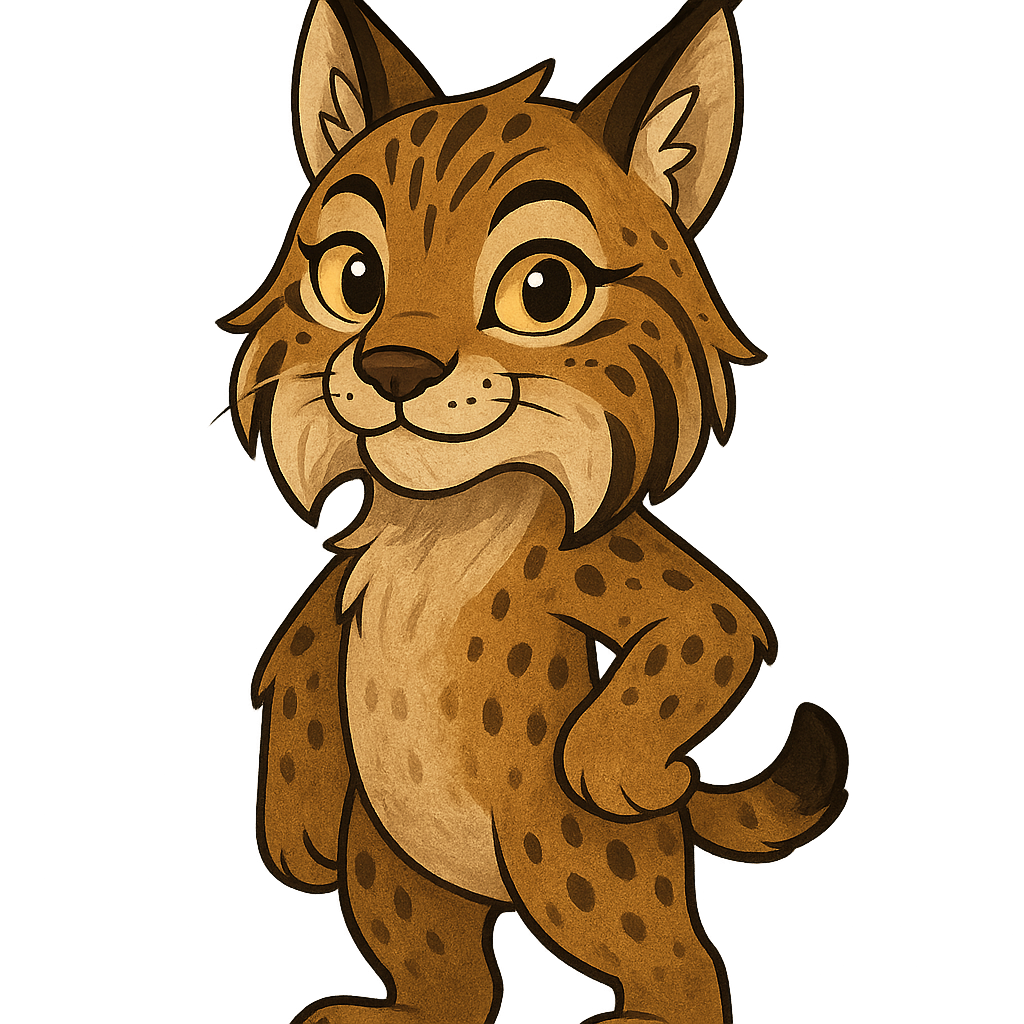
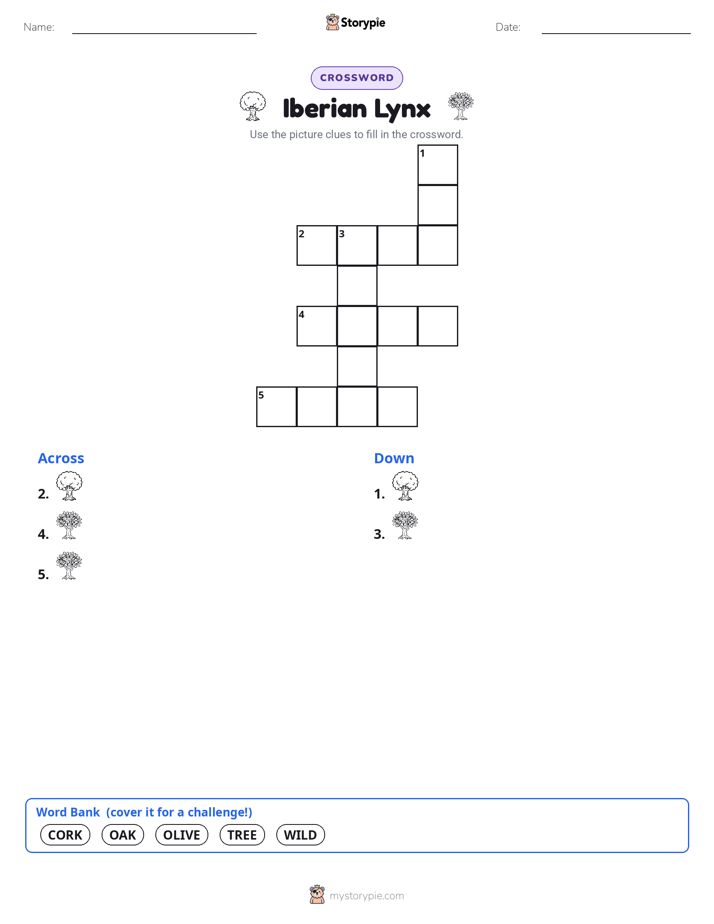
I am an Iberian Lynx, and my story is a whisper in the woods. I am one of the rarest wild cats on Earth, a ghost of the Mediterranean forest. My home is the sun-dappled scrublands of the Iberian Peninsula, a beautiful land of cork oaks and wild olive trees in Spain and Portugal. Nature designed me perfectly for this world. My ears are topped with long black tufts that act like antennas, catching the faintest rustle of leaves. A thick ruff of fur, like a long beard, frames my face, and my sandy, spotted coat is the perfect camouflage, helping me blend into the shifting light and shadows. I am a creature of solitude and stealth. For much of my life, I walk silently and alone, moving through the undergrowth unseen and unheard. My paws are large and padded, allowing me to tread softly as I patrol my territory, forever listening and watching.
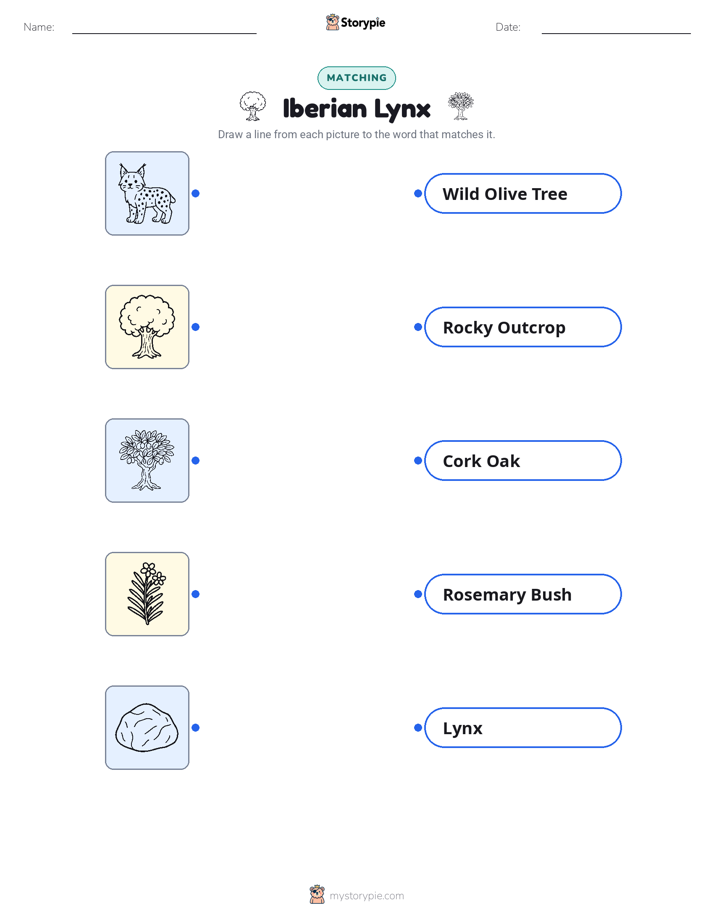
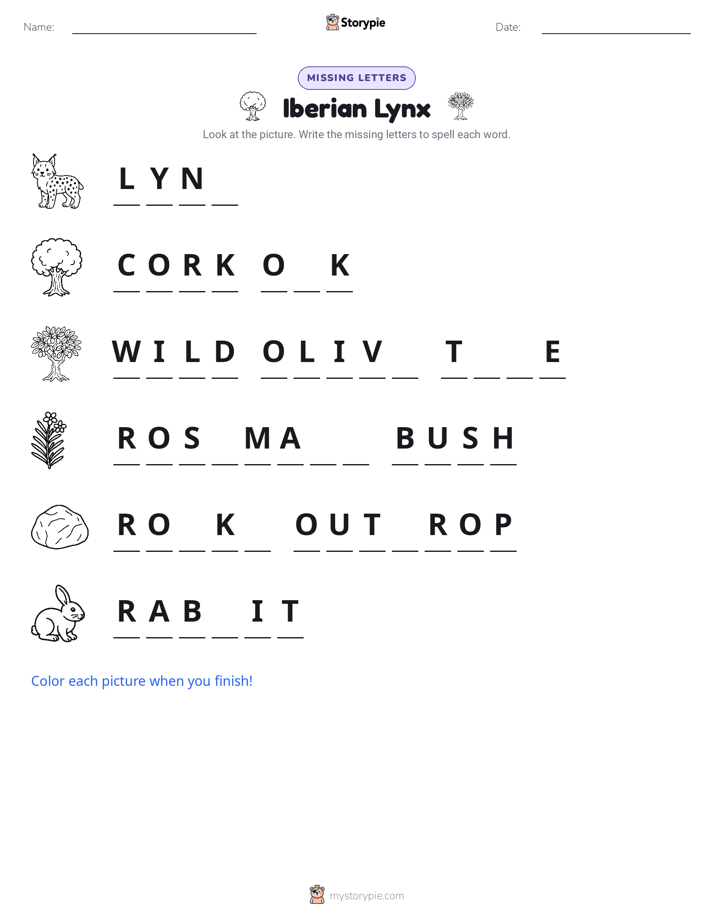
My life is built around a single, vital relationship: my connection to the European rabbit. I am what scientists call a specialist, which means my diet is almost entirely made up of this one animal. Hunting them is an art I have mastered. I can spend hours in complete stillness, hidden behind a rosemary bush or a rocky outcrop, my eyes fixed on a warren. When a rabbit emerges, I wait with immense patience for the perfect moment. Then, with a burst of power, I make a lightning-fast pounce. For generations, this was how my ancestors and I thrived. But this specialization became a great challenge. In the 1950s, a disease called myxomatosis swept through the peninsula, and then another disease followed in the 1980s. These sicknesses were devastating to the rabbit populations. Suddenly, the food that had sustained my family for centuries began to vanish from our homeland.
The Ghost of the Forest
I am an Iberian Lynx, and my story is a whisper in the woods. I am one of the rarest wild cats on Earth, a ghost of the Mediterranean forest. My home is the sun-dappled scrublands of the Iberian Peninsula, a beautiful land of cork oaks and wild olive trees in Spain and Portugal. Nature designed me perfectly for this world. My ears are topped with long black tufts that act like antennas, catching the faintest rustle of leaves. A thick ruff of fur, like a long beard, frames my face, and my sandy, spotted coat is the perfect camouflage, helping me blend into the shifting light and shadows. I am a creature of solitude and stealth. For much of my life, I walk silently and alone, moving through the undergrowth unseen and unheard. My paws are large and padded, allowing me to tread softly as I patrol my territory, forever listening and watching.
My life is built around a single, vital relationship: my connection to the European rabbit. I am what scientists call a specialist, which means my diet is almost entirely made up of this one animal. Hunting them is an art I have mastered. I can spend hours in complete stillness, hidden behind a rosemary bush or a rocky outcrop, my eyes fixed on a warren. When a rabbit emerges, I wait with immense patience for the perfect moment. Then, with a burst of power, I make a lightning-fast pounce. For generations, this was how my ancestors and I thrived. But this specialization became a great challenge. In the 1950s, a disease called myxomatosis swept through the peninsula, and then another disease followed in the 1980s. These sicknesses were devastating to the rabbit populations. Suddenly, the food that had sustained my family for centuries began to vanish from our homeland.
Losing our main food source was just the beginning of the most difficult time for my species. At the same time the rabbits were disappearing, our forest homes were shrinking. Human activity was changing the landscape, breaking our ancient territories into smaller and smaller fragments. With less food and less space to roam, our numbers began to fall at a frightening rate. The world grew quieter and lonelier for my kind. The whispers in the forest were fading. This decline reached a heartbreaking point by the year 2002. Wildlife experts searched across all of Spain and Portugal and could only find fewer than 100 of us left in the entire world. It was then that we were officially classified as 'Critically Endangered.' I learned this term means a species is just one single step away from extinction, from vanishing from the Earth forever.
Just when it seemed our story was about to end, a new chapter began, one filled with hope and collaboration. Humans, the same species whose activities had pushed us to the edge, realized we were in trouble and decided to act. In the early 2000s, an ambitious program was launched to save us. Scientists and conservationists worked together to create large, protected areas where our forest habitat could recover and where we would be safe from harm. They also started a careful breeding program in captivity. This was a critical step to ensure our survival. A truly exciting moment came on March 28th, 2005, when the first litter of lynx kittens was successfully born within the program. As our numbers slowly grew in these safe centers, the next step was to return us to our rightful homes. Starting in 2009, they began carefully releasing some of us back into protected areas of the wild where rabbit populations had become healthy again.
This careful, dedicated work has changed our destiny. My story is now a legacy of hope. On June 22nd, 2015, a major milestone was reached when our status was officially improved from 'Critically Endangered' to 'Endangered.' This was a sign that the efforts were working. The good news continued, and an announcement in 2023 shared that our population has grown to over 2,000 individuals, spread across Spain and Portugal. As a top predator, I play an important role in keeping the entire ecosystem healthy and balanced. My return to the forest helps everything from the plants to the rabbits I hunt. My journey proves that with dedication and care, it is possible to bring a species back from the very edge of disappearing. But it also reminds us that the work to protect our shared world is never truly finished, and we must continue to be guardians of the wild places.
Wow facts
About
The Iberian Lynx is a wild cat species native to the Iberian Peninsula. Once critically endangered, it had only 62 mature individuals remaining in 2002. It is now considered a major conservation success story, with its population recovering from fewer than 100 individuals in 2002 to over 2,000 by 2024.
Take a Quiz
Question 1 of 5
In your own words, what were the two main problems that caused the Iberian Lynx to become Critically Endangered?
Explore next






Want to do even more?
Go beyond exploring. Unlock tools that turn every story into real learning.

Storypie Plus for families
Full stories, quizzes, and printables. Nights and car rides, sorted.
- Unlimited audio stories
- Create Mode: your child stars in the story
- Offline downloads
- Printable worksheets & coloring pages

Why Storypie for Schools
Students engaged. Prep in seconds. Evenings back to you.
- Worksheets & Quizzes
- Classroom Management
- Formative Assessment
- Custom Curriculum & Lesson Plans
- 27 Languages

Why Storypie for Homeschool
Curriculum done. They'll ask for more. Hours back in your day.
- Worksheet Generator
- First-Person Audio Stories
- Built-in Comprehension Quizzes
- Custom Curriculum & Lesson Plans
- Print & Go Activities