English

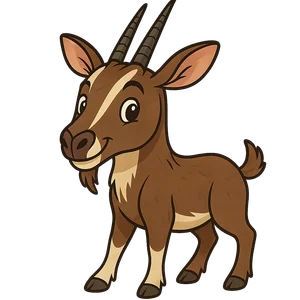
Saola
The Saola, often called the 'Asian Unicorn,' is one of the world's rarest large mammals…
Reads at Grades 6–8 Listens at Grades 4–8
Print & create
Answer keys·No prep·Free with an account
28 worksheets · answer keys · full story · quiz · Ages 10-12 · CEFR B2
Plus adds 164,000+ more stories in 27 languages, audio for every one, and printables for all of them.
Just want Saola?
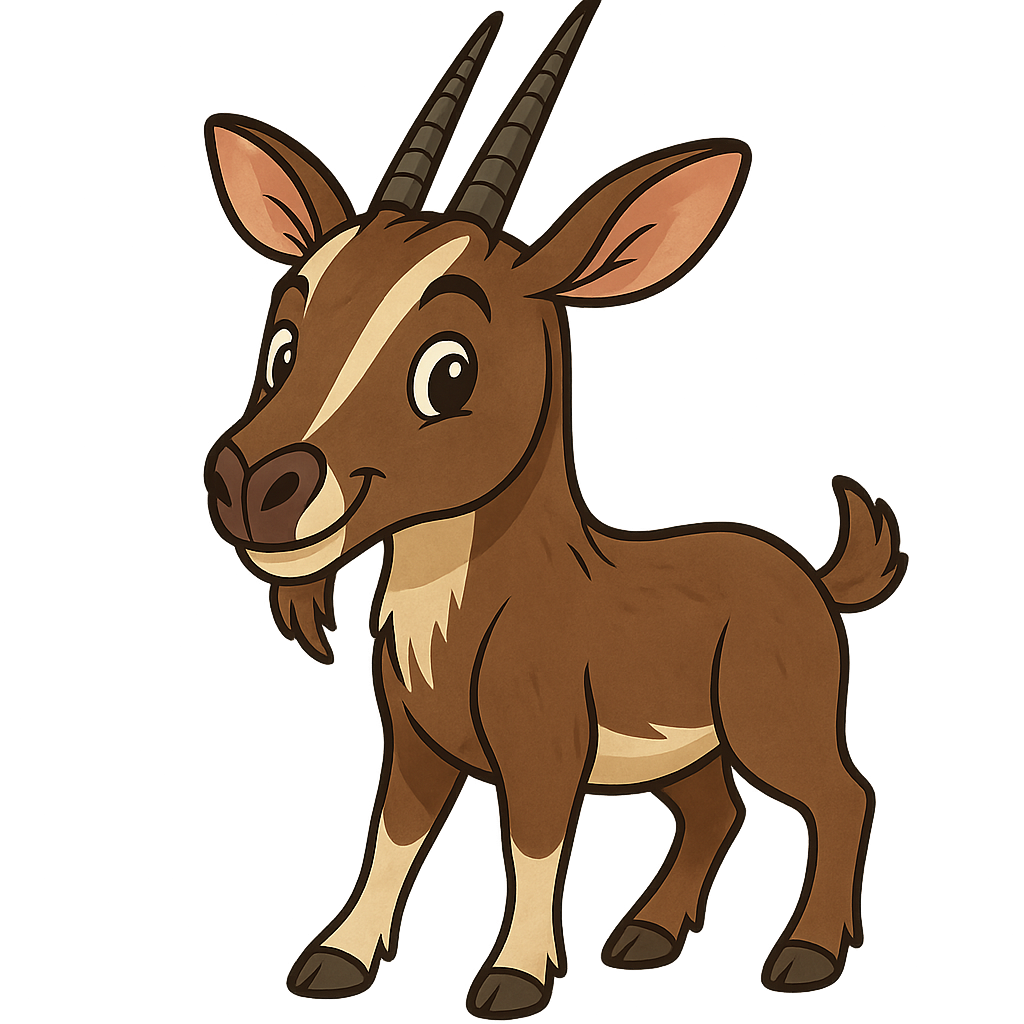
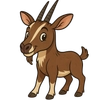
Hello, I am a Saola. Some people who have heard whispers of my kind call me the 'Asian Unicorn,' not because I am a creature of myth, but because I am so rarely seen. My home is a secret, misty world tucked away in the Annamite Mountains of Vietnam and Laos. Here, the forests are dense and ancient, and the valleys are so steep that they have hidden me for thousands of years. I am a quiet and solitary animal, preferring the company of shadows to the open sun. My coat is a deep, chocolate-brown, which helps me blend into the forest floor. The most striking thing about me are my two long, parallel horns that can grow up to half a meter long, and the unique white markings that decorate my face. For centuries upon centuries, only the local people who shared these mountains with me knew that I was real. I spend my days moving silently through the undergrowth, browsing for tender leaves and figs that grow near the cool, clear streams that carve through my territory. My life is one of quiet solitude, a secret kept by the mountains themselves.
The world outside my forest home did not know I existed until one fateful day in May of 1992. A team of scientists from Vietnam's Ministry of Forestry and the World Wide Fund for Nature (WWF) was conducting a survey in the Vu Quang Nature Reserve, a part of my mountain range. They did not see me slipping through the trees, as I am far too shy for that. Instead, they found my horns displayed in a local hunter's home. They knew immediately that they had stumbled upon something extraordinary. The discovery of a large mammal completely new to science was a momentous event, and it sent ripples of excitement through the scientific community. A few years later, in 1996, there was an attempt to study one of my kind, a female, in captivity. It was a sad time, as she did not survive for long away from her wild home. However, from that difficult experience, biologists like William Robichaud learned invaluable lessons about us. They were able to confirm just how unique my species is, solidifying our place as one of the most remarkable zoological finds of the 20th century.
The Asian Unicorn's Secret
Hello, I am a Saola. Some people who have heard whispers of my kind call me the 'Asian Unicorn,' not because I am a creature of myth, but because I am so rarely seen. My home is a secret, misty world tucked away in the Annamite Mountains of Vietnam and Laos. Here, the forests are dense and ancient, and the valleys are so steep that they have hidden me for thousands of years. I am a quiet and solitary animal, preferring the company of shadows to the open sun. My coat is a deep, chocolate-brown, which helps me blend into the forest floor. The most striking thing about me are my two long, parallel horns that can grow up to half a meter long, and the unique white markings that decorate my face. For centuries upon centuries, only the local people who shared these mountains with me knew that I was real. I spend my days moving silently through the undergrowth, browsing for tender leaves and figs that grow near the cool, clear streams that carve through my territory. My life is one of quiet solitude, a secret kept by the mountains themselves.
The world outside my forest home did not know I existed until one fateful day in May of 1992. A team of scientists from Vietnam's Ministry of Forestry and the World Wide Fund for Nature (WWF) was conducting a survey in the Vu Quang Nature Reserve, a part of my mountain range. They did not see me slipping through the trees, as I am far too shy for that. Instead, they found my horns displayed in a local hunter's home. They knew immediately that they had stumbled upon something extraordinary. The discovery of a large mammal completely new to science was a momentous event, and it sent ripples of excitement through the scientific community. A few years later, in 1996, there was an attempt to study one of my kind, a female, in captivity. It was a sad time, as she did not survive for long away from her wild home. However, from that difficult experience, biologists like William Robichaud learned invaluable lessons about us. They were able to confirm just how unique my species is, solidifying our place as one of the most remarkable zoological finds of the 20th century.
Despite the excitement of my discovery, my existence has become increasingly fragile. My greatest challenge is not a natural predator that stalks me through the forest, but a silent and indiscriminate danger: wire snares. These traps are not set for me, but for other animals like wild pigs and deer. I am an unfortunate victim, and my relatives and I often get caught by accident. This is the primary reason why our numbers have become so dangerously small. Alongside this threat, my forest home is shrinking as trees are cut down, leaving me with less space to roam and hide. The world has had very few glimpses of me since my discovery. There was a brief capture of a male Saola in 2010, but like the female before him, he did not survive. Then, on September 7th, 2013, there was a moment of hope. A camera trap, a hidden camera activated by movement, took a picture of one of my cousins in Vietnam. It was the first photograph of a Saola in the wild in that country in over a decade. It was a powerful, fleeting reminder to the world that we are still here, living our secret lives in the heart of the forest.
My story, however, is not over. My continued existence is living proof that our planet still holds incredible secrets and wonders yet to be fully understood. I am a symbol of the astonishing biodiversity of the Annamite Mountains, a living treasure of this unique ecosystem. My shy and mysterious nature has inspired dedicated people to protect my home. Groups like the Saola Foundation work tirelessly, removing thousands of deadly snares from the forest to make it safe for me and all the other creatures who live here. Though I am a quiet presence, my role in this ecosystem is important. As a forest browser, I help shape the plant life, influencing the growth and health of the vegetation around me. My survival is directly connected to the well-being of the entire forest. My story is a quiet call, a whisper from the misty mountains, urging humanity to protect the world's last wild and mysterious places, for they hold secrets far more precious than anyone can imagine.
Wow facts
About
The Saola, often called the 'Asian Unicorn,' is one of the world's rarest large mammals, native to the Annamite Mountains of Vietnam and Laos. It was only discovered by science in 1992 and is critically endangered.
Take a Quiz
Question 1 of 5
What is the main problem facing the Saola today, and what is one action being taken to resolve it?
Explore next





Want to do even more?
Go beyond exploring. Unlock tools that turn every story into real learning.

Storypie Plus for families
Full stories, quizzes, and printables. Nights and car rides, sorted.
- Unlimited audio stories
- Create Mode: your child stars in the story
- Offline downloads
- Printable worksheets & coloring pages

Why Storypie for Schools
Students engaged. Prep in seconds. Evenings back to you.
- Worksheets & Quizzes
- Classroom Management
- Formative Assessment
- Custom Curriculum & Lesson Plans
- 27 Languages

Why Storypie for Homeschool
Curriculum done. They'll ask for more. Hours back in your day.
- Worksheet Generator
- First-Person Audio Stories
- Built-in Comprehension Quizzes
- Custom Curriculum & Lesson Plans
- Print & Go Activities