English

Abbas ibn Firnas
Abbas ibn Firnas was a 9th-century Andalusian polymath, inventor, physician, and poet…
Reads at Grades 6–8 Listens at Grades 4–8
Print & create
Answer keys·No prep·Free with an account
28 worksheets · answer keys · full story · quiz · Ages 10-12 · CEFR B2
Plus adds 208,000+ more stories in 27 languages, audio for every one, and printables for all of them.
Just want Abbas ibn Firnas?
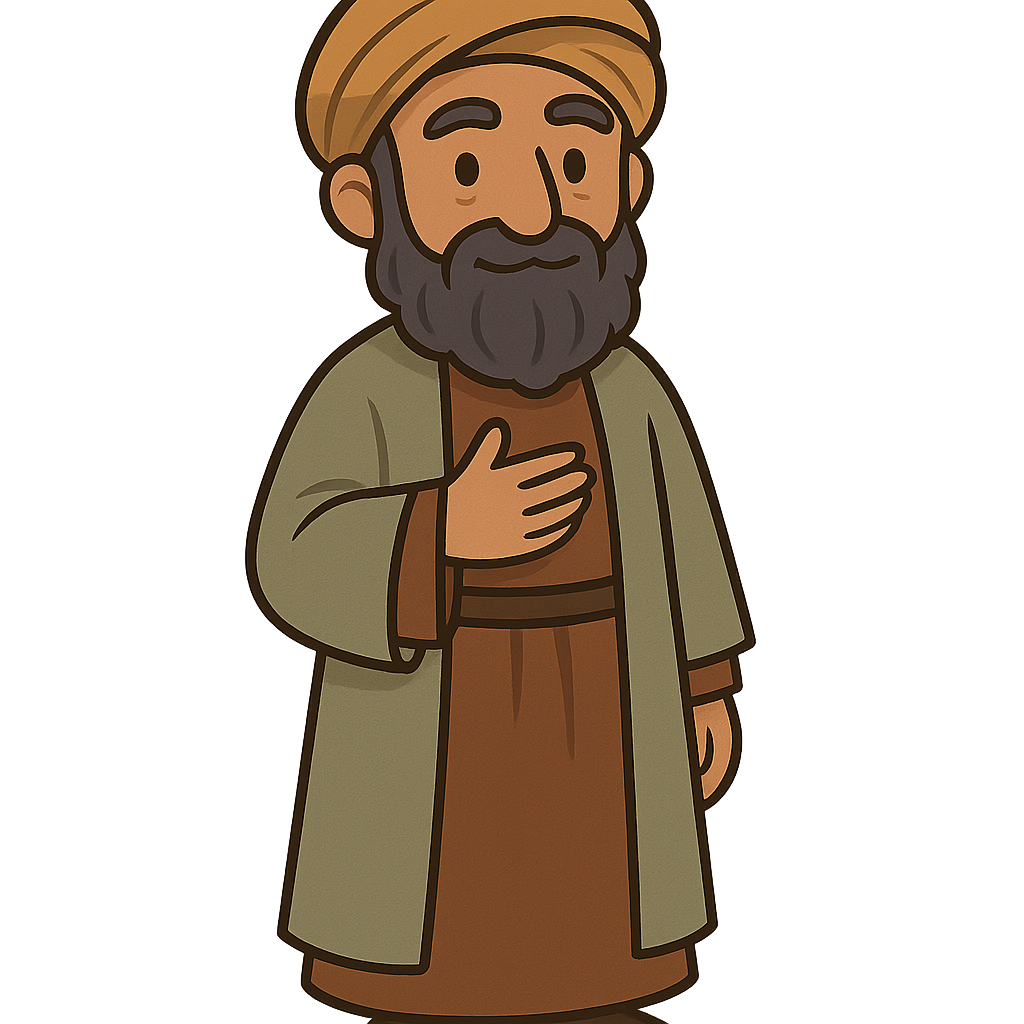
Hello, my name is Abbas ibn Firnas. I was born in the year 810 in a beautiful city called Ronda, which was part of a region known as Al-Andalus, now modern-day Spain. Even as a child, my mind was always buzzing with questions. I found joy in writing poetry and playing music, but my greatest passion was looking up at the night sky. I would gaze at the stars and planets, consumed with curiosity about how the universe worked. To pursue my endless questions, I moved to the magnificent city of Córdoba. During the 9th century, Córdoba was not just a city; it was a vibrant heart of knowledge and discovery in what historians now call the Islamic Golden Age. Scholars, artists, and scientists from all over the world gathered there. The streets buzzed with different languages, and the great library was filled with scrolls and books on every topic imaginable. It was the perfect environment for someone like me. I immersed myself in my studies, learning everything I could about astronomy, engineering, medicine, and chemistry. This city, with its spirit of innovation, challenged me to push the boundaries of what was known.
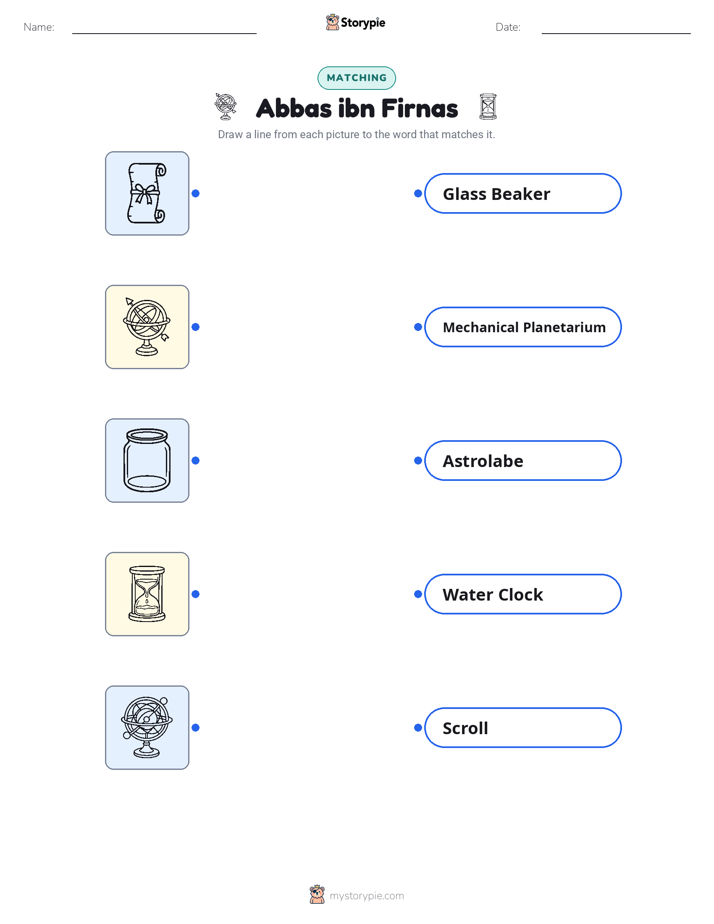
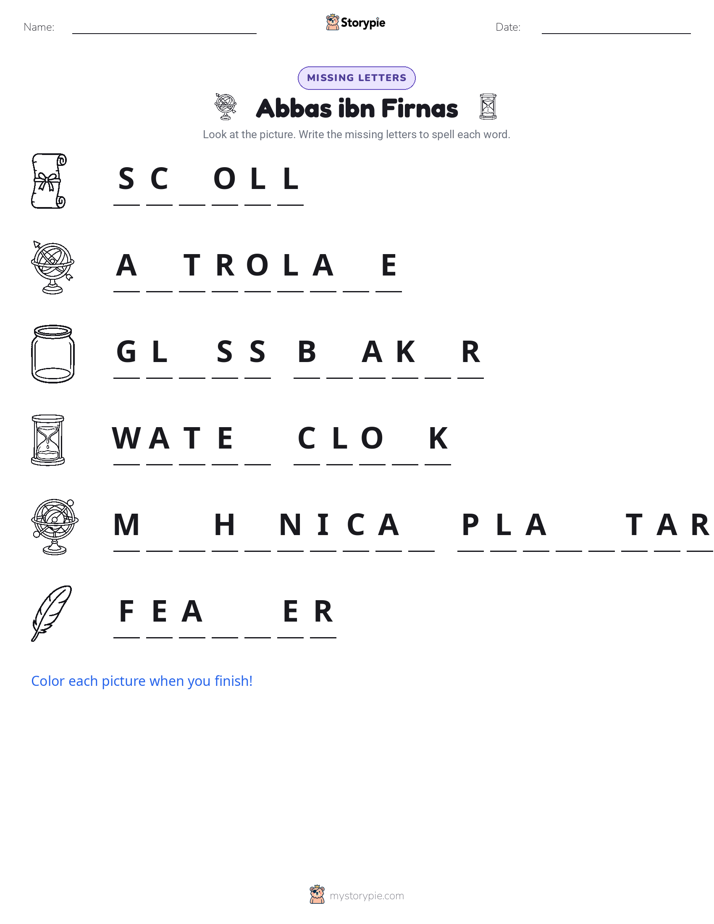
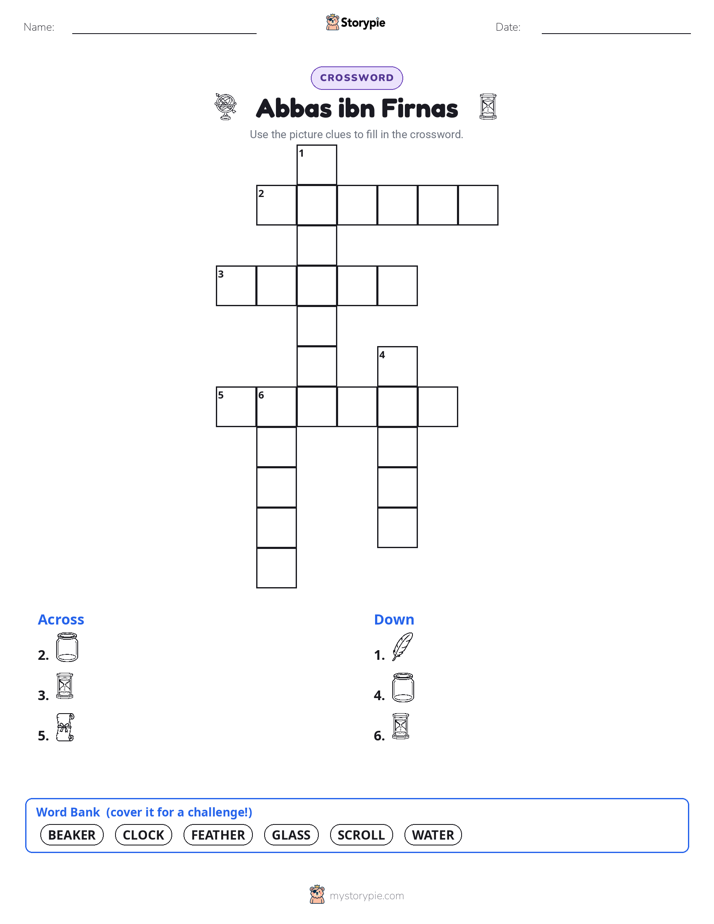
In the bustling intellectual atmosphere of Córdoba, I quickly earned a reputation as an inventor. For me, learning from books was only the beginning. The real excitement was in applying that knowledge to create new things that could help people or inspire wonder. One of my proudest achievements was developing a process to create crystal-clear glass. At the time, most glass was cloudy or colored. By experimenting with sand and stones, I discovered a formula for manufacturing transparent glass, a technique unknown in Europe then. I also built a marvelous planetarium right inside my home. It was a large, mechanical sphere that accurately represented the movements of the sun, moon, planets, and stars. It was more than just a model; it was an experience. With the turn of a crank, I could simulate the cosmos, and I even engineered it to create flashes of light and rumbling sounds that mimicked lightning and thunder. To help my community, I designed a sophisticated water clock I called the 'al-Maqata.' This device used the steady flow of water to measure time with remarkable precision, serving as an essential tool for daily life in a time before mechanical clocks were common.
The Dreamer of Córdoba: The Story of Abbas ibn Firnas
Hello, my name is Abbas ibn Firnas. I was born in the year 810 in a beautiful city called Ronda, which was part of a region known as Al-Andalus, now modern-day Spain. Even as a child, my mind was always buzzing with questions. I found joy in writing poetry and playing music, but my greatest passion was looking up at the night sky. I would gaze at the stars and planets, consumed with curiosity about how the universe worked. To pursue my endless questions, I moved to the magnificent city of Córdoba. During the 9th century, Córdoba was not just a city; it was a vibrant heart of knowledge and discovery in what historians now call the Islamic Golden Age. Scholars, artists, and scientists from all over the world gathered there. The streets buzzed with different languages, and the great library was filled with scrolls and books on every topic imaginable. It was the perfect environment for someone like me. I immersed myself in my studies, learning everything I could about astronomy, engineering, medicine, and chemistry. This city, with its spirit of innovation, challenged me to push the boundaries of what was known.
In the bustling intellectual atmosphere of Córdoba, I quickly earned a reputation as an inventor. For me, learning from books was only the beginning. The real excitement was in applying that knowledge to create new things that could help people or inspire wonder. One of my proudest achievements was developing a process to create crystal-clear glass. At the time, most glass was cloudy or colored. By experimenting with sand and stones, I discovered a formula for manufacturing transparent glass, a technique unknown in Europe then. I also built a marvelous planetarium right inside my home. It was a large, mechanical sphere that accurately represented the movements of the sun, moon, planets, and stars. It was more than just a model; it was an experience. With the turn of a crank, I could simulate the cosmos, and I even engineered it to create flashes of light and rumbling sounds that mimicked lightning and thunder. To help my community, I designed a sophisticated water clock I called the 'al-Maqata.' This device used the steady flow of water to measure time with remarkable precision, serving as an essential tool for daily life in a time before mechanical clocks were common.
While my inventions on the ground brought me satisfaction, my eyes were always drawn upward, to the sky. Nothing in nature fascinated me more than the flight of birds. I would spend countless hours in the fields outside Córdoba, observing them with the focus of a scientist. I watched eagles soar effortlessly and saw how small sparrows could dart and turn with incredible agility. Their freedom in the air was mesmerizing, and a powerful thought began to form in my mind: 'If a creature of flesh and bone can master the sky, why can't a human?' This question became my ultimate challenge. I moved from simple admiration to intense scientific study. I analyzed the anatomy of birds, noting the intricate structure of their wings and how they used their tails as rudders for steering and as brakes for landing. I realized flight wasn't magic; it was a matter of physics and engineering. After years of careful observation and countless drawings, I felt ready to turn my research into an experiment. I began to construct my own flying apparatus. I built a frame from a light but sturdy wood and then meticulously covered the entire device with real feathers, stitched together to create two large wings.
The day finally came in the year 875. By then, I was no longer a young man; my hair was grey, but the fire of my dream burned as brightly as ever. I carried my flying machine to a hill near Córdoba known as Jabal al-'Arus, or the 'Mountain of the Bride.' Word of my audacious plan had spread throughout the city, and a large crowd of curious onlookers had gathered below. I strapped the feathered wings securely to my body, felt the wind against my face, and took a moment to steady my nerves. Then, with a deep breath and a powerful leap, I launched myself from the edge of the hill and into the open air. For a few glorious moments, it worked. I was not falling; I was gliding. I soared through the sky, maneuvering on the air currents just as I had seen the birds do. The flight itself was a stunning success. The landing, however, was another matter. I came down much too fast and hit the ground hard, severely injuring my back. In my careful study of birds, I had overlooked one critical component: a tail. I realized too late that birds use their tails to create drag, slow their descent, and achieve a stable landing.
The back injury from that landing stayed with me for the rest of my life, a constant reminder of my ambitious flight. But even with the pain, I never once regretted my leap from Jabal al-'Arus. I continued my work as a poet and a scientist in Córdoba, sharing my knowledge with a new generation of thinkers until I passed from this world in the year 887. I lived to be about 77 years old. Though my landing was rough, my attempt was far from a failure. It was a pioneering step, a demonstration that with careful observation, courage, and scientific principles, humans could one day truly conquer the skies. Today, my story lives on. I am remembered as a pioneer of aviation, one of the very first to make a controlled flight. In Córdoba, a bridge is named in my honor. Statues have been erected to commemorate my leap. And far above the world I so longed to soar over, a crater on the Moon bears the name Ibn Firnas, forever linking my dream to the stars I loved to watch as a boy.
Wow facts
About
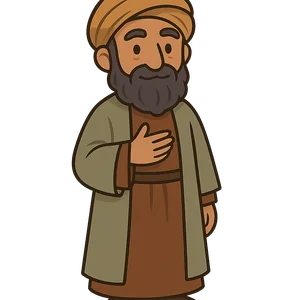
Abbas ibn Firnas was a 9th-century Andalusian polymath, inventor, physician, and poet, primarily known for being one of history's earliest pioneers in aviation.
Take a Quiz
Question 1 of 5
What was the main problem that caused Abbas ibn Firnas to have a rough landing during his flight in 875?
Explore next





Want to do even more?
Go beyond exploring. Unlock tools that turn every story into real learning.

Storypie Plus for families
Full stories, quizzes, and printables. Nights and car rides, sorted.
- Unlimited audio stories
- Create Mode: your child stars in the story
- Offline downloads
- Printable worksheets & coloring pages

Why Storypie for Schools
Students engaged. Prep in seconds. Evenings back to you.
- Worksheets & Quizzes
- Classroom Management
- Formative Assessment
- Custom Curriculum & Lesson Plans
- 27 Languages

Why Storypie for Homeschool
Curriculum done. They'll ask for more. Hours back in your day.
- Worksheet Generator
- First-Person Audio Stories
- Built-in Comprehension Quizzes
- Custom Curriculum & Lesson Plans
- Print & Go Activities