English

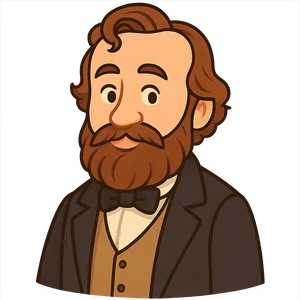
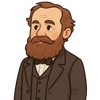
Adolphe Sax
Adolphe Sax was a Belgian inventor and musician who is best known for inventing the saxophone in the 1840s.
Reads at Grades 6–8 Listens at Grades 4–8
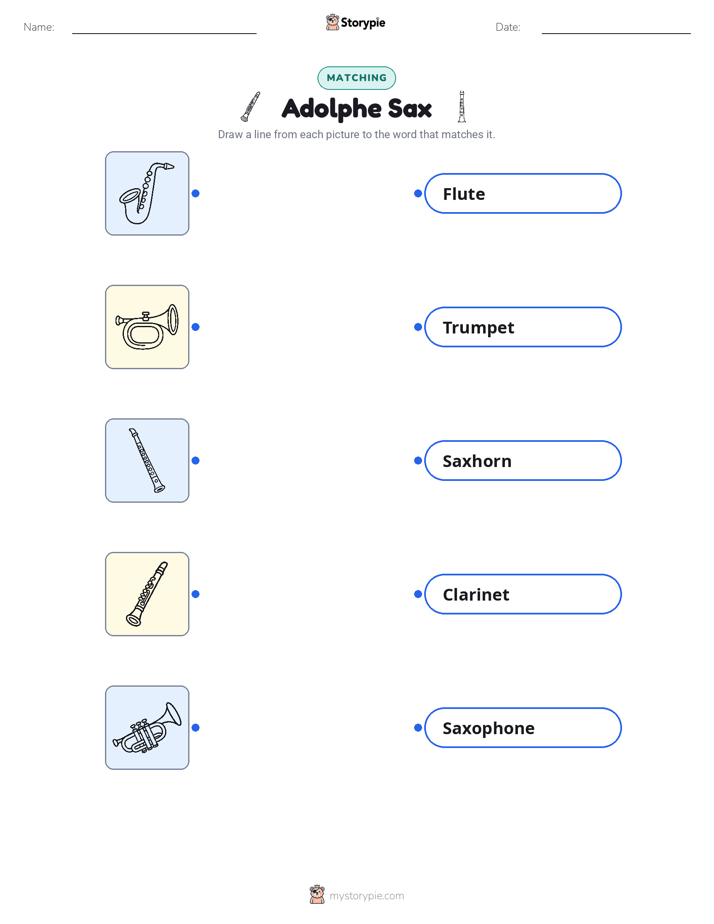
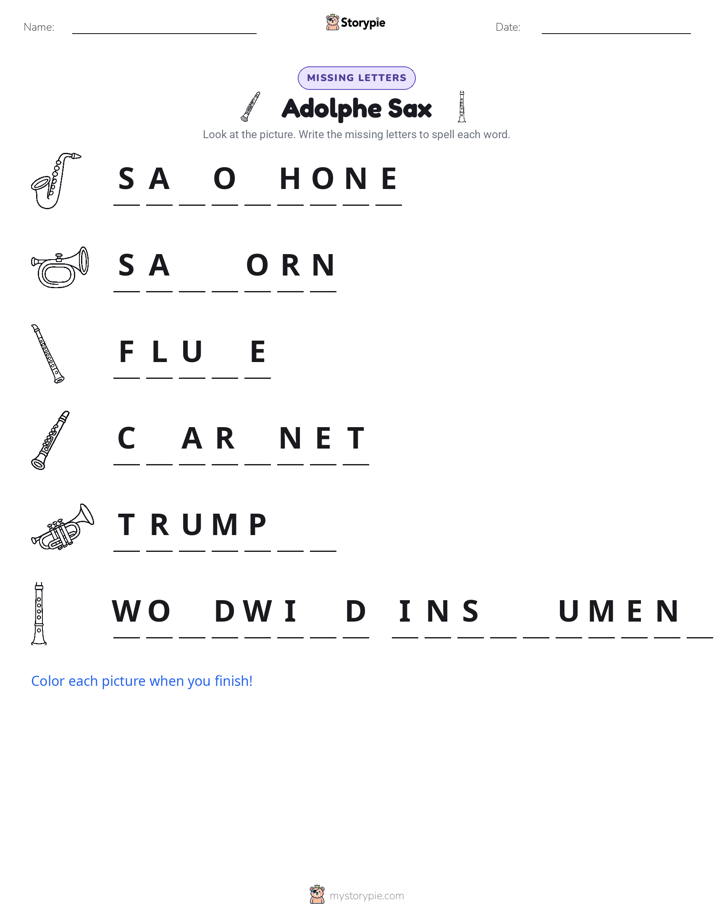
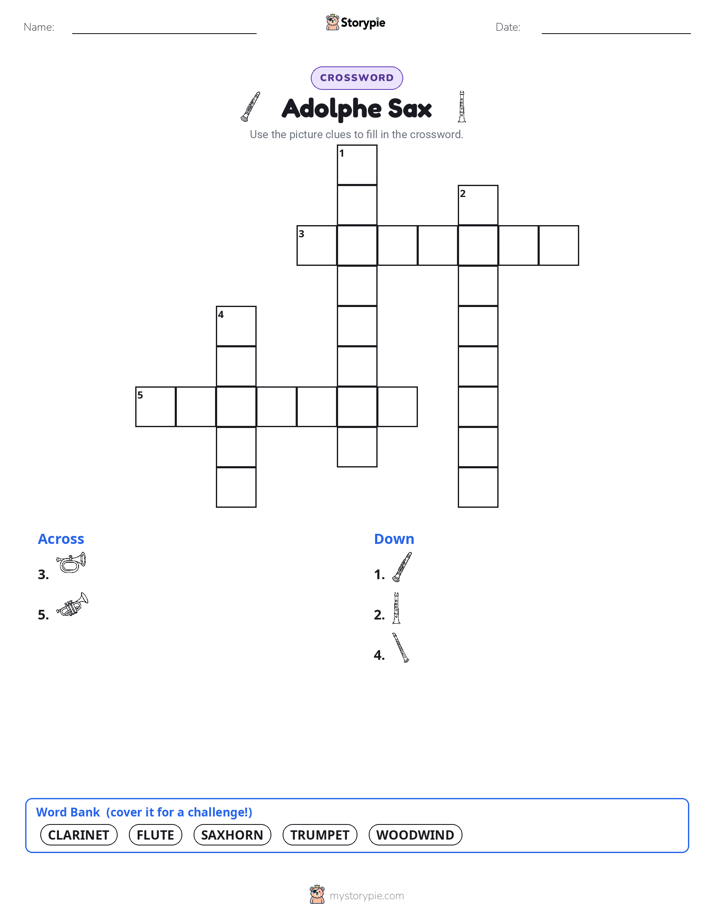
Print & create
Answer keys·No prep·Free with an account
28 worksheets · answer keys · full story · quiz · Ages 10-12 · CEFR B2
Plus adds 208,000+ more stories in 27 languages, audio for every one, and printables for all of them.
Just want Adolphe Sax?
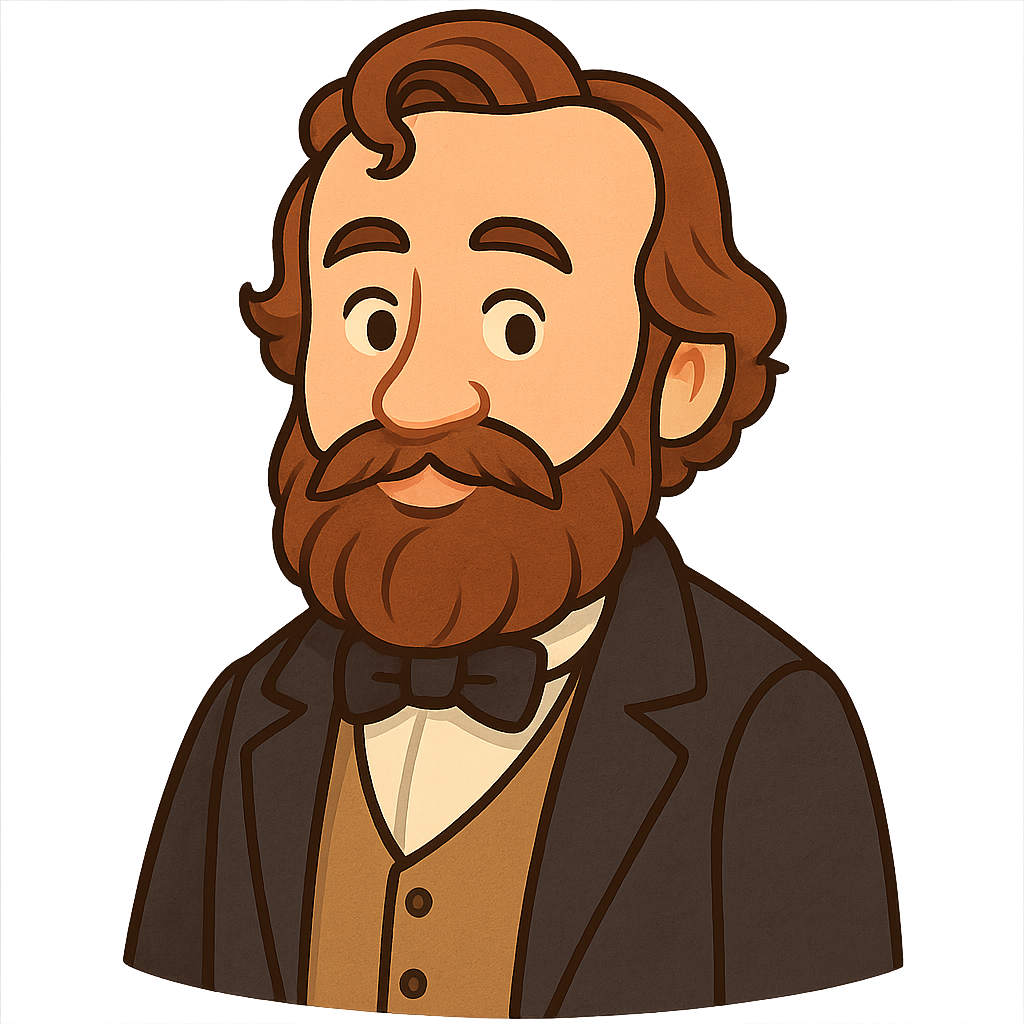
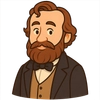
Hello. My name is Antoine-Joseph Sax, but everyone always called me Adolphe. I was born on November 6th, 1814, in a town named Dinant, which is in the country of Belgium. My father, Charles-Joseph, was a well-known maker of musical instruments, and his workshop was my childhood playground. It was a wonderful place, filled with the smells of wood and metal and the sounds of music being born. While I was surrounded by instruments, I was also quite accident-prone. My mother even called me 'the little ghost' because I seemed to survive all sorts of mishaps, from falling down stairs to accidentally drinking a bowl of poison. Despite my clumsiness, my true passion was learning my father's craft. I spent my time studying the flute and the clarinet at the Royal Conservatory of Brussels, eager to follow in his footsteps.
As I grew up, simply playing instruments wasn't enough for me; I wanted to make them better. Around the year 1838, I took on the challenge of redesigning the bass clarinet and succeeded in making its sound much richer and more powerful. But an even bigger idea was forming in my mind. I observed that in an orchestra, the woodwind instruments had a gentle, flexible sound, while the brass instruments were loud and commanding. There was a gap between them, a sound that didn't exist yet. I began to dream of creating an entirely new instrument that could combine the power of brass with the agility and expressiveness of a woodwind. With this ambitious dream guiding me, I made a life-changing decision in 1842. I moved to Paris, France, which was the musical center of the world at that time, determined to bring my idea to life.
Adolphe Sax
Hello. My name is Antoine-Joseph Sax, but everyone always called me Adolphe. I was born on November 6th, 1814, in a town named Dinant, which is in the country of Belgium. My father, Charles-Joseph, was a well-known maker of musical instruments, and his workshop was my childhood playground. It was a wonderful place, filled with the smells of wood and metal and the sounds of music being born. While I was surrounded by instruments, I was also quite accident-prone. My mother even called me 'the little ghost' because I seemed to survive all sorts of mishaps, from falling down stairs to accidentally drinking a bowl of poison. Despite my clumsiness, my true passion was learning my father's craft. I spent my time studying the flute and the clarinet at the Royal Conservatory of Brussels, eager to follow in his footsteps.
As I grew up, simply playing instruments wasn't enough for me; I wanted to make them better. Around the year 1838, I took on the challenge of redesigning the bass clarinet and succeeded in making its sound much richer and more powerful. But an even bigger idea was forming in my mind. I observed that in an orchestra, the woodwind instruments had a gentle, flexible sound, while the brass instruments were loud and commanding. There was a gap between them, a sound that didn't exist yet. I began to dream of creating an entirely new instrument that could combine the power of brass with the agility and expressiveness of a woodwind. With this ambitious dream guiding me, I made a life-changing decision in 1842. I moved to Paris, France, which was the musical center of the world at that time, determined to bring my idea to life.
Life in Paris was a whirlwind of hard work. In my small shop, I experimented tirelessly, combining different elements to create the sound I heard in my head. I finally crafted my new instrument. It had a conical metal body like a trumpet, but it used a mouthpiece with a single reed, just like a clarinet. This unique combination produced a sound that was completely new to the world—it was smooth, strong, and had a quality that many people said was almost like a human voice. The famous composer Hector Berlioz heard it and was so impressed that he wrote a glowing article about my invention, which brought it a lot of attention. My biggest opportunity arrived in 1845, when the French Army organized a contest to choose new instruments for its military bands. It was a 'battle of the bands,' and my instruments won. On June 28th, 1846, my hard work was officially recognized when I received the patent for an entire family of these new instruments, which I named after myself: the saxophone.
Unfortunately, my success in Paris created a lot of envy among other instrument makers. They saw my saxophone not as an innovation, but as a threat to their own businesses. They formed a group to try and stop me. They spread rumors that I had stolen the idea for the saxophone and dragged me into court over and over again. These constant legal battles were draining, both emotionally and financially. The cost of defending my invention was so high that it led me to declare bankruptcy three separate times, in 1852, 1873, and again in 1877. It was a deeply stressful and difficult period of my life, but I refused to give up on my creation. A moment of great pride came in 1857, when I was appointed as the first-ever saxophone professor at the prestigious Paris Conservatory. There, I had the honor of teaching a new generation of musicians how to play the instrument I had fought so hard for.
I spent the rest of my years inventing, teaching, and running my workshop in Paris. I lived to be 79 years old and passed away in 1894. Although I faced many financial struggles and professional rivalries, I never lost faith in my inventions. In my lifetime, I never got to see the saxophone achieve the worldwide fame it has today. Decades after my death, my instrument traveled across the Atlantic Ocean to America, where it became the star of an exciting new style of music called jazz. Today, the saxophone is one of the most beloved instruments in the world, and its unique voice is celebrated in countless musical genres, from classical to rock and roll. It fills me with pride to know that my dream of a new sound continues to bring joy to people and inspire musicians everywhere.
Wow facts
About
Adolphe Sax was a Belgian inventor and musician who is best known for inventing the saxophone in the 1840s.
Take a Quiz
Question 1 of 5
Which of these events happened *after* Adolphe Sax received the patent for the saxophone in 1846?
Explore next



Want to do even more?
Go beyond exploring. Unlock tools that turn every story into real learning.

Storypie Plus for families
Full stories, quizzes, and printables. Nights and car rides, sorted.
- Unlimited audio stories
- Create Mode: your child stars in the story
- Offline downloads
- Printable worksheets & coloring pages

Why Storypie for Schools
Students engaged. Prep in seconds. Evenings back to you.
- Worksheets & Quizzes
- Classroom Management
- Formative Assessment
- Custom Curriculum & Lesson Plans
- 27 Languages

Why Storypie for Homeschool
Curriculum done. They'll ask for more. Hours back in your day.
- Worksheet Generator
- First-Person Audio Stories
- Built-in Comprehension Quizzes
- Custom Curriculum & Lesson Plans
- Print & Go Activities