English

Amelia Bloomer
Amelia Bloomer was a 19th-century American women's rights and temperance advocate…
Reads at Grades 6–8 Listens at Grades 4–8
Print & create
Answer keys·No prep·Free with an account
28 worksheets · answer keys · full story · quiz · Ages 10-12 · CEFR B2
Plus adds 279,000+ more stories in 27 languages, audio for every one, and printables for all of them.
Just want Amelia Bloomer?
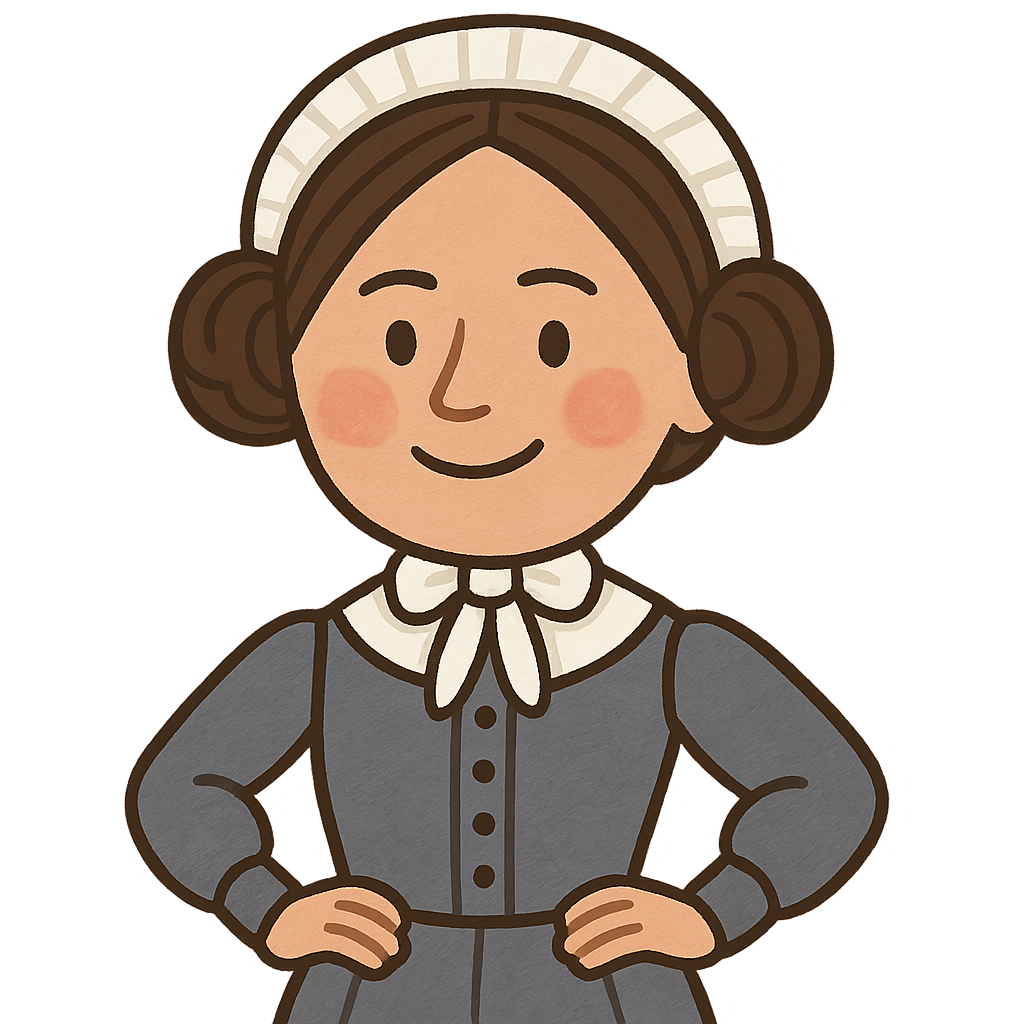
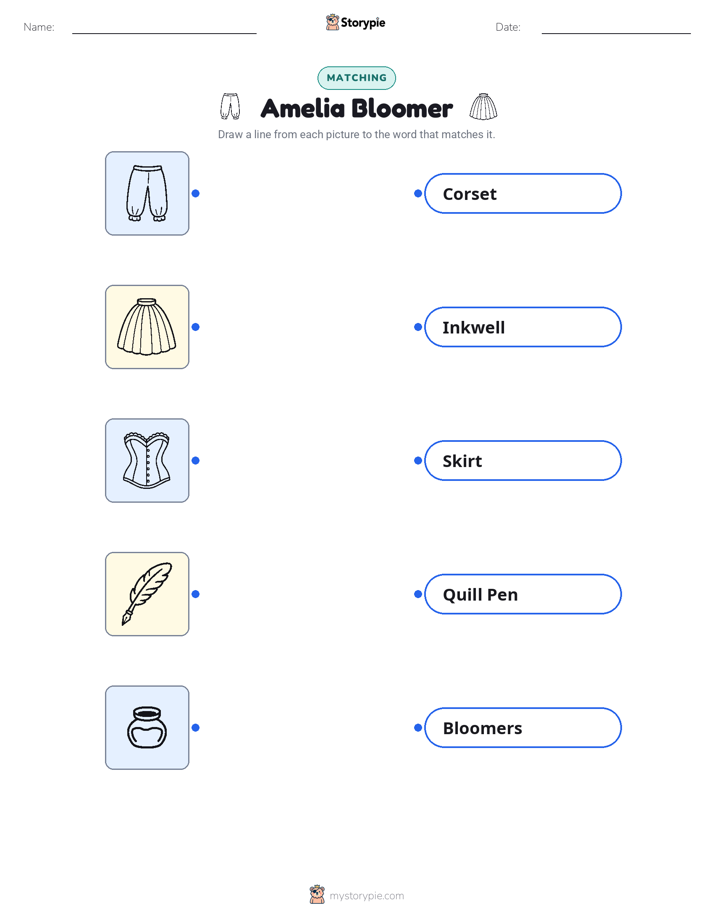
Hello, my name is Amelia Jenks Bloomer, and I used my voice, and my newspaper, to help change the world for women. I was born on May 27th, 1818, in Homer, New York. Growing up in the early 1800s, opportunities for girls like me were very limited. I was only able to attend school for a few years, but I loved learning and read every book I could find. My passion for knowledge led me to become a teacher when I was a young woman. In 1840, I married a man named Dexter Bloomer, who was a newspaper editor and a lawyer. He was very supportive and encouraged my growing interest in social issues. It’s important to understand what life was like for women back then. We were not allowed to vote, own property if we were married, or have much say in public life. Even our clothes were designed to be restrictive, with tight corsets and heavy, long skirts that made it hard to move or even breathe properly.
My journey into activism began with the temperance movement, which was a campaign to stop people from drinking alcohol. I felt strongly about this cause and wanted to do more to help. My husband’s work gave me an idea: what if I started my own newspaper? On January 1st, 1849, I did just that, launching 'The Lily.' It was a groundbreaking moment because 'The Lily' was the first newspaper in the United States to be owned, edited, and published entirely by a woman. A year earlier, in 1848, I had attended the very first women's rights convention in Seneca Falls, New York. That experience opened my eyes to the many injustices women faced. At first, 'The Lily' focused on temperance, but soon its pages were filled with articles about women’s rights, the need for better education for girls, and the most daring idea of all: suffrage, or the right for women to vote.
Amelia Bloomer: A Voice for Change
Hello, my name is Amelia Jenks Bloomer, and I used my voice, and my newspaper, to help change the world for women. I was born on May 27th, 1818, in Homer, New York. Growing up in the early 1800s, opportunities for girls like me were very limited. I was only able to attend school for a few years, but I loved learning and read every book I could find. My passion for knowledge led me to become a teacher when I was a young woman. In 1840, I married a man named Dexter Bloomer, who was a newspaper editor and a lawyer. He was very supportive and encouraged my growing interest in social issues. It’s important to understand what life was like for women back then. We were not allowed to vote, own property if we were married, or have much say in public life. Even our clothes were designed to be restrictive, with tight corsets and heavy, long skirts that made it hard to move or even breathe properly.
My journey into activism began with the temperance movement, which was a campaign to stop people from drinking alcohol. I felt strongly about this cause and wanted to do more to help. My husband’s work gave me an idea: what if I started my own newspaper? On January 1st, 1849, I did just that, launching 'The Lily.' It was a groundbreaking moment because 'The Lily' was the first newspaper in the United States to be owned, edited, and published entirely by a woman. A year earlier, in 1848, I had attended the very first women's rights convention in Seneca Falls, New York. That experience opened my eyes to the many injustices women faced. At first, 'The Lily' focused on temperance, but soon its pages were filled with articles about women’s rights, the need for better education for girls, and the most daring idea of all: suffrage, or the right for women to vote.
One of the most visible issues for women was our clothing. The long, heavy dresses we were expected to wear were not just uncomfortable; they were unhealthy. In 1851, I saw a much better alternative. My friend, Elizabeth Smith Miller, was wearing a sensible outfit that included loose trousers worn under a knee-length skirt. It was practical and allowed for freedom of movement. I was so impressed that I started wearing the outfit myself and promoted this “freedom dress” in the pages of 'The Lily.' Soon, people everywhere began talking about it, and because I wrote about it so much, the outfit became famously known as “bloomers,” named after me. The style caused a huge controversy. People made fun of women who wore it, and it became so distracting from our more serious work for women's rights that I eventually stopped wearing it. That same year, 1851, was important for another reason. I introduced two of my friends to each other: Elizabeth Cady Stanton and Susan B. Anthony. They would go on to become one of the most powerful partnerships in the fight for women's suffrage.
My life's journey took me westward. In 1853, my husband and I moved to Ohio, and then in 1855, we settled in Council Bluffs, Iowa. Because of the move and the challenges of publishing from so far away, I had to sell 'The Lily.' But selling my newspaper did not mean I was finished with my work. I continued to fight for women’s rights in my new home state. I gave lectures and wrote articles for other newspapers, always speaking out for equality. I became a leader in the Iowa Woman Suffrage Association, and for decades, we worked tirelessly to change unfair laws. One of our important victories was helping married women in Iowa gain the legal right to own their own property.
I dedicated my life to the fight for equality. I lived to be 76 years old and passed away on December 30th, 1894. Although I did not live to see the day when all women across the United States were granted the right to vote, I knew that the seeds we had planted would one day grow. My friends and I laid the groundwork for the generations of brave women who would continue the fight. I hope I am remembered not just for the controversial pants that bear my name, but for using my voice and my newspaper to give women a platform to speak and for showing the world that change often begins with one person daring to be different.
Wow facts
About
Amelia Bloomer was a 19th-century American women's rights and temperance advocate, best known for her newspaper, The Lily, and for popularizing a style of women's clothing that became known as 'bloomers.'
Take a Quiz
Question 1 of 5
What was the name of the newspaper Amelia Bloomer started on January 1st, 1849?
Explore next






Want to do even more?
Go beyond exploring. Unlock tools that turn every story into real learning.

Storypie Plus for families
Full stories, quizzes, and printables. Nights and car rides, sorted.
- Unlimited audio stories
- Create Mode: your child stars in the story
- Offline downloads
- Printable worksheets & coloring pages

Why Storypie for Schools
Students engaged. Prep in seconds. Evenings back to you.
- Worksheets & Quizzes
- Classroom Management
- Formative Assessment
- Custom Curriculum & Lesson Plans
- 27 Languages

Why Storypie for Homeschool
Curriculum done. They'll ask for more. Hours back in your day.
- Worksheet Generator
- First-Person Audio Stories
- Built-in Comprehension Quizzes
- Custom Curriculum & Lesson Plans
- Print & Go Activities