English

André Breton
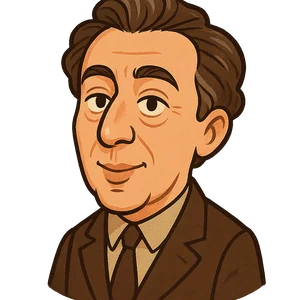
André Breton was a French writer and poet, best known as the founder and principal leader of Surrealism…
Reads at Grades 6–8 Listens at Grades 4–8
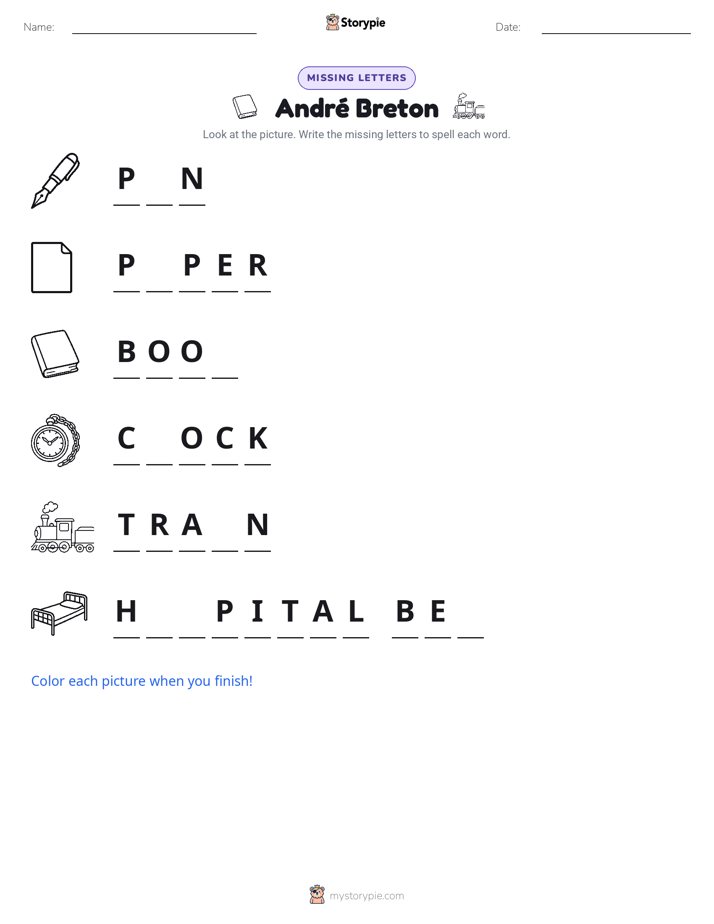
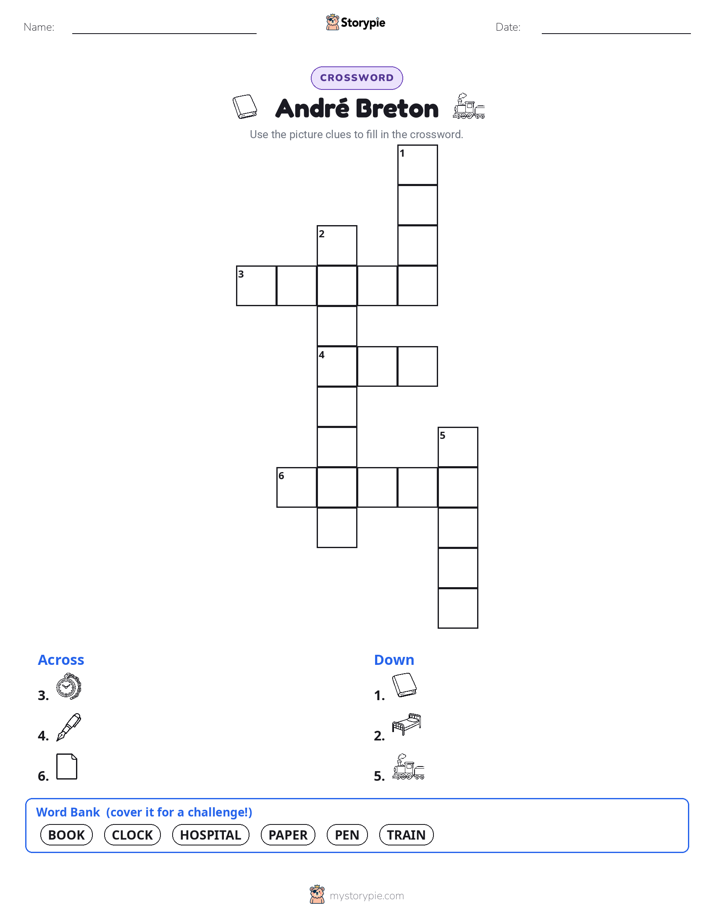
Print & create
Answer keys·No prep·Free with an account
28 worksheets · answer keys · full story · quiz · Ages 10-12 · CEFR B2
Plus adds 279,000+ more stories in 27 languages, audio for every one, and printables for all of them.
Just want André Breton?
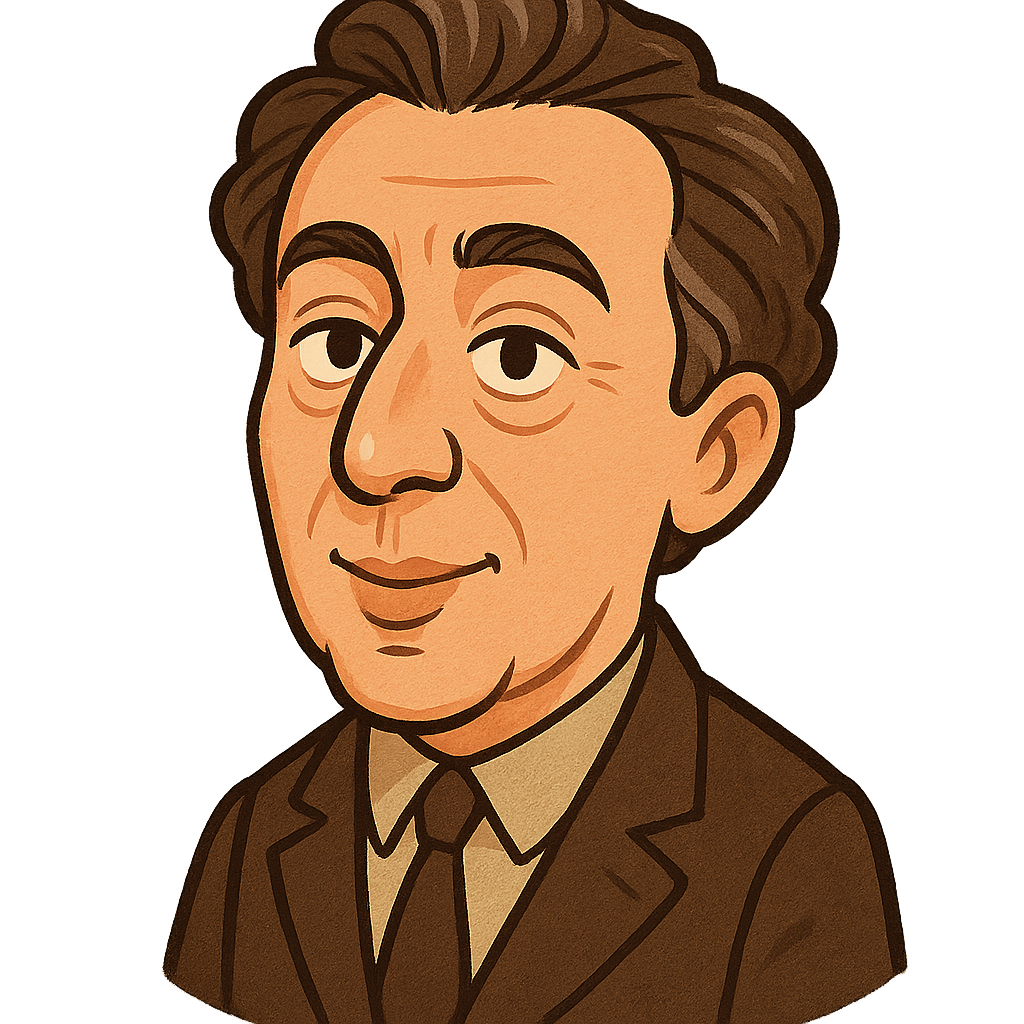
Hello, my name is André Breton, and I want to tell you about a journey into the world of dreams and imagination. I was born on February 19th, 1896, in a small town in France called Tinchebray. As a young man, I was curious about the world, which led me to study medicine. I was especially fascinated by the human mind and all its complex workings. My path took a sharp turn in 1914 when World War I began, a terrible conflict that reshaped the world and my own life. I served as a medical orderly in a neurological ward, a place where I cared for soldiers who were deeply wounded, not just in their bodies, but in their minds by the horrors they had witnessed. It was in this setting, around 1916, that I encountered the writings of a Viennese doctor named Sigmund Freud. He wrote about a hidden part of our minds he called the 'unconscious'—a place that holds our deepest thoughts, forgotten memories, and powerful dreams. This single idea was like a key unlocking a door in my own mind, and it set me on a course that would define the rest of my life and influence art for generations to come.
After the war finally ended in 1918, the world felt broken. Many artists and writers, myself included, felt that the old, rational ways of thinking had led to this catastrophic war. We needed a new way to see things. For a time, I joined a movement called Dada, which was born from this feeling of disillusionment. Dada was about rejecting logic and tradition through playful, sometimes nonsensical, art and performances. It was a necessary protest, but I soon felt it wasn't enough to simply tear down the old rules. I wanted to build something new and hopeful in its place. My experiences in the war and my fascination with Freud's ideas about the unconscious mind continued to occupy my thoughts. I began to experiment with a technique I called 'automatic writing.' I would sit with a pen and paper and let words flow out as quickly as possible, without any conscious thought or planning. I wanted to see what my hidden mind would reveal. The results were startling, strange, and beautiful. This practice convinced me that a powerful, untapped source of creativity existed within us all. This led me to a revolutionary idea, which I outlined in 1924 in a paper I called the *Manifesto of Surrealism*. In it, I defined 'Surrealism' as a way to express the true, unfiltered functioning of thought, completely free from the control of reason or morality.
André Breton
Hello, my name is André Breton, and I want to tell you about a journey into the world of dreams and imagination. I was born on February 19th, 1896, in a small town in France called Tinchebray. As a young man, I was curious about the world, which led me to study medicine. I was especially fascinated by the human mind and all its complex workings. My path took a sharp turn in 1914 when World War I began, a terrible conflict that reshaped the world and my own life. I served as a medical orderly in a neurological ward, a place where I cared for soldiers who were deeply wounded, not just in their bodies, but in their minds by the horrors they had witnessed. It was in this setting, around 1916, that I encountered the writings of a Viennese doctor named Sigmund Freud. He wrote about a hidden part of our minds he called the 'unconscious'—a place that holds our deepest thoughts, forgotten memories, and powerful dreams. This single idea was like a key unlocking a door in my own mind, and it set me on a course that would define the rest of my life and influence art for generations to come.
After the war finally ended in 1918, the world felt broken. Many artists and writers, myself included, felt that the old, rational ways of thinking had led to this catastrophic war. We needed a new way to see things. For a time, I joined a movement called Dada, which was born from this feeling of disillusionment. Dada was about rejecting logic and tradition through playful, sometimes nonsensical, art and performances. It was a necessary protest, but I soon felt it wasn't enough to simply tear down the old rules. I wanted to build something new and hopeful in its place. My experiences in the war and my fascination with Freud's ideas about the unconscious mind continued to occupy my thoughts. I began to experiment with a technique I called 'automatic writing.' I would sit with a pen and paper and let words flow out as quickly as possible, without any conscious thought or planning. I wanted to see what my hidden mind would reveal. The results were startling, strange, and beautiful. This practice convinced me that a powerful, untapped source of creativity existed within us all. This led me to a revolutionary idea, which I outlined in 1924 in a paper I called the Manifesto of Surrealism. In it, I defined 'Surrealism' as a way to express the true, unfiltered functioning of thought, completely free from the control of reason or morality.
With the publication of the manifesto, our group of Surrealists in Paris became a vibrant center for this new way of thinking. We were a collection of poets, painters, thinkers, and filmmakers who were all dedicated to exploring the landscapes of dreams and the depths of the imagination. Incredible artists like Salvador Dalí, with his melting clocks, Max Ernst, and the photographer Man Ray all became central figures in our cause. We would gather in Parisian cafés for hours, sharing our latest poems and paintings, playing creative games designed to unlock our unconscious minds, and engaging in passionate debates about art and life. We firmly believed that art should be more than just a decorative object; it should be a window into the mind's most secret corners. Our paintings and sculptures depicted bizarre creatures, impossible scenes, and dream-like vistas that challenged the viewer's sense of reality. My own writing continued to explore these themes. In 1928, I published a book titled Nadja, which was a unique blend of a novel and a real-life diary, intentionally blurring the line between reality and the surreal. For us, Surrealism was never just an art style. It was a revolutionary way of life and a powerful call for freedom—not just political freedom, but the liberation of the human mind itself.
Just as Surrealism was gaining influence across Europe, the world was plunged into darkness once more with the beginning of World War II in 1939. The occupying government in France viewed our ideas about freedom and revolution as dangerous and subversive. My work was condemned, and I knew I had to flee for my safety. In 1941, I found refuge in the United States, spending several years in the bustling energy of New York City. There, I connected with many American artists who were eager to learn about our movement. I shared the ideas and techniques of Surrealism with this new generation, and our concepts of automatism and exploring the unconscious helped inspire the development of new American art styles. Though I was an exile far from my home, my belief in the power of the imagination never wavered. I continued to write and organize, convinced that creativity could help build a better world. When the war finally came to an end, I returned to Paris in 1946 to help rebuild the cultural life of the city and continue my work.
I lived to be 70 years old, and my life was a whirlwind of art, ideas, and revolution. The original Surrealist group eventually went their separate ways, but the ideas we championed have had a lasting impact on art, literature, and film. We showed the world that art could come from anywhere—from dreams, from chance encounters, and from the hidden corners of the mind. My work encouraged people to look beyond the surface of everyday reality and to embrace the strange and wonderful power of their own imaginations. I hope my story reminds you that your dreams and your unique way of seeing the world are valuable, and that creativity has the power to change everything.
Wow facts
About
André Breton was a French writer and poet, best known as the founder and principal leader of Surrealism, an influential art and literary movement of the 20th century.
Take a Quiz
Question 1 of 5
What is the main idea of André Breton's life story?
Explore next


Want to do even more?
Go beyond exploring. Unlock tools that turn every story into real learning.

Storypie Plus for families
Full stories, quizzes, and printables. Nights and car rides, sorted.
- Unlimited audio stories
- Create Mode: your child stars in the story
- Offline downloads
- Printable worksheets & coloring pages

Why Storypie for Schools
Students engaged. Prep in seconds. Evenings back to you.
- Worksheets & Quizzes
- Classroom Management
- Formative Assessment
- Custom Curriculum & Lesson Plans
- 27 Languages

Why Storypie for Homeschool
Curriculum done. They'll ask for more. Hours back in your day.
- Worksheet Generator
- First-Person Audio Stories
- Built-in Comprehension Quizzes
- Custom Curriculum & Lesson Plans
- Print & Go Activities