English

Andrew Jackson
Andrew Jackson was the seventh U.S.
Reads at Grades 6–8 Listens at Grades 4–8
Print & create
Answer keys·No prep·Free with an account
28 worksheets · answer keys · full story · quiz · Ages 10-12 · CEFR B2
Plus adds 102,000+ more stories in 27 languages, audio for every one, and printables for all of them.
Just want Andrew Jackson?
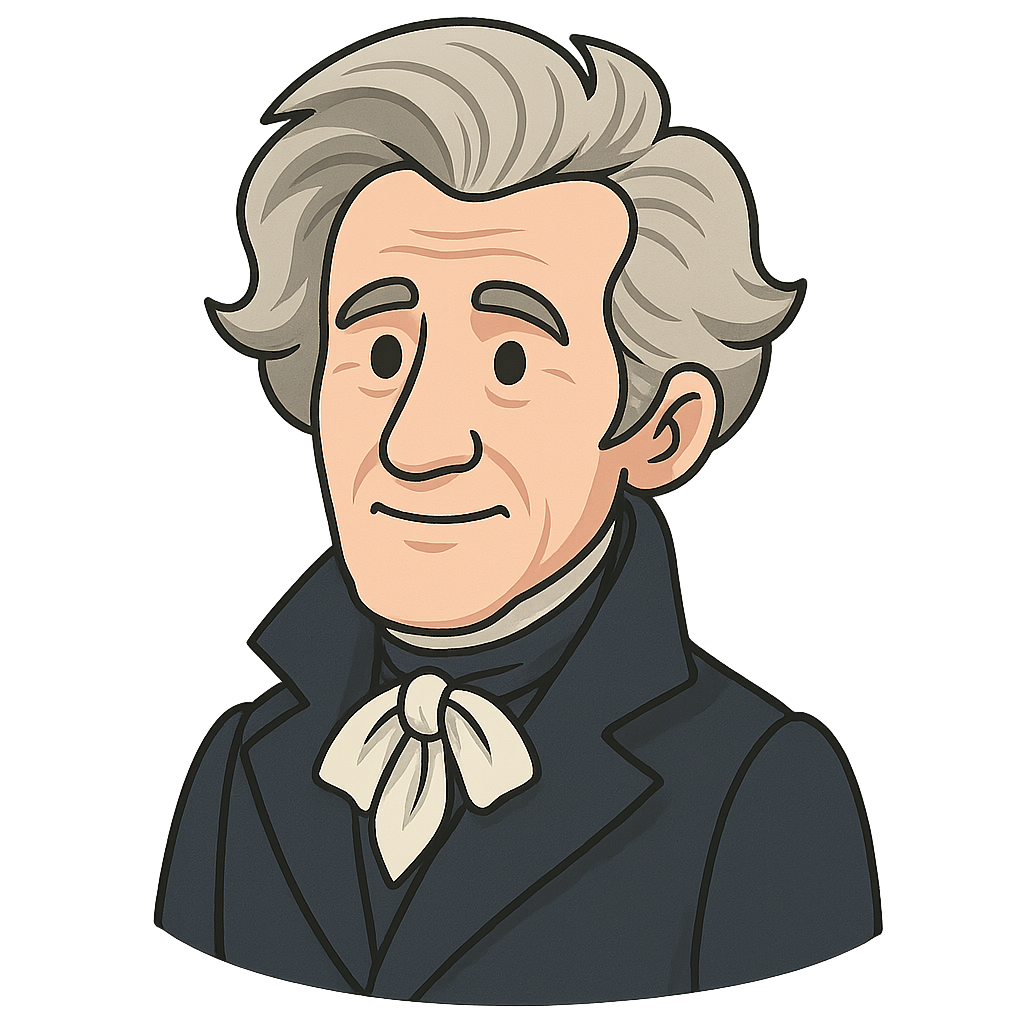
Hello, my name is Andrew Jackson. My story begins on the American frontier, a wild and challenging place. I was born on March 15th, 1767, in a settlement called the Waxhaws, right on the border between North and South Carolina. My life started with hardship. My father passed away just before I was born, leaving my mother to raise me and my two older brothers alone. The world around us was changing rapidly, and soon the Revolutionary War for American independence began. The war brought great sorrow to my family. Both of my brothers died during the conflict, and my dear mother passed away from an illness she contracted while nursing wounded soldiers. By the age of 14, I was an orphan. I even played a small part in the war myself, serving as a young courier. During this time, I was captured by the British. This experience was difficult, but it forged in me a deep love for my country and a will as strong as iron.
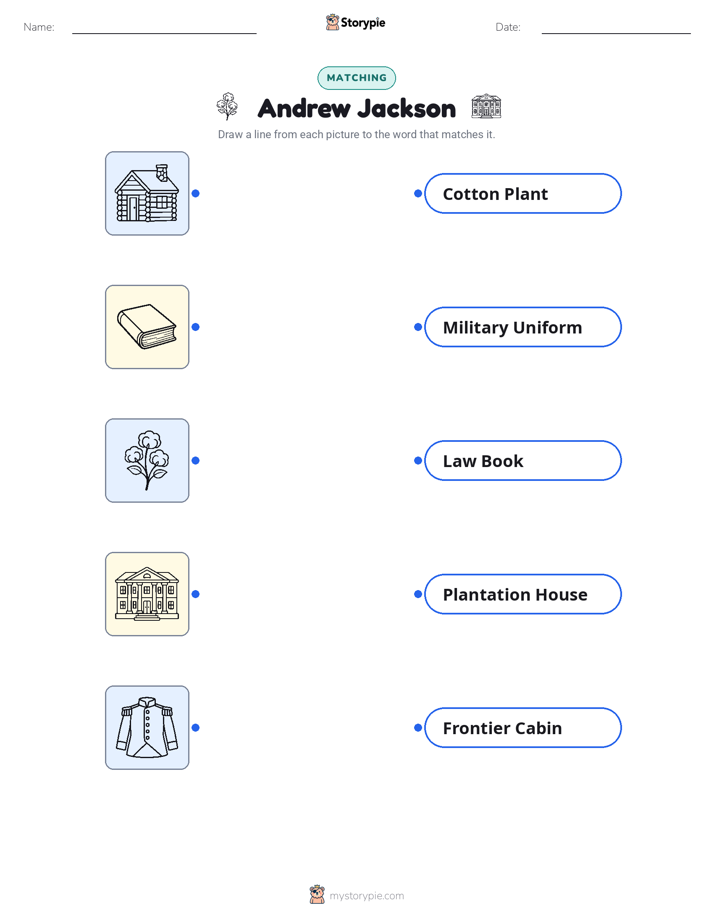
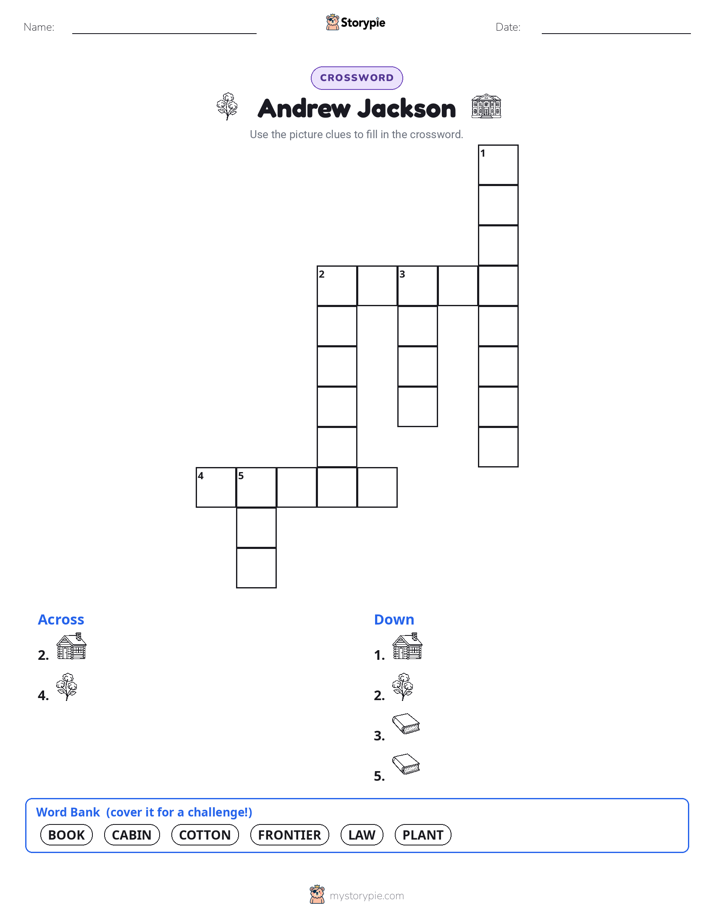
After the war, I knew I had to make my own way in the world. Around 1787, I decided to move west, to the frontier territory that would one day become the state of Tennessee. It was a land of opportunity, and I was determined to build a life for myself there. I studied law and became a prosecutor, earning a reputation for being tough but fair. It was in Tennessee that I met my beloved wife, Rachel. Together, we built a home near Nashville, a beautiful cotton plantation we named The Hermitage. It was more than just a farm; it was our sanctuary, a place of peace away from the demands of my public life. My work as a lawyer and my growing involvement in local politics set the stage for the next chapter of my life, one that would place me on the national stage.
Andrew Jackson: A President for the People
Hello, my name is Andrew Jackson. My story begins on the American frontier, a wild and challenging place. I was born on March 15th, 1767, in a settlement called the Waxhaws, right on the border between North and South Carolina. My life started with hardship. My father passed away just before I was born, leaving my mother to raise me and my two older brothers alone. The world around us was changing rapidly, and soon the Revolutionary War for American independence began. The war brought great sorrow to my family. Both of my brothers died during the conflict, and my dear mother passed away from an illness she contracted while nursing wounded soldiers. By the age of 14, I was an orphan. I even played a small part in the war myself, serving as a young courier. During this time, I was captured by the British. This experience was difficult, but it forged in me a deep love for my country and a will as strong as iron.
After the war, I knew I had to make my own way in the world. Around 1787, I decided to move west, to the frontier territory that would one day become the state of Tennessee. It was a land of opportunity, and I was determined to build a life for myself there. I studied law and became a prosecutor, earning a reputation for being tough but fair. It was in Tennessee that I met my beloved wife, Rachel. Together, we built a home near Nashville, a beautiful cotton plantation we named The Hermitage. It was more than just a farm; it was our sanctuary, a place of peace away from the demands of my public life. My work as a lawyer and my growing involvement in local politics set the stage for the next chapter of my life, one that would place me on the national stage.
My country called on me to serve again during the War of 1812, this time as a general in the United States Army. I led my soldiers through many difficult campaigns, and they came to respect my determination. They gave me the nickname 'Old Hickory' because they said I was as tough and unbending as the wood of a hickory tree. My most famous moment came on January 8th, 1815, at the Battle of New Orleans. We faced a powerful British force that was expected to defeat us easily. But my army, made up of soldiers, frontiersmen, and volunteers, stood strong. Against all odds, we achieved a stunning and decisive victory. That battle cemented my reputation across the nation, and I became known as the 'Hero of New Orleans.'
My fame as a military hero led many people to encourage me to run for president. The journey to the White House was not easy. In the election of 1824, I won the most votes from the people, but because of the way the election was decided back then, I did not become president. I did not give up. Four years later, in 1828, I ran again and won. I served two terms as the seventh president, from 1829 to 1837. I saw myself as a president for the 'common man,' and I wanted to give more power to ordinary citizens, not just the wealthy and powerful. During my time in office, I faced major challenges. I fought against the Second Bank of the United States because I believed it had too much control over the economy. I also faced the Nullification Crisis, when South Carolina threatened to ignore federal laws. I stood firm for the belief that we were one strong, unified nation, and that no single state could break away.
While I am remembered for many achievements, my presidency also includes one of its most painful and controversial chapters. I must be honest about the difficult decisions I made and their consequences. In 1830, I signed a law passed by Congress called the Indian Removal Act. The purpose of this law was to move Native American tribes, including the Cherokee, Creek, and others, from their ancestral homelands in the southeastern United States. They were to be relocated to territory west of the Mississippi River. This policy led to immense suffering. The forced march of the Cherokee people from their lands became known as the Trail of Tears. It was a journey of unimaginable hardship, and thousands of people lost their lives along the way. It is a deeply sorrowful part of our nation's history.
After my presidency ended, I returned to my home, The Hermitage, where I spent the remainder of my years. I lived to be 78 years old, passing away at my home on June 8th, 1845. My legacy is a complex one. I am remembered by many as a war hero and a champion of the common person who strengthened the presidency. However, I am also remembered for policies like the Indian Removal Act that caused great suffering and injustice. My life shows that history is not simple; it is filled with moments of both great pride and profound sadness, and it is important to remember all of it.
Wow facts
About
Andrew Jackson was the seventh U.S. President, a military general known for his victory at the Battle of New Orleans, and a controversial figure due to his policies, including the Indian Removal Act.
Take a Quiz
Question 1 of 5
Why did Andrew Jackson's soldiers call him 'Old Hickory'?
Explore next



Want to do even more?
Go beyond exploring. Unlock tools that turn every story into real learning.

Storypie Plus for families
Full stories, quizzes, and printables. Nights and car rides, sorted.
- Unlimited audio stories
- Create Mode: your child stars in the story
- Offline downloads
- Printable worksheets & coloring pages

Why Storypie for Schools
Students engaged. Prep in seconds. Evenings back to you.
- Worksheets & Quizzes
- Classroom Management
- Formative Assessment
- Custom Curriculum & Lesson Plans
- 27 Languages

Why Storypie for Homeschool
Curriculum done. They'll ask for more. Hours back in your day.
- Worksheet Generator
- First-Person Audio Stories
- Built-in Comprehension Quizzes
- Custom Curriculum & Lesson Plans
- Print & Go Activities