English


Andy Warhol
Andy Warhol was a leading American artist in the Pop Art movement…
Reads at Grades 6–8 Listens at Grades 4–8
Print & create
Answer keys·No prep·Free with an account
28 worksheets · answer keys · full story · quiz · Ages 10-12 · CEFR B2
Plus adds 208,000+ more stories in 27 languages, audio for every one, and printables for all of them.
Just want Andy Warhol?

Hello! My name is Andy Warhol, and I saw the world a little differently. I was born Andrew Warhola on August 6th, 1928, in Pittsburgh, Pennsylvania. My parents were from a small country in Europe, and they worked very hard in our new home. When I was about eight years old, in 1936, I got very sick and had to stay in bed for months. It was a lonely time, but my mom, Julia, gave me magazines and taught me how to draw. I would cut out pictures of movie stars and create my own little worlds on paper. That's when I fell in love with art, seeing how everyday images could be turned into something special.
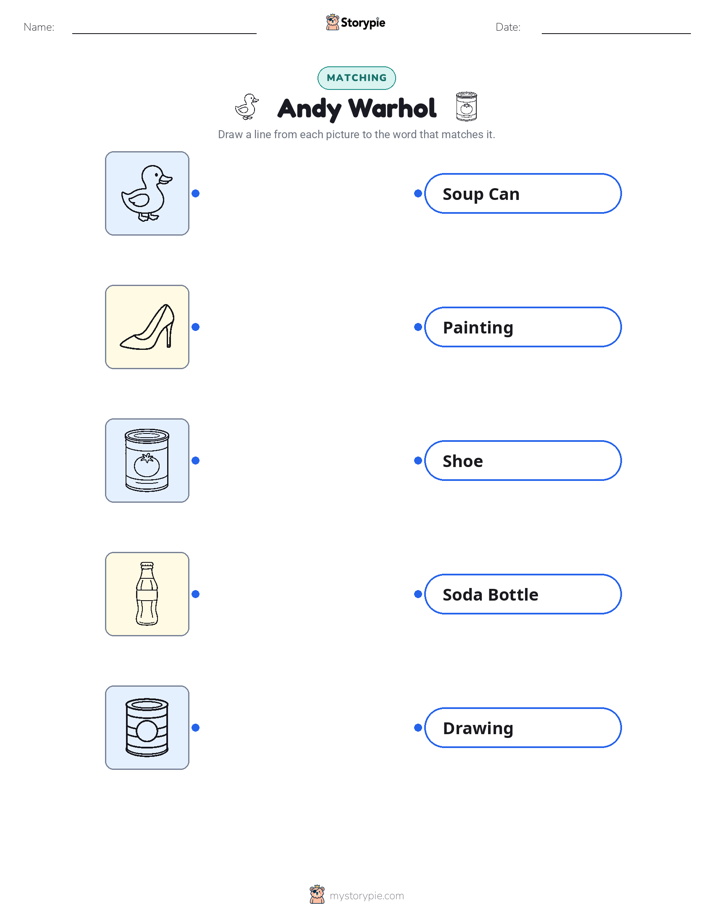
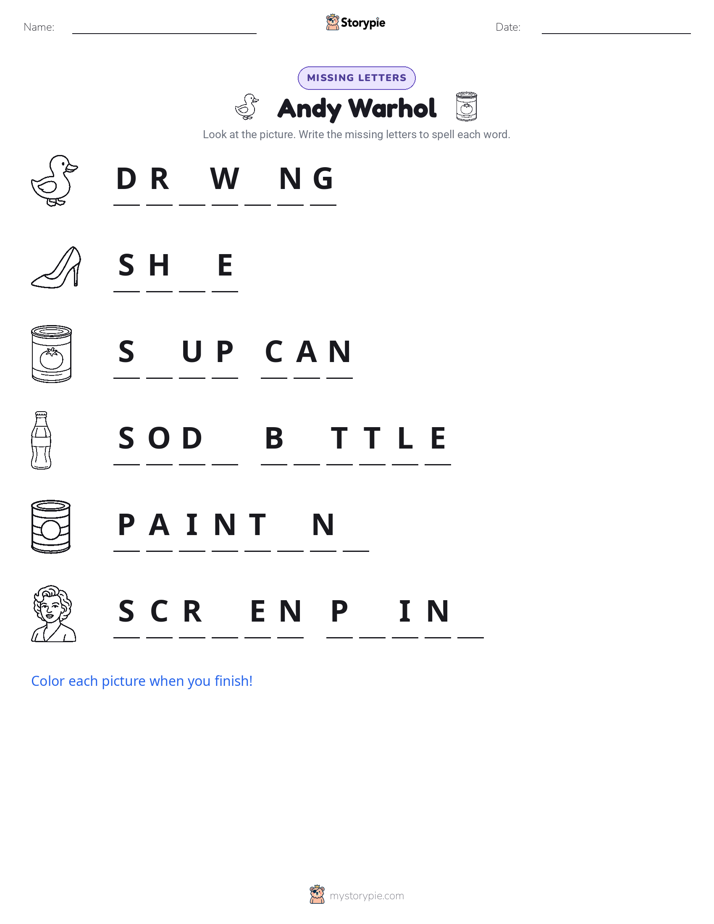
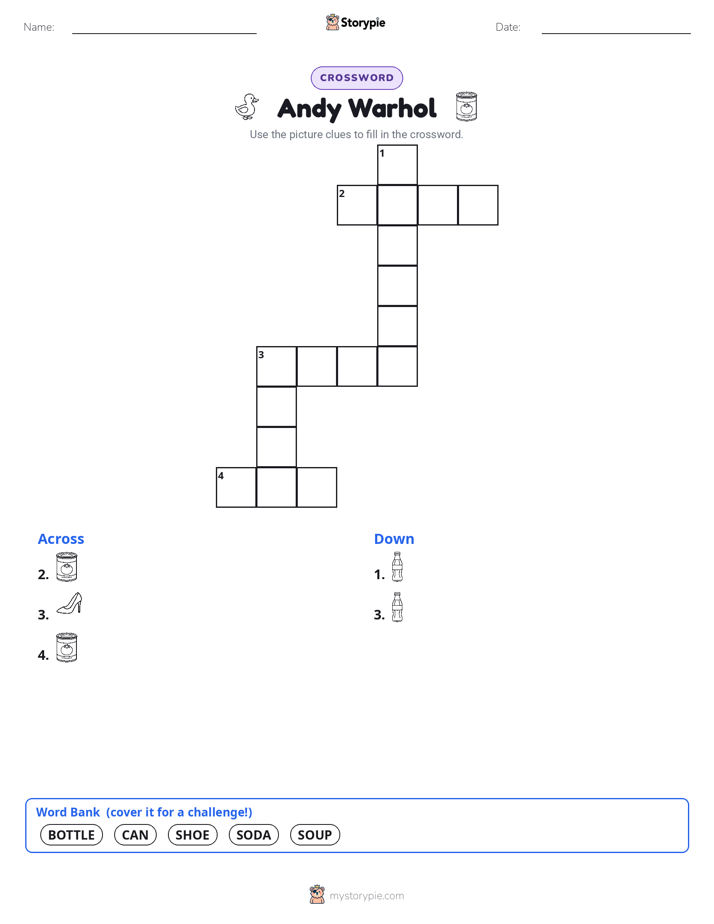
After I studied art in college, I moved to the biggest city I could think of—New York City! That was in 1949. My first job was as a commercial artist, creating illustrations for magazines and advertisements. I became quite well-known for my unique, blotted-line drawings of shoes, which were very popular in fashion ads. It was exciting work, and it paid the bills, but I felt a pull to create a different kind of art. I wanted to make art that reflected the world around me, a world filled with mass-produced items and celebrity culture. I looked at the grocery store shelves, billboards, and magazines and thought, 'Why can't a soup can or a soda bottle be a piece of art? Why is some art considered 'high' and other art 'low'?'
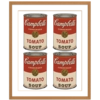
In the early 1960s, I began to create art that did just that, and it started a movement people called Pop Art. The name came from its focus on 'popular' culture. In 1962, I created one of my most famous works: a series of 32 paintings of Campbell's Soup Cans, one for every flavor they sold at the time. To make them, I used a commercial technique called screen printing. This process allowed me to produce many copies of the same image, much like a factory makes products. By changing the colors, I could make each print unique. I used this method to create colorful pictures of famous people, like the actress Marilyn Monroe, and everyday objects, like Brillo soap pad boxes. I wanted to show that art could be made from anything and that the things we see every day are just as worthy of being in a museum as a classical painting.
Andy Warhol
Hello! My name is Andy Warhol, and I saw the world a little differently. I was born Andrew Warhola on August 6th, 1928, in Pittsburgh, Pennsylvania. My parents were from a small country in Europe, and they worked very hard in our new home. When I was about eight years old, in 1936, I got very sick and had to stay in bed for months. It was a lonely time, but my mom, Julia, gave me magazines and taught me how to draw. I would cut out pictures of movie stars and create my own little worlds on paper. That's when I fell in love with art, seeing how everyday images could be turned into something special.
After I studied art in college, I moved to the biggest city I could think of—New York City! That was in 1949. My first job was as a commercial artist, creating illustrations for magazines and advertisements. I became quite well-known for my unique, blotted-line drawings of shoes, which were very popular in fashion ads. It was exciting work, and it paid the bills, but I felt a pull to create a different kind of art. I wanted to make art that reflected the world around me, a world filled with mass-produced items and celebrity culture. I looked at the grocery store shelves, billboards, and magazines and thought, 'Why can't a soup can or a soda bottle be a piece of art? Why is some art considered 'high' and other art 'low'?'
In the early 1960s, I began to create art that did just that, and it started a movement people called Pop Art. The name came from its focus on 'popular' culture. In 1962, I created one of my most famous works: a series of 32 paintings of Campbell's Soup Cans, one for every flavor they sold at the time. To make them, I used a commercial technique called screen printing. This process allowed me to produce many copies of the same image, much like a factory makes products. By changing the colors, I could make each print unique. I used this method to create colorful pictures of famous people, like the actress Marilyn Monroe, and everyday objects, like Brillo soap pad boxes. I wanted to show that art could be made from anything and that the things we see every day are just as worthy of being in a museum as a classical painting.
My art studio wasn't a quiet, solitary room. I called it 'The Factory,' and the first one opened in 1962. I wanted it to be a place of creation and collaboration, so I covered the walls in silver foil to make it feel modern and exciting. The Factory was always buzzing with people—artists, musicians, actors, and writers all coming together to share ideas and create. We didn't just make paintings and sculptures; we also produced experimental movies. I even managed and promoted a rock band called The Velvet Underground, designing their first album cover. My life wasn't always easy, however. A very difficult thing happened in 1968 when I was shot and badly hurt. I recovered, but the experience changed how I saw the world and my own fame. Still, I never stopped creating.
I continued making art for the rest of my life, becoming famous for my bright portraits and my unique view of modern culture. I lived to be 58 years old and passed away in 1987 after surgery. People remember me for helping to start the Pop Art movement and for exploring the relationship between art, advertising, and celebrity. I once said that 'in the future, everyone will be world-famous for 15 minutes,' and I think my work showed how much our world loves popular images. I hope my art encourages you to look closely and find the beauty and importance in the everyday things all around you.
Wow facts
About
Andy Warhol was a leading American artist in the Pop Art movement, known for his paintings and screenprints of everyday objects and celebrities.
Take a Quiz
Question 1 of 5
According to the story, what was 'The Factory' and what kinds of activities happened there?
Explore next




Want to do even more?
Go beyond exploring. Unlock tools that turn every story into real learning.

Storypie Plus for families
Full stories, quizzes, and printables. Nights and car rides, sorted.
- Unlimited audio stories
- Create Mode: your child stars in the story
- Offline downloads
- Printable worksheets & coloring pages

Why Storypie for Schools
Students engaged. Prep in seconds. Evenings back to you.
- Worksheets & Quizzes
- Classroom Management
- Formative Assessment
- Custom Curriculum & Lesson Plans
- 27 Languages

Why Storypie for Homeschool
Curriculum done. They'll ask for more. Hours back in your day.
- Worksheet Generator
- First-Person Audio Stories
- Built-in Comprehension Quizzes
- Custom Curriculum & Lesson Plans
- Print & Go Activities