English

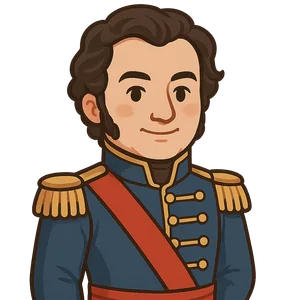
Bernardo O'Higgins
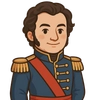
Bernardo O'Higgins was a Chilean independence leader and is considered one of the founding fathers of Chile.
Reads at Grades 6–8 Listens at Grades 4–8
Print & create
Answer keys·No prep·Free with an account
28 worksheets · answer keys · full story · quiz · Ages 10-12 · CEFR B2
Plus adds 164,000+ more stories in 27 languages, audio for every one, and printables for all of them.
Just want Bernardo O'Higgins?
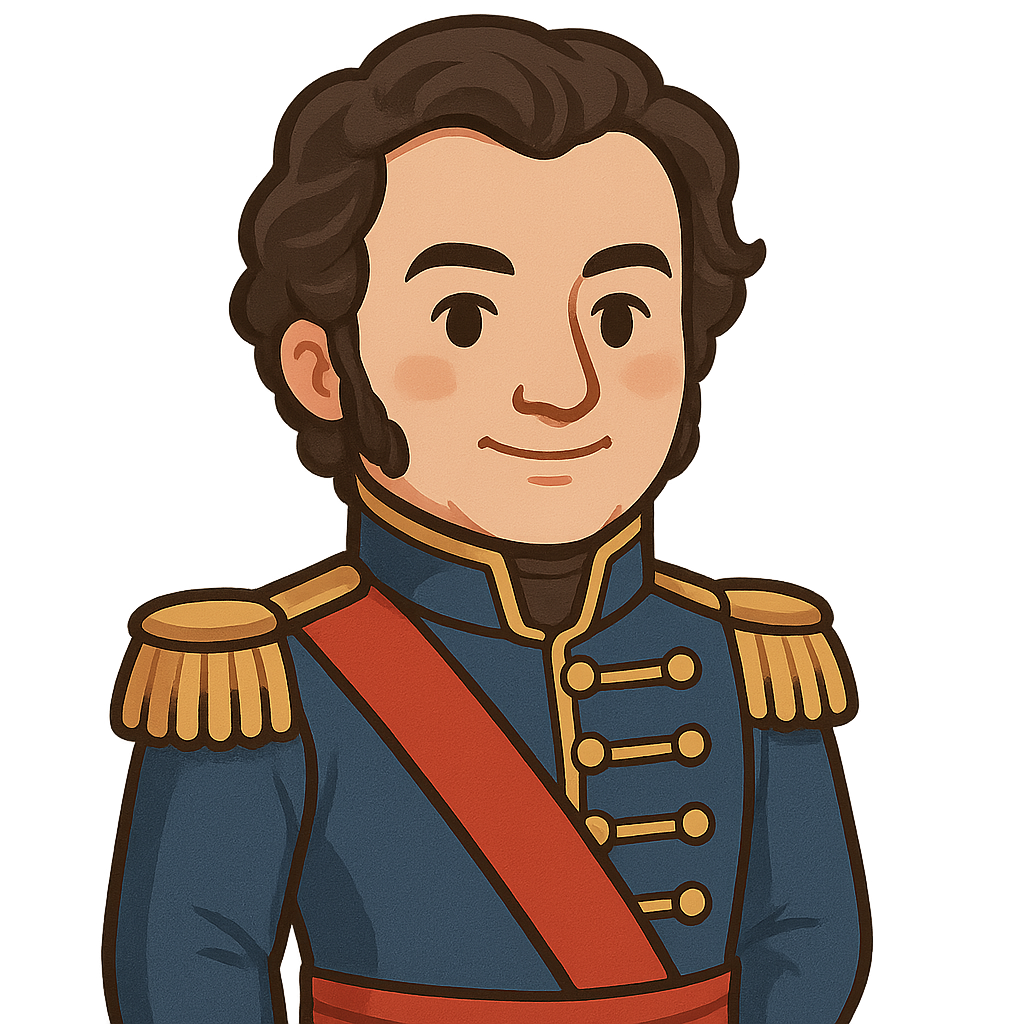
Hello! My name is Bernardo O'Higgins, and I want to tell you the story of how my country, Chile, became free. I was born on August 20th, 1778, in a town called Chillán, which was then part of the Spanish Empire. My father, Ambrosio O'Higgins, was a very important man—an Irish-born officer working for the Spanish crown who rose through the ranks to become the governor of Chile. My mother was Isabel Riquelme, who came from a well-known Chilean family. Because my parents were not married, which was a very serious matter at the time, my early life was kept quiet. I lived with my mother's family, but my father watched over my future from a distance. He made sure I received the best education possible, sending me first to a school in Lima, Peru, and then all the way across the ocean to study in England. It was in Europe, far from the land of my birth, where my entire view of the world would change forever.
While I was a student in London around the year 1798, I met a man whose ideas ignited a fire in me. His name was Francisco de Miranda, a Venezuelan revolutionary who dreamed of a future where all of South America was free from Spanish rule. He spoke with such passion about liberty, self-government, and the right of our people to determine their own destiny. His enthusiasm was contagious, and I soon joined a secret group of young South Americans who shared this powerful dream. After my father passed away, I returned to Chile in 1802 to take charge of the land he had left me. Then, in 1808, a major event happened in Europe that gave us our chance. The French emperor, Napoleon Bonaparte, invaded Spain. This invasion created chaos and dramatically weakened Spain's ability to control its colonies across the ocean. For me and many others who longed for freedom, this felt like the perfect moment to act.
Bernardo O'Higgins
Hello! My name is Bernardo O'Higgins, and I want to tell you the story of how my country, Chile, became free. I was born on August 20th, 1778, in a town called Chillán, which was then part of the Spanish Empire. My father, Ambrosio O'Higgins, was a very important man—an Irish-born officer working for the Spanish crown who rose through the ranks to become the governor of Chile. My mother was Isabel Riquelme, who came from a well-known Chilean family. Because my parents were not married, which was a very serious matter at the time, my early life was kept quiet. I lived with my mother's family, but my father watched over my future from a distance. He made sure I received the best education possible, sending me first to a school in Lima, Peru, and then all the way across the ocean to study in England. It was in Europe, far from the land of my birth, where my entire view of the world would change forever.
While I was a student in London around the year 1798, I met a man whose ideas ignited a fire in me. His name was Francisco de Miranda, a Venezuelan revolutionary who dreamed of a future where all of South America was free from Spanish rule. He spoke with such passion about liberty, self-government, and the right of our people to determine their own destiny. His enthusiasm was contagious, and I soon joined a secret group of young South Americans who shared this powerful dream. After my father passed away, I returned to Chile in 1802 to take charge of the land he had left me. Then, in 1808, a major event happened in Europe that gave us our chance. The French emperor, Napoleon Bonaparte, invaded Spain. This invasion created chaos and dramatically weakened Spain's ability to control its colonies across the ocean. For me and many others who longed for freedom, this felt like the perfect moment to act.
In 1810, the movement for Chile's independence officially began, and I committed myself entirely to the cause. I was not a formally trained soldier, but I was a dedicated learner and quickly rose to become a military commander. Our first years of fighting were incredibly difficult. In 1814, our forces suffered a crushing defeat at the Battle of Rancagua. The Spanish royalist army proved too strong, and we were forced to retreat. I led a group of patriots on a dangerous escape across the massive Andes Mountains into Argentina. There, I met another great leader named José de San Martín, an Argentine general who shared my goal of liberating South America. We knew that to succeed, we had to work together. We combined our forces to create the Army of the Andes. In January of 1817, we embarked on what many believed was an impossible mission: leading thousands of soldiers on a treacherous journey over the freezing, towering peaks of the Andes to re-enter Chile. Our daring plan worked. By surprising the Spanish forces, we achieved a decisive victory at the Battle of Chacabuco on February 12th, 1817, which opened the way for us to reclaim our capital city, Santiago.
After our victory at Chacabuco, the people of Chile looked to me for leadership. They named me the first head of state of our emerging nation, granting me the title of Supreme Director. It was the greatest honor of my life to be entrusted with building our new country. To make our freedom official and known to the world, on February 12th, 1818—exactly one year after our key victory—I formally signed the Chilean Declaration of Independence. At last, Chile was a free and sovereign nation. As leader, I worked tirelessly to establish the foundations of our country. I created a military academy to train our officers, founded the National Library of Chile to promote knowledge, and helped draft a new constitution to govern our people. I also introduced reforms that I believed would create a fairer society, such as abolishing the official titles of nobility that separated people by class. However, these changes were not popular with everyone, and I soon made some powerful enemies who disagreed with my vision.
By the year 1823, opposition to my rule had grown strong among some of Chile's most powerful families. I could see that the nation was becoming deeply divided, and I feared that our disagreements could erupt into a destructive civil war. To me, the unity and future of Chile were far more important than my own position of power. So, I made the painful decision to step down as Supreme Director. I went into exile and lived the rest of my life in Peru, always dreaming of one day returning to the homeland I had fought so hard to liberate. I lived to be 64 years old. Today, I am remembered by the people of Chile as one of the founding fathers of their nation and honored with the title 'Liberator of Chile.' It fills me with pride to know my name is carried on streets, parks, and an entire region of the country, all because I believed in the dream of a free and independent Chile.
Wow facts
About
Bernardo O'Higgins was a Chilean independence leader and is considered one of the founding fathers of Chile. He was the Supreme Director of Chile from 1817 to 1823, effectively serving as the head of state during this period.
Take a Quiz
Question 1 of 5
Based on the story, what was Bernardo O'Higgins's main goal in life?
Explore next

Want to do even more?
Go beyond exploring. Unlock tools that turn every story into real learning.

Storypie Plus for families
Full stories, quizzes, and printables. Nights and car rides, sorted.
- Unlimited audio stories
- Create Mode: your child stars in the story
- Offline downloads
- Printable worksheets & coloring pages

Why Storypie for Schools
Students engaged. Prep in seconds. Evenings back to you.
- Worksheets & Quizzes
- Classroom Management
- Formative Assessment
- Custom Curriculum & Lesson Plans
- 27 Languages

Why Storypie for Homeschool
Curriculum done. They'll ask for more. Hours back in your day.
- Worksheet Generator
- First-Person Audio Stories
- Built-in Comprehension Quizzes
- Custom Curriculum & Lesson Plans
- Print & Go Activities