English


Carl Rogers
Carl Rogers was an American psychologist and a founder of humanistic psychology…
Reads at Grades 6–8 Listens at Grades 4–8
Print & create
Answer keys·No prep·Free with an account
28 worksheets · answer keys · full story · quiz · Ages 10-12 · CEFR B2
Plus adds 244,000+ more stories in 27 languages, audio for every one, and printables for all of them.
Just want Carl Rogers?

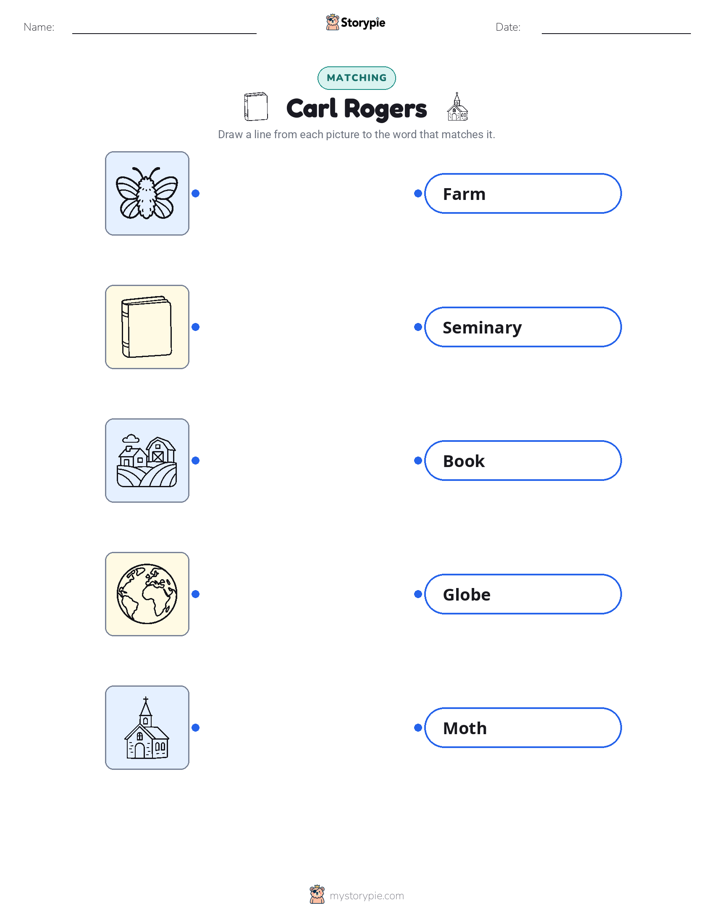
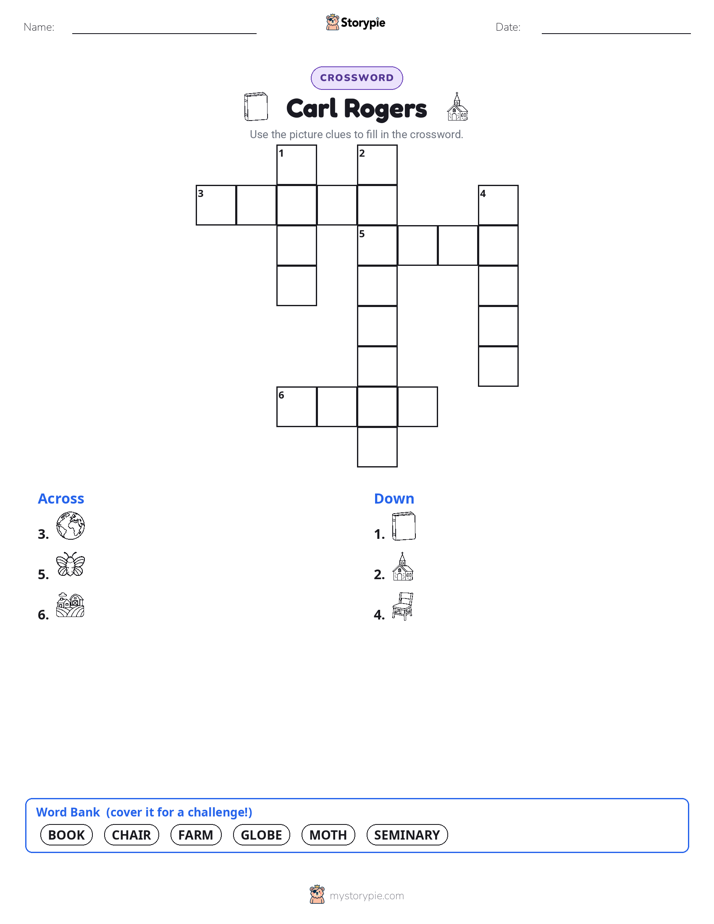
Hello! My name is Carl Rogers, and I want to share my story with you. I was born on January 8th, 1902, in a suburb of Chicago called Oak Park, Illinois. I was the fourth of six children in a very strict and religious family. When I was 12, in 1914, my family moved to a farm. I loved it there! I became fascinated with science, reading every book I could find about agriculture. I raised moths and other animals, carefully observing and recording everything about their lives. This early love for scientific observation was a clue to the work I would do for the rest of my life.
In 1919, I started at the University of Wisconsin, studying agriculture just like I had planned. But my world opened up when I was chosen for a trip to China in 1922. For the first time, I met people with very different beliefs and saw that good people could have different ideas. This trip made me question the strict rules I grew up with. I decided to change my studies from agriculture to history and then to religion. I wanted to understand people, not just plants and animals. This led me to New York City to study at a seminary, but I soon realized my real passion was in psychology—the study of the human mind.
I earned my Ph.D. in clinical psychology from Columbia University in 1931. My first job was helping children in Rochester, New York. The way psychology was taught back then was for the therapist to be the expert who told people what was wrong with them. But as I worked with children, I noticed something amazing. When I truly listened to them, without judging, and tried to understand their world from their point of view, they started to figure out their own solutions. I realized that people have the answers inside themselves; they just need a safe, caring, and understanding person to help them find them.
Carl Rogers
Hello! My name is Carl Rogers, and I want to share my story with you. I was born on January 8th, 1902, in a suburb of Chicago called Oak Park, Illinois. I was the fourth of six children in a very strict and religious family. When I was 12, in 1914, my family moved to a farm. I loved it there! I became fascinated with science, reading every book I could find about agriculture. I raised moths and other animals, carefully observing and recording everything about their lives. This early love for scientific observation was a clue to the work I would do for the rest of my life.
In 1919, I started at the University of Wisconsin, studying agriculture just like I had planned. But my world opened up when I was chosen for a trip to China in 1922. For the first time, I met people with very different beliefs and saw that good people could have different ideas. This trip made me question the strict rules I grew up with. I decided to change my studies from agriculture to history and then to religion. I wanted to understand people, not just plants and animals. This led me to New York City to study at a seminary, but I soon realized my real passion was in psychology—the study of the human mind.
I earned my Ph.D. in clinical psychology from Columbia University in 1931. My first job was helping children in Rochester, New York. The way psychology was taught back then was for the therapist to be the expert who told people what was wrong with them. But as I worked with children, I noticed something amazing. When I truly listened to them, without judging, and tried to understand their world from their point of view, they started to figure out their own solutions. I realized that people have the answers inside themselves; they just need a safe, caring, and understanding person to help them find them.
I started teaching at Ohio State University in 1940 and began to write about my discoveries. In 1942, I published a book called 'Counseling and Psychotherapy,' where I described my new method. I first called it 'non-directive therapy,' but later changed it to 'client-centered' and then 'person-centered' therapy. My whole idea was based on three things: being genuine and honest (which I called congruence), caring for the person with no strings attached (unconditional positive regard), and trying to deeply understand their feelings (empathy). From 1945 to 1957, I worked at the University of Chicago, creating a counseling center to test and prove these ideas. Not everyone agreed with me, and I even had famous public debates with other psychologists, like B.F. Skinner, in 1956 about the best way to help people.
In 1964, I moved to California and helped start the Center for Studies of the Person. I began to see that my ideas about listening and understanding could help not just one person, but whole groups. I started working with leaders in business, education, and even government. I wanted to see if the same ideas of empathy and honest communication could solve bigger problems. In my later years, I traveled the world, bringing together people from countries in conflict, like in Northern Ireland and South Africa. I believed that if people could truly hear each other, they could resolve even the most difficult disagreements. Just before my life ended, in January of 1987, I was nominated for the Nobel Peace Prize for this work.
I lived to be 85 years old, passing away in February of 1987. My life's journey took me from a farm boy curious about moths to a psychologist curious about people. I am remembered for creating a kinder, more human way of helping others. My person-centered approach changed the fields of psychology, counseling, and education. My most important message is that every single person has worth and the power to grow and change for the better, if only they are given an environment of trust, acceptance, and understanding.
Wow facts
About
Carl Rogers was an American psychologist and a founder of humanistic psychology, best known for developing person-centered therapy.
Take a Quiz
Question 1 of 5
What major event in 1922 caused me to question my strict upbringing and change my field of study?
Explore next






Want to do even more?
Go beyond exploring. Unlock tools that turn every story into real learning.

Storypie Plus for families
Full stories, quizzes, and printables. Nights and car rides, sorted.
- Unlimited audio stories
- Create Mode: your child stars in the story
- Offline downloads
- Printable worksheets & coloring pages

Why Storypie for Schools
Students engaged. Prep in seconds. Evenings back to you.
- Worksheets & Quizzes
- Classroom Management
- Formative Assessment
- Custom Curriculum & Lesson Plans
- 27 Languages

Why Storypie for Homeschool
Curriculum done. They'll ask for more. Hours back in your day.
- Worksheet Generator
- First-Person Audio Stories
- Built-in Comprehension Quizzes
- Custom Curriculum & Lesson Plans
- Print & Go Activities