English

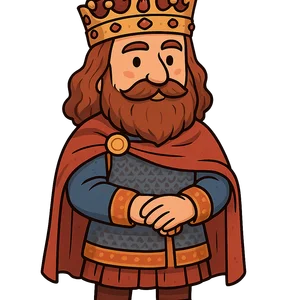
Charlemagne
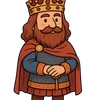
Charlemagne, also known as Charles the Great…
Reads at Grades 6–8 Listens at Grades 4–8
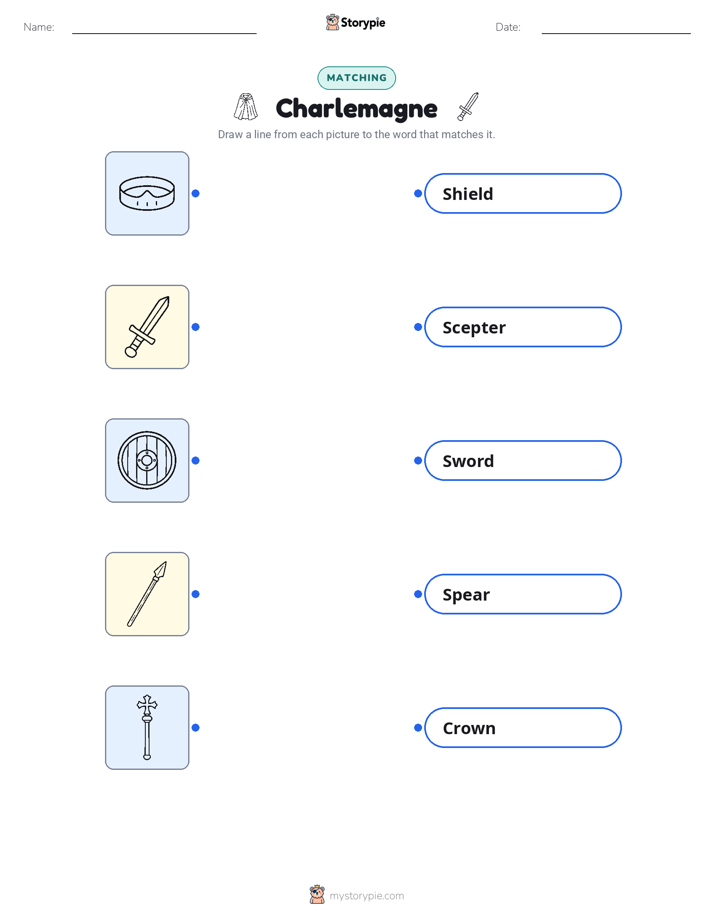
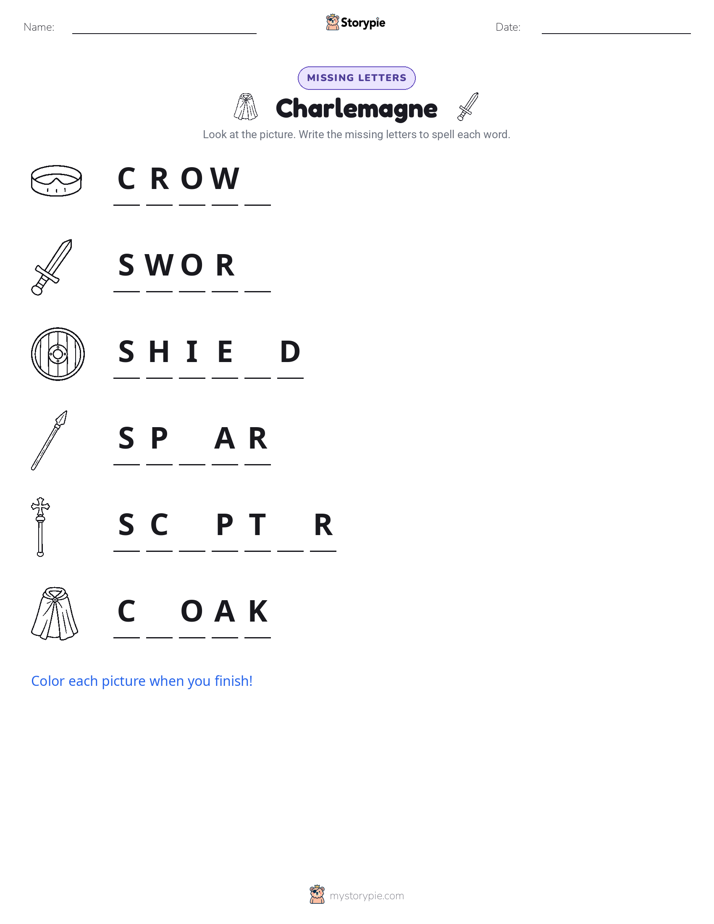
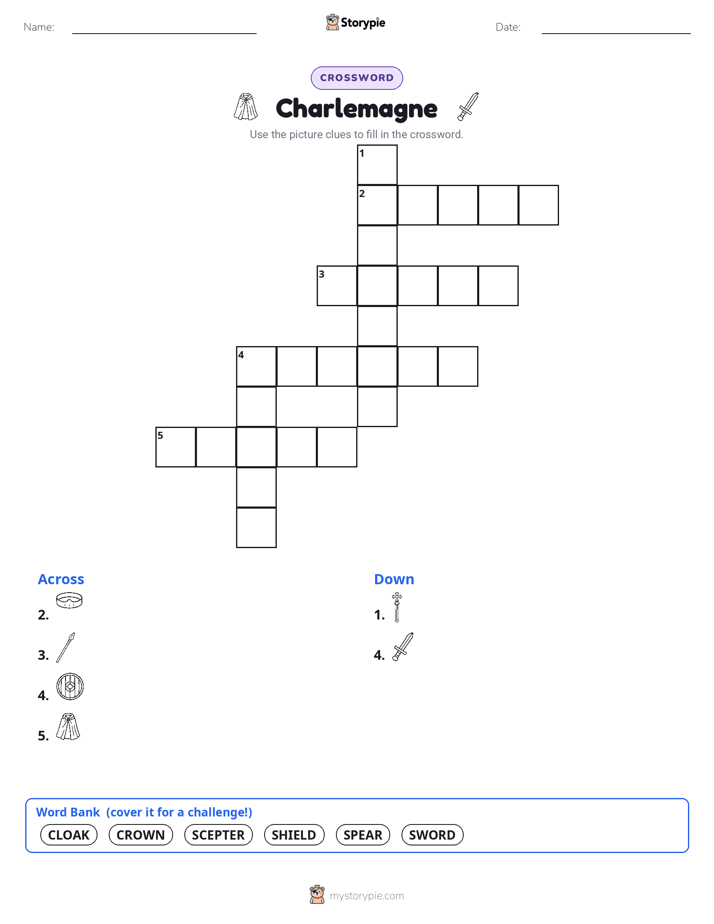
Print & create
Answer keys·No prep·Free with an account
28 worksheets · answer keys · full story · quiz · Ages 10-12 · CEFR B2
Plus adds 164,000+ more stories in 27 languages, audio for every one, and printables for all of them.
Just want Charlemagne?
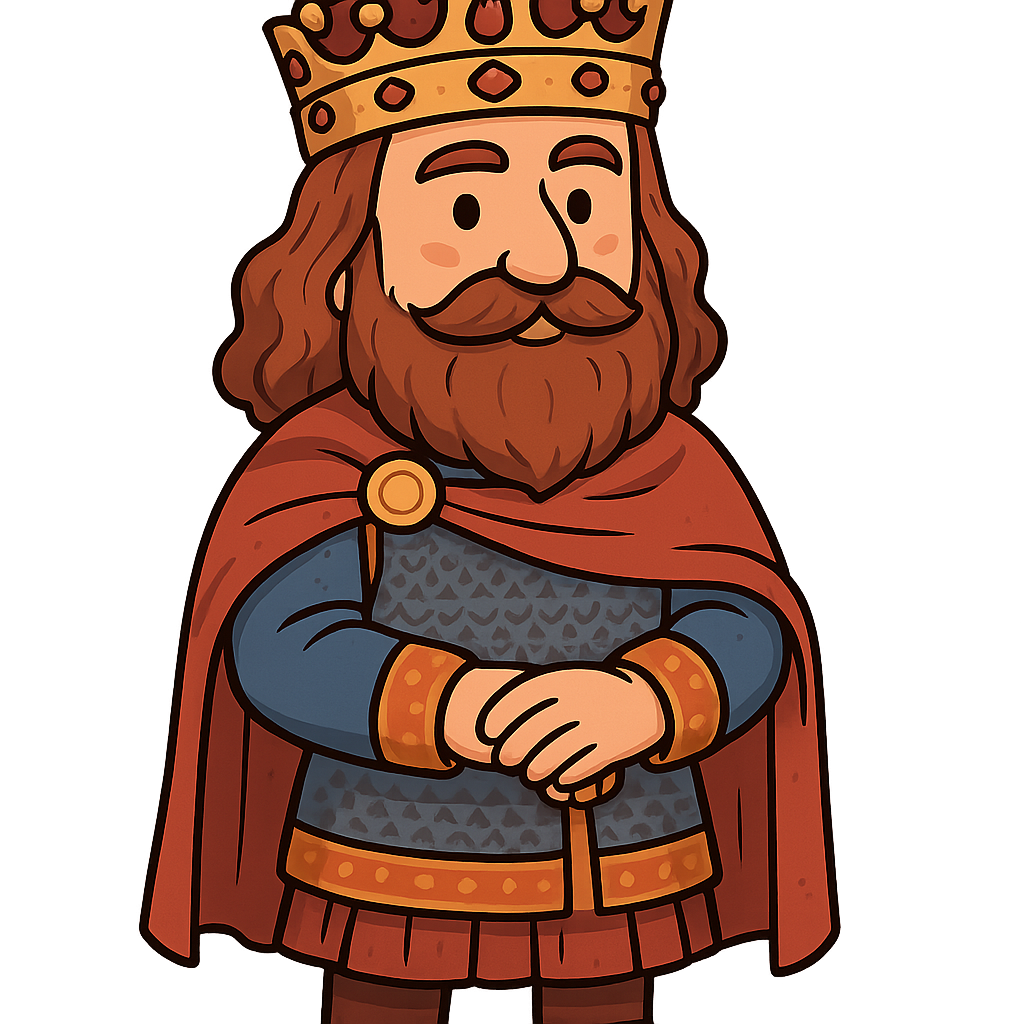
Hello, I am Charles, but history would come to know me as Charlemagne, or Charles the Great. I was born around the year 748 into the ruling family of a people called the Franks. My father was King Pepin the Short, and from a very young age, I was prepared for a life of leadership. Our kingdom was vast, stretching across lands that are now part of modern-day France and Germany. I grew up alongside my younger brother, Carloman, and we were both taught the ways of being a warrior and a ruler. It was a time of great change in Europe, and I knew from my earliest days that I was destined to play a part in shaping its future.
When my father, King Pepin, died on September 24th, 768, the great responsibility of ruling the Franks fell to my brother and me. As was the custom, the kingdom was divided between us. Sharing power was not always easy, and for a few years, we ruled our own territories side-by-side. Our relationship was often strained, but everything changed with Carloman's unexpected death on December 4th, 771. Suddenly, I was the sole ruler of the entire Frankish kingdom. The weight of this duty was immense, but I accepted it with a clear vision: to expand our lands, protect our people, and unite them all under a single, strong rule.
To achieve my vision of a united kingdom, I spent much of my reign as a military leader. My armies were almost constantly on the march. One of my longest and most difficult challenges was the war against the Saxons, a fierce people to the northeast of my kingdom. This conflict began around the year 772 and lasted for many decades. My campaigns were not just in the north. In 774, I led my army across the Alps into Italy and conquered the Lombard Kingdom, adding it to my growing realm. I led many other campaigns as well, expanding my rule over many different peoples. For me, these wars were not just about gaining territory; they were about bringing order, stability, and a common Christian faith to a fractured Europe.
Charlemagne: Father of Europe
Hello, I am Charles, but history would come to know me as Charlemagne, or Charles the Great. I was born around the year 748 into the ruling family of a people called the Franks. My father was King Pepin the Short, and from a very young age, I was prepared for a life of leadership. Our kingdom was vast, stretching across lands that are now part of modern-day France and Germany. I grew up alongside my younger brother, Carloman, and we were both taught the ways of being a warrior and a ruler. It was a time of great change in Europe, and I knew from my earliest days that I was destined to play a part in shaping its future.
When my father, King Pepin, died on September 24th, 768, the great responsibility of ruling the Franks fell to my brother and me. As was the custom, the kingdom was divided between us. Sharing power was not always easy, and for a few years, we ruled our own territories side-by-side. Our relationship was often strained, but everything changed with Carloman's unexpected death on December 4th, 771. Suddenly, I was the sole ruler of the entire Frankish kingdom. The weight of this duty was immense, but I accepted it with a clear vision: to expand our lands, protect our people, and unite them all under a single, strong rule.
To achieve my vision of a united kingdom, I spent much of my reign as a military leader. My armies were almost constantly on the march. One of my longest and most difficult challenges was the war against the Saxons, a fierce people to the northeast of my kingdom. This conflict began around the year 772 and lasted for many decades. My campaigns were not just in the north. In 774, I led my army across the Alps into Italy and conquered the Lombard Kingdom, adding it to my growing realm. I led many other campaigns as well, expanding my rule over many different peoples. For me, these wars were not just about gaining territory; they were about bringing order, stability, and a common Christian faith to a fractured Europe.
One of the most significant moments of my life occurred far from the battlefield. In the year 800, I traveled to Rome to help Pope Leo III, who was facing great difficulties. As a sign of gratitude and alliance, on Christmas Day of that year, something extraordinary happened. While I was kneeling in prayer during the service at St. Peter's Basilica, Pope Leo placed a crown on my head and declared me Emperor of the Romans. The title was more than just a name; it was a powerful symbol. It meant that we were reviving the glory of the old Western Roman Empire, which had fallen centuries before. This event established my kingdom as the new great power in Europe, a successor to the legacy of ancient Rome.
While I was known as a warrior, I also had a deep passion for learning and culture. I wanted my empire to be not only strong but also wise. I invited the greatest scholars of the age to my court at my capital city, Aachen. One of the most famous was Alcuin of York, a brilliant teacher from England. Together, we worked to reform education throughout the land. I ordered the creation of schools in monasteries and cathedrals so that more people could learn to read and write. We also worked to preserve the knowledge of the past by carefully copying ancient books. To make this easier, my scholars developed a new style of handwriting called Carolingian minuscule. Its clear, simple letters made books much easier to read and copy, which helped spark a revival of learning and art that is now called the Carolingian Renaissance.
My reign lasted for over 45 years, a long time to shape the future of a continent. I lived to be about 70 years old, passing away on January 28th, 814. After my death, my vast empire was eventually divided among my grandsons, but the work I had done was not forgotten. My efforts to unite much of western and central Europe, my support for education, and my work to create a common identity for its people left a lasting mark. Because of this, I was later given the title 'Pater Europae,' which means the 'Father of Europe.' My story is a reminder that one person's vision can help shape the course of history for centuries to come.
Wow facts
About
Charlemagne, also known as Charles the Great, was King of the Franks who united much of Western and Central Europe during the Early Middle Ages. He was crowned the first Holy Roman Emperor in 800 CE, sparking a cultural revival known as the Carolingian Renaissance.
Take a Quiz
Question 1 of 5
Why was Charlemagne's coronation as Emperor of the Romans in the year 800 a significant event?
Explore next




Want to do even more?
Go beyond exploring. Unlock tools that turn every story into real learning.

Storypie Plus for families
Full stories, quizzes, and printables. Nights and car rides, sorted.
- Unlimited audio stories
- Create Mode: your child stars in the story
- Offline downloads
- Printable worksheets & coloring pages

Why Storypie for Schools
Students engaged. Prep in seconds. Evenings back to you.
- Worksheets & Quizzes
- Classroom Management
- Formative Assessment
- Custom Curriculum & Lesson Plans
- 27 Languages

Why Storypie for Homeschool
Curriculum done. They'll ask for more. Hours back in your day.
- Worksheet Generator
- First-Person Audio Stories
- Built-in Comprehension Quizzes
- Custom Curriculum & Lesson Plans
- Print & Go Activities