English

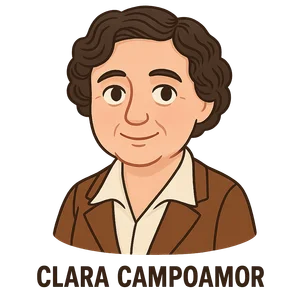
Clara Campoamor
Clara Campoamor was a Spanish lawyer, politician…
Reads at Grades 6–8 Listens at Grades 4–8
Print & create
Answer keys·No prep·Free with an account
28 worksheets · answer keys · full story · quiz · Ages 10-12 · CEFR B2
Plus adds 280,000+ more stories in 27 languages, audio for every one, and printables for all of them.
Just want Clara Campoamor?
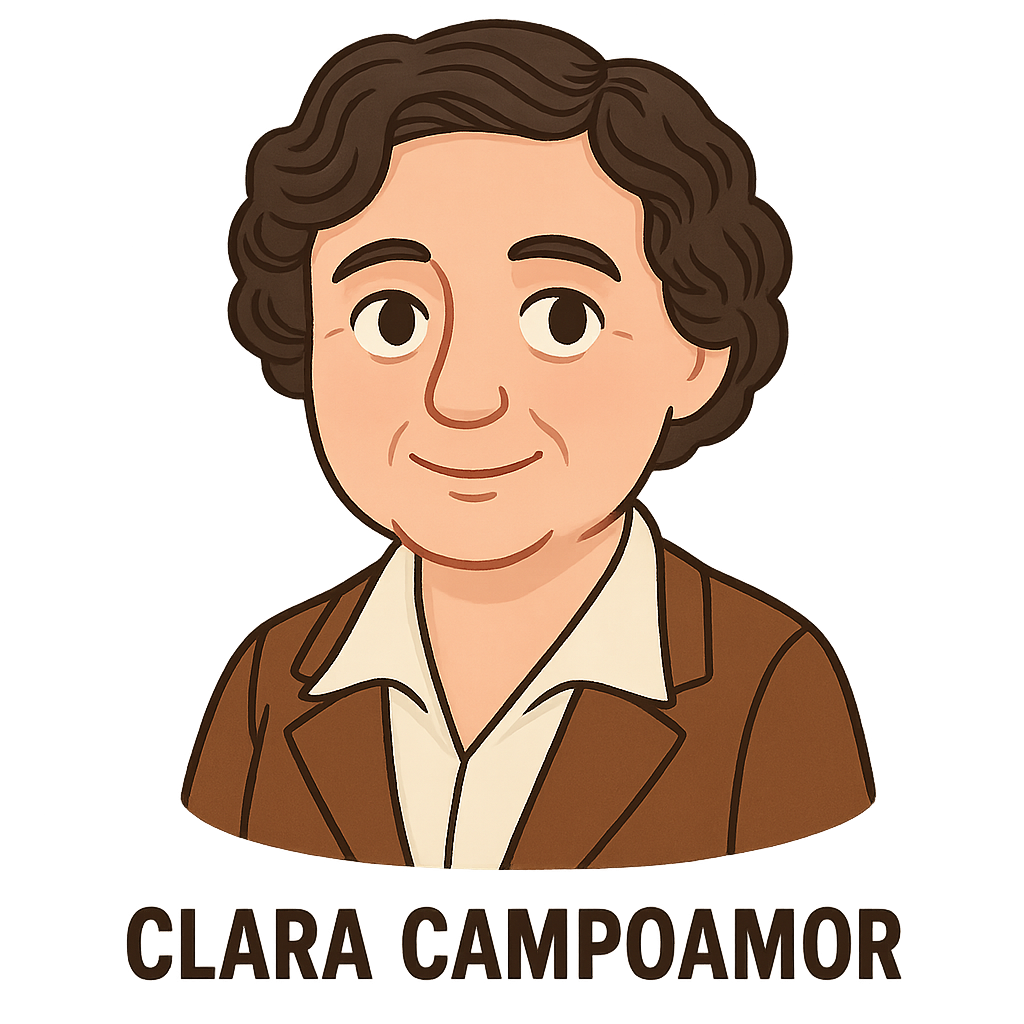
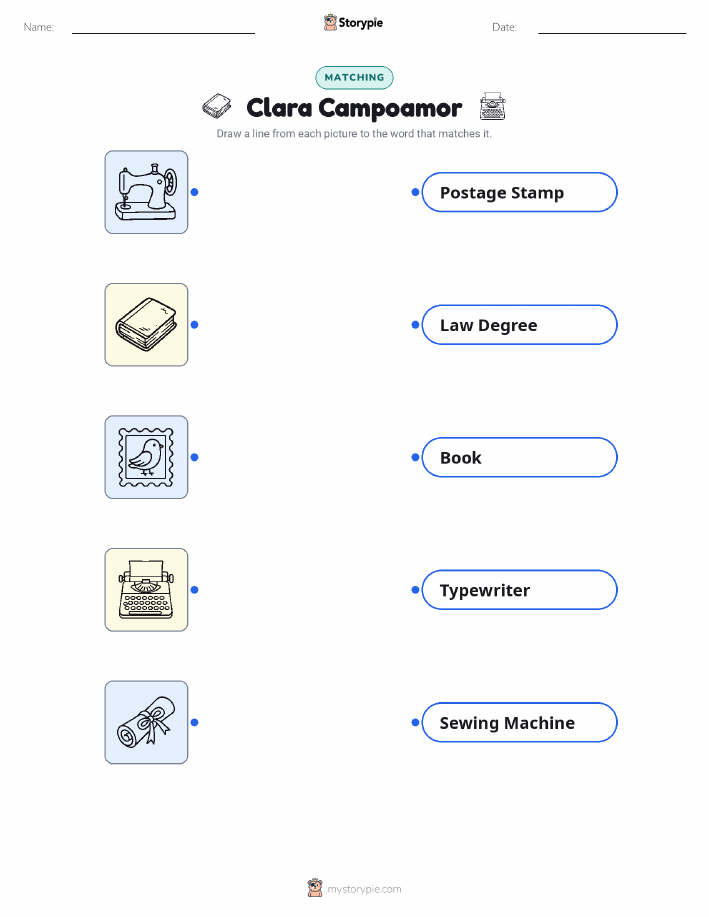
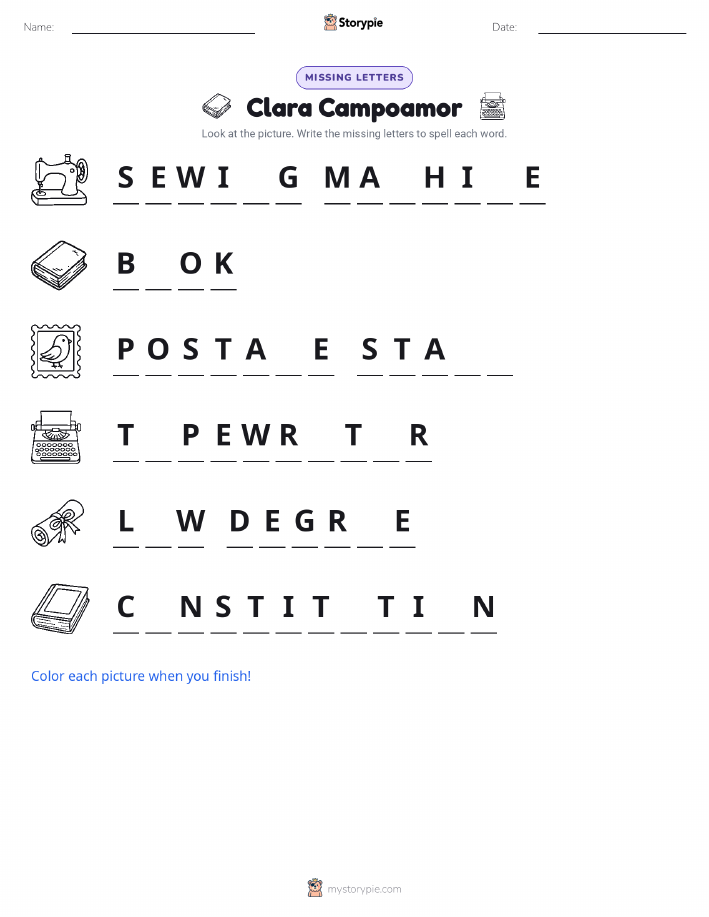
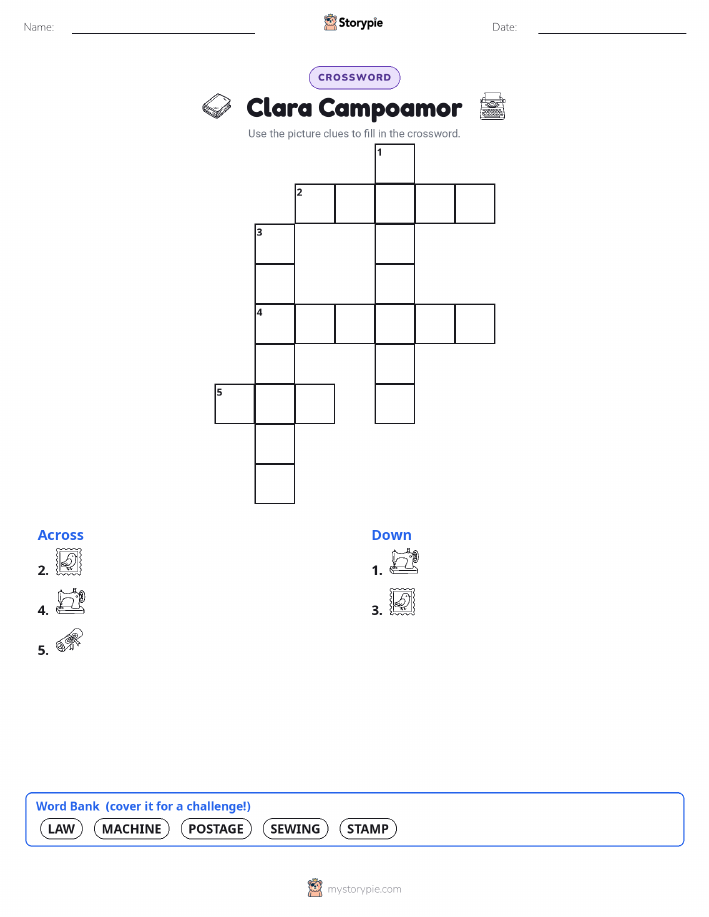
Hello, my name is Clara Campoamor, and I want to share my story with you. I was born in Madrid, Spain, on February 12th, 1888, into a working-class family that valued learning. My world changed when I was just 10 years old, after my father passed away. To help my mother, I had to leave school at the age of 13 and begin working as a seamstress. But even as my hands were busy sewing, my mind was always dreaming of getting a full education and finding a way to make a difference in the world.
My path to achieving my dreams was unconventional. I took on many different jobs to support myself while continuing to learn whenever I could. In 1909, I passed an exam to begin working for the post office, and later, I even worked as a typing teacher. These jobs were like my own personal classroom, teaching me about the world and strengthening my resolve. I was determined to finish the education I had started as a child. Finally, as a grown woman, I returned to school. It was an incredibly proud day in 1924 when, at the age of 36, I graduated from the University of Madrid with a law degree. In those days, very few women became lawyers, but I was ready to step into the courtroom and argue for justice.
In 1931, a new chapter began for my country when Spain became a democracy known as the Second Spanish Republic. It was a time of great change, and I was elected to be part of the government tasked with writing our new constitution. I was one of only three women in the entire assembly. As I sat there, I noticed a profound problem: women like me could be elected to create the laws of the nation, but we were not allowed to vote for the people who represented us. I knew this was a deep injustice. How could a country call itself a true democracy if it ignored the voices of half its people? I decided then that making this right would be my most important fight.
Clara Campoamor
Hello, my name is Clara Campoamor, and I want to share my story with you. I was born in Madrid, Spain, on February 12th, 1888, into a working-class family that valued learning. My world changed when I was just 10 years old, after my father passed away. To help my mother, I had to leave school at the age of 13 and begin working as a seamstress. But even as my hands were busy sewing, my mind was always dreaming of getting a full education and finding a way to make a difference in the world.
My path to achieving my dreams was unconventional. I took on many different jobs to support myself while continuing to learn whenever I could. In 1909, I passed an exam to begin working for the post office, and later, I even worked as a typing teacher. These jobs were like my own personal classroom, teaching me about the world and strengthening my resolve. I was determined to finish the education I had started as a child. Finally, as a grown woman, I returned to school. It was an incredibly proud day in 1924 when, at the age of 36, I graduated from the University of Madrid with a law degree. In those days, very few women became lawyers, but I was ready to step into the courtroom and argue for justice.
In 1931, a new chapter began for my country when Spain became a democracy known as the Second Spanish Republic. It was a time of great change, and I was elected to be part of the government tasked with writing our new constitution. I was one of only three women in the entire assembly. As I sat there, I noticed a profound problem: women like me could be elected to create the laws of the nation, but we were not allowed to vote for the people who represented us. I knew this was a deep injustice. How could a country call itself a true democracy if it ignored the voices of half its people? I decided then that making this right would be my most important fight.
Convincing others was not easy. Many people, including politicians and members of the public, disagreed with me. They argued that women weren't ready for the responsibility of voting. Surprisingly, one of the other female deputies, Victoria Kent, argued against it as well. She worried that women would be influenced to vote against the new republic. The debate came to a head on October 1st, 1931, when I stood before the assembly to give the most important speech of my life. I argued that fundamental rights and freedoms belong to everyone, regardless of their gender. I told them that you cannot build a democracy on a mistake—and leaving women out was a fundamental mistake. After a long and difficult debate, the assembly voted. We won! The right for women to vote was officially written into the Spanish constitution.
My happiness for Spain, and the progress we had made, was short-lived. In 1936, the Spanish Civil War began, a terrible conflict that tore my country apart. Because of my political beliefs and my public role, it was no longer safe for me to stay. I had to flee, becoming an exile from the home I loved. I lived in other countries, including Argentina and Switzerland, for the rest of my life. I always dreamed of returning to Spain, but the new government would not allow it. Even though I was far away, I never stopped writing and speaking out for the freedom and equality I believed every person deserved.
I lived to be 84 years old. My work ensured that the women of Spain had a voice in their country's future, a right that could never again be taken away. Today, I am remembered as a champion of democracy and equality. You can find my face on coins, and there are schools and streets named after me all over Spain. My story is a reminder that you must always stand up for what you believe is right, even if you have to stand alone.
Wow facts
About
Clara Campoamor was a Spanish lawyer, politician, and feminist best known for her advocacy for women's rights and her crucial role in securing women's suffrage in Spain in 1931 during the Second Spanish Republic.
Take a Quiz
Question 1 of 5
What was the main conflict Clara Campoamor faced in the government assembly in 1931?
Explore next





Want to do even more?
Go beyond exploring. Unlock tools that turn every story into real learning.

Storypie Plus for families
Full stories, quizzes, and printables. Nights and car rides, sorted.
- Unlimited audio stories
- Create Mode: your child stars in the story
- Offline downloads
- Printable worksheets & coloring pages

Why Storypie for Schools
Students engaged. Prep in seconds. Evenings back to you.
- Worksheets & Quizzes
- Classroom Management
- Formative Assessment
- Custom Curriculum & Lesson Plans
- 27 Languages

Why Storypie for Homeschool
Curriculum done. They'll ask for more. Hours back in your day.
- Worksheet Generator
- First-Person Audio Stories
- Built-in Comprehension Quizzes
- Custom Curriculum & Lesson Plans
- Print & Go Activities