English

Clara Campoamor
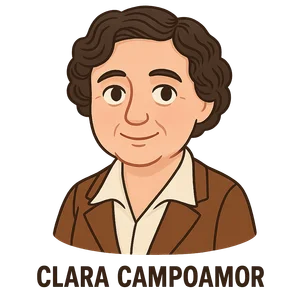
Clara Campoamor was a Spanish lawyer, politician…
Reads at Grades 3–5 Listens at Grades 1–5
Print & create
Answer keys·No prep·Free with an account
28 worksheets · answer keys · full story · quiz · Ages 8-10 · CEFR B1
Plus adds 280,000+ more stories in 27 languages, audio for every one, and printables for all of them.
Just want Clara Campoamor?
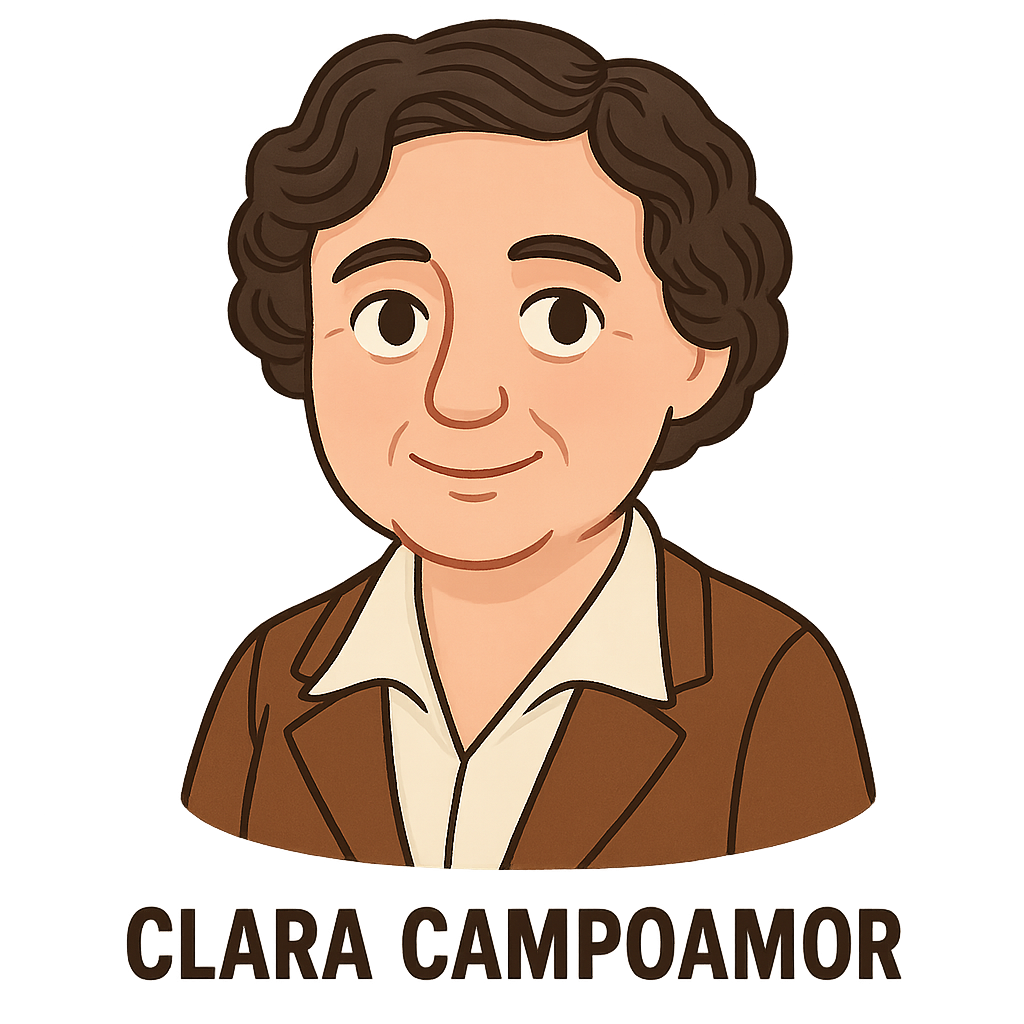
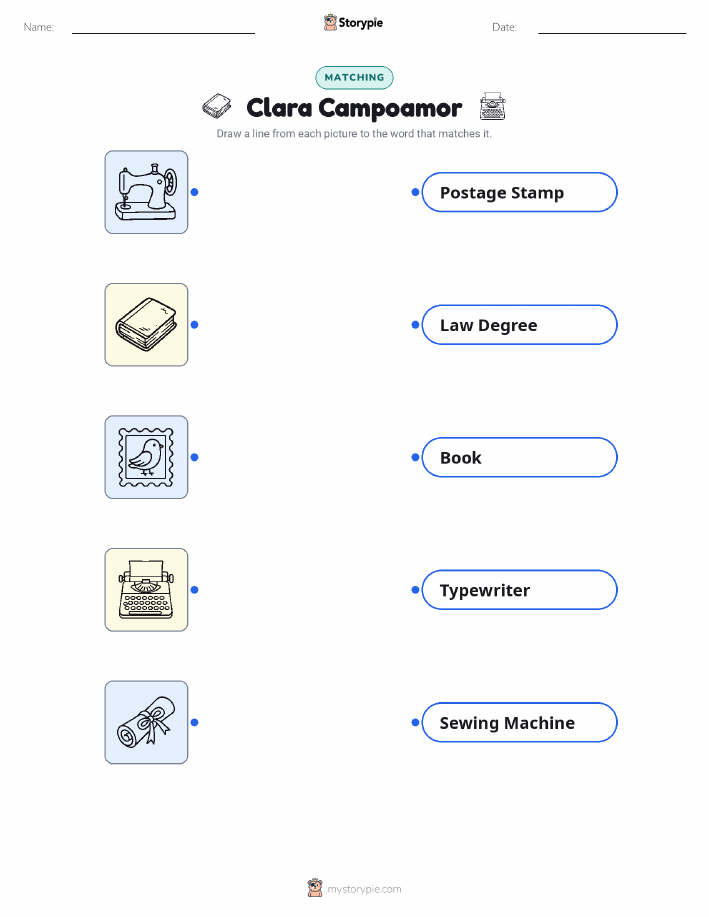
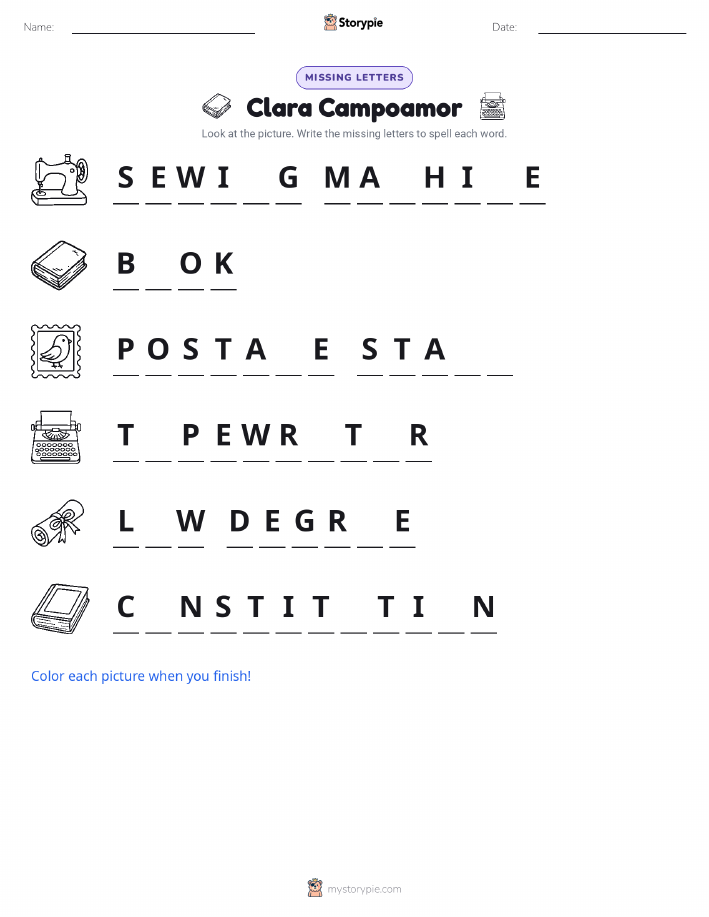
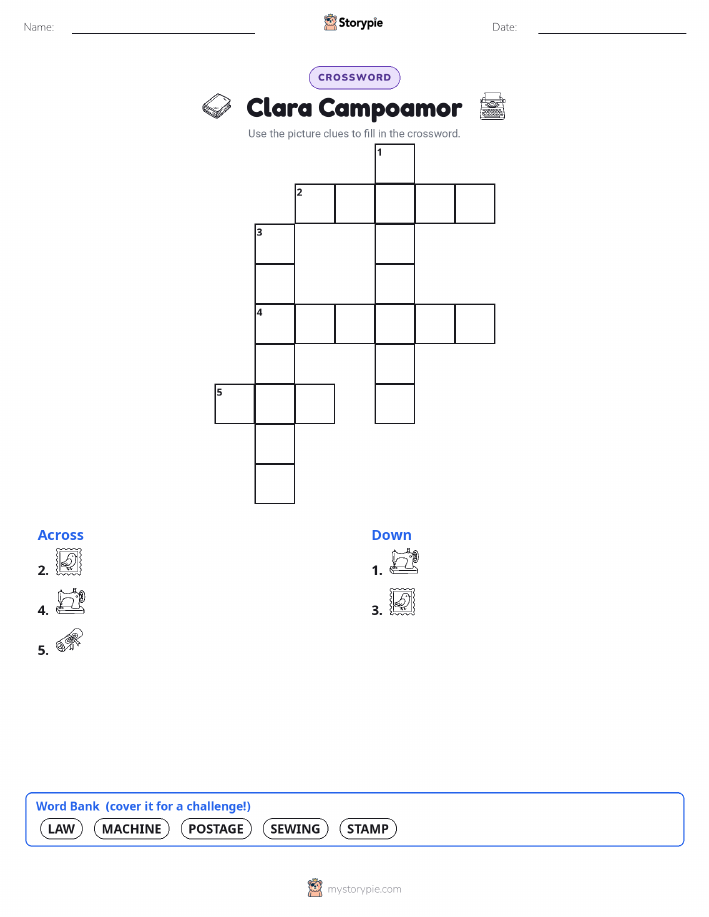
Hello! My name is Clara Campoamor, and I want to share my story with you. I was born in a working-class neighborhood in Madrid, Spain, on February 12th, 1888. My family didn't have much money, but our home was filled with love. When I was just a young girl, a sad thing happened—my father passed away. I knew I had to help my mother support our family. So, at age 13, I began working as a seamstress, carefully stitching clothes. Even though I was working, I never stopped dreaming. I loved to read and learn about the world, and I promised myself that I would study hard one day and use my knowledge to make a difference for others.
As I grew up, I took many different jobs to support myself, including working for the post office and later for the telephone company. All the while, I kept studying whenever I could find a spare moment. It wasn't easy to work all day and then open my books at night, but I was determined to reach my goal. Finally, in 1920, I achieved my dream of enrolling in the University of Madrid to study law. Back then, it was very rare for a woman to become a lawyer, and some people didn't think I belonged there. But I ignored them and focused on my studies. In 1924, I proudly graduated and became one of the few female lawyers in all of Spain. I wanted to use my new skills to fight for fairness and justice, especially for women and children who often didn't have a voice in society.
In 1931, big changes were happening in my country. Spain became a new kind of government called a republic, which meant the people would have more power. I was elected to help write the new set of rules for everyone, called a constitution. I knew this was my chance to fight for something I believed in with all my heart: women's right to vote. At the time, women in Spain were not allowed to vote in elections, which meant they had no say in who their leaders were or what laws were made. Many people, including some other women in the government, argued that women weren't ready for such a big responsibility. On October 1st, 1931, I stood up in front of all the leaders and gave the most important speech of my life. I argued that a country could not be truly fair or free if it ignored half of its people. I told them that women were smart, capable citizens who deserved the same rights as men.
Clara Campoamor: A Voice for Justice
Hello! My name is Clara Campoamor, and I want to share my story with you. I was born in a working-class neighborhood in Madrid, Spain, on February 12th, 1888. My family didn't have much money, but our home was filled with love. When I was just a young girl, a sad thing happened—my father passed away. I knew I had to help my mother support our family. So, at age 13, I began working as a seamstress, carefully stitching clothes. Even though I was working, I never stopped dreaming. I loved to read and learn about the world, and I promised myself that I would study hard one day and use my knowledge to make a difference for others.
As I grew up, I took many different jobs to support myself, including working for the post office and later for the telephone company. All the while, I kept studying whenever I could find a spare moment. It wasn't easy to work all day and then open my books at night, but I was determined to reach my goal. Finally, in 1920, I achieved my dream of enrolling in the University of Madrid to study law. Back then, it was very rare for a woman to become a lawyer, and some people didn't think I belonged there. But I ignored them and focused on my studies. In 1924, I proudly graduated and became one of the few female lawyers in all of Spain. I wanted to use my new skills to fight for fairness and justice, especially for women and children who often didn't have a voice in society.
In 1931, big changes were happening in my country. Spain became a new kind of government called a republic, which meant the people would have more power. I was elected to help write the new set of rules for everyone, called a constitution. I knew this was my chance to fight for something I believed in with all my heart: women's right to vote. At the time, women in Spain were not allowed to vote in elections, which meant they had no say in who their leaders were or what laws were made. Many people, including some other women in the government, argued that women weren't ready for such a big responsibility. On October 1st, 1931, I stood up in front of all the leaders and gave the most important speech of my life. I argued that a country could not be truly fair or free if it ignored half of its people. I told them that women were smart, capable citizens who deserved the same rights as men.
After my speech, a vote was held to decide if women should get the right to vote. And we won! The right for women to vote was officially written into Spain's new constitution. It was a huge victory for fairness and equality. In the election of 1933, women all across Spain voted for the very first time. It filled my heart with joy to see them taking part in shaping their country's future. Sadly, just a few years later in 1936, a terrible civil war broke out in Spain. The country became a very dangerous place for me because of my beliefs, and I had to leave the home I loved so much.
I spent the rest of my life living in other countries and never got to return to Spain. But I never stopped writing and speaking out for democracy and equality. I lived to be 84 years old. Today, my work is remembered all over Spain. You can find streets, schools, and even statues with my name on them. People remember me as a woman who believed in justice and used her voice to make sure every single person's voice could be heard.
Wow facts
About
Clara Campoamor was a Spanish lawyer, politician, and feminist best known for her advocacy for women's rights and her crucial role in securing women's suffrage in Spain in 1931 during the Second Spanish Republic.
Take a Quiz
Question 1 of 5
What was the main goal Clara Campoamor fought for when she was elected in 1931?
Explore next





Want to do even more?
Go beyond exploring. Unlock tools that turn every story into real learning.

Storypie Plus for families
Full stories, quizzes, and printables. Nights and car rides, sorted.
- Unlimited audio stories
- Create Mode: your child stars in the story
- Offline downloads
- Printable worksheets & coloring pages

Why Storypie for Schools
Students engaged. Prep in seconds. Evenings back to you.
- Worksheets & Quizzes
- Classroom Management
- Formative Assessment
- Custom Curriculum & Lesson Plans
- 27 Languages

Why Storypie for Homeschool
Curriculum done. They'll ask for more. Hours back in your day.
- Worksheet Generator
- First-Person Audio Stories
- Built-in Comprehension Quizzes
- Custom Curriculum & Lesson Plans
- Print & Go Activities