English

Claude Debussy
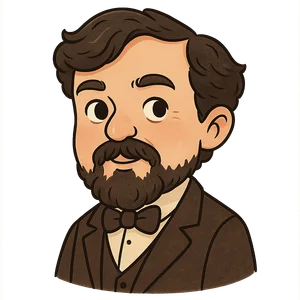
Claude Debussy was a highly influential French composer of the late 19th and early 20th centuries…
Reads at Grades 6–8 Listens at Grades 4–8
Print & create
Answer keys·No prep·Free with an account
28 worksheets · answer keys · full story · quiz · Ages 10-12 · CEFR B2
Plus adds 279,000+ more stories in 27 languages, audio for every one, and printables for all of them.
Just want Claude Debussy?
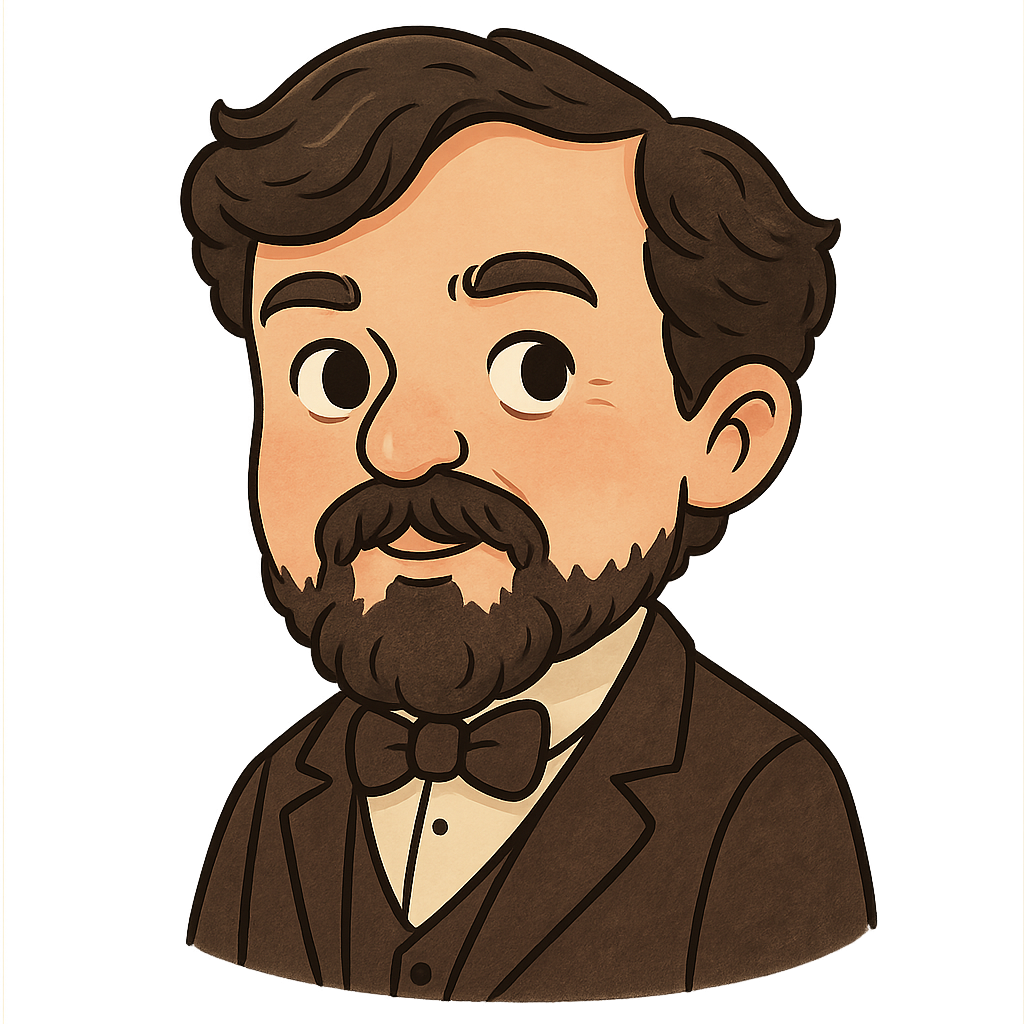
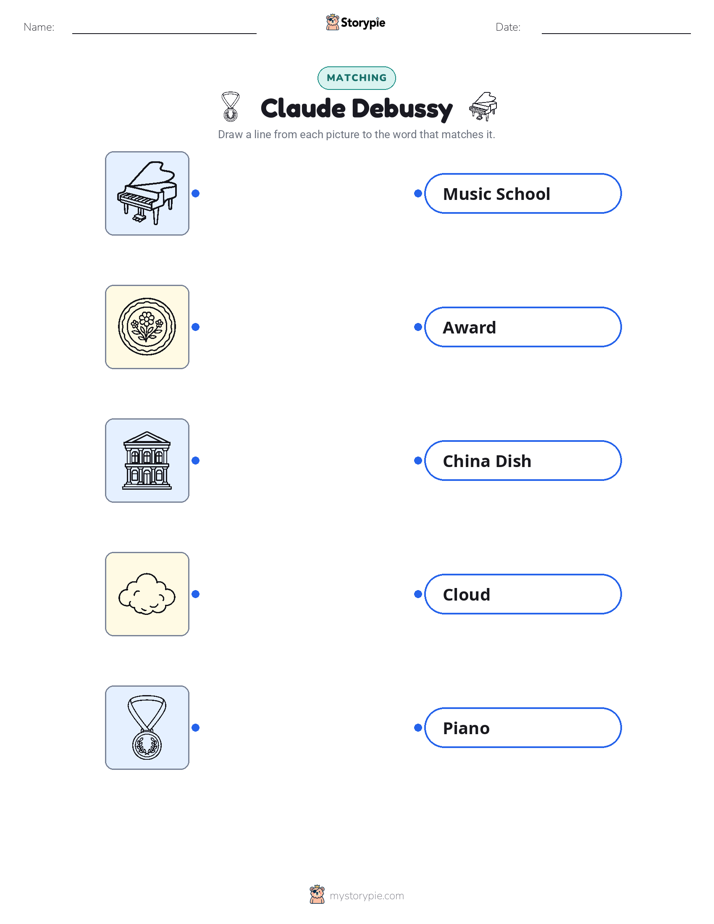
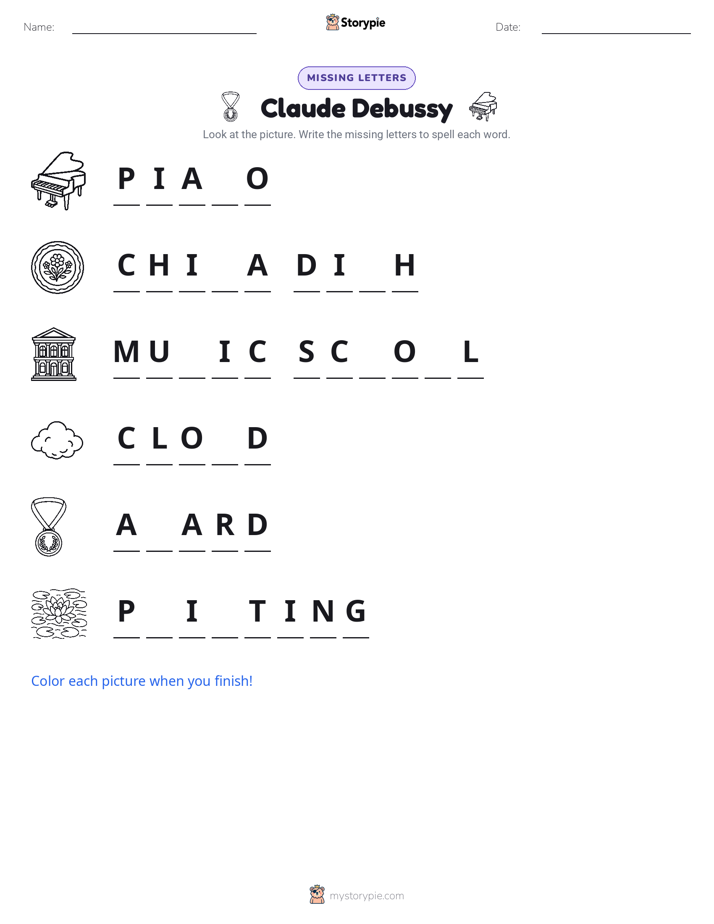
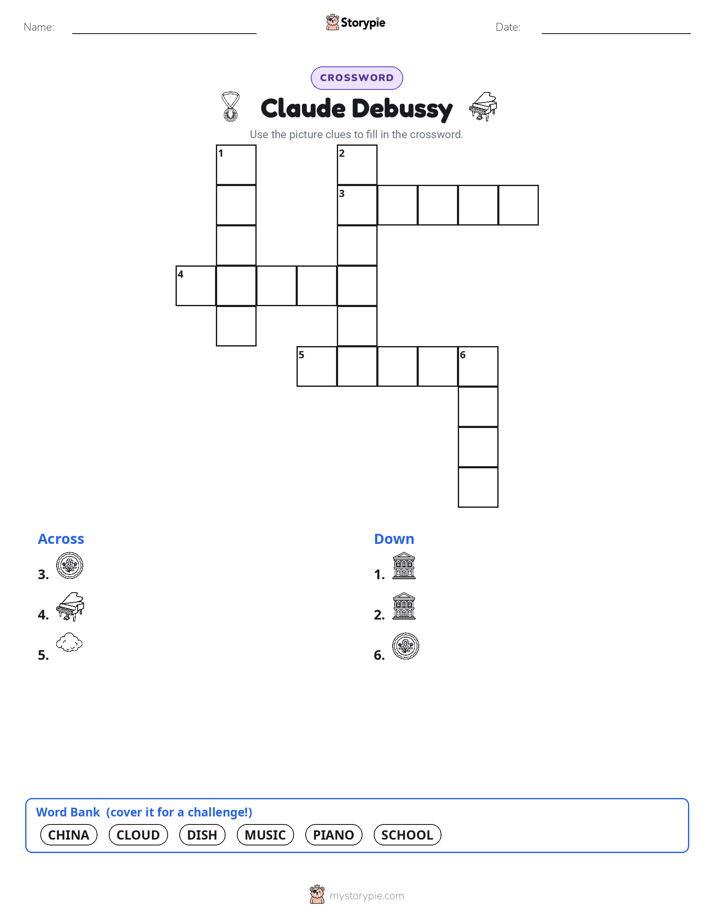
Hello. My name is Claude Debussy, and I want to tell you the story of how I learned to paint pictures with music. I was born on August 22nd, 1862, in a small town near Paris, France, called Saint-Germain-en-Laye. My family wasn't very musical; my parents ran a little shop that sold china dishes. But my wonderful aunt saw something special in me. She noticed how much I loved the piano and believed I had a real talent. Thanks to her, I began taking lessons, and it felt like a whole new world opened up to me. I practiced so hard that in 1872, when I was just ten years old, I was accepted into the most famous music school in the country, the Paris Conservatoire. It was a dream come true, but it was also the beginning of my journey to find my own unique voice in the world of music.
The Paris Conservatoire was a very serious place with lots of rules. My professors wanted me to write music exactly the way composers had for hundreds of years. I was a good student, and I learned all the rules, but in my heart, I heard different kinds of sounds. I wanted my music to feel free and flowing, like a cloud drifting across the sky or light shimmering on water. I would experiment with chords and harmonies that my teachers thought were strange and incorrect. Despite being a bit of a rebel, my skills were recognized, and in 1884, I won a very important award called the Prix de Rome for a piece I wrote. The prize was a chance to study music in Rome, Italy. But I missed the creative energy of Paris, so I didn't stay long. I knew my true musical path was waiting for me back home.
Claude Debussy: Painting Pictures with Sound
Hello. My name is Claude Debussy, and I want to tell you the story of how I learned to paint pictures with music. I was born on August 22nd, 1862, in a small town near Paris, France, called Saint-Germain-en-Laye. My family wasn't very musical; my parents ran a little shop that sold china dishes. But my wonderful aunt saw something special in me. She noticed how much I loved the piano and believed I had a real talent. Thanks to her, I began taking lessons, and it felt like a whole new world opened up to me. I practiced so hard that in 1872, when I was just ten years old, I was accepted into the most famous music school in the country, the Paris Conservatoire. It was a dream come true, but it was also the beginning of my journey to find my own unique voice in the world of music.
The Paris Conservatoire was a very serious place with lots of rules. My professors wanted me to write music exactly the way composers had for hundreds of years. I was a good student, and I learned all the rules, but in my heart, I heard different kinds of sounds. I wanted my music to feel free and flowing, like a cloud drifting across the sky or light shimmering on water. I would experiment with chords and harmonies that my teachers thought were strange and incorrect. Despite being a bit of a rebel, my skills were recognized, and in 1884, I won a very important award called the Prix de Rome for a piece I wrote. The prize was a chance to study music in Rome, Italy. But I missed the creative energy of Paris, so I didn't stay long. I knew my true musical path was waiting for me back home.
Back in Paris, I felt inspired by the world around me, especially by the painters and poets. There was a new style of painting called Impressionism, led by artists like Claude Monet. They used light and color to capture a feeling or a fleeting moment rather than a perfect picture. I thought, 'Why can't I do that with music?' I began to compose pieces that didn't follow a strict story but instead created a mood or an atmosphere. My music was meant to suggest images and emotions to the listener. In 1894, my orchestral piece Prélude à l'après-midi d'un faune (Prelude to the Afternoon of a Faun) was performed for the first time. People had never heard anything like it. It was dreamy, mysterious, and didn't follow the old rules. Some critics were confused, but many people felt it was the start of a whole new kind of music.
After finding my unique style, I was filled with ideas. I spent ten years writing my only opera, Pelléas et Mélisande, which premiered in 1902. It was very different from the loud, dramatic operas people were used to; mine was quiet, mysterious, and full of subtle emotion. I also loved writing for the piano. Perhaps you've heard of my most famous piano piece, 'Clair de lune,' which means 'moonlight.' It is part of a collection called the Suite bergamasque, which I published in 1905. I also wrote a powerful piece for the orchestra called La Mer (The Sea), where I used all the instruments to paint a picture of the ocean, from calm morning waves to a stormy conversation between the wind and the sea. Through these works, I tried to show that music could be as colorful and evocative as any painting.
My later years were shadowed by the start of World War I, which was a sad time for my country and the world. But I continued to compose, always searching for new sounds. I lived to be 55 years old and passed away in my beloved Paris on March 25th, 1918. I am told that my music changed everything. I broke the old rules and gave composers who came after me the freedom to explore new ideas about harmony, rhythm, and musical color. Today, when you hear my music, whether it's the gentle notes of 'Clair de lune' or the swirling sounds of La Mer, I hope you feel like you are stepping into a beautiful, dreamy painting—one made not with paint, but with sound.
Wow facts
About
Claude Debussy was a highly influential French composer of the late 19th and early 20th centuries, known for his special way of creating music. He is often connected with Impressionist music, even though he did not like that label. He is famous for works like 'Clair de lune', which is part of his Suite bergamasque, and 'La mer'.
Take a Quiz
Question 1 of 5
Summarize the main challenge Claude Debussy faced at the Paris Conservatoire.
Explore next






Want to do even more?
Go beyond exploring. Unlock tools that turn every story into real learning.

Storypie Plus for families
Full stories, quizzes, and printables. Nights and car rides, sorted.
- Unlimited audio stories
- Create Mode: your child stars in the story
- Offline downloads
- Printable worksheets & coloring pages

Why Storypie for Schools
Students engaged. Prep in seconds. Evenings back to you.
- Worksheets & Quizzes
- Classroom Management
- Formative Assessment
- Custom Curriculum & Lesson Plans
- 27 Languages

Why Storypie for Homeschool
Curriculum done. They'll ask for more. Hours back in your day.
- Worksheet Generator
- First-Person Audio Stories
- Built-in Comprehension Quizzes
- Custom Curriculum & Lesson Plans
- Print & Go Activities