English

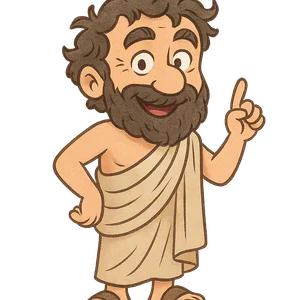
Democritus
Democritus was an Ancient Greek pre-Socratic philosopher primarily remembered today for his formulation of an…
Reads at Grades 3–5 Listens at Grades 1–5
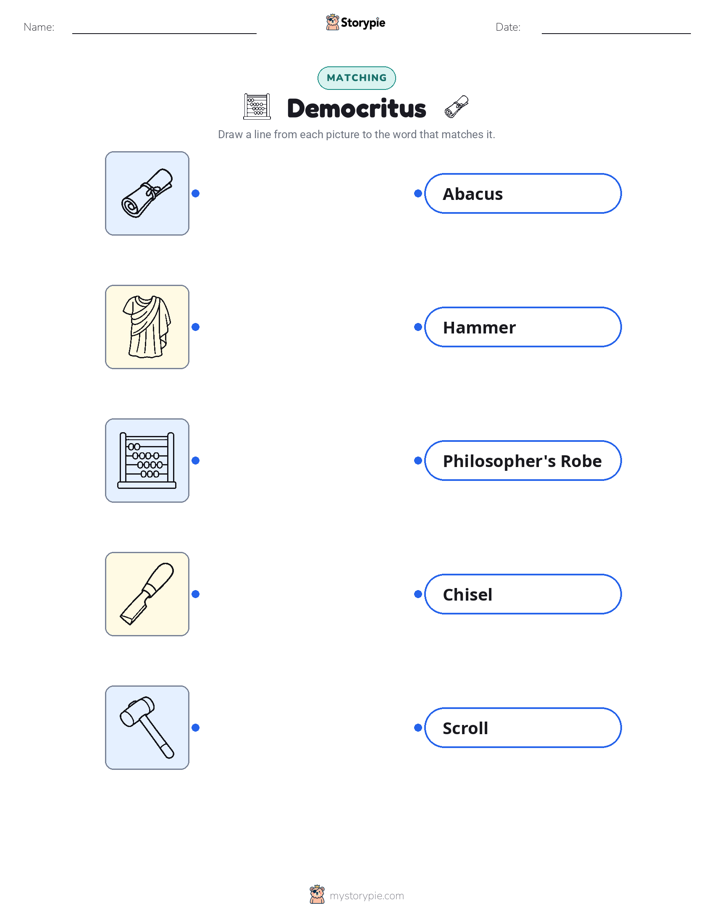
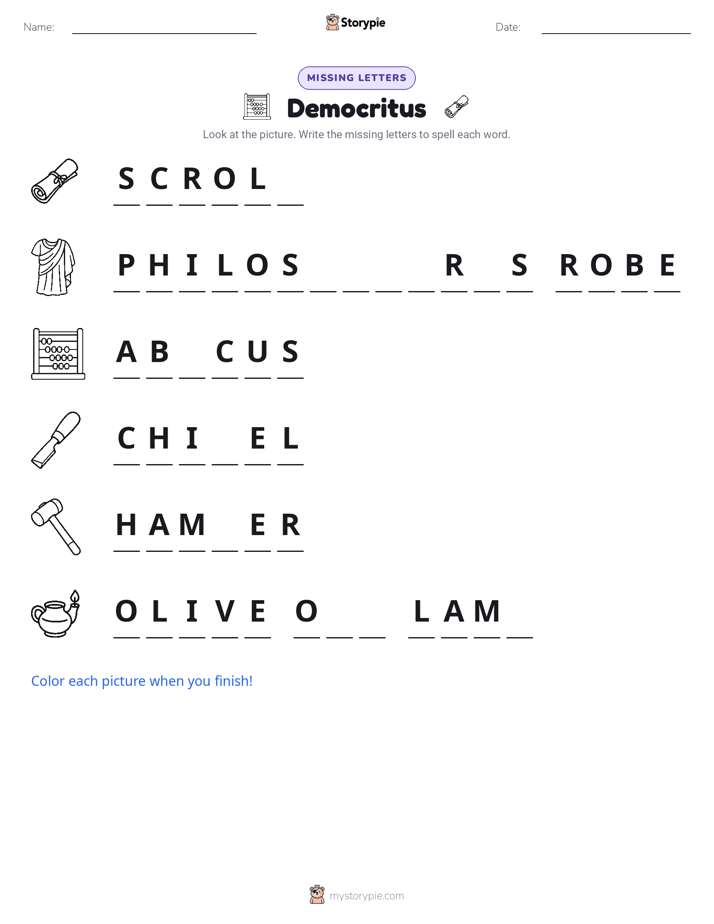
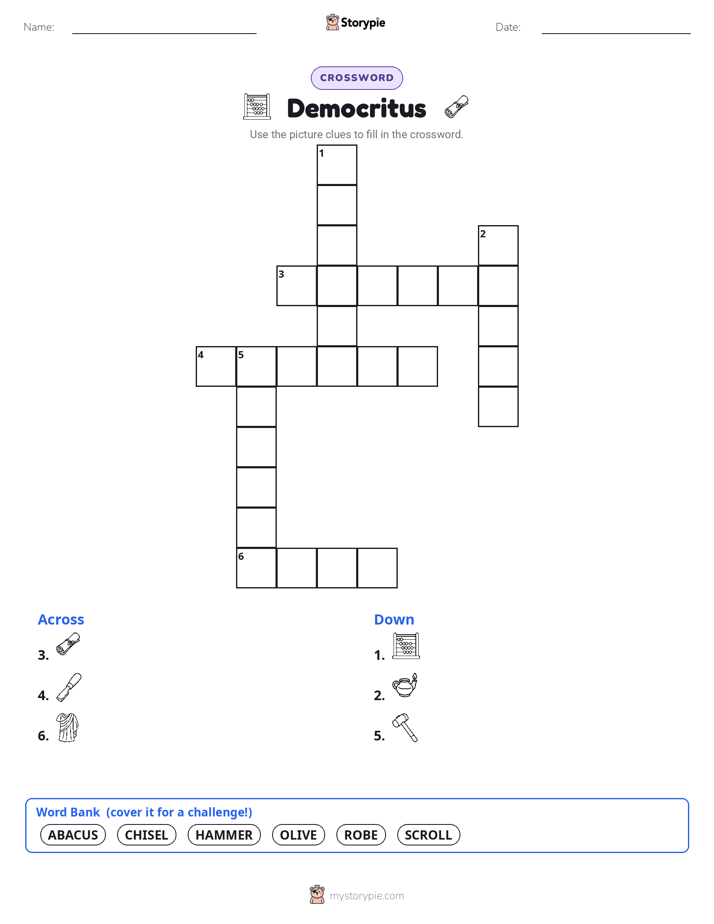
Print & create
Answer keys·No prep·Free with an account
28 worksheets · answer keys · full story · quiz · Ages 8-10 · CEFR B1
Plus adds 208,000+ more stories in 27 languages, audio for every one, and printables for all of them.
Just want Democritus?
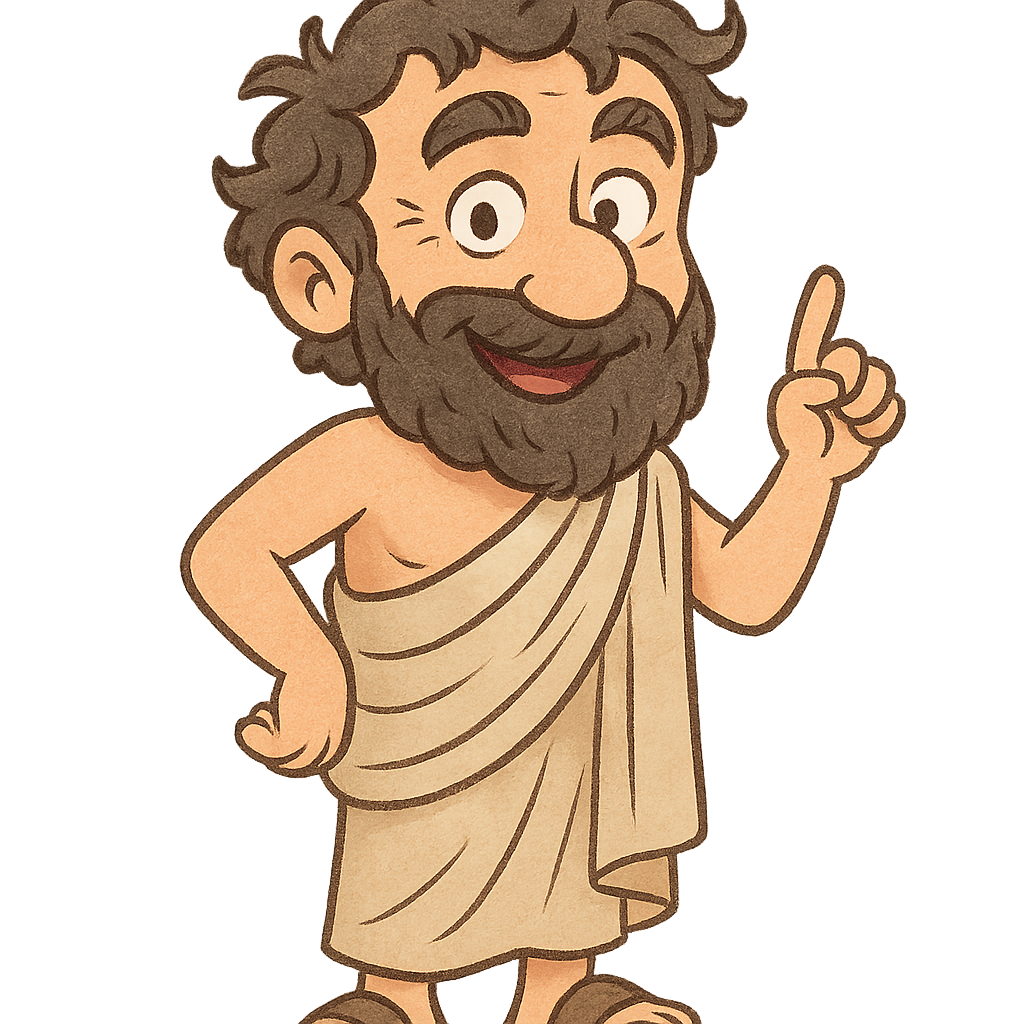
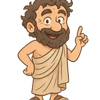
Hello. My name is Democritus, and I was a thinker, or what we called a philosopher, in ancient Greece. I was born in a city called Abdera around the year 460 BCE. While many philosophers were known for being very serious, I had a different reputation. People often called me 'The Laughing Philosopher.' This wasn't because I was always telling jokes, but because I truly believed that being cheerful was one of the most important things in life. I thought that when a person is happy, their mind is clear and free to ask big questions, to wonder about the world, and to learn everything it has to offer. A joyful heart, I believed, was the best tool for discovery.
My greatest passion was learning. I was very fortunate because my family had enough money to allow me to follow this passion wherever it led. During the 5th century BCE, I traveled to many faraway lands, which was not an easy thing to do back then. My journeys took me to places like Egypt and Persia. In these different cultures, I met other thinkers and scholars who taught me about their knowledge of mathematics, the stars in the night sky, and their own unique ways of understanding the world. All this travel and study was driven by one main goal. I wanted to answer what I believed was the biggest and most important question of all: 'What is everything in the world made of?'.
To find the answer, I spent a lot of time thinking with my teacher, a wise man named Leucippus. Imagine you find a beautiful seashell on the beach. If you break it in half, you have two smaller pieces of seashell. If you break one of those pieces, you get an even smaller piece. What if you could keep breaking it again and again? My idea was that you would eventually reach a piece so incredibly tiny that it could not be broken any further. I came up with a special name for this final, unbreakable particle. I called it 'atomos,' which is a Greek word that means 'uncuttable.' I proposed that everything in the entire universe was made of these tiny, invisible atoms. The stars, the sea, the sandals on my feet, and even you and I—all of it was just different arrangements of atoms moving around in empty space. It was a very big idea, and not many people were ready for it. A very famous philosopher named Aristotle, who lived after me, did not agree with my theory. Because he was so respected, my idea about atoms was not widely accepted for a very, very long time.
Democritus: The Man Who Discovered the Atom
Hello. My name is Democritus, and I was a thinker, or what we called a philosopher, in ancient Greece. I was born in a city called Abdera around the year 460 BCE. While many philosophers were known for being very serious, I had a different reputation. People often called me 'The Laughing Philosopher.' This wasn't because I was always telling jokes, but because I truly believed that being cheerful was one of the most important things in life. I thought that when a person is happy, their mind is clear and free to ask big questions, to wonder about the world, and to learn everything it has to offer. A joyful heart, I believed, was the best tool for discovery.
My greatest passion was learning. I was very fortunate because my family had enough money to allow me to follow this passion wherever it led. During the 5th century BCE, I traveled to many faraway lands, which was not an easy thing to do back then. My journeys took me to places like Egypt and Persia. In these different cultures, I met other thinkers and scholars who taught me about their knowledge of mathematics, the stars in the night sky, and their own unique ways of understanding the world. All this travel and study was driven by one main goal. I wanted to answer what I believed was the biggest and most important question of all: 'What is everything in the world made of?'.
To find the answer, I spent a lot of time thinking with my teacher, a wise man named Leucippus. Imagine you find a beautiful seashell on the beach. If you break it in half, you have two smaller pieces of seashell. If you break one of those pieces, you get an even smaller piece. What if you could keep breaking it again and again? My idea was that you would eventually reach a piece so incredibly tiny that it could not be broken any further. I came up with a special name for this final, unbreakable particle. I called it 'atomos,' which is a Greek word that means 'uncuttable.' I proposed that everything in the entire universe was made of these tiny, invisible atoms. The stars, the sea, the sandals on my feet, and even you and I—all of it was just different arrangements of atoms moving around in empty space. It was a very big idea, and not many people were ready for it. A very famous philosopher named Aristotle, who lived after me, did not agree with my theory. Because he was so respected, my idea about atoms was not widely accepted for a very, very long time.
I lived a very long and full life, filled with questions and wonder. I lived to be about 90 years old. For more than 2,000 years after my time, my idea about 'atomos' was mostly forgotten. But then, much later in history, scientists with new tools and new ways of experimenting proved that the universe really is made of atoms. Today, I am remembered because my curiosity helped start a new way of looking at the world. My story shows that even if people don't believe your ideas at first, asking big questions about the smallest things can eventually lead to incredible discoveries.
Wow facts
About
Democritus was an Ancient Greek pre-Socratic philosopher primarily remembered today for his formulation of an atomic theory of the universe.
Take a Quiz
Question 1 of 5
Why was Democritus called 'The Laughing Philosopher'?
Explore next




Want to do even more?
Go beyond exploring. Unlock tools that turn every story into real learning.

Storypie Plus for families
Full stories, quizzes, and printables. Nights and car rides, sorted.
- Unlimited audio stories
- Create Mode: your child stars in the story
- Offline downloads
- Printable worksheets & coloring pages

Why Storypie for Schools
Students engaged. Prep in seconds. Evenings back to you.
- Worksheets & Quizzes
- Classroom Management
- Formative Assessment
- Custom Curriculum & Lesson Plans
- 27 Languages

Why Storypie for Homeschool
Curriculum done. They'll ask for more. Hours back in your day.
- Worksheet Generator
- First-Person Audio Stories
- Built-in Comprehension Quizzes
- Custom Curriculum & Lesson Plans
- Print & Go Activities