English

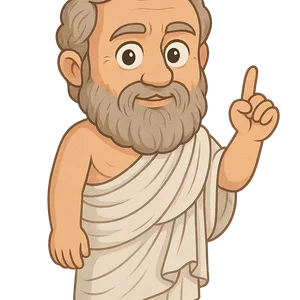
Plato
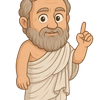
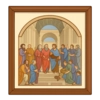
An ancient Greek philosopher who founded the Academy in Athens and wrote influential philosophical dialogues…
Reads at Grades 3–5 Listens at Grades 1–5
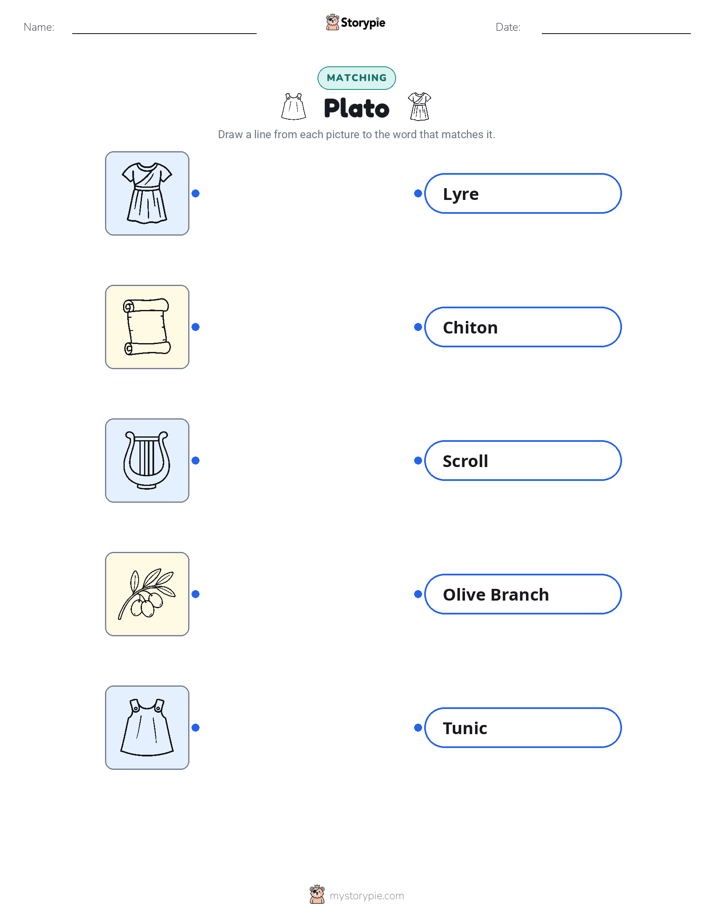
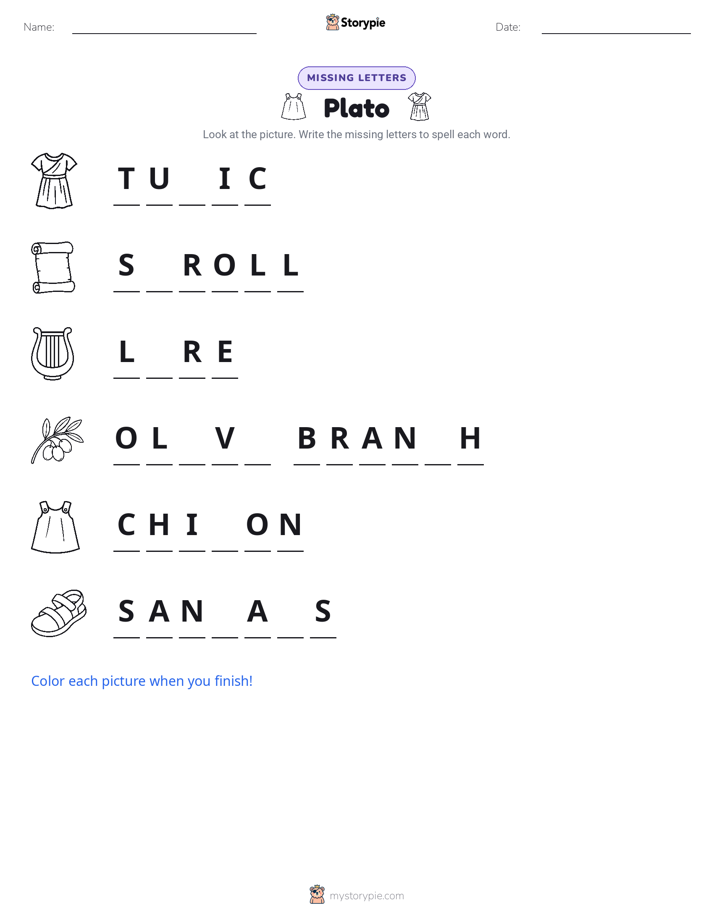
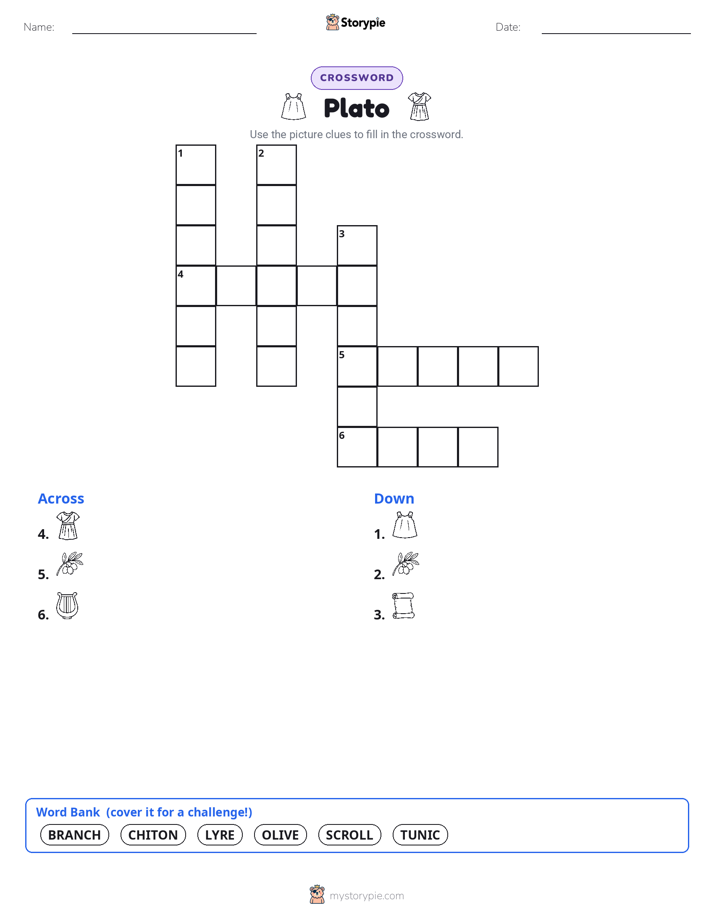
Print & create
Answer keys·No prep·Free with an account
28 worksheets · answer keys · full story · quiz · Ages 8-10 · CEFR B1
Plus adds 102,000+ more stories in 27 languages, audio for every one, and printables for all of them.
Just want Plato?
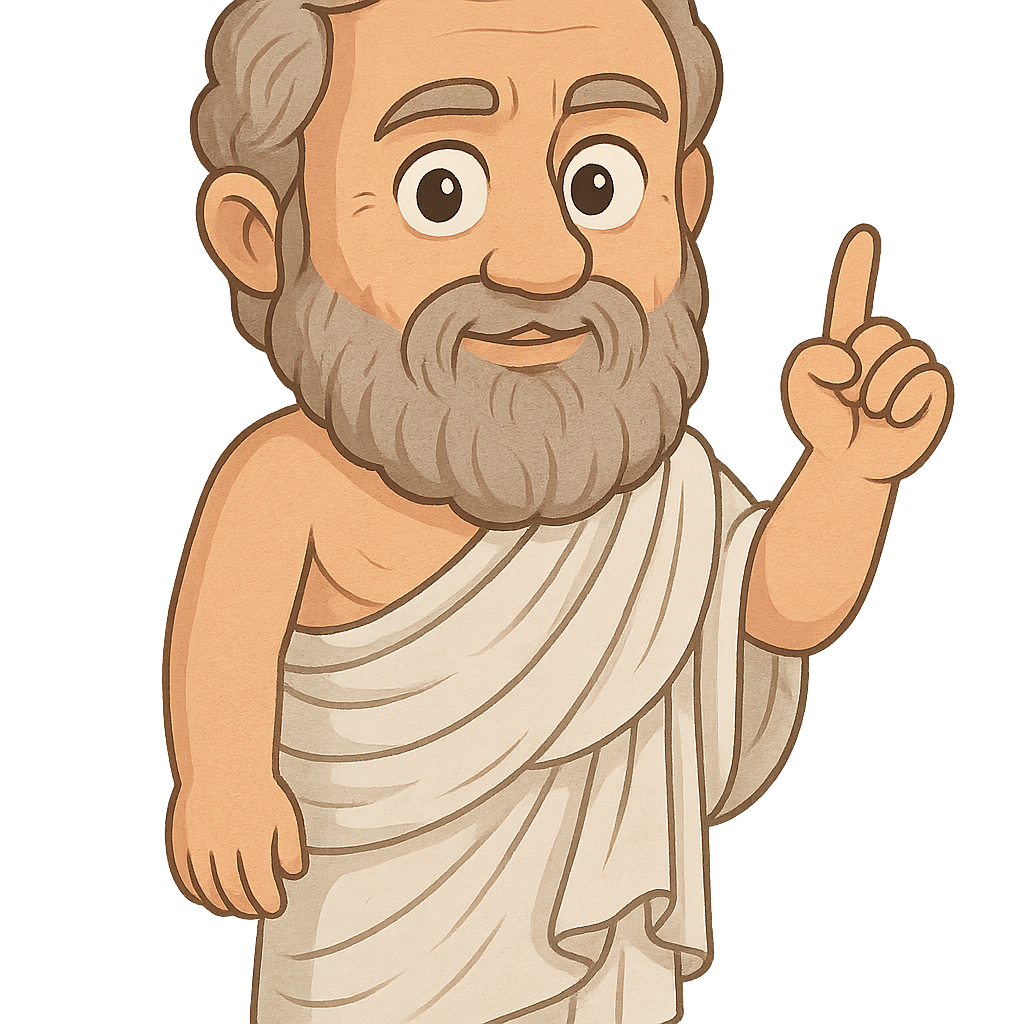
Hello! My name is Plato. I was born into a well-known family in the beautiful city of Athens, Greece, around the year 428 BCE. Growing up, Athens was a busy place full of amazing art, new ideas, and lots of talking. I was very lucky to get a good education in music, poetry, and gymnastics. But what I loved most was thinking and asking questions. When I was a young man, I met someone who changed my life forever: a philosopher named Socrates. He wasn't like other teachers. He didn't just give you answers; he taught you how to find them yourself by asking smart questions. I became his devoted student and followed him everywhere, listening to every word.
For years, I learned from Socrates. We would walk through the marketplace, called the agora, and he would talk to everyone—shopkeepers, soldiers, and politicians. He would ask them simple questions like, 'What is courage?' or 'What does it mean to be good?' It was amazing to watch people realize they didn't really know the answers to things they thought were simple. He made everyone think more deeply. But some powerful people in Athens didn't like that Socrates was always questioning them. They accused him of disrespecting the city's traditions. In the year 399 BCE, he was put on trial and, very sadly, was sentenced to death. Losing my teacher was the saddest moment of my life, and it made me believe that our city needed better leaders and a better way of thinking about justice.
After Socrates was gone, I left Athens for a while. I traveled to places like Egypt and Italy, learning about mathematics, science, and different ways of living. These travels opened my eyes to the world. When I returned to Athens around the year 387 BCE, I had a big idea. I wanted to create a special place where people could learn how to think like Socrates, a place dedicated to knowledge and the search for truth. I started a school just outside the city walls in a grove of olive trees dedicated to a hero named Akademos. I called my school the Academy. It wasn't just any school; it became a place where the brightest minds could study philosophy, mathematics, astronomy, and how to govern fairly. It is sometimes called the very first university in the world!
Plato: The Thinker of Athens
Hello! My name is Plato. I was born into a well-known family in the beautiful city of Athens, Greece, around the year 428 BCE. Growing up, Athens was a busy place full of amazing art, new ideas, and lots of talking. I was very lucky to get a good education in music, poetry, and gymnastics. But what I loved most was thinking and asking questions. When I was a young man, I met someone who changed my life forever: a philosopher named Socrates. He wasn't like other teachers. He didn't just give you answers; he taught you how to find them yourself by asking smart questions. I became his devoted student and followed him everywhere, listening to every word.
For years, I learned from Socrates. We would walk through the marketplace, called the agora, and he would talk to everyone—shopkeepers, soldiers, and politicians. He would ask them simple questions like, 'What is courage?' or 'What does it mean to be good?' It was amazing to watch people realize they didn't really know the answers to things they thought were simple. He made everyone think more deeply. But some powerful people in Athens didn't like that Socrates was always questioning them. They accused him of disrespecting the city's traditions. In the year 399 BCE, he was put on trial and, very sadly, was sentenced to death. Losing my teacher was the saddest moment of my life, and it made me believe that our city needed better leaders and a better way of thinking about justice.
After Socrates was gone, I left Athens for a while. I traveled to places like Egypt and Italy, learning about mathematics, science, and different ways of living. These travels opened my eyes to the world. When I returned to Athens around the year 387 BCE, I had a big idea. I wanted to create a special place where people could learn how to think like Socrates, a place dedicated to knowledge and the search for truth. I started a school just outside the city walls in a grove of olive trees dedicated to a hero named Akademos. I called my school the Academy. It wasn't just any school; it became a place where the brightest minds could study philosophy, mathematics, astronomy, and how to govern fairly. It is sometimes called the very first university in the world!
To make sure Socrates's ideas were never forgotten, I started writing them down. I wrote many books, but they were written as conversations, or 'dialogues,' with Socrates as the main character. In these dialogues, I explored the big questions he loved to ask. I wrote about justice in my most famous book, The Republic, where I imagined what a perfect, fair city would look like. I also had an idea called the 'Theory of Forms.' I believed that for everything we see in our world—a chair, a dog, or a brave act—there is a perfect, unchanging idea, or 'Form,' of it in a higher reality. I also told a famous story called the 'Allegory of the Cave' to explain how philosophy can help us see the world more clearly, like escaping a dark cave to see the real sun.
I spent the rest of my life teaching at the Academy. One of my best students was a brilliant young man named Aristotle, who went on to become a famous philosopher himself. I lived to be about 80 years old, passing away around 348 BCE. Even though I lived thousands of years ago, people still read my books and discuss my ideas today. My school, the Academy, lasted for over 900 years! I am remembered for encouraging people to ask big questions, to search for truth, and to believe that a better, fairer world is always possible if we use our minds.
Wow facts
About
An ancient Greek philosopher who founded the Academy in Athens and wrote influential philosophical dialogues, laying the foundation for Western philosophy and political theory.
Take a Quiz
Question 1 of 5
What was the name of the school I started around the year 387 BCE?
Explore next



Want to do even more?
Go beyond exploring. Unlock tools that turn every story into real learning.

Storypie Plus for families
Full stories, quizzes, and printables. Nights and car rides, sorted.
- Unlimited audio stories
- Create Mode: your child stars in the story
- Offline downloads
- Printable worksheets & coloring pages

Why Storypie for Schools
Students engaged. Prep in seconds. Evenings back to you.
- Worksheets & Quizzes
- Classroom Management
- Formative Assessment
- Custom Curriculum & Lesson Plans
- 27 Languages

Why Storypie for Homeschool
Curriculum done. They'll ask for more. Hours back in your day.
- Worksheet Generator
- First-Person Audio Stories
- Built-in Comprehension Quizzes
- Custom Curriculum & Lesson Plans
- Print & Go Activities