English

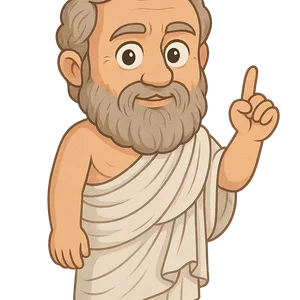
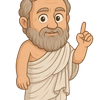
Plato
An ancient Greek philosopher who founded the Academy in Athens and wrote influential philosophical dialogues…
Reads at Grades 6–8 Listens at Grades 4–8
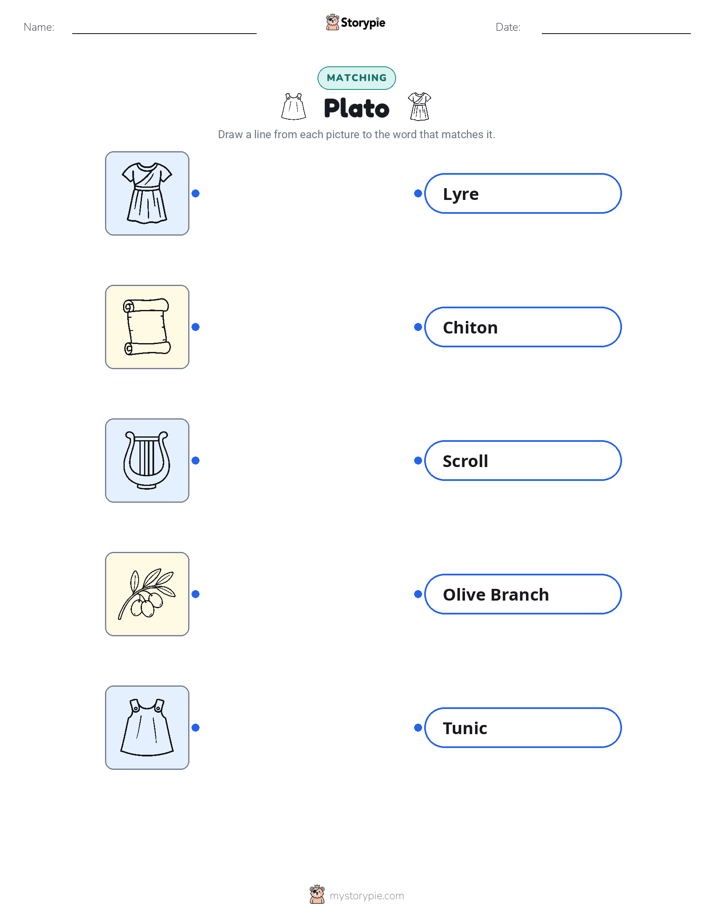
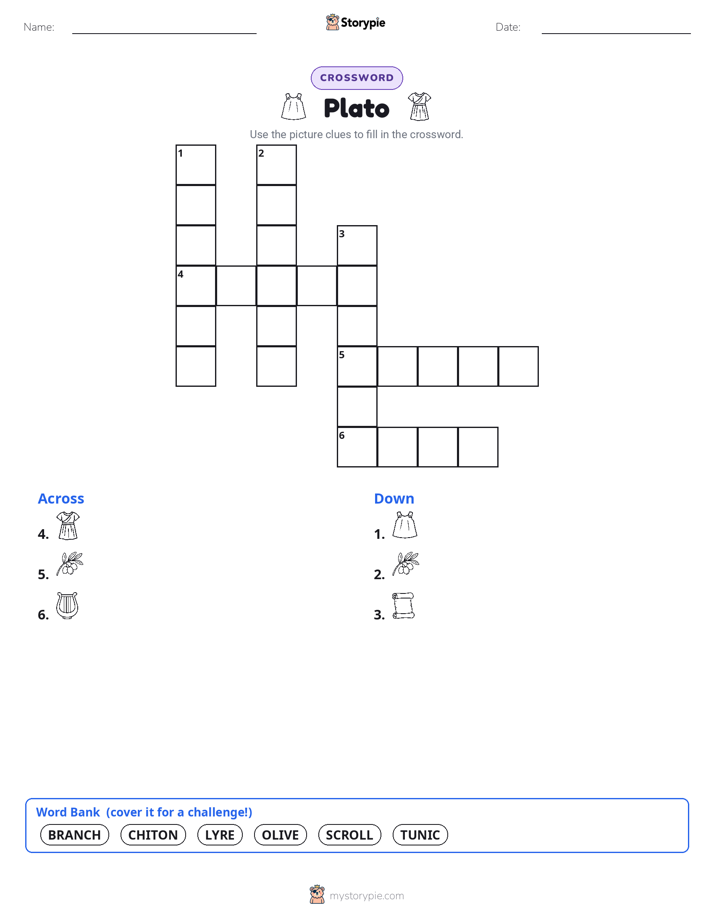
Print & create
Answer keys·No prep·Free with an account
28 worksheets · answer keys · full story · quiz · Ages 10-12 · CEFR B2
Plus adds 102,000+ more stories in 27 languages, audio for every one, and printables for all of them.
Just want Plato?
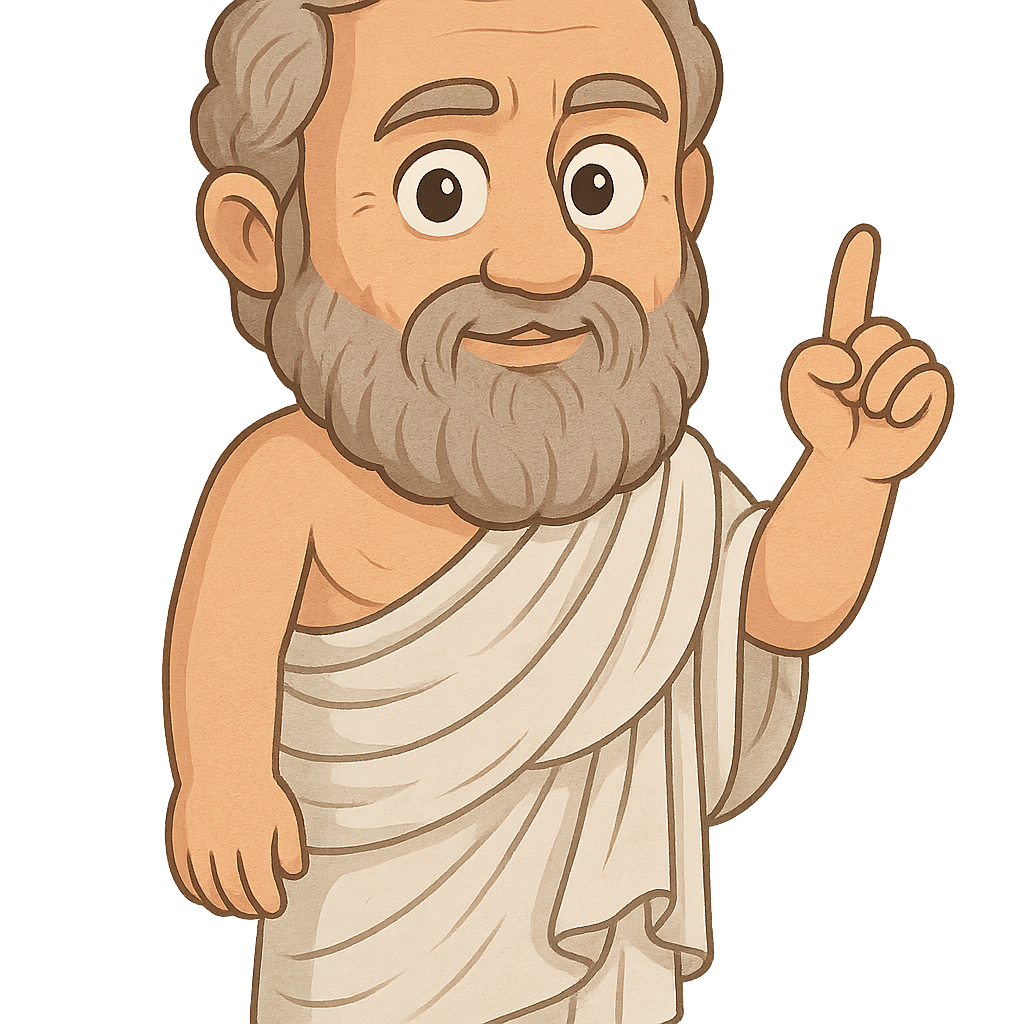
Hello. My name is Plato, though you might be surprised to learn I was born with the name Aristocles. My story begins around the year 428 BCE in Athens, a powerful and famous city-state in Greece. I came from a well-known family, and from a young age, the path to a career in politics seemed set for me. However, my mind was drawn not to power, but to ideas. I was fascinated by big questions about life, justice, and the world itself. I grew up during a time of great turmoil, the Peloponnesian War, a long and bitter conflict. Watching the leaders of Athens make terrible mistakes during this war deeply affected me. It made me question everything and ignited a desire to understand what it would take to build a truly good and fair society, one based on wisdom and reason instead of ambition and conflict.
As a young man, my life took a decisive turn when I met a philosopher named Socrates. He was unlike any teacher I had ever known. Socrates didn’t stand in front of a class and simply lecture. Instead, he would wander through the bustling streets and markets of Athens, engaging people in conversation. He asked question after question, a method that challenged people to examine their own beliefs and think more deeply than they ever had before. I was captivated and soon became one of his most devoted students. From Socrates, I learned one of the most important lessons of my life: that true wisdom begins when you admit that you do not know everything. His relentless search for truth and goodness became my own life's mission.
A Story of Plato
Hello. My name is Plato, though you might be surprised to learn I was born with the name Aristocles. My story begins around the year 428 BCE in Athens, a powerful and famous city-state in Greece. I came from a well-known family, and from a young age, the path to a career in politics seemed set for me. However, my mind was drawn not to power, but to ideas. I was fascinated by big questions about life, justice, and the world itself. I grew up during a time of great turmoil, the Peloponnesian War, a long and bitter conflict. Watching the leaders of Athens make terrible mistakes during this war deeply affected me. It made me question everything and ignited a desire to understand what it would take to build a truly good and fair society, one based on wisdom and reason instead of ambition and conflict.
As a young man, my life took a decisive turn when I met a philosopher named Socrates. He was unlike any teacher I had ever known. Socrates didn’t stand in front of a class and simply lecture. Instead, he would wander through the bustling streets and markets of Athens, engaging people in conversation. He asked question after question, a method that challenged people to examine their own beliefs and think more deeply than they ever had before. I was captivated and soon became one of his most devoted students. From Socrates, I learned one of the most important lessons of my life: that true wisdom begins when you admit that you do not know everything. His relentless search for truth and goodness became my own life's mission.
My world was shattered in the year 399 BCE when a terrible injustice occurred. The leaders of Athens, threatened by Socrates's constant questioning, accused him of corrupting the city’s youth and sentenced him to death. I was heartbroken and completely disillusioned with the politics of my home city. How could the wisest and most virtuous man I knew be executed by the very society he sought to improve? His death proved to me that politics without philosophy was dangerous. Shortly after this tragedy, I left Athens and began a long journey that would last for about twelve years. I traveled to distant lands like Egypt and Italy, studying mathematics, science, and different forms of government. This period of travel and learning was essential, preparing me for the great work that lay ahead.
I returned to Athens around the year 387 BCE, no longer an uncertain young man but someone with a clear purpose. I knew I couldn't change the world through politics alone; I had to start by educating future leaders. Just outside the city walls, I founded my own school and named it the Academy. This was not a place for simply memorizing facts. It was a community where students and teachers could gather to discuss profound ideas, study mathematics and astronomy, and explore the very nature of a just and ethical life. The Academy is often considered the first university in the Western world, and it was there that I had the privilege of teaching one of my most brilliant students, a young man named Aristotle, who would go on to become a great philosopher in his own right.
To share my philosophical ideas and to honor the memory of my great teacher, I wrote them down in a unique format. Instead of writing essays, I wrote conversations, which are called dialogues. In most of these dialogues, Socrates is the main character, asking the questions and guiding the discussion just as he did in real life. One of my most famous works is a dialogue called The Republic. In it, I explored the question of justice and described what an ideal society might look like—one ruled not by the wealthy or powerful, but by wise and thoughtful 'philosopher-kings.' I also told a famous story within it called the 'Allegory of the Cave.' This story explains that the world we perceive with our senses is like shadows on a cave wall, and a philosopher's job is to break free from the chains, step into the sunlight of knowledge, and see the true, perfect 'Forms' or ideas that are the source of all reality.
I dedicated the remainder of my life to teaching and writing at my beloved Academy. I lived a long and full life, reaching about 80 years of age before passing away around 348 BCE. Though my time on Earth came to an end, my ideas did not. For more than two thousand years, my writings have been studied, debated, and treasured by thinkers all over the world. My student, Aristotle, carried on the tradition of philosophy, becoming another of history's greatest minds. I hope I am remembered as someone who championed the power of reason and who inspired people everywhere to never stop asking questions in their quest for truth and a better world.
Wow facts
About
An ancient Greek philosopher who founded the Academy in Athens and wrote influential philosophical dialogues, laying the foundation for Western philosophy and political theory.
Take a Quiz
Question 1 of 5
Retell the main events of the section titled "A Great Sadness and a New Path" in your own words.
Explore next



Want to do even more?
Go beyond exploring. Unlock tools that turn every story into real learning.

Storypie Plus for families
Full stories, quizzes, and printables. Nights and car rides, sorted.
- Unlimited audio stories
- Create Mode: your child stars in the story
- Offline downloads
- Printable worksheets & coloring pages

Why Storypie for Schools
Students engaged. Prep in seconds. Evenings back to you.
- Worksheets & Quizzes
- Classroom Management
- Formative Assessment
- Custom Curriculum & Lesson Plans
- 27 Languages

Why Storypie for Homeschool
Curriculum done. They'll ask for more. Hours back in your day.
- Worksheet Generator
- First-Person Audio Stories
- Built-in Comprehension Quizzes
- Custom Curriculum & Lesson Plans
- Print & Go Activities