English

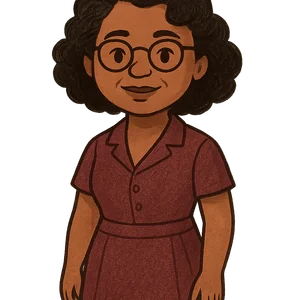
Dorothy Vaughan
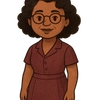
Dorothy Vaughan was an African American mathematician and human computer who was the first African American…
Reads at Grades 6–8 Listens at Grades 4–8
Print & create
Answer keys·No prep·Free with an account
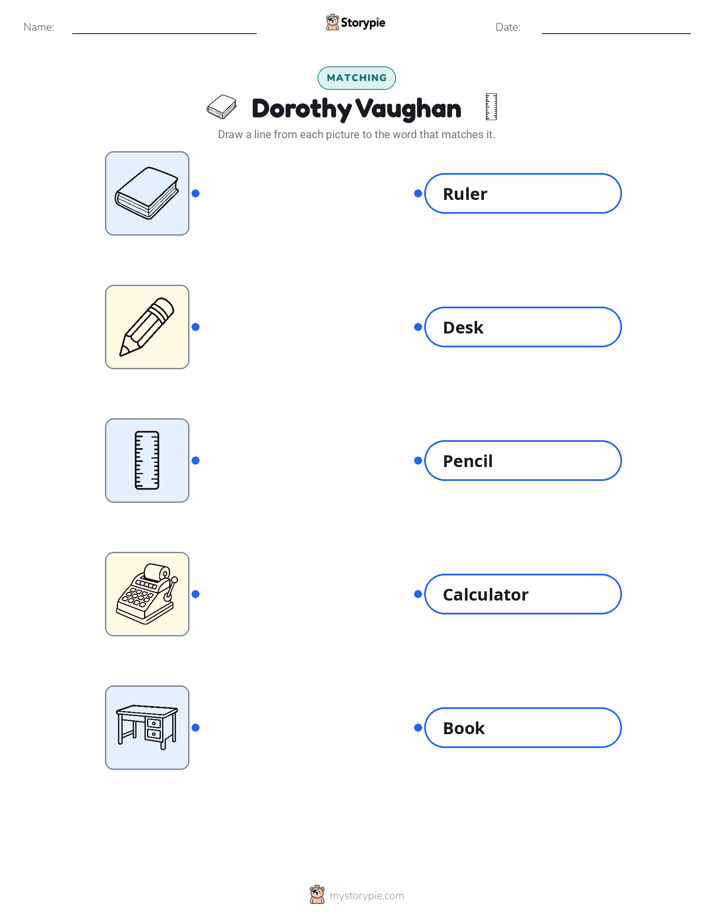
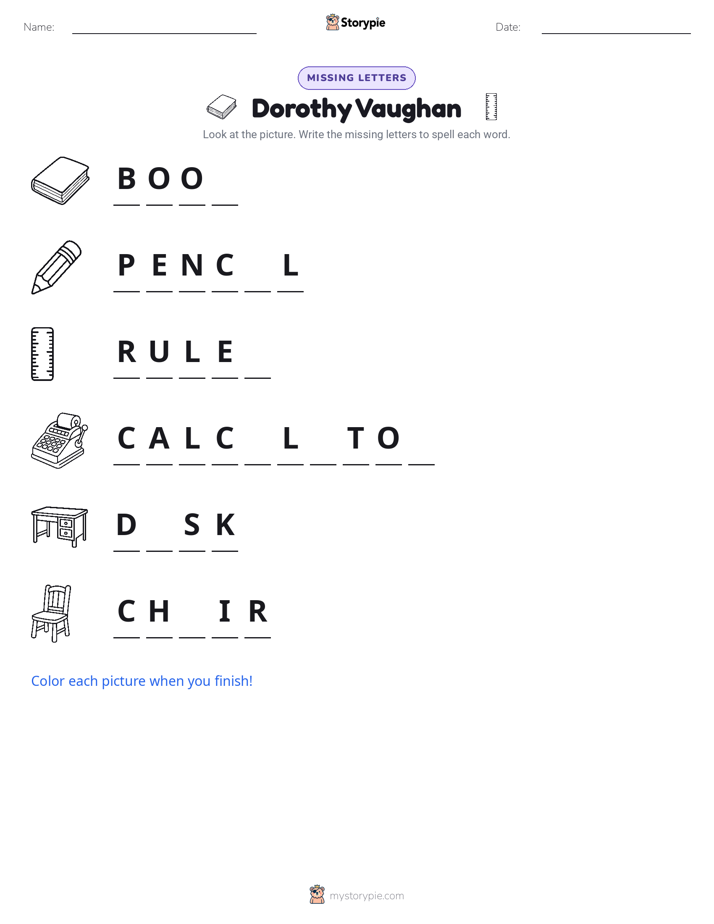
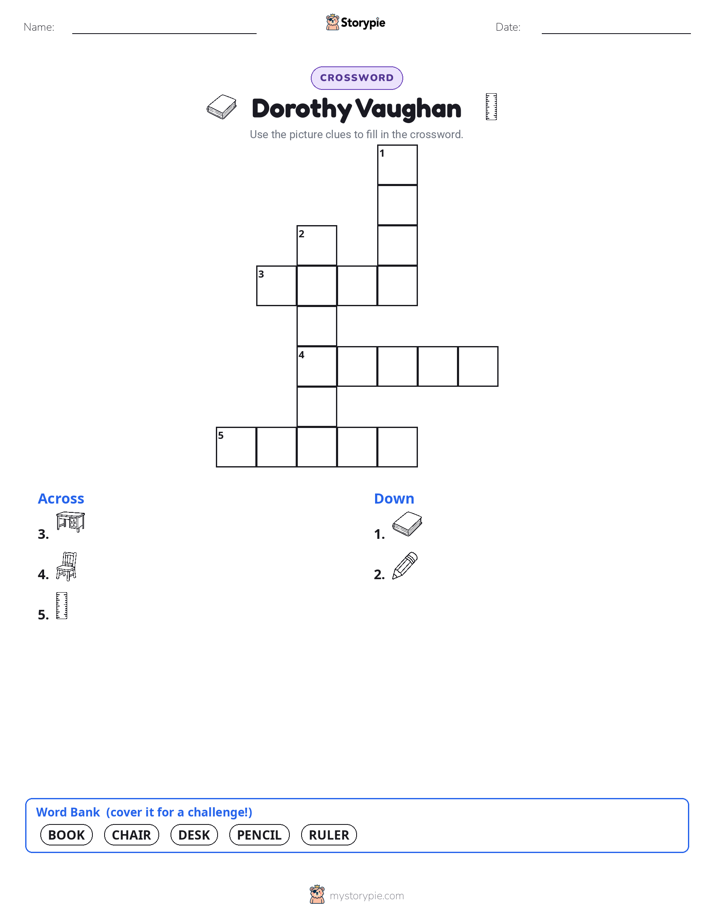
28 worksheets · answer keys · full story · quiz · Ages 10-12 · CEFR B2
Plus adds 164,000+ more stories in 27 languages, audio for every one, and printables for all of them.
Just want Dorothy Vaughan?
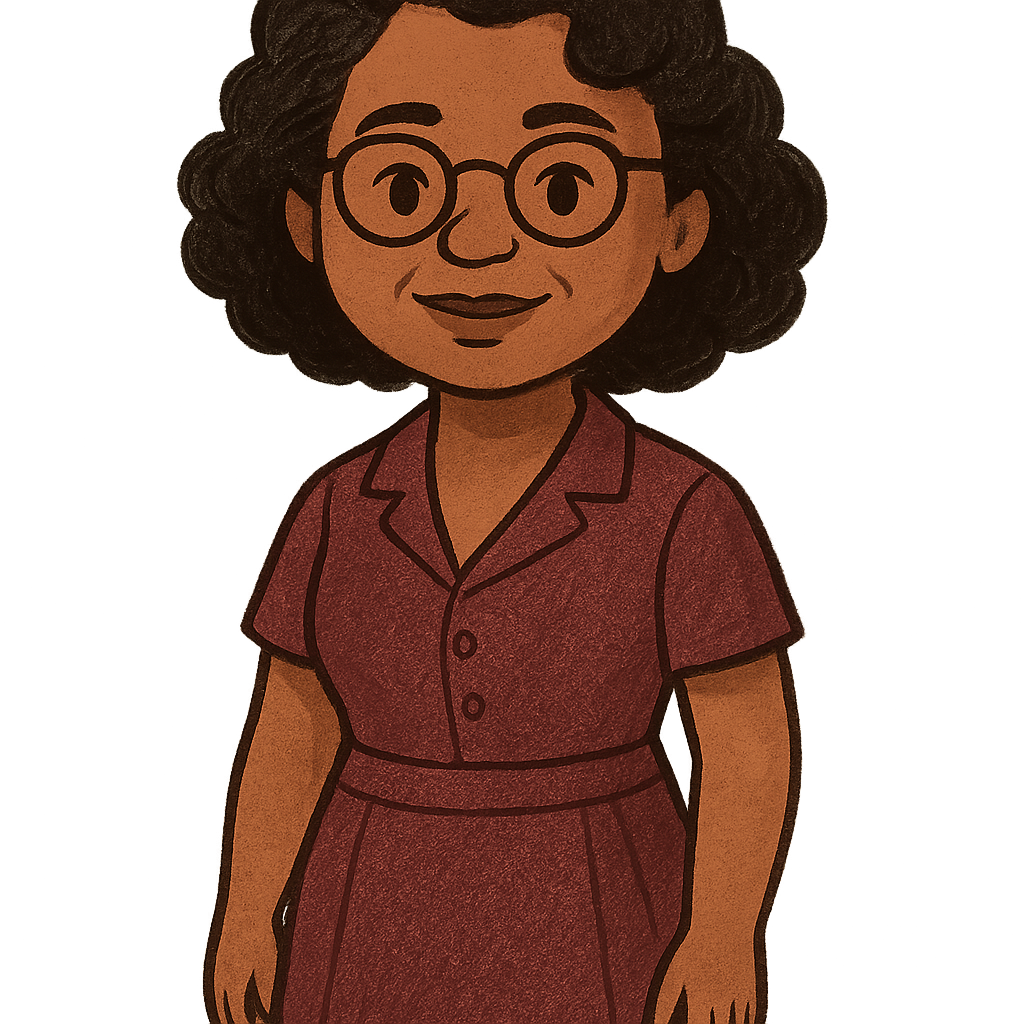
Hello, my name is Dorothy Vaughan, and I want to share my story with you. I was born on September 20th, 1910, in Kansas City, Missouri. From a very young age, I was fascinated by numbers and the logic of solving puzzles. This passion led me to Wilberforce University in Ohio, where I earned a degree in mathematics and graduated in 1929. For many years after college, I worked as a math teacher in Virginia. It was a joy to share my love of numbers with my students, and I truly believed that understanding mathematics was a powerful tool that could help anyone make sense of the world around them.
During World War II, our country needed everyone to help, and I saw a notice for a job that would change the course of my life. In 1943, I was hired by the National Advisory Committee for Aeronautics, which you might know by its later name, NASA. I moved my family to Hampton, Virginia, to work at the Langley Memorial Aeronautical Laboratory. My job title was a 'human computer,' which meant my work involved performing incredibly complex mathematical calculations by hand for the engineers. It was a time of segregation in America, so African American employees like me worked in a separate group called the West Area Computing Unit. We had to use separate bathrooms and dining facilities. Despite these challenges, we were proud of our contributions and knew that our work was essential for helping America's pilots fly safely and effectively.
I poured all my effort into my work, and so did the other brilliant women in my group. Our calculations had to be absolutely perfect, as there was no room for error in aeronautics. After our supervisor left, I was asked to step in as the acting head of the West Area Computers in 1949. A couple of years after that, I was officially promoted to the position of supervisor. This was a significant moment because it made me the very first African American manager in NACA's history. It was a great responsibility, and I made it my mission to advocate for all the women in my unit, both Black and white. I fought to ensure they received the recognition they deserved for their brilliant work and were given opportunities to advance their careers.
Dorothy Vaughan: A Vision for the Future
Hello, my name is Dorothy Vaughan, and I want to share my story with you. I was born on September 20th, 1910, in Kansas City, Missouri. From a very young age, I was fascinated by numbers and the logic of solving puzzles. This passion led me to Wilberforce University in Ohio, where I earned a degree in mathematics and graduated in 1929. For many years after college, I worked as a math teacher in Virginia. It was a joy to share my love of numbers with my students, and I truly believed that understanding mathematics was a powerful tool that could help anyone make sense of the world around them.
During World War II, our country needed everyone to help, and I saw a notice for a job that would change the course of my life. In 1943, I was hired by the National Advisory Committee for Aeronautics, which you might know by its later name, NASA. I moved my family to Hampton, Virginia, to work at the Langley Memorial Aeronautical Laboratory. My job title was a 'human computer,' which meant my work involved performing incredibly complex mathematical calculations by hand for the engineers. It was a time of segregation in America, so African American employees like me worked in a separate group called the West Area Computing Unit. We had to use separate bathrooms and dining facilities. Despite these challenges, we were proud of our contributions and knew that our work was essential for helping America's pilots fly safely and effectively.
I poured all my effort into my work, and so did the other brilliant women in my group. Our calculations had to be absolutely perfect, as there was no room for error in aeronautics. After our supervisor left, I was asked to step in as the acting head of the West Area Computers in 1949. A couple of years after that, I was officially promoted to the position of supervisor. This was a significant moment because it made me the very first African American manager in NACA's history. It was a great responsibility, and I made it my mission to advocate for all the women in my unit, both Black and white. I fought to ensure they received the recognition they deserved for their brilliant work and were given opportunities to advance their careers.
In the 1950s, a new technology arrived at Langley that signaled a huge shift in our work: giant electronic computers made by IBM. I saw these incredible machines and knew immediately that they represented the future. I also understood that they would eventually make the job of a 'human computer' obsolete. Instead of being afraid of this change, I decided to embrace it and prepare for it. I went to the library, checked out books, and began teaching myself a new computer programming language called FORTRAN. Once I understood it, I taught the women in my group how to program, too. I wanted to make sure that we would all have valuable skills when the world of computing changed. My foresight paid off. In 1958, NACA was transformed into NASA, and the segregated units were finally integrated. Because we had prepared ourselves and learned to program, my team and I became some of the first and most vital computer programmers at the new space agency.
As a programmer at NASA, I had the incredible opportunity to be part of the Space Race. My work focused on the Scout Launch Vehicle Program, a critical project responsible for launching satellites into orbit around the Earth. The computer code I wrote and the calculations I oversaw were essential to the success of these missions. I felt an immense sense of pride knowing that my love for numbers was helping America reach for the stars and explore the vastness of space. I continued my career at NASA for many years, constantly solving new problems and helping to push the boundaries of what was thought possible. I finally retired in 1971, after a long and fulfilling career that I never could have imagined when I was just a young girl who loved math.
I lived to be 98 years old. Many years after I retired, my story, along with the stories of my amazing colleagues Katherine Johnson and Mary Jackson, was shared with the world in a book and a movie called 'Hidden Figures.' People finally learned about the dedicated 'human computers' who played such a crucial role in helping America win the Space Race. In 2019, I was posthumously awarded the Congressional Gold Medal for my contributions. I hope my story reminds people to never be afraid of the future and to always lift up the people around you. A love for learning can take you to places you've only dreamed of.
Wow facts
About
Dorothy Vaughan was an African American mathematician and human computer who was the first African American female supervisor at NACA, which later became NASA. She was a pioneer in early computing and made significant contributions to NASA's early computing efforts, including work on the Scout Launch Vehicle Program.
Take a Quiz
Question 1 of 5
The story says Dorothy decided to 'advocate' for the women in her unit. What does the word 'advocate' mean in this context?
Explore next




Want to do even more?
Go beyond exploring. Unlock tools that turn every story into real learning.

Storypie Plus for families
Full stories, quizzes, and printables. Nights and car rides, sorted.
- Unlimited audio stories
- Create Mode: your child stars in the story
- Offline downloads
- Printable worksheets & coloring pages

Why Storypie for Schools
Students engaged. Prep in seconds. Evenings back to you.
- Worksheets & Quizzes
- Classroom Management
- Formative Assessment
- Custom Curriculum & Lesson Plans
- 27 Languages

Why Storypie for Homeschool
Curriculum done. They'll ask for more. Hours back in your day.
- Worksheet Generator
- First-Person Audio Stories
- Built-in Comprehension Quizzes
- Custom Curriculum & Lesson Plans
- Print & Go Activities