English

Duke Ellington
Duke Ellington was a groundbreaking American composer, pianist, and leader of a jazz orchestra…
Reads at Grades 6–8 Listens at Grades 4–8
Print & create
Answer keys·No prep·Free with an account
28 worksheets · answer keys · full story · quiz · Ages 10-12 · CEFR B2
Plus adds 244,000+ more stories in 27 languages, audio for every one, and printables for all of them.
Just want Duke Ellington?
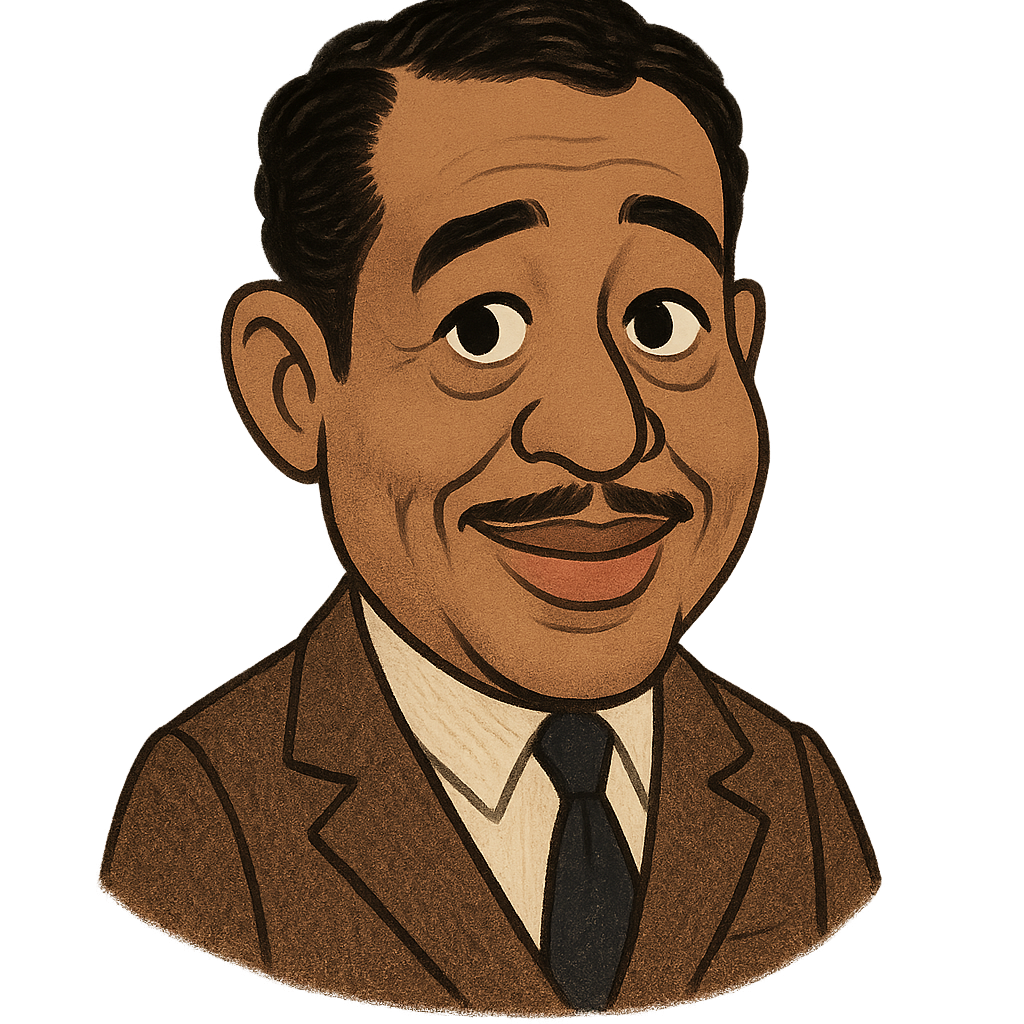
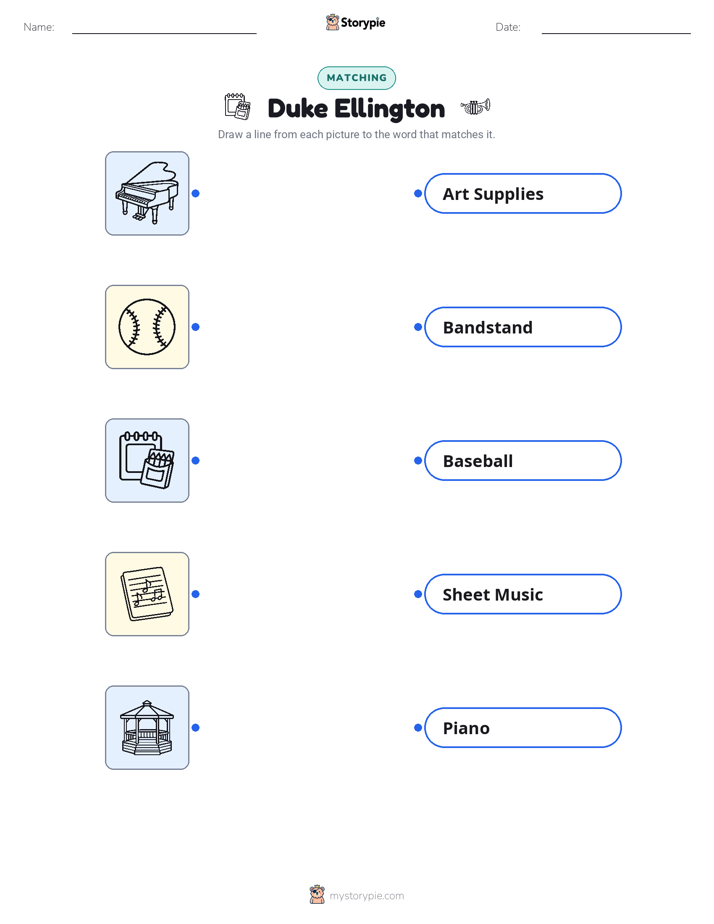
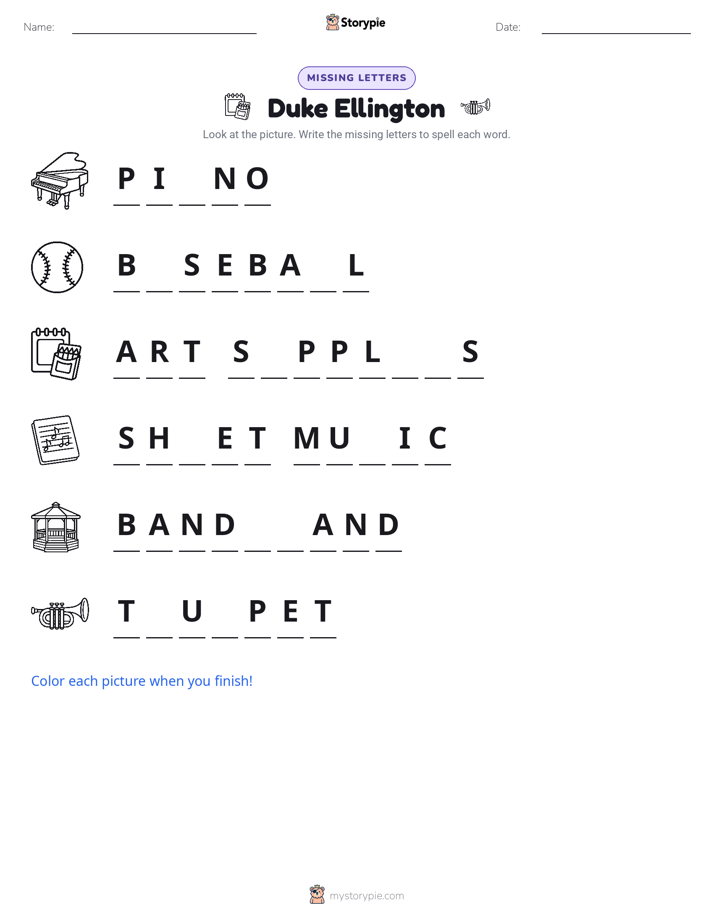
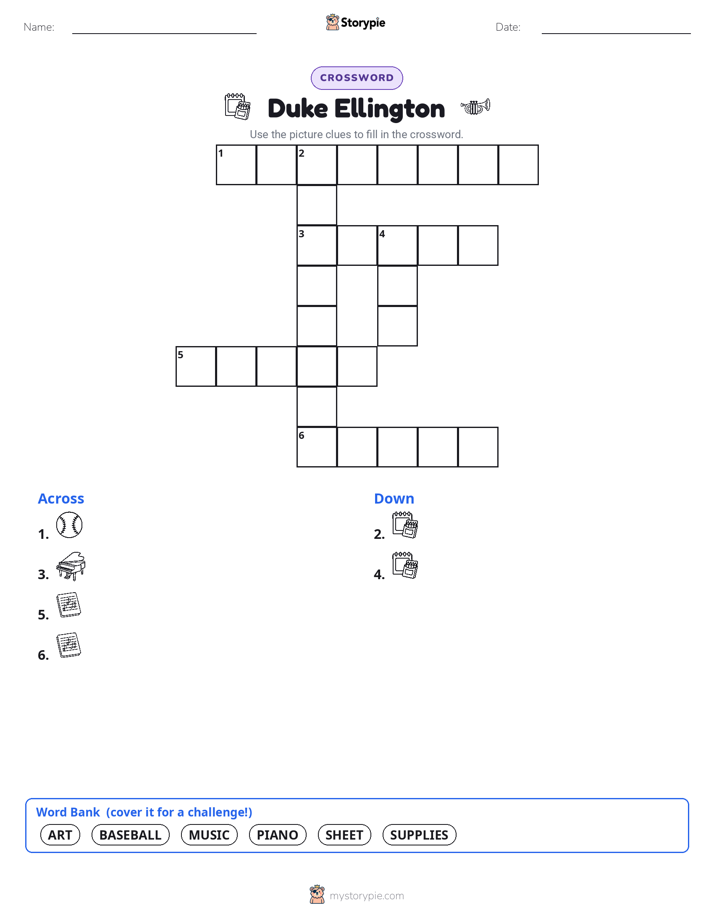
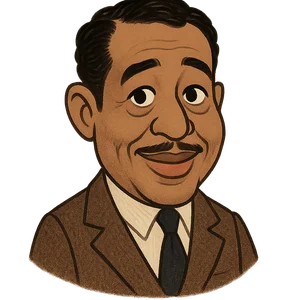
Hello there. My name is Edward Kennedy Ellington, but you can call me 'Duke.' I was born on April 29th, 1899, in Washington, D.C., into a home filled with music. Both of my parents were talented piano players, so melody was always in the air. As a boy, my friends gave me my nickname because I always tried to have elegant manners and wear sharp, stylish clothes. They said I carried myself like a young nobleman. Before I ever dreamed of becoming a musician, my passions were baseball and art. I loved to draw, and my hard work paid off when I won a poster-designing contest for the NAACP in 1913. It was my first taste of public recognition, but my true calling was waiting for me at the piano.
My journey into the world of music didn't start with formal lessons. Instead, I learned by listening carefully and experimenting. Around 1914, I composed my very first piece, which I called 'Soda Fountain Rag.' I created it entirely by ear, figuring out the notes and rhythms on my own. As my confidence grew, I knew I wanted to lead my own band. In 1917, I formed my first group, The Duke's Serenaders, and we played for parties and events around Washington, D.C. But I had bigger dreams. The heart of African American culture and creativity was beating in New York City. In 1923, I made the move to Harlem, arriving right in the middle of a vibrant artistic movement known as the Harlem Renaissance. It was an incredible time to be an artist, surrounded by brilliant writers, painters, and musicians.
My big break came in 1927 when my orchestra landed the role of the house band at the famous Cotton Club in Harlem. This wasn't just any job; it was the most sought-after gig in the city. The club was known for its exciting shows, and our music was at the center of it all. What truly made us famous were the live radio broadcasts that sent our music out from the club and into homes all across America. Suddenly, people everywhere knew our sound. I never saw my orchestra as just a group of musicians playing notes on a page. To me, it was a collection of unique voices, each with its own special talent. I wrote my compositions specifically for the strengths of each player, whether it was the soulful wail of a saxophone or the powerful growl of a trumpet. This approach allowed us to create a sound that was completely our own and unlike anything anyone had ever heard before.
Duke Ellington: The Duke of Jazz
Hello there. My name is Edward Kennedy Ellington, but you can call me 'Duke.' I was born on April 29th, 1899, in Washington, D.C., into a home filled with music. Both of my parents were talented piano players, so melody was always in the air. As a boy, my friends gave me my nickname because I always tried to have elegant manners and wear sharp, stylish clothes. They said I carried myself like a young nobleman. Before I ever dreamed of becoming a musician, my passions were baseball and art. I loved to draw, and my hard work paid off when I won a poster-designing contest for the NAACP in 1913. It was my first taste of public recognition, but my true calling was waiting for me at the piano.
My journey into the world of music didn't start with formal lessons. Instead, I learned by listening carefully and experimenting. Around 1914, I composed my very first piece, which I called 'Soda Fountain Rag.' I created it entirely by ear, figuring out the notes and rhythms on my own. As my confidence grew, I knew I wanted to lead my own band. In 1917, I formed my first group, The Duke's Serenaders, and we played for parties and events around Washington, D.C. But I had bigger dreams. The heart of African American culture and creativity was beating in New York City. In 1923, I made the move to Harlem, arriving right in the middle of a vibrant artistic movement known as the Harlem Renaissance. It was an incredible time to be an artist, surrounded by brilliant writers, painters, and musicians.
My big break came in 1927 when my orchestra landed the role of the house band at the famous Cotton Club in Harlem. This wasn't just any job; it was the most sought-after gig in the city. The club was known for its exciting shows, and our music was at the center of it all. What truly made us famous were the live radio broadcasts that sent our music out from the club and into homes all across America. Suddenly, people everywhere knew our sound. I never saw my orchestra as just a group of musicians playing notes on a page. To me, it was a collection of unique voices, each with its own special talent. I wrote my compositions specifically for the strengths of each player, whether it was the soulful wail of a saxophone or the powerful growl of a trumpet. This approach allowed us to create a sound that was completely our own and unlike anything anyone had ever heard before.
As our fame grew, so did our music. A pivotal moment in my career came in 1939 when I met a brilliant composer and arranger named Billy Strayhorn. He became my closest musical partner, and together we created some of our most enduring work. In fact, Billy wrote the song that would become our signature theme, the unforgettable 'Take the 'A' Train.' Starting in the 1950s, my orchestra and I began to travel the world, taking our music far beyond the United States. I didn't call our music jazz; I called it 'American Music,' because I believed it represented the history, spirit, and complexity of our country. I also used my compositions to tell important stories. My piece 'Black, Brown and Beige' was a musical history of the African American experience. One of the proudest moments of my life was in 1969, when I was awarded the Presidential Medal of Freedom for my contributions to music and culture.
I lived a full and wonderful life, dedicated to creating music. In my career, I composed over a thousand pieces, from swinging dance tunes that filled ballrooms to sacred concerts performed in grand cathedrals. I continued to write and perform until my final days. I lived to be 75 years old. Today, my music is still played and celebrated all over the world, from classrooms to concert halls. It was a great honor when my life's work was recognized with a special Pulitzer Prize in 1999. I hope my story inspires you to listen closely to the unique voices around you and to create something that is truly your own.
Wow facts
About
Duke Ellington was a groundbreaking American composer, pianist, and leader of a jazz orchestra, whose career spanned more than 50 years and elevated jazz to an art form.
Take a Quiz
Question 1 of 5
How did Duke Ellington and his orchestra first become famous across America?
Explore next




Want to do even more?
Go beyond exploring. Unlock tools that turn every story into real learning.

Storypie Plus for families
Full stories, quizzes, and printables. Nights and car rides, sorted.
- Unlimited audio stories
- Create Mode: your child stars in the story
- Offline downloads
- Printable worksheets & coloring pages

Why Storypie for Schools
Students engaged. Prep in seconds. Evenings back to you.
- Worksheets & Quizzes
- Classroom Management
- Formative Assessment
- Custom Curriculum & Lesson Plans
- 27 Languages

Why Storypie for Homeschool
Curriculum done. They'll ask for more. Hours back in your day.
- Worksheet Generator
- First-Person Audio Stories
- Built-in Comprehension Quizzes
- Custom Curriculum & Lesson Plans
- Print & Go Activities