English

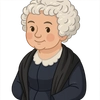
Eunice Foote
Eunice Foote was a 19th-century American scientist, inventor…
Reads at Grades 6–8 Listens at Grades 4–8
Print & create
Answer keys·No prep·Free with an account
28 worksheets · answer keys · full story · quiz · Ages 10-12 · CEFR B2
Plus adds 290,000+ more stories in 27 languages, audio for every one, and printables for all of them.
Just want Eunice Foote?
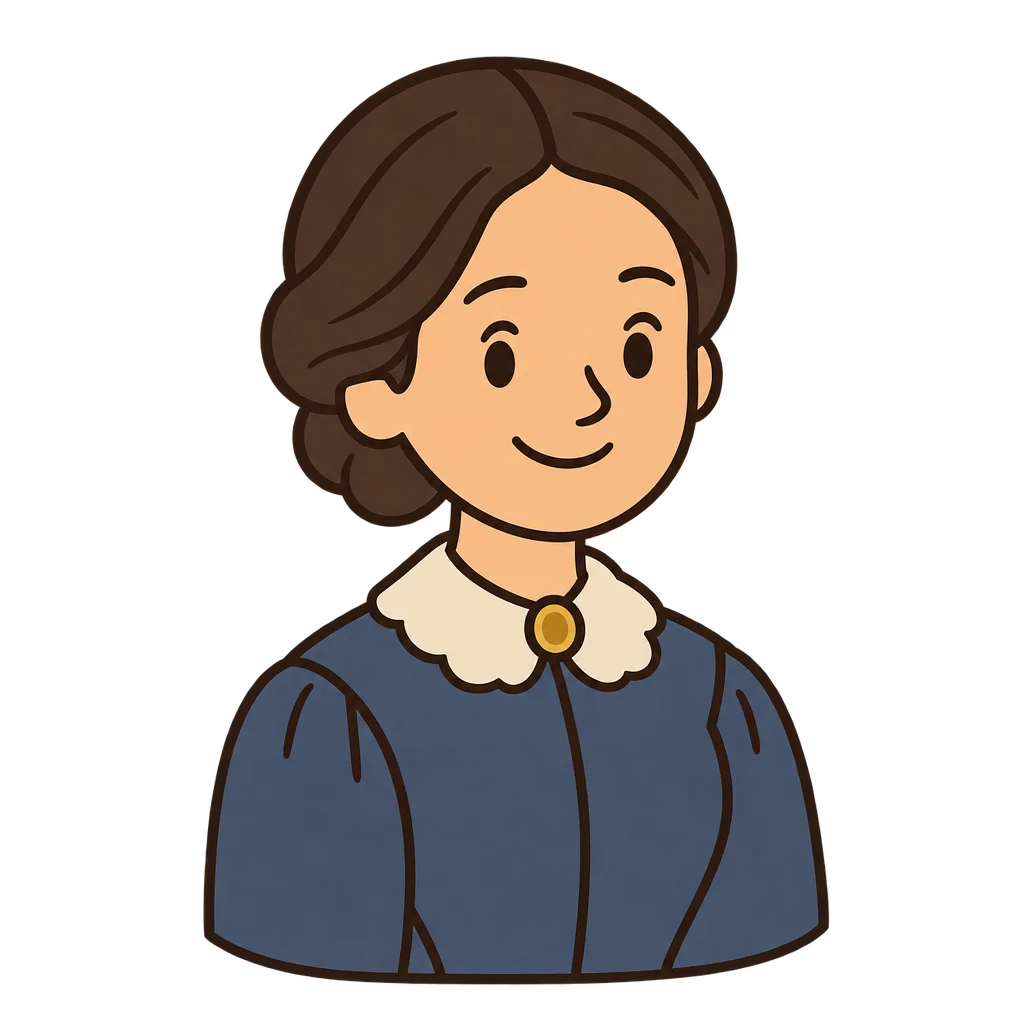
Hello, my name is Eunice Newton Foote. I was born on July 17th, 1819, in Connecticut. From a very young age, I found the world to be a fascinating place, and I was filled with endless questions about how everything worked. In the late 1830s, I was fortunate to attend a school called the Troy Female Seminary. At that time, it was very unusual for girls to be taught subjects like science, but at this school, my love for scientific exploration truly blossomed. I learned to think critically and to test my ideas. In 1841, I married Elisha Foote, who was a judge and an inventor himself. He saw the passion I had for science and always encouraged my curiosity, supporting my desire to understand the world on a deeper level.
My husband and I made our home in Seneca Falls, New York. The town was alive with new ideas about freedom and equality, and we found ourselves at the center of an important movement. In July of 1848, I gathered with my neighbors for a historic meeting that would come to be known as the Seneca Falls Convention. It was the very first convention for women's rights held in the United States, and I was proud to be there alongside inspiring women like Elizabeth Cady Stanton. I added my signature to the Declaration of Sentiments, a powerful document that demanded women be treated as equal citizens with the same rights as men. I firmly believed that a woman's mind was just as capable as a man's, whether she was contributing to politics or conducting experiments in a science laboratory.
Eunice Newton Foote
Hello, my name is Eunice Newton Foote. I was born on July 17th, 1819, in Connecticut. From a very young age, I found the world to be a fascinating place, and I was filled with endless questions about how everything worked. In the late 1830s, I was fortunate to attend a school called the Troy Female Seminary. At that time, it was very unusual for girls to be taught subjects like science, but at this school, my love for scientific exploration truly blossomed. I learned to think critically and to test my ideas. In 1841, I married Elisha Foote, who was a judge and an inventor himself. He saw the passion I had for science and always encouraged my curiosity, supporting my desire to understand the world on a deeper level.
My husband and I made our home in Seneca Falls, New York. The town was alive with new ideas about freedom and equality, and we found ourselves at the center of an important movement. In July of 1848, I gathered with my neighbors for a historic meeting that would come to be known as the Seneca Falls Convention. It was the very first convention for women's rights held in the United States, and I was proud to be there alongside inspiring women like Elizabeth Cady Stanton. I added my signature to the Declaration of Sentiments, a powerful document that demanded women be treated as equal citizens with the same rights as men. I firmly believed that a woman's mind was just as capable as a man's, whether she was contributing to politics or conducting experiments in a science laboratory.
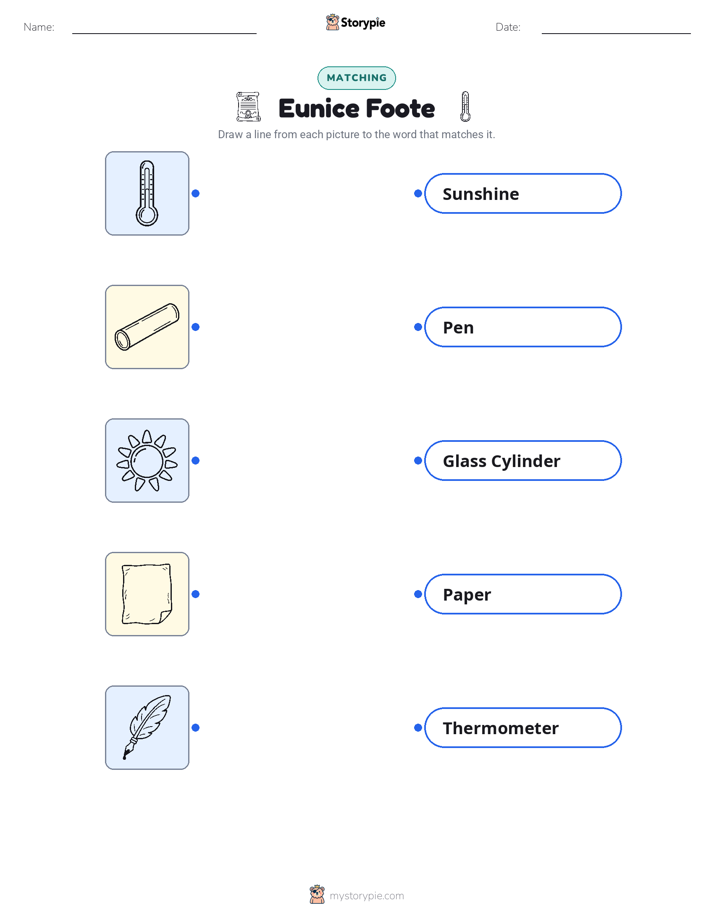
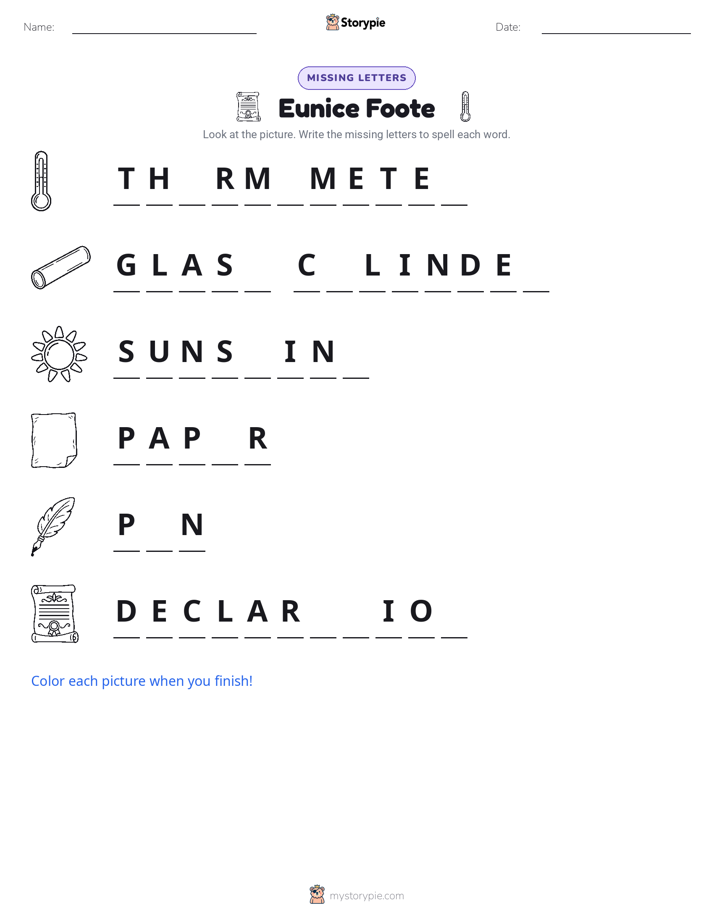
My home became my laboratory. I was determined to find an answer to a question that had long fascinated me: why are some days warmer than others? Around the year 1856, I designed a simple but clever experiment to investigate this. I took two identical glass cylinders and placed a thermometer inside each one. Using an air pump, I carefully filled the cylinders with different types of gases. I filled one cylinder with the regular air that we all breathe. For the second cylinder, I filled it with what was then called 'carbonic acid gas'—a gas you now know as carbon dioxide. With my setup complete, I placed both cylinders side by side in the bright, warm sunshine and began to observe them carefully, waiting to see what would happen.
The results of my experiment were truly astounding! I watched as the thermometer in the cylinder filled with carbon dioxide began to climb much higher than the one in the cylinder with regular air. Not only did it get hotter, but it also stayed warm for a long time after I moved both cylinders into the shade. From this, I realized that the carbon dioxide gas was trapping the sun’s heat. I carefully documented my findings and wrote a scientific paper titled 'Circumstances affecting the Heat of the Sun's Rays.' In my paper, I made a bold suggestion: if Earth's atmosphere contained a higher amount of carbon dioxide, our entire planet would become warmer. This was a groundbreaking idea, the very first scientific description of what is now called the greenhouse effect.
On August 23rd, 1856, my paper was scheduled to be presented at a major science conference, the American Association for the Advancement of Science. It was a moment of great importance for my work, but I was not allowed to share it myself. Because I was a woman, the rules of the time prevented me from standing before the audience and reading my own research. Instead, a respected male scientist, Professor Joseph Henry, presented my findings for me. While my work was mentioned in a few scientific magazines afterward, it was soon mostly forgotten by the scientific community. A few years later, another scientist named John Tyndall published similar findings about heat-trapping gases. For more than a century, he was given all the credit for the discovery, and my contribution was overlooked. It was a difficult reality that showed how challenging it was for a woman in science during my time.
My curiosity didn't stop with climate research. I continued to explore and invent, and in 1860, I even received a patent for a new type of filling for shoes that made them quieter. I lived a full and curious life and passed away when I was 69 years old. For over 100 years, my important contribution to science was a hidden story, lost to history. But today, historians have rediscovered my 1856 paper, and I am finally being recognized as a pioneer of climate science. My story shows that a curious mind can change the world, and it reminds us how important it is that every voice, no matter who it belongs to, has a chance to be heard.
Wow facts
About
Eunice Foote was a 19th-century American scientist, inventor, and women's rights campaigner who was the first person to discover that carbon dioxide traps heat, the fundamental principle of the greenhouse effect.
Take a Quiz
Question 1 of 5
Which of the following best summarizes the main idea of Eunice Newton Foote's story?
Explore next





Want to do even more?
Go beyond exploring. Unlock tools that turn every story into real learning.

Storypie Plus for families
Full stories, quizzes, and printables. Nights and car rides, sorted.
- Unlimited audio stories
- Create Mode: your child stars in the story
- Offline downloads
- Printable worksheets & coloring pages

Why Storypie for Schools
Students engaged. Prep in seconds. Evenings back to you.
- Worksheets & Quizzes
- Classroom Management
- Formative Assessment
- Custom Curriculum & Lesson Plans
- 27 Languages

Why Storypie for Homeschool
Curriculum done. They'll ask for more. Hours back in your day.
- Worksheet Generator
- First-Person Audio Stories
- Built-in Comprehension Quizzes
- Custom Curriculum & Lesson Plans
- Print & Go Activities