English

Eunice Foote
Eunice Foote was a 19th-century American scientist, inventor…
Reads at Grades 3–5 Listens at Grades 1–5
Print & create
Answer keys·No prep·Free with an account
28 worksheets · answer keys · full story · quiz · Ages 8-10 · CEFR B1
Plus adds 290,000+ more stories in 27 languages, audio for every one, and printables for all of them.
Just want Eunice Foote?
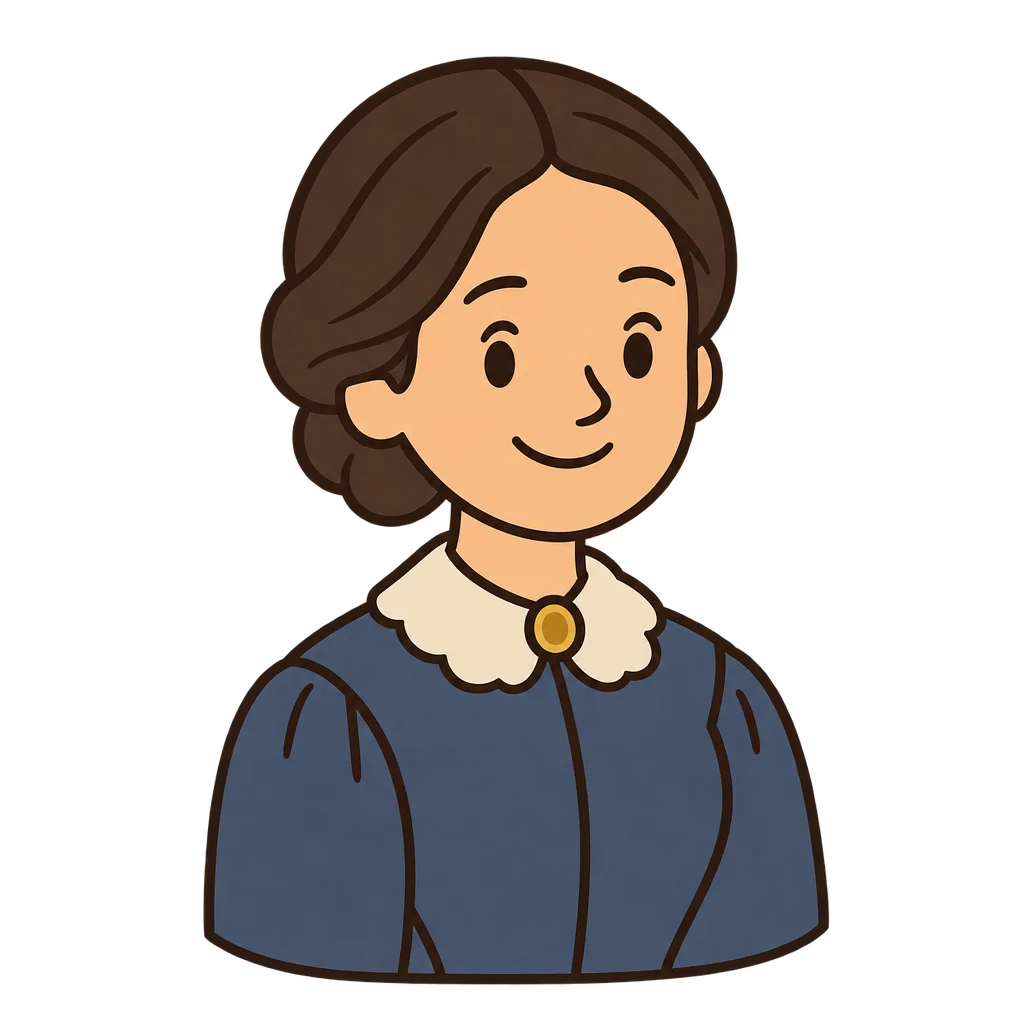
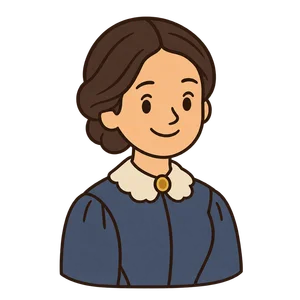
Hello! My name is Eunice Foote, and I was a scientist long before it was common for women to be one. I was born on July 17th, 1819, in Connecticut, but I grew up in New York. From a young age, I was filled with curiosity. I didn't just want to know that the sun was warm; I wanted to know *how* it warmed the Earth. Luckily, I was able to attend a special school called the Troy Female Seminary. It was one of the only schools for girls in the early 1800s where we could study science and math, just like the boys did. I loved it! I learned how to conduct experiments and think like a scientist. I later married a wonderful man named Elisha Foote in 1841. He was a judge and an inventor, and he encouraged my love for science.
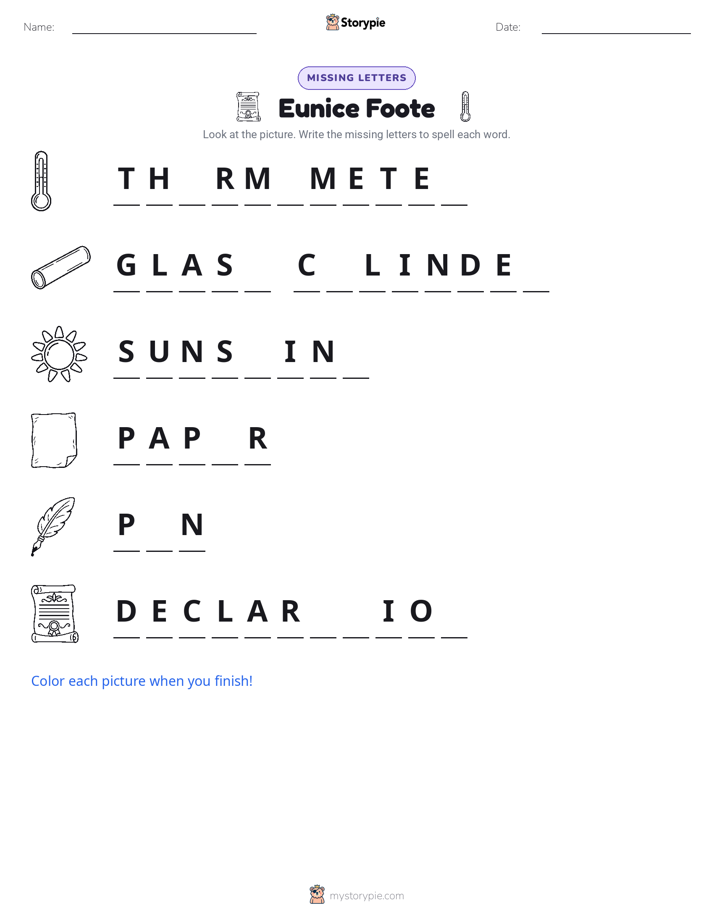
Besides science, I cared deeply about fairness. My husband and I lived in a town called Seneca Falls, New York. In 1848, something amazing happened there. My neighbors, including the famous Elizabeth Cady Stanton, organized the very first women's rights convention in the United States. I knew I had to be a part of it! At the time, women couldn't vote, own property in the same way as men, or even go to most colleges. I believed that women's minds were just as capable as men's, whether in politics or in a science laboratory. I proudly signed my name to a document called the Declaration of Sentiments, which demanded equal rights for women. It was a brave thing to do, and it was just the beginning of a long fight for equality.
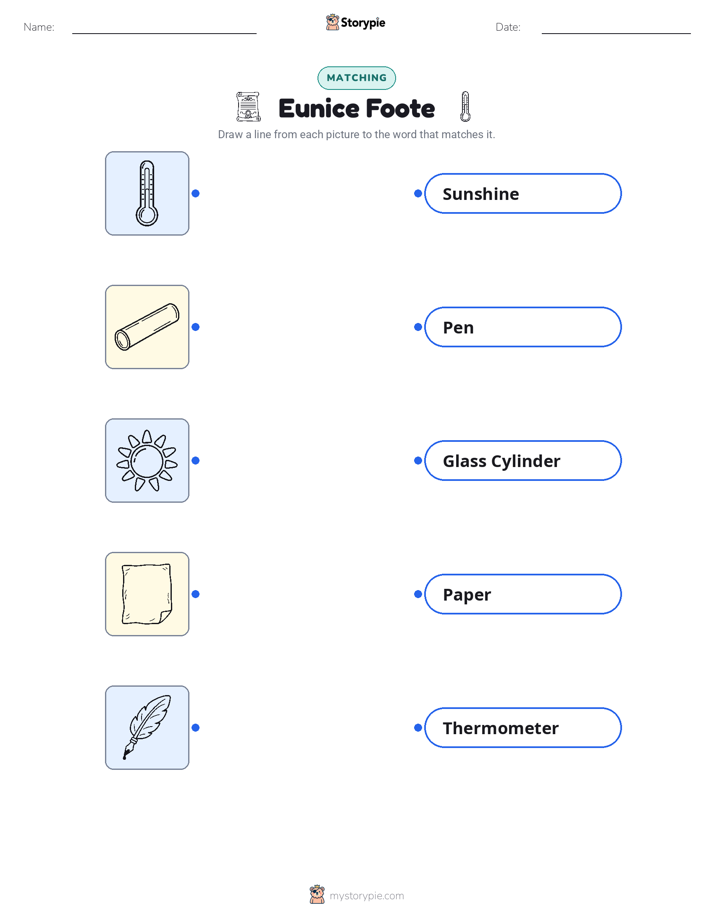
My passion for science never faded. I set up a laboratory right in my own home. In 1856, I decided to finally answer my question about the sun's heat. I took two glass cylinders, placed a thermometer in each, and used an air pump to fill them with different gases. I put one cylinder with plain air and another with carbon dioxide, side-by-side in the sunshine. I watched the thermometers closely. And I noticed something incredible! The thermometer in the cylinder with carbon dioxide rose to a much higher temperature than the one with regular air. It also took much longer to cool down once I brought it into the shade. I had discovered that carbon dioxide gas is very good at trapping heat. I wrote down my findings and realized this could mean that if there were more of that gas in our planet's atmosphere, the whole Earth would get warmer.
Eunice Foote: The Woman Who Discovered Climate Change
Hello! My name is Eunice Foote, and I was a scientist long before it was common for women to be one. I was born on July 17th, 1819, in Connecticut, but I grew up in New York. From a young age, I was filled with curiosity. I didn't just want to know that the sun was warm; I wanted to know how it warmed the Earth. Luckily, I was able to attend a special school called the Troy Female Seminary. It was one of the only schools for girls in the early 1800s where we could study science and math, just like the boys did. I loved it! I learned how to conduct experiments and think like a scientist. I later married a wonderful man named Elisha Foote in 1841. He was a judge and an inventor, and he encouraged my love for science.
Besides science, I cared deeply about fairness. My husband and I lived in a town called Seneca Falls, New York. In 1848, something amazing happened there. My neighbors, including the famous Elizabeth Cady Stanton, organized the very first women's rights convention in the United States. I knew I had to be a part of it! At the time, women couldn't vote, own property in the same way as men, or even go to most colleges. I believed that women's minds were just as capable as men's, whether in politics or in a science laboratory. I proudly signed my name to a document called the Declaration of Sentiments, which demanded equal rights for women. It was a brave thing to do, and it was just the beginning of a long fight for equality.
My passion for science never faded. I set up a laboratory right in my own home. In 1856, I decided to finally answer my question about the sun's heat. I took two glass cylinders, placed a thermometer in each, and used an air pump to fill them with different gases. I put one cylinder with plain air and another with carbon dioxide, side-by-side in the sunshine. I watched the thermometers closely. And I noticed something incredible! The thermometer in the cylinder with carbon dioxide rose to a much higher temperature than the one with regular air. It also took much longer to cool down once I brought it into the shade. I had discovered that carbon dioxide gas is very good at trapping heat. I wrote down my findings and realized this could mean that if there were more of that gas in our planet's atmosphere, the whole Earth would get warmer.
I was so excited about my discovery! I wrote a scientific paper called 'Circumstances affecting the Heat of the Sun's Rays.' In August of 1856, my paper was presented at a big meeting of the American Association for the Advancement of Science. But there was a problem. Because I was a woman, I was not allowed to stand up and read my own paper. A male scientist, Professor Joseph Henry, had to present my work for me. My paper was published in a science journal, but then, something sad happened. My work was mostly forgotten. A few years later, a man named John Tyndall published similar experiments and for more than a century, everyone thought he was the first person to make this discovery.
I continued my work as an inventor, even getting patents for a new kind of shoe insert in 1860 and a paper-making machine in 1867. I lived to be 69 years old. For a very long time, my contribution to science was lost to history. But today, people have rediscovered my 1856 paper! I am now celebrated as a pioneer in climate science and the very first person to discover the warming properties of carbon dioxide, which is now called the greenhouse effect. My story shows that a curious mind can make amazing discoveries, and it reminds us how important it is to listen to all voices, no matter who they belong to.
Wow facts
About
Eunice Foote was a 19th-century American scientist, inventor, and women's rights campaigner who was the first person to discover that carbon dioxide traps heat, the fundamental principle of the greenhouse effect.
Take a Quiz
Question 1 of 5
What did Eunice discover when she put a cylinder with carbon dioxide in the sun?
Explore next






Want to do even more?
Go beyond exploring. Unlock tools that turn every story into real learning.

Storypie Plus for families
Full stories, quizzes, and printables. Nights and car rides, sorted.
- Unlimited audio stories
- Create Mode: your child stars in the story
- Offline downloads
- Printable worksheets & coloring pages

Why Storypie for Schools
Students engaged. Prep in seconds. Evenings back to you.
- Worksheets & Quizzes
- Classroom Management
- Formative Assessment
- Custom Curriculum & Lesson Plans
- 27 Languages

Why Storypie for Homeschool
Curriculum done. They'll ask for more. Hours back in your day.
- Worksheet Generator
- First-Person Audio Stories
- Built-in Comprehension Quizzes
- Custom Curriculum & Lesson Plans
- Print & Go Activities