English

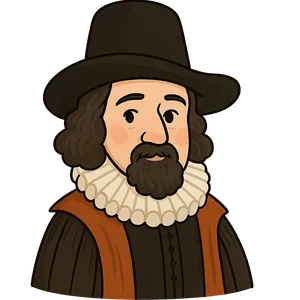
Francis Bacon
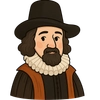
Francis Bacon was an English philosopher, statesman, scientist…
Reads at Grades 3–5 Listens at Grades 1–5
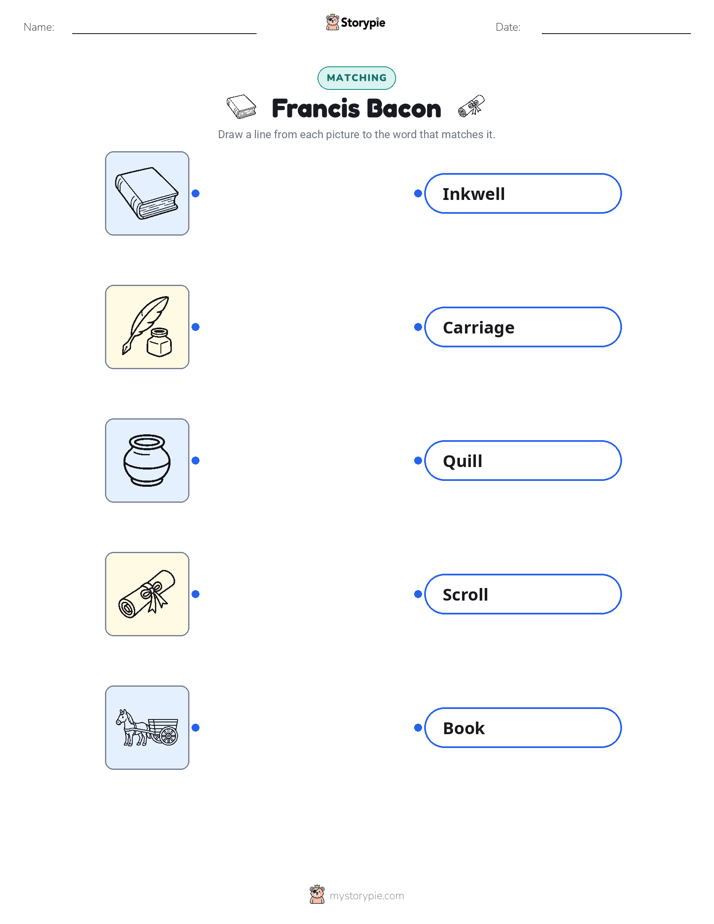
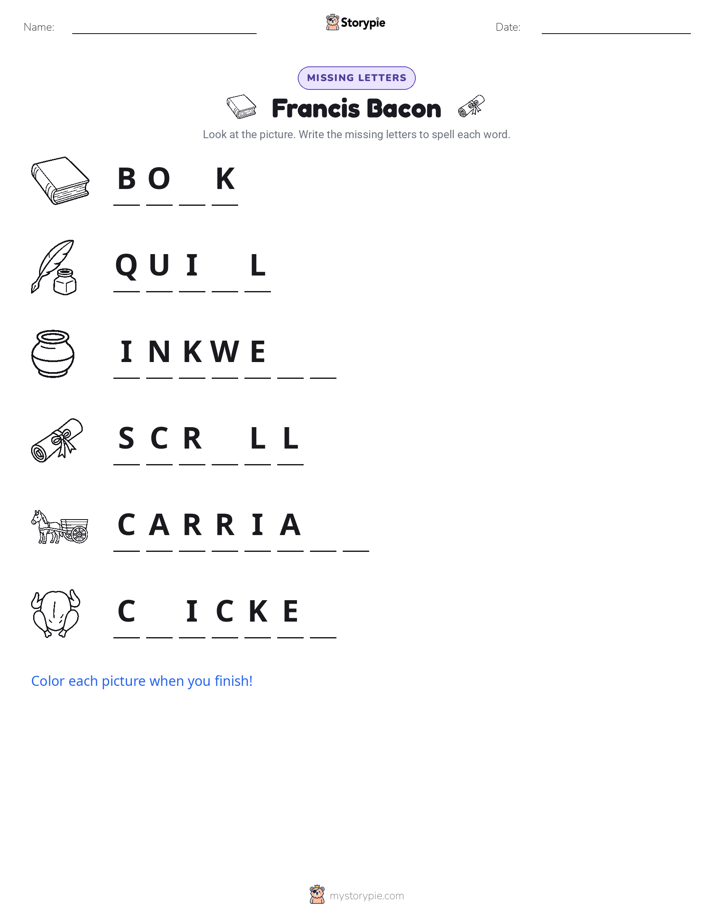
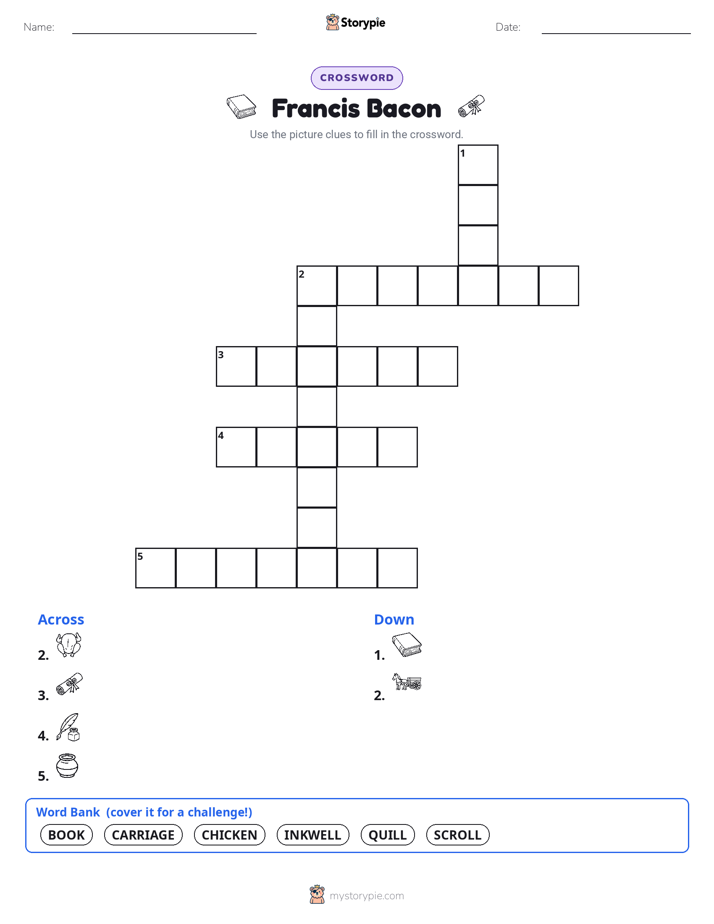
Print & create
Answer keys·No prep·Free with an account
28 worksheets · answer keys · full story · quiz · Ages 8-10 · CEFR B1
Plus adds 244,000+ more stories in 27 languages, audio for every one, and printables for all of them.
Just want Francis Bacon?
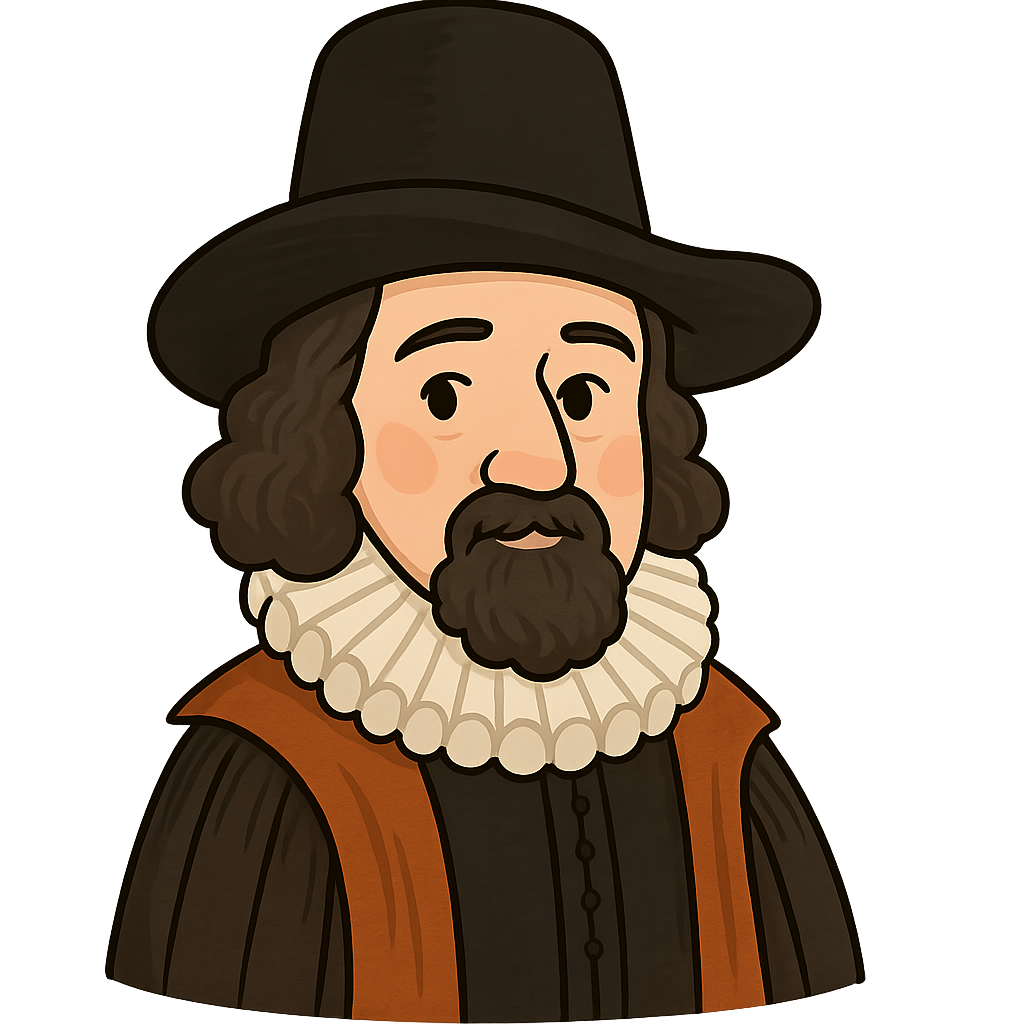
Hello! My name is Francis Bacon, and I want to tell you my story. I was born in London, England, on January 22nd, 1561, a long, long time ago. My father was a very important man who worked for the famous Queen Elizabeth I, so our home was always busy. Even as a boy, I was bursting with questions. I didn't just want to know what something was; I wanted to know how it worked and why. I thought the best way to learn wasn't just by listening to stories but by looking at the world with my own two eyes.
When I was just 12 years old, in 1573, I went to study at the great Trinity College at Cambridge University. I was so excited to learn! But I soon discovered that most of our lessons were about memorizing what wise men, like the Greek philosopher Aristotle, had written thousands of years before. My teachers believed that all the important discoveries had already been made. I didn't agree. I thought, 'How can we be sure they were right about everything? Shouldn't we test their ideas to see if they are true?' This question sparked a big idea in my mind that would shape my entire life.
After I finished my studies, I became a lawyer and a member of England's Parliament in 1581. I was good at my job, and I served both Queen Elizabeth I and the king who came after her, King James I. The king trusted me, and over the years he gave me more and more important roles. In 1618, he made me Lord Chancellor, which was one of the most powerful positions in the entire country! But my time at the top didn't last forever. In 1621, I was accused of doing things I shouldn't have, and I lost my job. It was a very difficult time, but it gave me the chance to focus on what I truly loved: science and philosophy.
The Story of Francis Bacon
Hello! My name is Francis Bacon, and I want to tell you my story. I was born in London, England, on January 22nd, 1561, a long, long time ago. My father was a very important man who worked for the famous Queen Elizabeth I, so our home was always busy. Even as a boy, I was bursting with questions. I didn't just want to know what something was; I wanted to know how it worked and why. I thought the best way to learn wasn't just by listening to stories but by looking at the world with my own two eyes.
When I was just 12 years old, in 1573, I went to study at the great Trinity College at Cambridge University. I was so excited to learn! But I soon discovered that most of our lessons were about memorizing what wise men, like the Greek philosopher Aristotle, had written thousands of years before. My teachers believed that all the important discoveries had already been made. I didn't agree. I thought, 'How can we be sure they were right about everything? Shouldn't we test their ideas to see if they are true?' This question sparked a big idea in my mind that would shape my entire life.
After I finished my studies, I became a lawyer and a member of England's Parliament in 1581. I was good at my job, and I served both Queen Elizabeth I and the king who came after her, King James I. The king trusted me, and over the years he gave me more and more important roles. In 1618, he made me Lord Chancellor, which was one of the most powerful positions in the entire country! But my time at the top didn't last forever. In 1621, I was accused of doing things I shouldn't have, and I lost my job. It was a very difficult time, but it gave me the chance to focus on what I truly loved: science and philosophy.
With my political career over, I had time to write and share my most important idea with the world. In my book 'Novum Organum', which I published in 1620, I described a new way of learning. I argued that to find the truth, you couldn't just think about it in a chair. You had to go out into the world, observe, ask questions, and do experiments to test your ideas. For example, instead of just guessing if heavy things fall faster than light things, you should try it and see! This method of learning through observation and testing is what we now call the scientific method. I believed that by collecting evidence piece by piece, we could build a true understanding of how the universe works.
I spent the rest of my years writing and studying the natural world. There is a story that my very last experiment involved stuffing a chicken with snow to see if the cold would preserve it. I lived to be 65 years old and my life came to a peaceful end in 1626. Though my time as a great politician ended, my ideas about science have lived on. I am often called the 'Father of the Scientific Method' because I helped show people that the path to knowledge is through curiosity, observation, and experimentation. Every time a scientist today conducts a test in a lab, they are following in the footsteps of the ideas I championed so long ago.
Wow facts
About
Francis Bacon was an English philosopher, statesman, scientist, and author who is best known for promoting the scientific method.
Take a Quiz
Question 1 of 5
In the story, I said my time at the top 'didn't last forever.' What does this phrase mean?
Explore next


Want to do even more?
Go beyond exploring. Unlock tools that turn every story into real learning.

Storypie Plus for families
Full stories, quizzes, and printables. Nights and car rides, sorted.
- Unlimited audio stories
- Create Mode: your child stars in the story
- Offline downloads
- Printable worksheets & coloring pages

Why Storypie for Schools
Students engaged. Prep in seconds. Evenings back to you.
- Worksheets & Quizzes
- Classroom Management
- Formative Assessment
- Custom Curriculum & Lesson Plans
- 27 Languages

Why Storypie for Homeschool
Curriculum done. They'll ask for more. Hours back in your day.
- Worksheet Generator
- First-Person Audio Stories
- Built-in Comprehension Quizzes
- Custom Curriculum & Lesson Plans
- Print & Go Activities