English

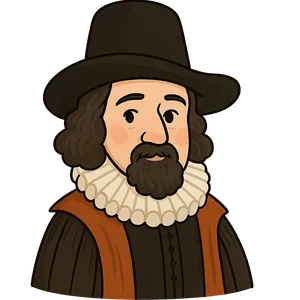
Francis Bacon
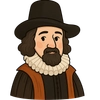
Francis Bacon was an English philosopher, statesman, scientist…
Reads at Grades 6–8 Listens at Grades 4–8
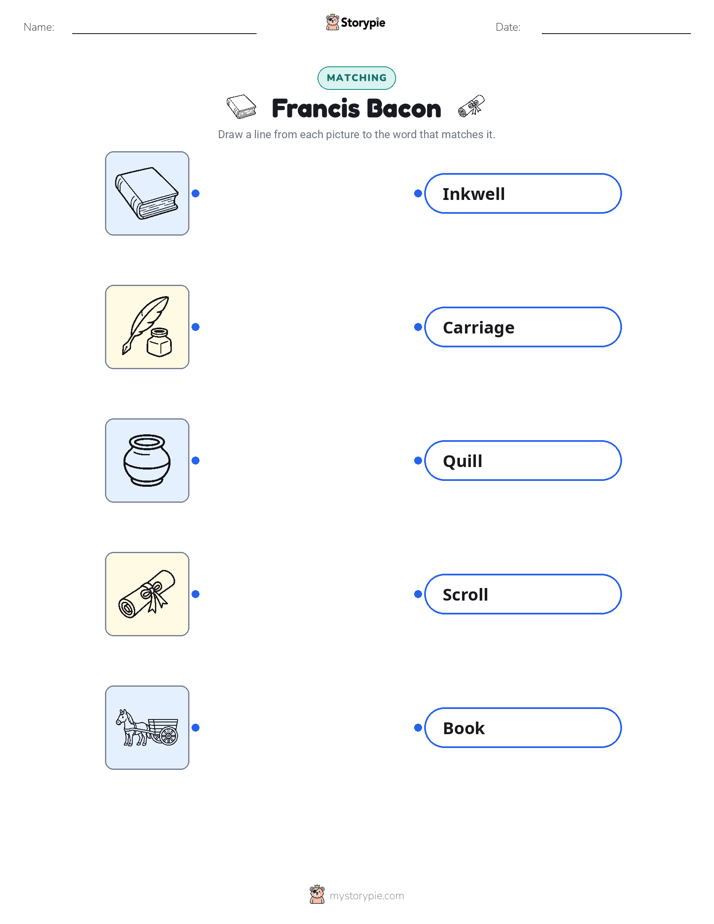
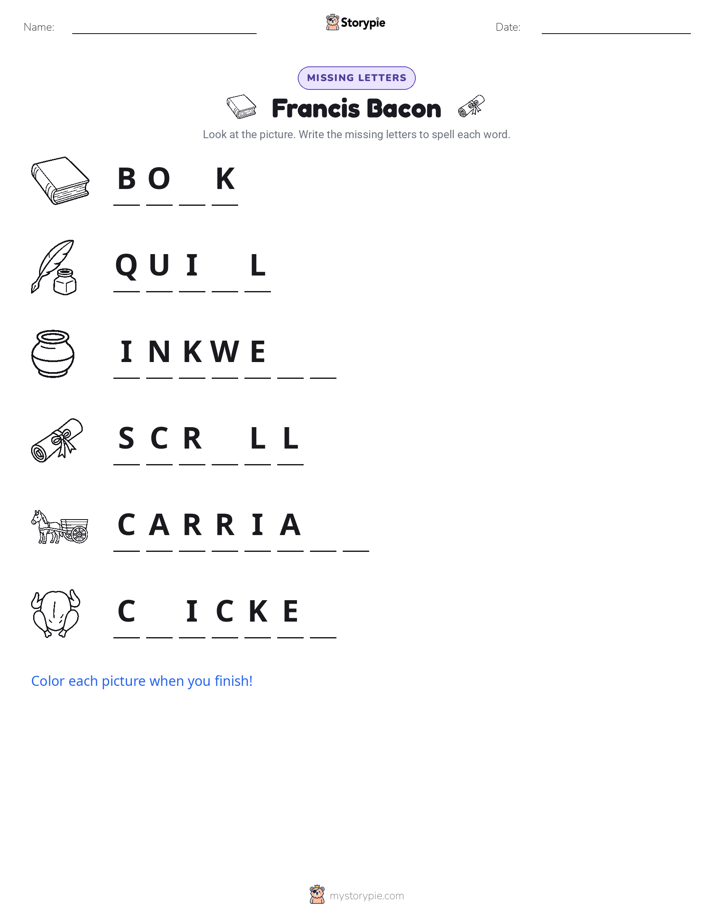
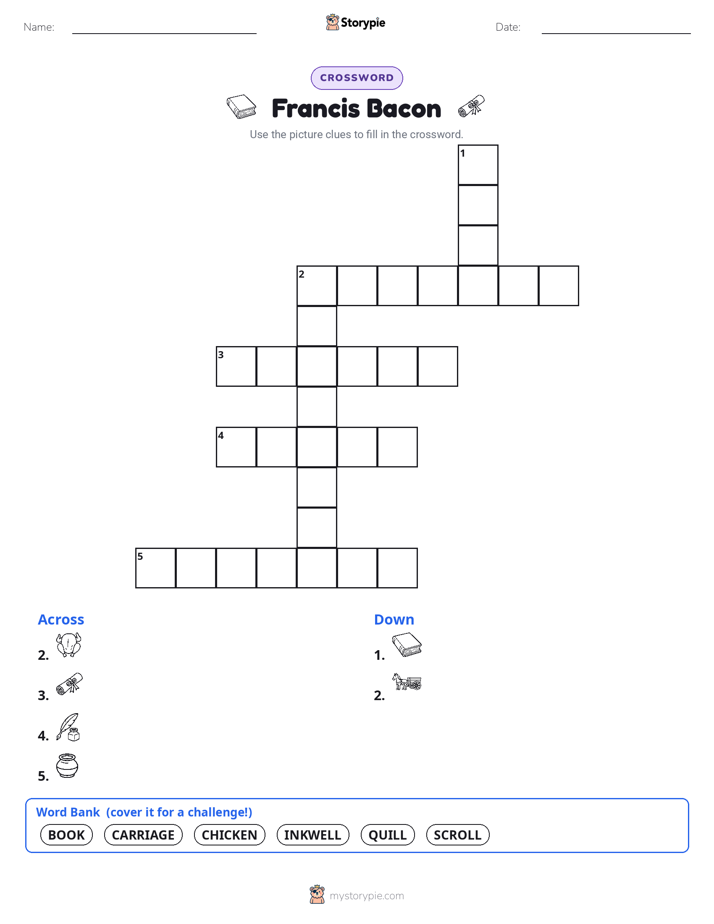
Print & create
Answer keys·No prep·Free with an account
28 worksheets · answer keys · full story · quiz · Ages 10-12 · CEFR B2
Plus adds 244,000+ more stories in 27 languages, audio for every one, and printables for all of them.
Just want Francis Bacon?
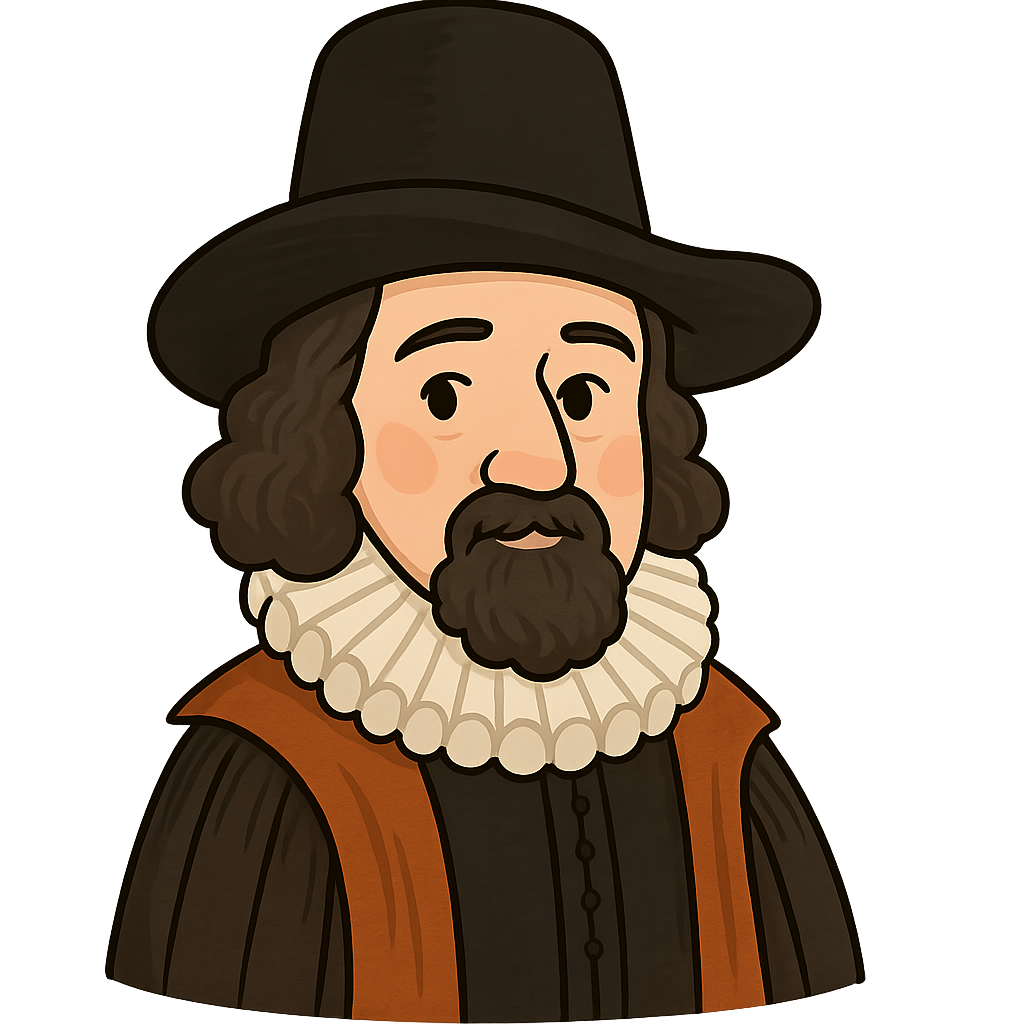
Hello, my name is Francis Bacon, and I want to tell you how my curiosity helped change the way we understand the world. I was born in London, England, on January 22nd, 1561. My father was Sir Nicholas Bacon, a very important man who served the queen, and my mother was Lady Anne, who was known for her sharp mind and education. Growing up in such a household, I was surrounded by books and big ideas. But from a very young age, I felt that something was missing. I grew tired of simply reading what ancient authors had written centuries ago. I believed that the best way to learn about the world was not just to read about it, but to look at it directly and ask questions. In 1573, when I was only 12 years old, I went to study at Trinity College, Cambridge. Even there, I felt that the methods of teaching were outdated. It seemed to me that people were just repeating old ideas instead of discovering new ones. I knew there had to be a better way to find the truth.
After my studies, I began a career in law and politics, following in my father’s footsteps. It was a world of power and influence. In 1581, I was elected to Parliament, where I helped make laws for the country. I served Queen Elizabeth I for many years, but my career truly flourished when King James I came to the throne. He recognized my abilities, and in 1603, he made me a knight. My influence continued to grow, and I took on more and more responsibility within the government. By 1618, I had reached the very top, becoming the Lord Chancellor of England, one of the most powerful positions in the entire kingdom. It seemed as though my political life was a great success. However, my time in power came to a sudden and difficult end. In 1621, I was accused of taking bribes, which meant people claimed I had accepted money in exchange for using my influence to help them. I lost my position as Lord Chancellor and was forced to leave my political life behind forever. It was a great downfall for me.
Francis Bacon
Hello, my name is Francis Bacon, and I want to tell you how my curiosity helped change the way we understand the world. I was born in London, England, on January 22nd, 1561. My father was Sir Nicholas Bacon, a very important man who served the queen, and my mother was Lady Anne, who was known for her sharp mind and education. Growing up in such a household, I was surrounded by books and big ideas. But from a very young age, I felt that something was missing. I grew tired of simply reading what ancient authors had written centuries ago. I believed that the best way to learn about the world was not just to read about it, but to look at it directly and ask questions. In 1573, when I was only 12 years old, I went to study at Trinity College, Cambridge. Even there, I felt that the methods of teaching were outdated. It seemed to me that people were just repeating old ideas instead of discovering new ones. I knew there had to be a better way to find the truth.
After my studies, I began a career in law and politics, following in my father’s footsteps. It was a world of power and influence. In 1581, I was elected to Parliament, where I helped make laws for the country. I served Queen Elizabeth I for many years, but my career truly flourished when King James I came to the throne. He recognized my abilities, and in 1603, he made me a knight. My influence continued to grow, and I took on more and more responsibility within the government. By 1618, I had reached the very top, becoming the Lord Chancellor of England, one of the most powerful positions in the entire kingdom. It seemed as though my political life was a great success. However, my time in power came to a sudden and difficult end. In 1621, I was accused of taking bribes, which meant people claimed I had accepted money in exchange for using my influence to help them. I lost my position as Lord Chancellor and was forced to leave my political life behind forever. It was a great downfall for me.
Although my time in politics was over, this change gave me the chance to focus entirely on my true passion: philosophy and the study of the natural world. I wanted to give humanity a new way to learn, a tool for thinking that could lead to real discoveries. This big idea is what we now call the scientific method. I argued that instead of just accepting what old books said, people should go out and observe the world for themselves. They should form ideas, or hypotheses, and then, most importantly, they should perform experiments to test if those ideas were true. By gathering evidence step-by-step, we could build a more accurate understanding of how everything works. To share this new way of thinking, I wrote a book called Novum Organum, which means “new instrument,” in 1620. In it, I explained my method for investigation. I firmly believed that “knowledge is power,” and I hoped that through science, people could improve their lives and build a better world.
My dedication to experimentation stayed with me until my final days. In the spring of 1626, I was traveling by carriage through the snow when an idea suddenly struck me. I looked at the freezing landscape and wondered if cold could be used to preserve food and stop it from spoiling. I was so excited by the question that I couldn't wait to test it. I ordered my carriage to stop, and I went to a nearby house to buy a chicken. Right there on the side of the road, I began my experiment, stuffing the chicken full of snow to see if the cold would keep it fresh. In my eagerness to test my theory, I didn't pay enough attention to my own health. I spent too long out in the freezing air and caught a terrible chill. The cold settled deep in my chest and soon developed into pneumonia.
My final experiment led to the illness that ended my life. I passed away on April 9th, 1626. I lived to be 65 years old. While my political career ended in disgrace, my true work had just begun to make its mark on the world. The ideas I wrote about—the importance of observation, questioning, and experimentation—did not die with me. Today, I am remembered as one of the fathers of the scientific method. The way scientists all over the world conduct their research is based on the principles I championed so long ago, proving that a good idea can be the most powerful legacy of all.
Wow facts
About
Francis Bacon was an English philosopher, statesman, scientist, and author who is best known for promoting the scientific method.
Take a Quiz
Question 1 of 5
What is the main idea of the section titled 'A New Way to Learn'?
Explore next


Want to do even more?
Go beyond exploring. Unlock tools that turn every story into real learning.

Storypie Plus for families
Full stories, quizzes, and printables. Nights and car rides, sorted.
- Unlimited audio stories
- Create Mode: your child stars in the story
- Offline downloads
- Printable worksheets & coloring pages

Why Storypie for Schools
Students engaged. Prep in seconds. Evenings back to you.
- Worksheets & Quizzes
- Classroom Management
- Formative Assessment
- Custom Curriculum & Lesson Plans
- 27 Languages

Why Storypie for Homeschool
Curriculum done. They'll ask for more. Hours back in your day.
- Worksheet Generator
- First-Person Audio Stories
- Built-in Comprehension Quizzes
- Custom Curriculum & Lesson Plans
- Print & Go Activities