English

Frédéric Chopin
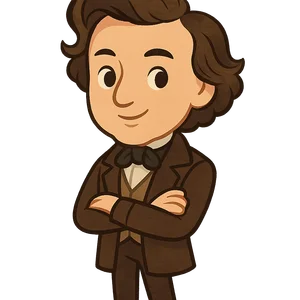
Frédéric Chopin was a Polish composer and pianist of the Romantic era…
Reads at Grades 6–8 Listens at Grades 4–8
Print & create
Answer keys·No prep·Free with an account
28 worksheets · answer keys · full story · quiz · Ages 10-12 · CEFR B2
Plus adds 164,000+ more stories in 27 languages, audio for every one, and printables for all of them.
Just want Frédéric Chopin?
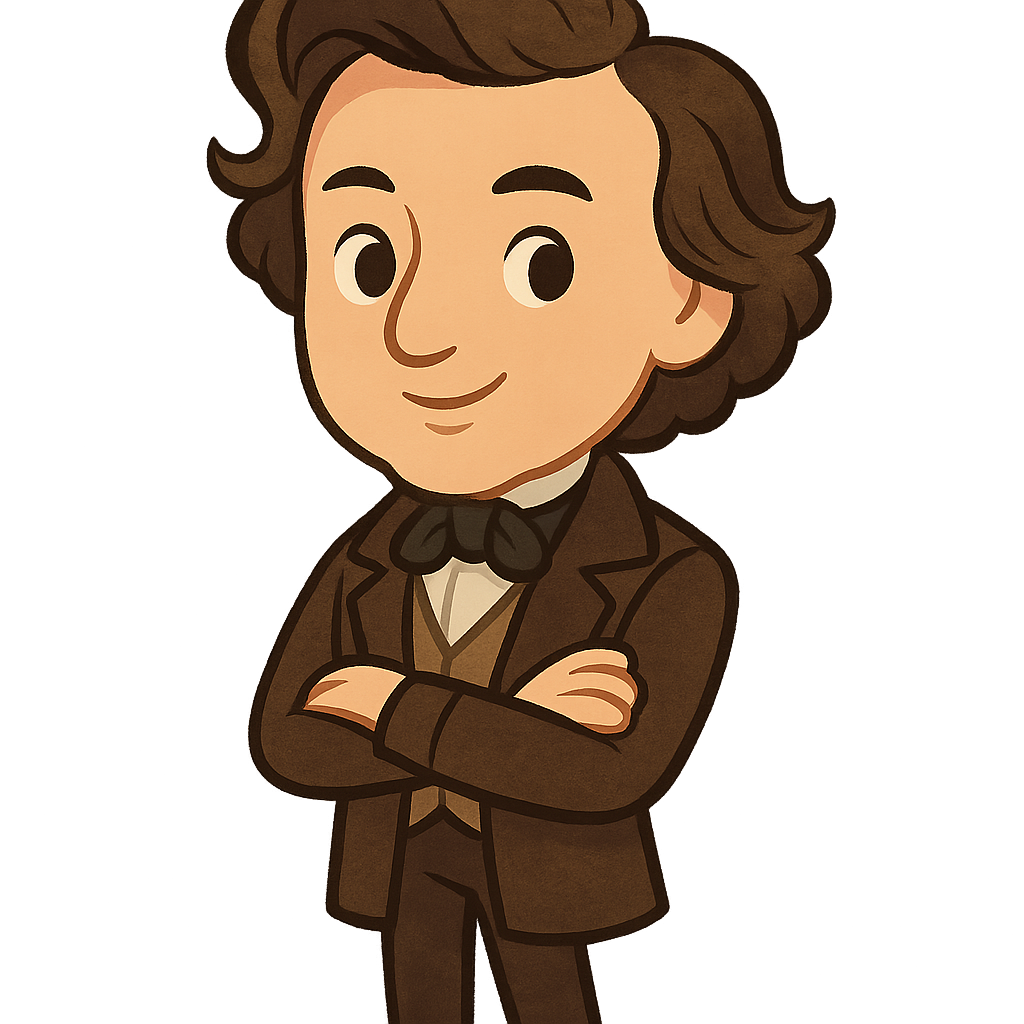
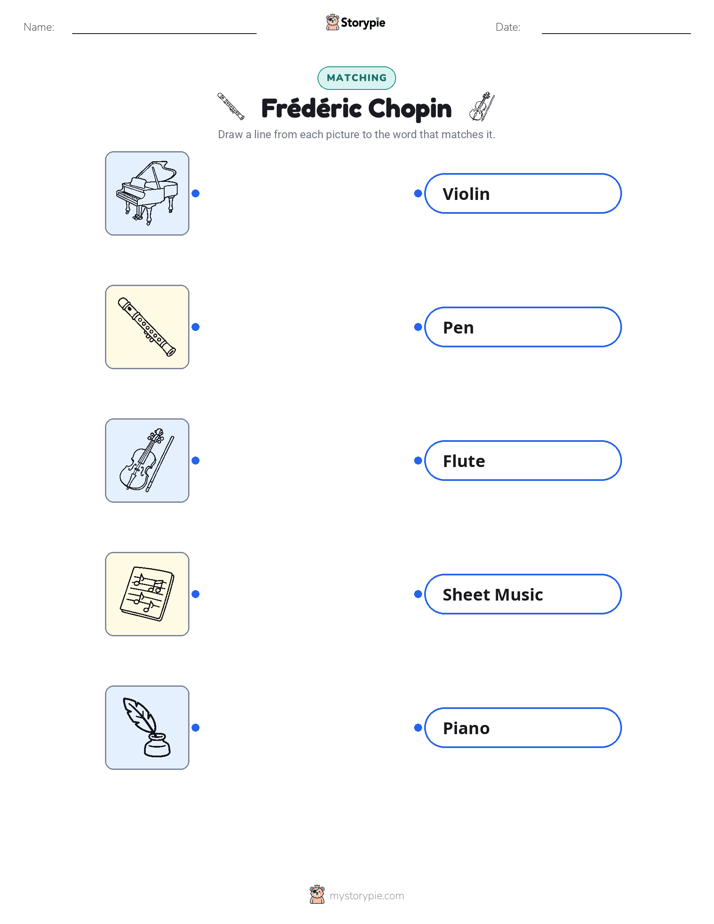
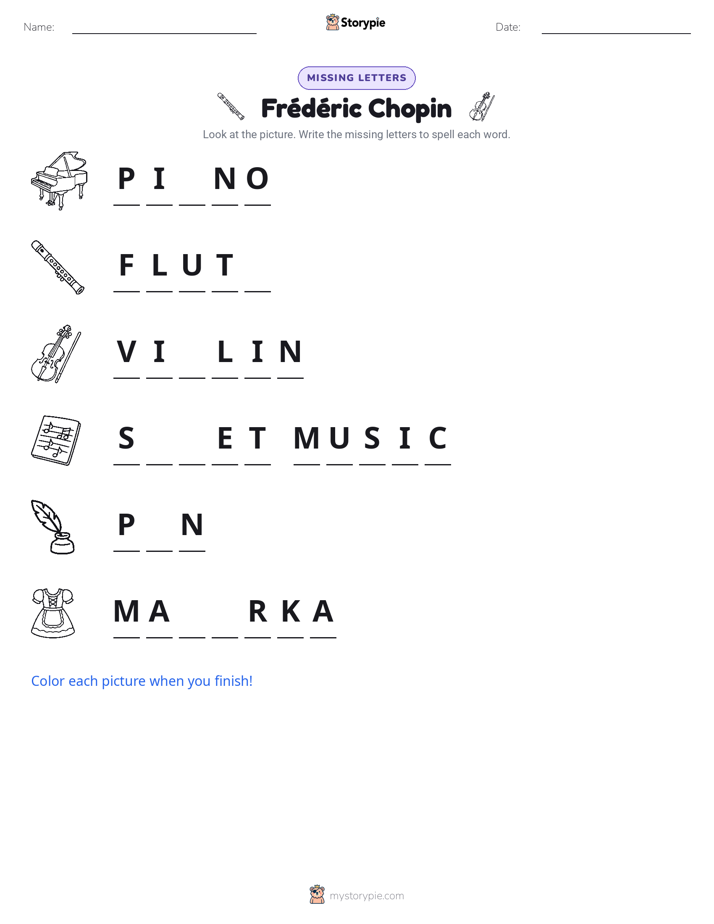
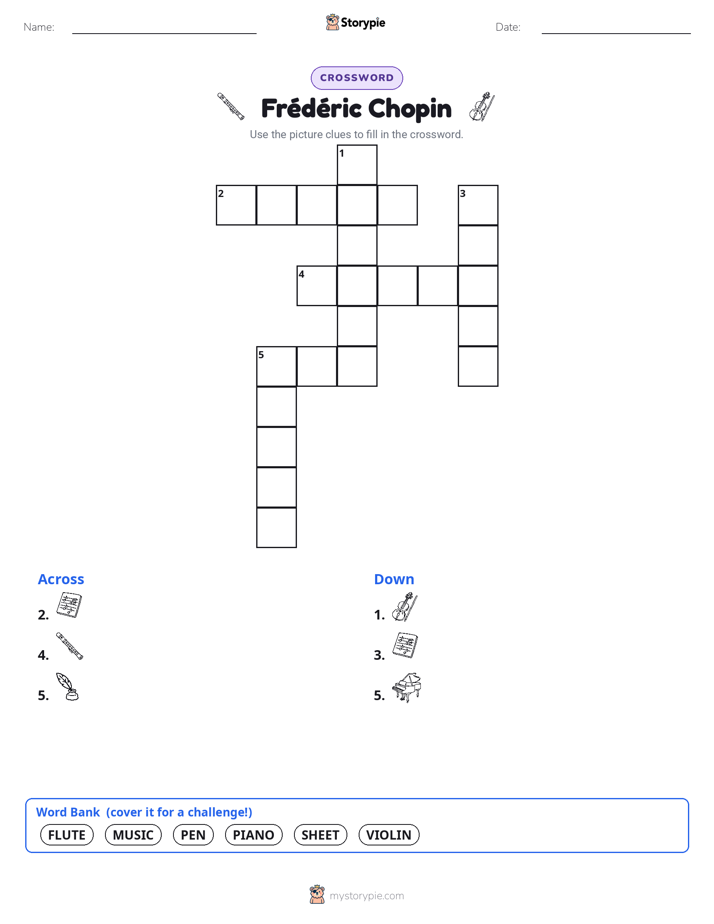
Hello, my name is Frédéric Chopin, and I want to share the story of my life, which was filled with music from the very beginning. I was born on March 1st, 1810, in a small Polish village called Żelazowa Wola, not far from the city of Warsaw. My home was always filled with melodies, as my mother taught me piano and my father played the flute and violin. I was captivated by the piano and spent hours at the keyboard, exploring its sounds. It felt like the instrument could speak a language all its own. Before long, people began to notice my talent, calling me a 'child prodigy.' It was a grand title for a little boy, but it was true that music came to me naturally. By the time I was seven years old, I was not just playing music but composing my own pieces. The following year, in 1818, I gave my first major public concert in Warsaw. I was only eight years old, but I felt completely at home on the stage. My heart was always tied to Poland, and the beautiful, lively folk songs of my homeland deeply inspired me. I wove the rhythms and melodies of traditional Polish dances, like the mazurka and the polonaise, into my compositions, sharing a piece of my country with the world through my music.
As I grew older, I knew I had to see more of the world to grow as an artist. In 1830, I made the difficult decision to leave Poland and travel. My journey led me to Paris, France, in 1831. At that time, Paris was a dazzling hub of creativity, the artistic heart of Europe. While I was excited by the new opportunities, my joy was overshadowed by terrible news from home. I learned of the November Uprising, a Polish rebellion against foreign rule. The uprising was unsuccessful, and it became clear that I could never return to my beloved Poland. My heart ached with a deep sense of loss and homesickness. I poured all of my powerful emotions—my love for my country and my sorrow for its struggles—into my music. One of my most famous pieces from this time is my Étude in C minor, which later became known as the 'Revolutionary' Étude, filled with passion and fire. In Paris, I found a new community among other famous artists and musicians. I became good friends with the brilliant pianist Franz Liszt, and we shared our ideas about music. I soon became a sought-after piano teacher for the children of wealthy families and performed my compositions in the elegant salons of the city, where my unique style made me famous.
Frédéric Chopin: Poet of the Piano
Hello, my name is Frédéric Chopin, and I want to share the story of my life, which was filled with music from the very beginning. I was born on March 1st, 1810, in a small Polish village called Żelazowa Wola, not far from the city of Warsaw. My home was always filled with melodies, as my mother taught me piano and my father played the flute and violin. I was captivated by the piano and spent hours at the keyboard, exploring its sounds. It felt like the instrument could speak a language all its own. Before long, people began to notice my talent, calling me a 'child prodigy.' It was a grand title for a little boy, but it was true that music came to me naturally. By the time I was seven years old, I was not just playing music but composing my own pieces. The following year, in 1818, I gave my first major public concert in Warsaw. I was only eight years old, but I felt completely at home on the stage. My heart was always tied to Poland, and the beautiful, lively folk songs of my homeland deeply inspired me. I wove the rhythms and melodies of traditional Polish dances, like the mazurka and the polonaise, into my compositions, sharing a piece of my country with the world through my music.
As I grew older, I knew I had to see more of the world to grow as an artist. In 1830, I made the difficult decision to leave Poland and travel. My journey led me to Paris, France, in 1831. At that time, Paris was a dazzling hub of creativity, the artistic heart of Europe. While I was excited by the new opportunities, my joy was overshadowed by terrible news from home. I learned of the November Uprising, a Polish rebellion against foreign rule. The uprising was unsuccessful, and it became clear that I could never return to my beloved Poland. My heart ached with a deep sense of loss and homesickness. I poured all of my powerful emotions—my love for my country and my sorrow for its struggles—into my music. One of my most famous pieces from this time is my Étude in C minor, which later became known as the 'Revolutionary' Étude, filled with passion and fire. In Paris, I found a new community among other famous artists and musicians. I became good friends with the brilliant pianist Franz Liszt, and we shared our ideas about music. I soon became a sought-after piano teacher for the children of wealthy families and performed my compositions in the elegant salons of the city, where my unique style made me famous.
My years in Paris during the 1830s and 1840s were some of the most creative of my life, though they were also marked by personal challenges. Around 1838, I began a very important relationship with a remarkable French writer named Amantine Dupin, who was better known by her pen name, George Sand. She was a brilliant and supportive partner who understood the demands of an artist's life. We spent many seasons together, including a winter on the Spanish island of Majorca. That trip was quite difficult for us, as the weather was cold and damp, and it made my already poor health even worse. I had struggled with illness for much of my life, often feeling weak and tired. Yet, even during that challenging winter, I found the strength to compose. In fact, it was a very productive time for me musically. Throughout my years with George Sand, I wrote some of my most famous and beloved pieces. I composed hauntingly beautiful nocturnes that sound like music for the night, graceful waltzes that make you want to dance, and a powerful set of preludes, each one capturing a different mood or feeling. My music was always deeply personal and emotional; it was my way of telling stories and sharing my innermost thoughts without ever using words.
As the years went on, my health continued to decline. My body grew weaker, and I had less and less energy for performing. I gave my last public concert in London in 1848, a final chance to share my music with an audience. I lived to be 39 years old, and my life came to an end in Paris on October 17th, 1849. Though my final resting place is in Paris, I had one last wish for my homeland. My heart was carefully removed and returned to Poland, where it rests today in a pillar of a church in Warsaw, forever close to the people and places I loved. Today, people remember me as the 'Poet of the Piano' because my music speaks with such deep emotion. My compositions continue to be played by pianists and loved by listeners all over the world, keeping the spirit of Poland and the beautiful voice of the piano alive for generations to come.
Wow facts
About
Frédéric Chopin was a Polish composer and pianist of the Romantic era, renowned for his solo piano compositions. He is widely regarded as one of the greatest masters of Romantic music.
Take a Quiz
Question 1 of 5
Summarize the main events of Frédéric Chopin's life in the correct order.
Explore next




Want to do even more?
Go beyond exploring. Unlock tools that turn every story into real learning.

Storypie Plus for families
Full stories, quizzes, and printables. Nights and car rides, sorted.
- Unlimited audio stories
- Create Mode: your child stars in the story
- Offline downloads
- Printable worksheets & coloring pages

Why Storypie for Schools
Students engaged. Prep in seconds. Evenings back to you.
- Worksheets & Quizzes
- Classroom Management
- Formative Assessment
- Custom Curriculum & Lesson Plans
- 27 Languages

Why Storypie for Homeschool
Curriculum done. They'll ask for more. Hours back in your day.
- Worksheet Generator
- First-Person Audio Stories
- Built-in Comprehension Quizzes
- Custom Curriculum & Lesson Plans
- Print & Go Activities