English

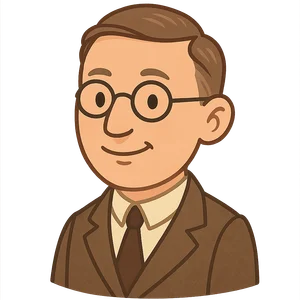
Frederick Banting
A Canadian medical scientist and doctor who co-discovered insulin, a life-saving treatment for diabetes…
Reads at Grades 3–5 Listens at Grades 1–5
Print & create
Answer keys·No prep·Free with an account
28 worksheets · answer keys · full story · quiz · Ages 8-10 · CEFR B1
Plus adds 164,000+ more stories in 27 languages, audio for every one, and printables for all of them.
Just want Frederick Banting?
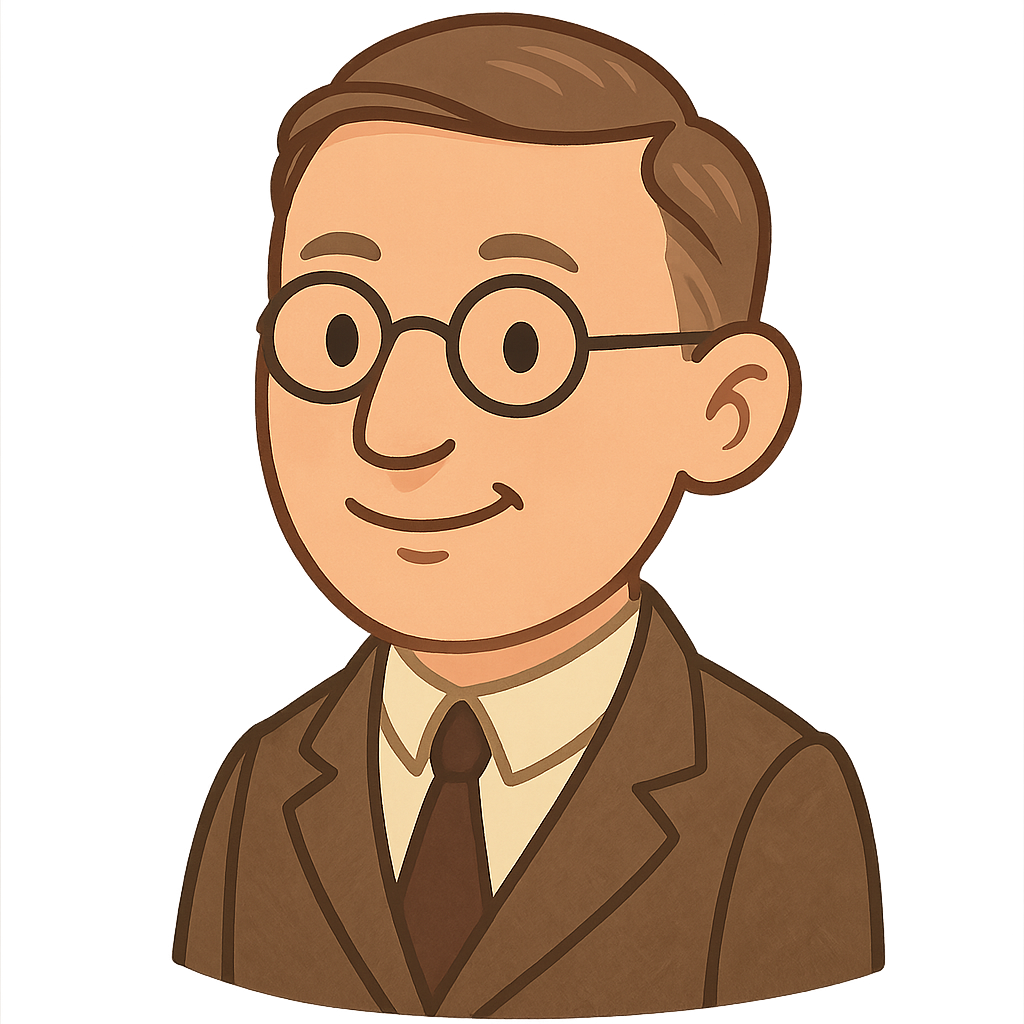
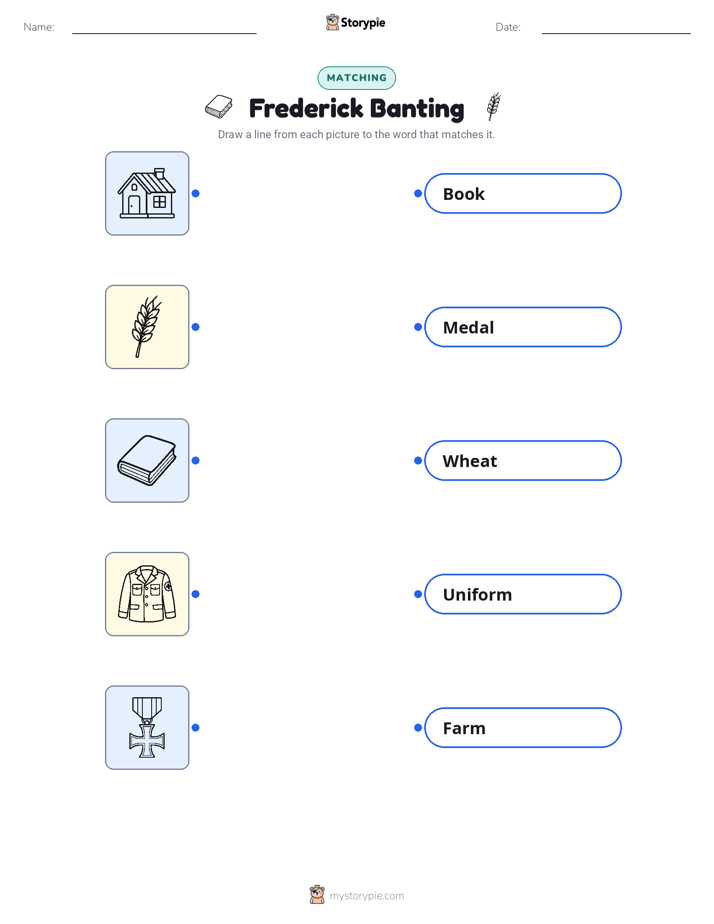
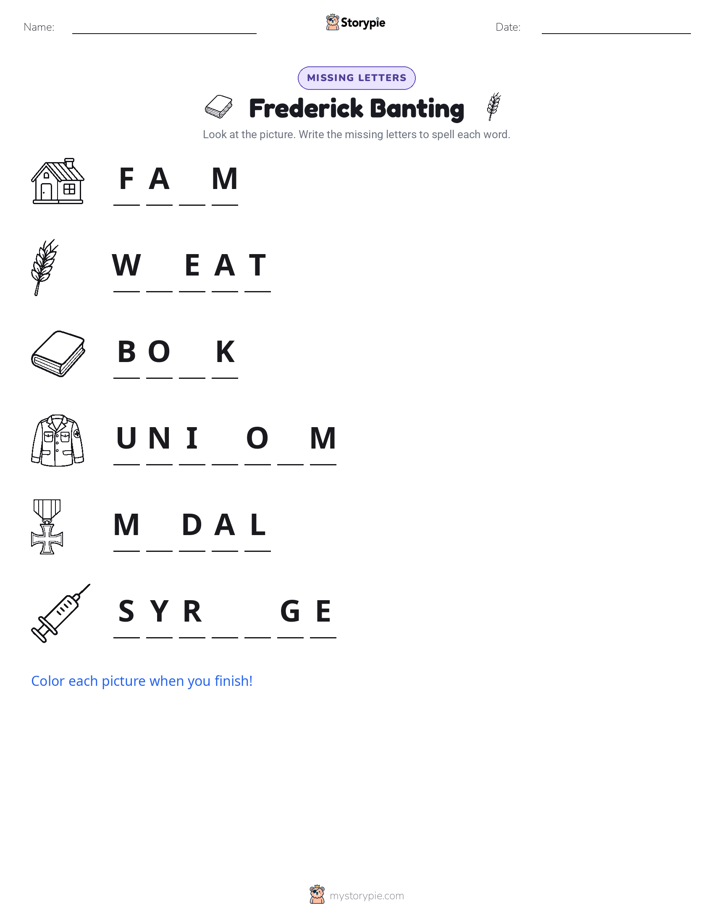
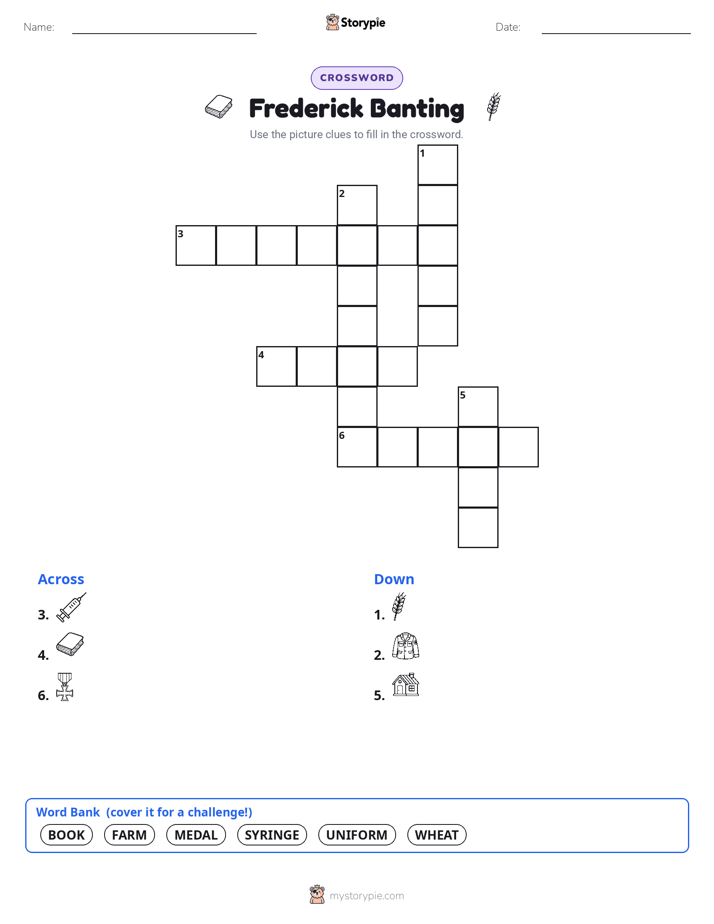
Hello! My name is Frederick Banting. I'll tell you the story of how a big idea helped save millions of lives. I was born on November 14th, 1891, on a farm in Alliston, Ontario, in Canada. Growing up, I loved being outdoors, but I wasn't always the best student in school. More than anything, I knew I wanted to help people, so I made the decision to become a doctor. That choice put me on a path to a discovery that would change the world.
I started my studies at the University of Toronto in 1912. Just a few years later, a huge war, World War I, began. So many doctors were needed to help the soldiers that my classes were sped up, and I graduated early in 1916. I immediately joined the Canadian Army Medical Corps and traveled to Europe to care for wounded soldiers on the battlefield. It was a very difficult and dangerous time. In 1918, I was injured during a battle, but even after I was hurt, I kept working for sixteen hours to help other soldiers. For my bravery, I was awarded a special medal called the Military Cross in 1919.
After the war, I returned to Canada and started my own small medical practice in London, Ontario. It was a slow start, and not many patients came to see me. To earn a little more money, I began teaching at a local university. One night, on October 31st, 1920, I was up late preparing a lecture about an organ in our bodies called the pancreas. As I was reading, an idea suddenly flashed into my mind. I came up with a new theory about how to get a special substance from the pancreas that I believed could treat a serious illness called diabetes. At that time, there was no cure for diabetes, and it was heartbreaking to see people, especially children, become so sick from it. I was so excited about my idea that I couldn't sleep for the rest of the night.
Frederick Banting
Hello! My name is Frederick Banting. I'll tell you the story of how a big idea helped save millions of lives. I was born on November 14th, 1891, on a farm in Alliston, Ontario, in Canada. Growing up, I loved being outdoors, but I wasn't always the best student in school. More than anything, I knew I wanted to help people, so I made the decision to become a doctor. That choice put me on a path to a discovery that would change the world.
I started my studies at the University of Toronto in 1912. Just a few years later, a huge war, World War I, began. So many doctors were needed to help the soldiers that my classes were sped up, and I graduated early in 1916. I immediately joined the Canadian Army Medical Corps and traveled to Europe to care for wounded soldiers on the battlefield. It was a very difficult and dangerous time. In 1918, I was injured during a battle, but even after I was hurt, I kept working for sixteen hours to help other soldiers. For my bravery, I was awarded a special medal called the Military Cross in 1919.
After the war, I returned to Canada and started my own small medical practice in London, Ontario. It was a slow start, and not many patients came to see me. To earn a little more money, I began teaching at a local university. One night, on October 31st, 1920, I was up late preparing a lecture about an organ in our bodies called the pancreas. As I was reading, an idea suddenly flashed into my mind. I came up with a new theory about how to get a special substance from the pancreas that I believed could treat a serious illness called diabetes. At that time, there was no cure for diabetes, and it was heartbreaking to see people, especially children, become so sick from it. I was so excited about my idea that I couldn't sleep for the rest of the night.
I took my idea to a professor at the University of Toronto named John Macleod. He was doubtful at first, but he agreed to give me a small laboratory, some dogs for my experiments, and a student assistant for the summer of 1921. My new partner was a brilliant young man named Charles Best. All summer, Charles and I worked day and night in a hot, stuffy lab. The work was very hard, but we were determined to succeed. We finally managed to isolate the substance from the pancreas of the dogs. We then brought in a biochemist, James Collip, to help us make the substance pure enough to be used in people. In January of 1922, we gave our first successful injection of this purified substance, which we named insulin, to a 14-year-old boy named Leonard Thompson. He was very sick with diabetes, but the insulin saved his life. It felt like a miracle.
Our discovery of insulin changed the world for people with diabetes. In 1923, Professor Macleod and I were awarded the Nobel Prize, which is one of the greatest honors a scientist can receive. However, I felt it wasn't right that my hardworking partner, Charles Best, wasn't included in the prize. I knew I could not have done it without him. The moment I heard the news, I announced that I would share my prize money equally with Charles. Professor Macleod also chose to share his prize money with James Collip. We wanted the world to know that this amazing discovery was a team effort.
I spent the rest of my career working as a scientist, always searching for new ways to help people. In 1934, I was given a great honor when the King of England made me a knight, so I became Sir Frederick Banting. I lived to be 49 years old. My life ended during my service in World War II, but I am so proud that the work my team and I did continues to help millions of people with diabetes live long and healthy lives. It all started with a simple idea and the desire to help others.
Wow facts
About
A Canadian medical scientist and doctor who co-discovered insulin, a life-saving treatment for diabetes, and was a co-recipient of the 1923 Nobel Prize in Medicine.
Take a Quiz
Question 1 of 5
On what date did I have the 'midnight idea' about how to treat diabetes?
Explore next





Want to do even more?
Go beyond exploring. Unlock tools that turn every story into real learning.

Storypie Plus for families
Full stories, quizzes, and printables. Nights and car rides, sorted.
- Unlimited audio stories
- Create Mode: your child stars in the story
- Offline downloads
- Printable worksheets & coloring pages

Why Storypie for Schools
Students engaged. Prep in seconds. Evenings back to you.
- Worksheets & Quizzes
- Classroom Management
- Formative Assessment
- Custom Curriculum & Lesson Plans
- 27 Languages

Why Storypie for Homeschool
Curriculum done. They'll ask for more. Hours back in your day.
- Worksheet Generator
- First-Person Audio Stories
- Built-in Comprehension Quizzes
- Custom Curriculum & Lesson Plans
- Print & Go Activities