English

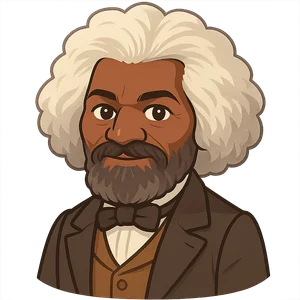
Frederick Douglass
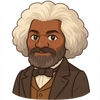
Frederick Douglass was an American social reformer, abolitionist, orator, writer…
Reads at Grades 6–8 Listens at Grades 4–8
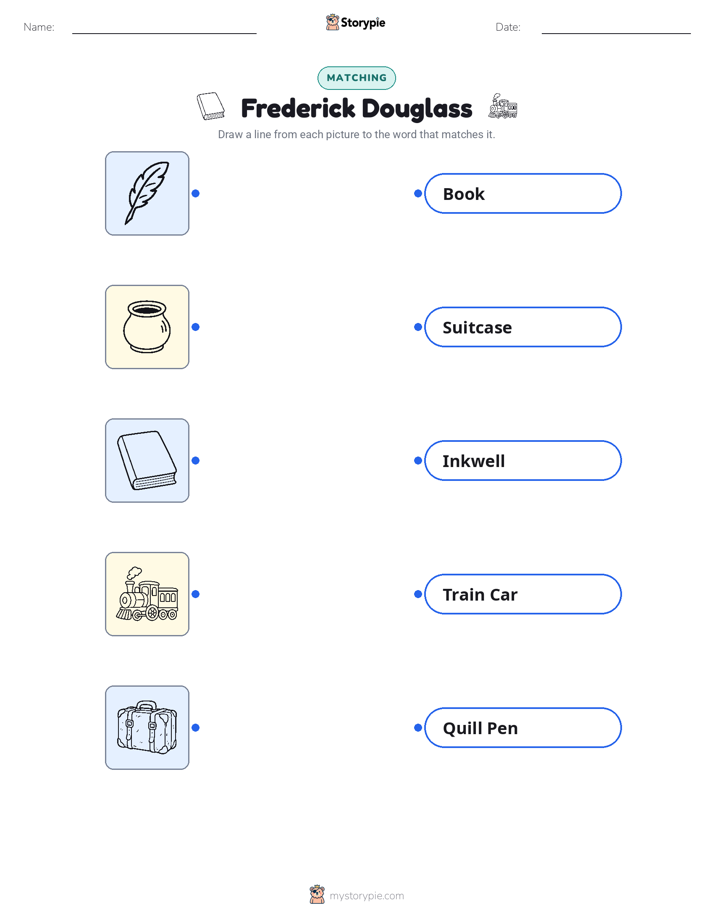
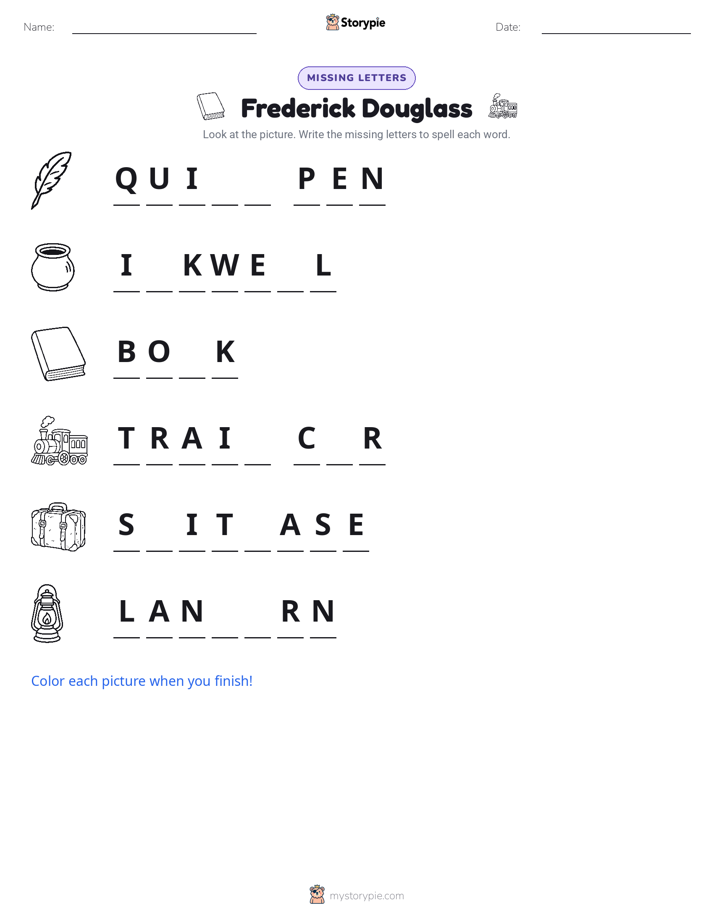
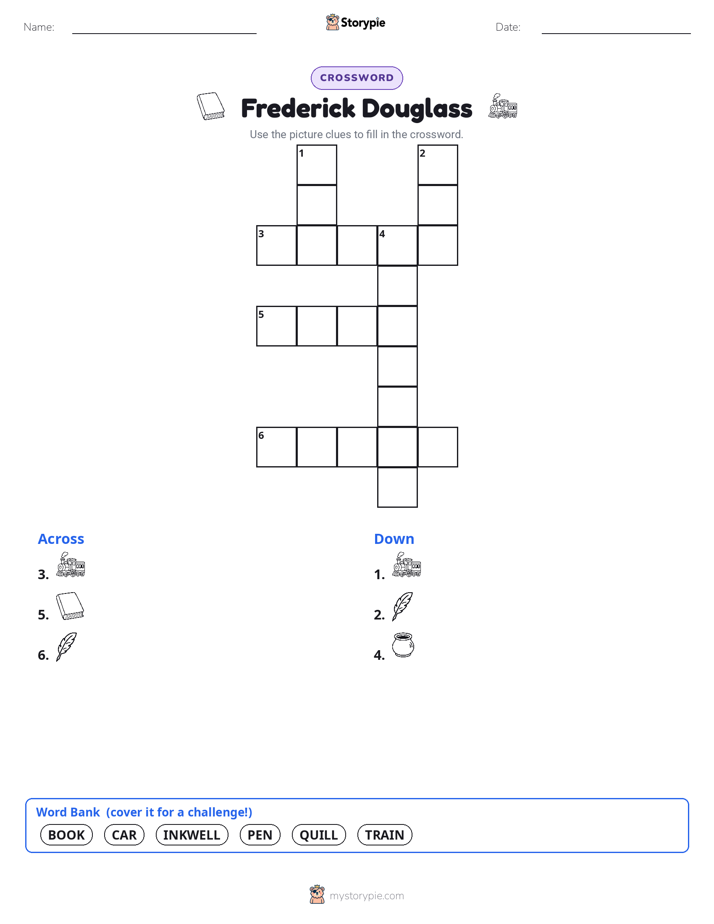
Print & create
Answer keys·No prep·Free with an account
28 worksheets · answer keys · full story · quiz · Ages 10-12 · CEFR B2
Plus adds 102,000+ more stories in 27 languages, audio for every one, and printables for all of them.
Just want Frederick Douglass?
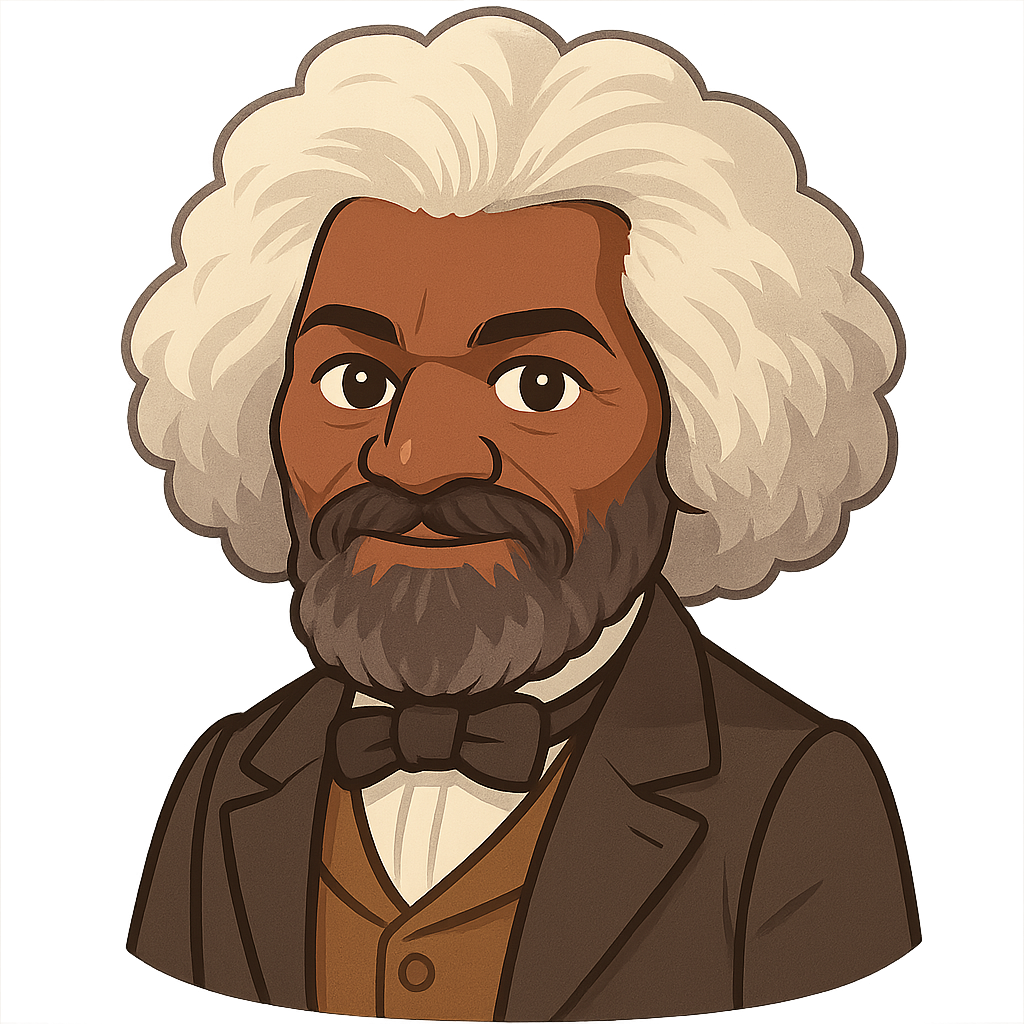
Hello, my name is Frederick Douglass, but I was given a different name at birth: Frederick Augustus Washington Bailey. I was born into the cruel system of slavery in Talbot County, Maryland, around the year 1818. Because enslaved people were not often told their birth dates, I never knew the exact day I was born. Later in my life, I chose to celebrate it on February 14th. Like many children in slavery, I was separated from my mother when I was very young, a heartbreaking reality of that unjust system. Life was filled with hardship, but even then, a small hope for a life of freedom began to grow inside me.
When I was about eight years old, in 1826, I was sent to live with the Auld family in Baltimore. There, something happened that changed my life forever. My new mistress, Sophia Auld, began to teach me the alphabet. She was kind at first, but her husband was furious when he discovered what she was doing. He declared that teaching a slave to read would make him unfit for slavery. In that moment, I understood a powerful truth: knowledge was the pathway to freedom. From that day forward, I dedicated myself to learning. I would cleverly trade pieces of bread with poor white children in my neighborhood in exchange for reading lessons. I devoured every newspaper, book, and pamphlet I could get my hands on. The more I read about justice and liberty, the more I knew I could not, and would not, remain enslaved.
My desire for freedom became an unstoppable force. After a previous attempt to escape had failed, I made my successful journey to freedom on September 3rd, 1838. I was about twenty years old at the time. My escape was made possible with the help of a courageous free Black woman named Anna Murray, who would later become my wife. I disguised myself as a sailor, wearing borrowed clothes and carrying papers that belonged to a free Black seaman. I boarded a train heading north, my heart pounding with a mix of fear and hope. The journey was filled with danger, but the thought of living as a free man pulled me forward. When I finally stepped onto the soil of New York, a free state, it felt as though I was being born all over again. To protect myself from slave catchers, I changed my last name to Douglass. Soon after, Anna joined me, and we began our new life together as a married couple.
Frederick Douglass: A Voice for Freedom
Hello, my name is Frederick Douglass, but I was given a different name at birth: Frederick Augustus Washington Bailey. I was born into the cruel system of slavery in Talbot County, Maryland, around the year 1818. Because enslaved people were not often told their birth dates, I never knew the exact day I was born. Later in my life, I chose to celebrate it on February 14th. Like many children in slavery, I was separated from my mother when I was very young, a heartbreaking reality of that unjust system. Life was filled with hardship, but even then, a small hope for a life of freedom began to grow inside me.
When I was about eight years old, in 1826, I was sent to live with the Auld family in Baltimore. There, something happened that changed my life forever. My new mistress, Sophia Auld, began to teach me the alphabet. She was kind at first, but her husband was furious when he discovered what she was doing. He declared that teaching a slave to read would make him unfit for slavery. In that moment, I understood a powerful truth: knowledge was the pathway to freedom. From that day forward, I dedicated myself to learning. I would cleverly trade pieces of bread with poor white children in my neighborhood in exchange for reading lessons. I devoured every newspaper, book, and pamphlet I could get my hands on. The more I read about justice and liberty, the more I knew I could not, and would not, remain enslaved.
My desire for freedom became an unstoppable force. After a previous attempt to escape had failed, I made my successful journey to freedom on September 3rd, 1838. I was about twenty years old at the time. My escape was made possible with the help of a courageous free Black woman named Anna Murray, who would later become my wife. I disguised myself as a sailor, wearing borrowed clothes and carrying papers that belonged to a free Black seaman. I boarded a train heading north, my heart pounding with a mix of fear and hope. The journey was filled with danger, but the thought of living as a free man pulled me forward. When I finally stepped onto the soil of New York, a free state, it felt as though I was being born all over again. To protect myself from slave catchers, I changed my last name to Douglass. Soon after, Anna joined me, and we began our new life together as a married couple.
Living as a free man, I felt a deep responsibility to speak out against the horrors I had endured. In 1841, I was invited to share my story at an abolitionist meeting. Though I was nervous, I spoke from the heart about my life in slavery. The audience was moved, and I soon became a prominent speaker for the anti-slavery movement. To prove that my experiences were real, I published my first autobiography in 1845, titled 'Narrative of the Life of Frederick Douglass, an American Slave.' The book became a bestseller, but it also put my freedom at risk, as it publicly identified me as an escaped slave. To avoid capture, I traveled to Great Britain, where I continued to speak out against slavery for two years. In 1846, my British supporters raised money to officially purchase my freedom. I returned to America in 1847, truly free at last, and started my own abolitionist newspaper, which I called 'The North Star.' My fight for equality wasn't limited to one cause; in 1848, I was proud to be one of the only men to attend the first women's rights convention in Seneca Falls, New York.
When the Civil War erupted in 1861, I knew it was a crucial battle for the future of the United States. I worked tirelessly to ensure that the end of slavery would be a central goal of the war. I met with President Abraham Lincoln on several occasions to advise him and to advocate for the inclusion of Black soldiers in the Union Army. I traveled across the North, recruiting African American men to fight for their own freedom, and I was immensely proud when my own two sons joined the cause. After the war finally ended and slavery was abolished in 1865, our work was far from over. I dedicated the rest of my life to fighting for civil rights, including the right to vote for all Americans. I served my country in several government positions, including as the United States Minister to Haiti from 1889 to 1891.
I lived to be about 77 years old, and my life's journey came to an end on February 20th, 1895. I had used my voice and my pen to fight for the cause of freedom and justice for all people. I always believed in the power of words to change hearts and minds, and in the power of a single individual to stand up for what is right. Today, I am remembered as an author, an orator, and a leader who never gave up on the promise of America—a nation where every person, regardless of their background, could one day be truly free.
Wow facts
About
Frederick Douglass was an American social reformer, abolitionist, orator, writer, and statesman who escaped from slavery and became a national leader of the abolitionist movement.
Take a Quiz
Question 1 of 5
In your own words, summarize the main events that happened in the section titled 'The Flight to Freedom'.
Explore next


Want to do even more?
Go beyond exploring. Unlock tools that turn every story into real learning.

Storypie Plus for families
Full stories, quizzes, and printables. Nights and car rides, sorted.
- Unlimited audio stories
- Create Mode: your child stars in the story
- Offline downloads
- Printable worksheets & coloring pages

Why Storypie for Schools
Students engaged. Prep in seconds. Evenings back to you.
- Worksheets & Quizzes
- Classroom Management
- Formative Assessment
- Custom Curriculum & Lesson Plans
- 27 Languages

Why Storypie for Homeschool
Curriculum done. They'll ask for more. Hours back in your day.
- Worksheet Generator
- First-Person Audio Stories
- Built-in Comprehension Quizzes
- Custom Curriculum & Lesson Plans
- Print & Go Activities