English

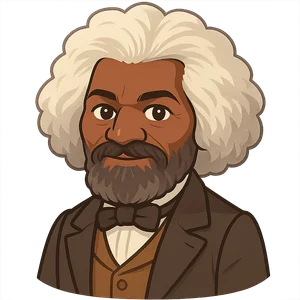
Frederick Douglass
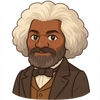
Frederick Douglass was an American social reformer, abolitionist, orator, writer…
Reads at Grades 3–5 Listens at Grades 1–5
Print & create
Answer keys·No prep·Free with an account
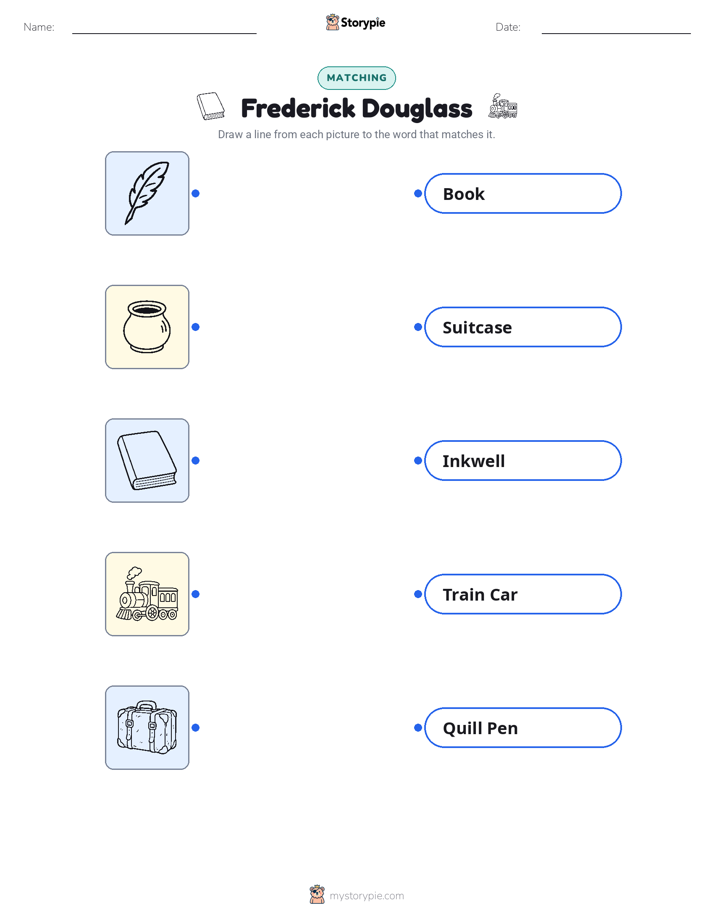
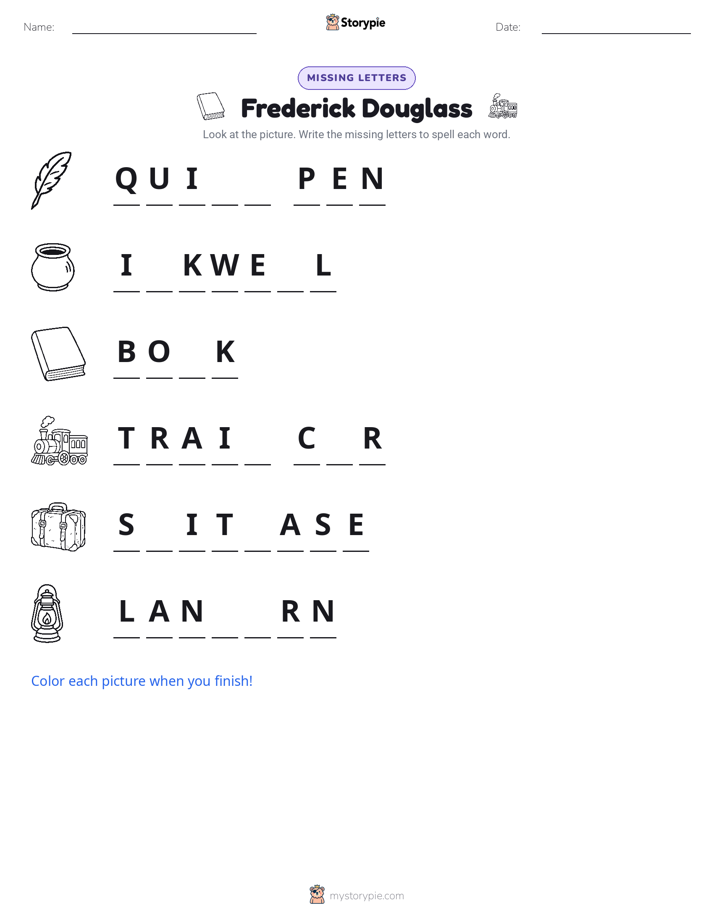
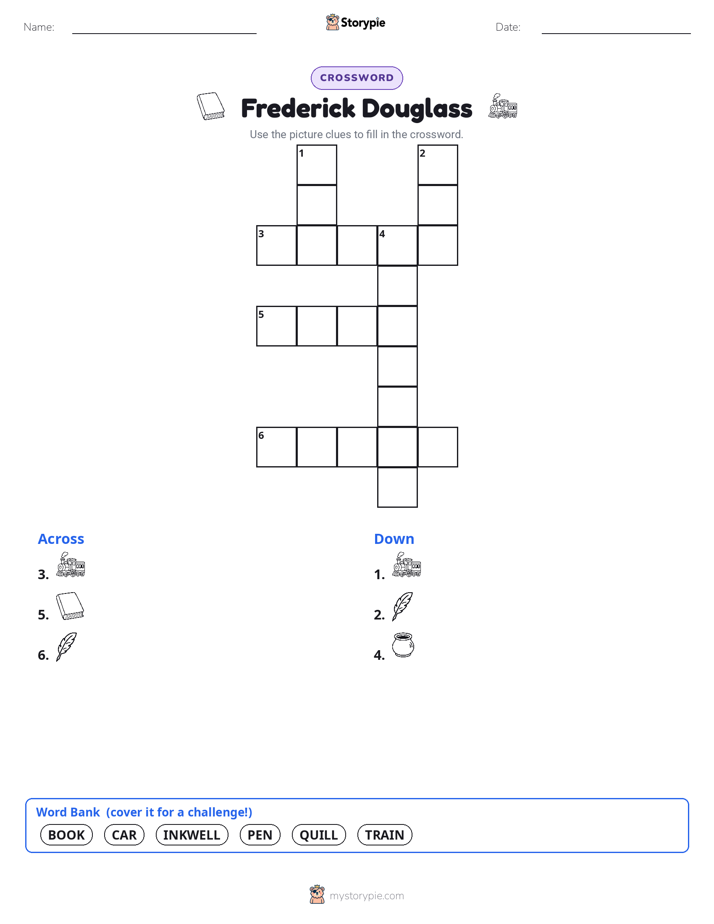
28 worksheets · answer keys · full story · quiz · Ages 8-10 · CEFR B1
Plus adds 102,000+ more stories in 27 languages, audio for every one, and printables for all of them.
Just want Frederick Douglass?
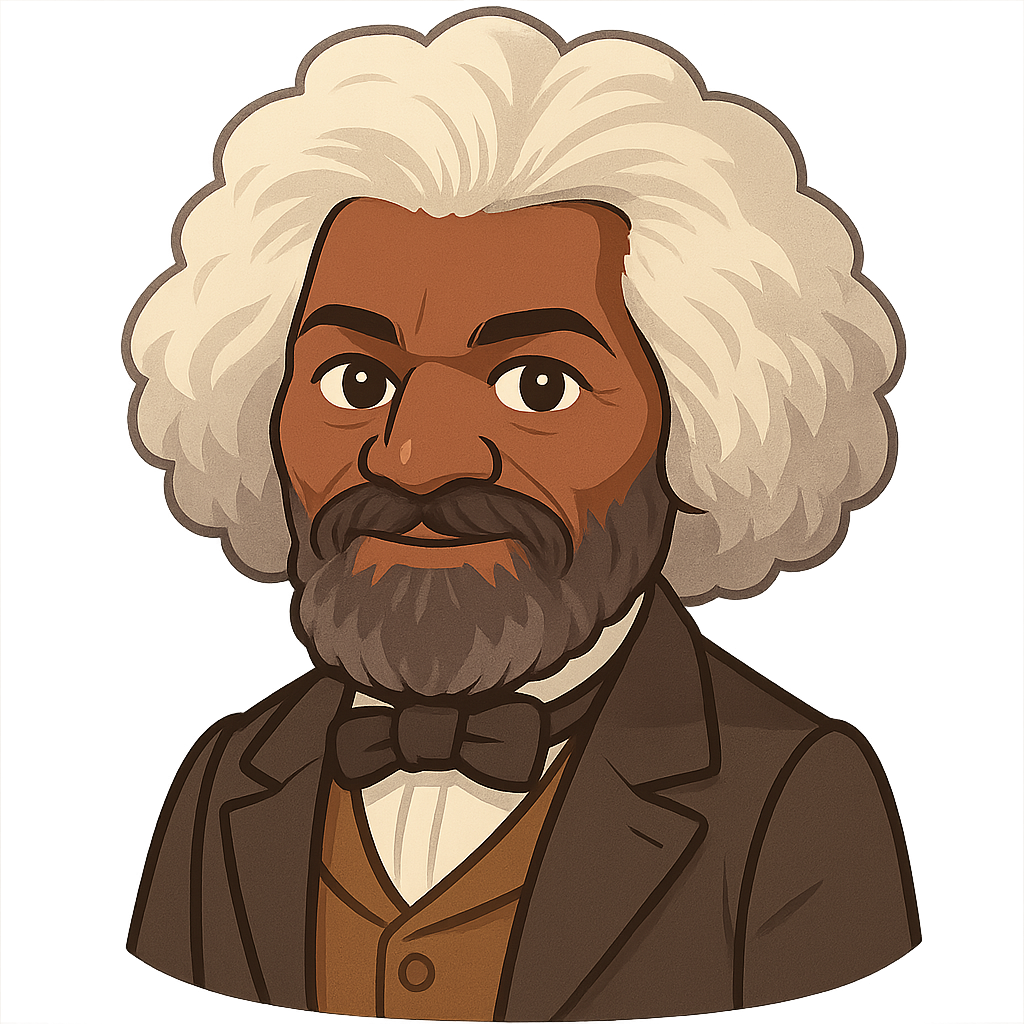
Hello. I'd like to tell you my story. My name is Frederick Douglass. I was born into slavery in Maryland around the year 1818. I never knew my exact birthday, so I chose February 14th to celebrate it each year. As a young boy, I was sent to live with a family in Baltimore. The woman of the house, Sophia Auld, was kind at first and started teaching me my ABCs. It felt like a light turning on in my mind! But when her husband found out, he was furious. He told her that learning would make me unfit to be a slave. In that moment, I understood something very important: reading and writing were my path to freedom. From then on, I practiced in secret, using any book or newspaper I could get my hands on, determined to learn more.
Life as a slave was very difficult, but I never gave up hope for a better future. While I was in Baltimore, I met a wonderful free Black woman named Anna Murray. She believed in my dream of freedom and decided to help me. On September 3rd, 1838, I put on a disguise and bravely boarded a train heading north. My heart pounded with every mile the train traveled, a mix of fear and excitement. When I finally arrived in the free state of New York, I felt like I could truly breathe for the very first time. To protect myself from being found and taken back, I changed my last name from Bailey to Douglass. Soon after, Anna joined me, and we were married, ready to start our new life together as a free family.
In the North, I started going to meetings with abolitionists—these were people who were working hard to end slavery. At first, I was nervous to speak in front of crowds, but I soon realized that my own story was a powerful tool in this fight. I began traveling and giving speeches, telling people about the true and terrible reality of slavery. In 1845, I wrote a book about my life called *Narrative of the Life of Frederick Douglass, an American Slave*. Publishing it was dangerous because it revealed my real identity, but I knew the world needed to hear the truth. A couple of years later, in 1847, I started my own newspaper, which I called *The North Star*, to continue the fight for freedom and equality. I believed everyone deserved rights, so in 1848, I also attended the Seneca Falls Convention to show my support for the right of women to vote.
Frederick Douglass
Hello. I'd like to tell you my story. My name is Frederick Douglass. I was born into slavery in Maryland around the year 1818. I never knew my exact birthday, so I chose February 14th to celebrate it each year. As a young boy, I was sent to live with a family in Baltimore. The woman of the house, Sophia Auld, was kind at first and started teaching me my ABCs. It felt like a light turning on in my mind! But when her husband found out, he was furious. He told her that learning would make me unfit to be a slave. In that moment, I understood something very important: reading and writing were my path to freedom. From then on, I practiced in secret, using any book or newspaper I could get my hands on, determined to learn more.
Life as a slave was very difficult, but I never gave up hope for a better future. While I was in Baltimore, I met a wonderful free Black woman named Anna Murray. She believed in my dream of freedom and decided to help me. On September 3rd, 1838, I put on a disguise and bravely boarded a train heading north. My heart pounded with every mile the train traveled, a mix of fear and excitement. When I finally arrived in the free state of New York, I felt like I could truly breathe for the very first time. To protect myself from being found and taken back, I changed my last name from Bailey to Douglass. Soon after, Anna joined me, and we were married, ready to start our new life together as a free family.
In the North, I started going to meetings with abolitionists—these were people who were working hard to end slavery. At first, I was nervous to speak in front of crowds, but I soon realized that my own story was a powerful tool in this fight. I began traveling and giving speeches, telling people about the true and terrible reality of slavery. In 1845, I wrote a book about my life called Narrative of the Life of Frederick Douglass, an American Slave. Publishing it was dangerous because it revealed my real identity, but I knew the world needed to hear the truth. A couple of years later, in 1847, I started my own newspaper, which I called The North Star, to continue the fight for freedom and equality. I believed everyone deserved rights, so in 1848, I also attended the Seneca Falls Convention to show my support for the right of women to vote.
When the Civil War began in 1861, I knew it was a crucial fight for the future of the entire country. During the war, I even had the chance to meet with President Abraham Lincoln to advise him. I urged him to allow Black men to fight for the Union army, and he listened to my advice. It was a very proud moment for me to see brave Black soldiers marching to fight for their own freedom and the freedom of all enslaved people. After the war finally ended and slavery was abolished, I continued to work for the government. I always made sure to speak up for justice and equal rights for every single American.
I lived a long and full life until the year 1895. I lived to be about 77 years old. Today, people remember me as an author, speaker, and leader who used the power of words to help end slavery in America. My story shows that education is a powerful key that can unlock the door to freedom, and that one person's voice, when used for good, can truly help change the world for the better.
Wow facts
About
Frederick Douglass was an American social reformer, abolitionist, orator, writer, and statesman who escaped from slavery and became a national leader of the abolitionist movement.
Take a Quiz
Question 1 of 5
Why did Frederick Douglass say that learning to read and write was his 'path to freedom'?
Explore next


Want to do even more?
Go beyond exploring. Unlock tools that turn every story into real learning.

Storypie Plus for families
Full stories, quizzes, and printables. Nights and car rides, sorted.
- Unlimited audio stories
- Create Mode: your child stars in the story
- Offline downloads
- Printable worksheets & coloring pages

Why Storypie for Schools
Students engaged. Prep in seconds. Evenings back to you.
- Worksheets & Quizzes
- Classroom Management
- Formative Assessment
- Custom Curriculum & Lesson Plans
- 27 Languages

Why Storypie for Homeschool
Curriculum done. They'll ask for more. Hours back in your day.
- Worksheet Generator
- First-Person Audio Stories
- Built-in Comprehension Quizzes
- Custom Curriculum & Lesson Plans
- Print & Go Activities