English

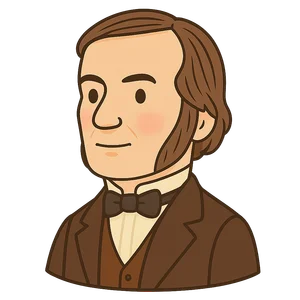
George Boole
George Boole was an English mathematician, philosopher, and logician whose work, particularly Boolean algebra…
Reads at Grades 3–5 Listens at Grades 1–5
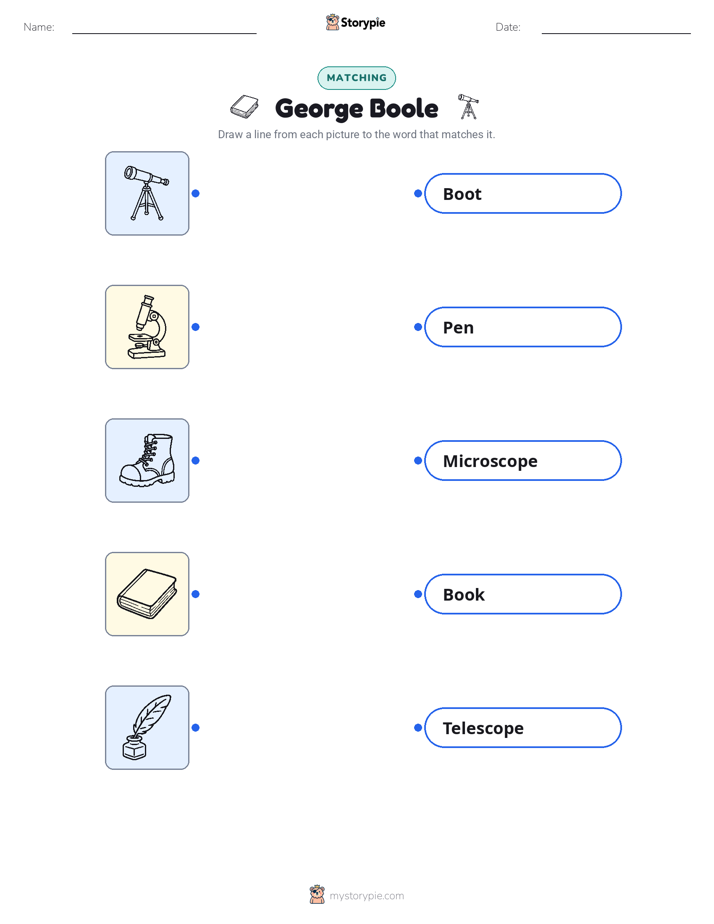
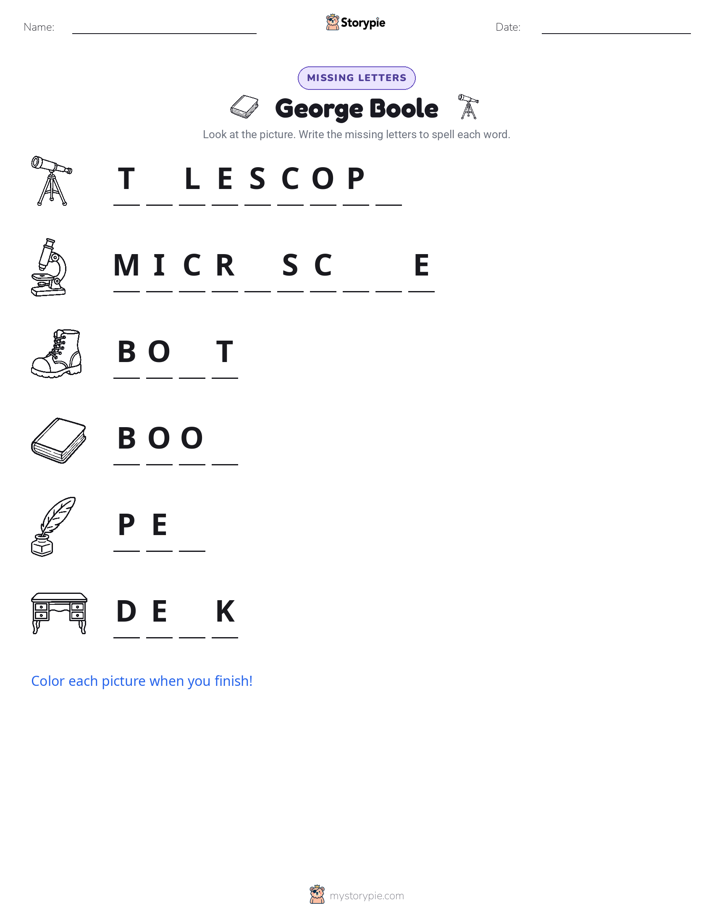
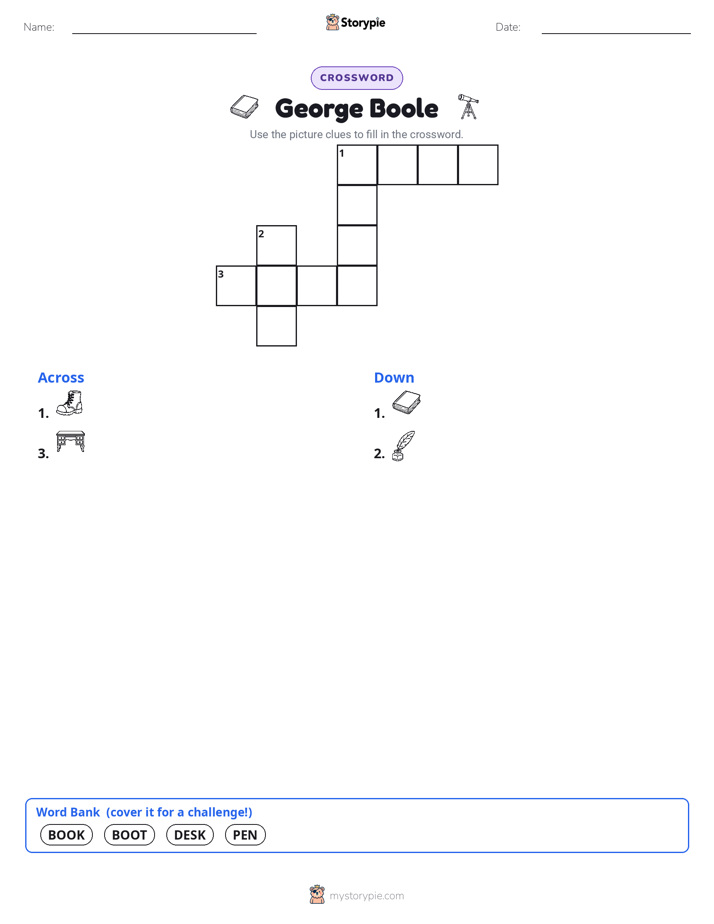
Print & create
Answer keys·No prep·Free with an account
28 worksheets · answer keys · full story · quiz · Ages 8-10 · CEFR B1
Plus adds 244,000+ more stories in 27 languages, audio for every one, and printables for all of them.
Just want George Boole?
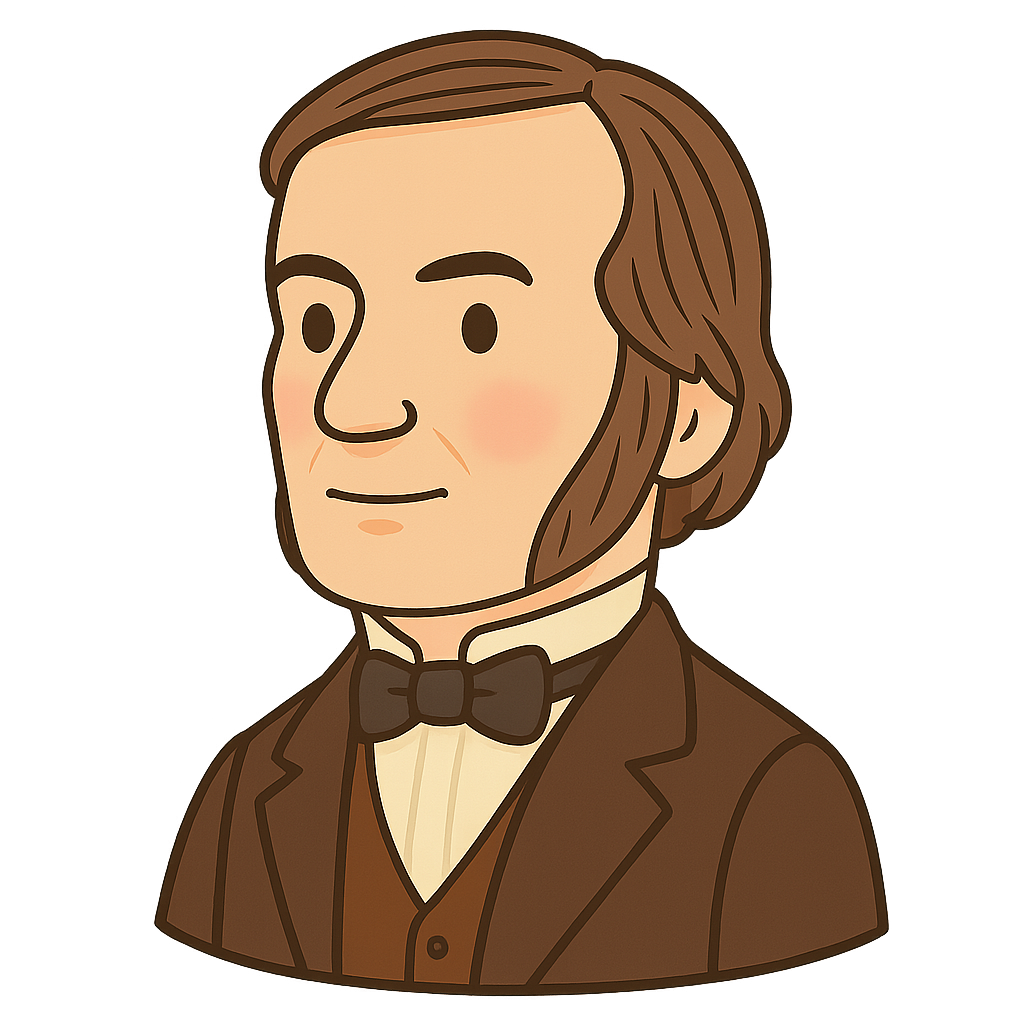
Hello! My name is George Boole, and I want to tell you a story about how simple ideas can change the world. I was born on November 2nd, 1815, in a town called Lincoln, in England. My father, John, was a shoemaker, but his real passion was science and mathematics. He even built his own telescope to look at the stars! We didn't have much money, so I couldn't attend a fancy school. But my father taught me everything he knew and, most importantly, he taught me to be curious. I loved learning so much that I decided to teach myself new languages. By the time I was a teenager, I had learned Latin and Greek all on my own.
When I was just sixteen years old, around the year 1831, my father's business was struggling, and I knew I had to help my family. I became an assistant teacher. A few years later, in 1834, I opened my very own school. I loved sharing knowledge with my students, but my own learning didn't stop. In my spare time, I would visit the local library and read every advanced mathematics book I could find. I was basically my own professor! I began to have my own ideas about math. I wrote them down in papers and sent them to math journals. To my surprise, they were published! Important mathematicians started to notice the work of a self-taught schoolmaster from Lincoln.
I had a powerful idea that I couldn't stop thinking about. I believed that logic—the way we reason about whether things are true or false—could be described using mathematics. In 1847, I published a book called 'The Mathematical Analysis of Logic.' In it, I showed how you could use symbols like 'x' and '+' to represent ideas. Think about simple questions with only two answers: Yes or No. On or Off. True or False. I realized that all complicated thoughts could be broken down into these simple choices. My work was so new and exciting that in 1849, Queen's College in Cork, Ireland, asked me to be its very first professor of mathematics. It was a great honor, especially for someone who never attended a university! In 1854, I published my most famous book, 'An Investigation of the Laws of Thought.' It explained my whole system, which people later named 'Boolean Algebra' after me.
George Boole: The Father of the Digital Age
Hello! My name is George Boole, and I want to tell you a story about how simple ideas can change the world. I was born on November 2nd, 1815, in a town called Lincoln, in England. My father, John, was a shoemaker, but his real passion was science and mathematics. He even built his own telescope to look at the stars! We didn't have much money, so I couldn't attend a fancy school. But my father taught me everything he knew and, most importantly, he taught me to be curious. I loved learning so much that I decided to teach myself new languages. By the time I was a teenager, I had learned Latin and Greek all on my own.
When I was just sixteen years old, around the year 1831, my father's business was struggling, and I knew I had to help my family. I became an assistant teacher. A few years later, in 1834, I opened my very own school. I loved sharing knowledge with my students, but my own learning didn't stop. In my spare time, I would visit the local library and read every advanced mathematics book I could find. I was basically my own professor! I began to have my own ideas about math. I wrote them down in papers and sent them to math journals. To my surprise, they were published! Important mathematicians started to notice the work of a self-taught schoolmaster from Lincoln.
I had a powerful idea that I couldn't stop thinking about. I believed that logic—the way we reason about whether things are true or false—could be described using mathematics. In 1847, I published a book called 'The Mathematical Analysis of Logic.' In it, I showed how you could use symbols like 'x' and '+' to represent ideas. Think about simple questions with only two answers: Yes or No. On or Off. True or False. I realized that all complicated thoughts could be broken down into these simple choices. My work was so new and exciting that in 1849, Queen's College in Cork, Ireland, asked me to be its very first professor of mathematics. It was a great honor, especially for someone who never attended a university! In 1854, I published my most famous book, 'An Investigation of the Laws of Thought.' It explained my whole system, which people later named 'Boolean Algebra' after me.
While in Ireland, I met and married a wonderful woman named Mary Everest, who was also a brilliant mathematician. We had five talented daughters. I spent many happy years teaching and writing. I lived to be 49 years old. My life ended in 1864 after I walked two miles to the university in a heavy downpour and became very ill. Back then, I could never have imagined a computer or a smartphone. But my idea that everything could be understood as either 'true' or 'false'—or as we might say today, a 1 or a 0—is the very foundation of the digital world. Every time you search for something on the internet or play a video game, you are using my Boolean logic. I am so proud that my curiosity helped build the amazing world you live in today.
Wow facts
About
George Boole was an English mathematician, philosopher, and logician whose work, particularly Boolean algebra, became the foundation for the information age and digital electronics.
Take a Quiz
Question 1 of 5
In the story, I say I was 'basically my own professor.' What does this mean?
Explore next






Want to do even more?
Go beyond exploring. Unlock tools that turn every story into real learning.

Storypie Plus for families
Full stories, quizzes, and printables. Nights and car rides, sorted.
- Unlimited audio stories
- Create Mode: your child stars in the story
- Offline downloads
- Printable worksheets & coloring pages

Why Storypie for Schools
Students engaged. Prep in seconds. Evenings back to you.
- Worksheets & Quizzes
- Classroom Management
- Formative Assessment
- Custom Curriculum & Lesson Plans
- 27 Languages

Why Storypie for Homeschool
Curriculum done. They'll ask for more. Hours back in your day.
- Worksheet Generator
- First-Person Audio Stories
- Built-in Comprehension Quizzes
- Custom Curriculum & Lesson Plans
- Print & Go Activities