English

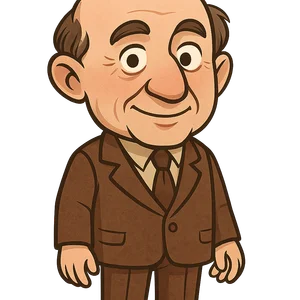
Georges Braque
Georges Braque was a major 20th-century French painter, collagist, and sculptor…
Reads at Grades 6–8 Listens at Grades 4–8
Print & create
Answer keys·No prep·Free with an account
28 worksheets · answer keys · full story · quiz · Ages 10-12 · CEFR B2
Plus adds 208,000+ more stories in 27 languages, audio for every one, and printables for all of them.
Just want Georges Braque?
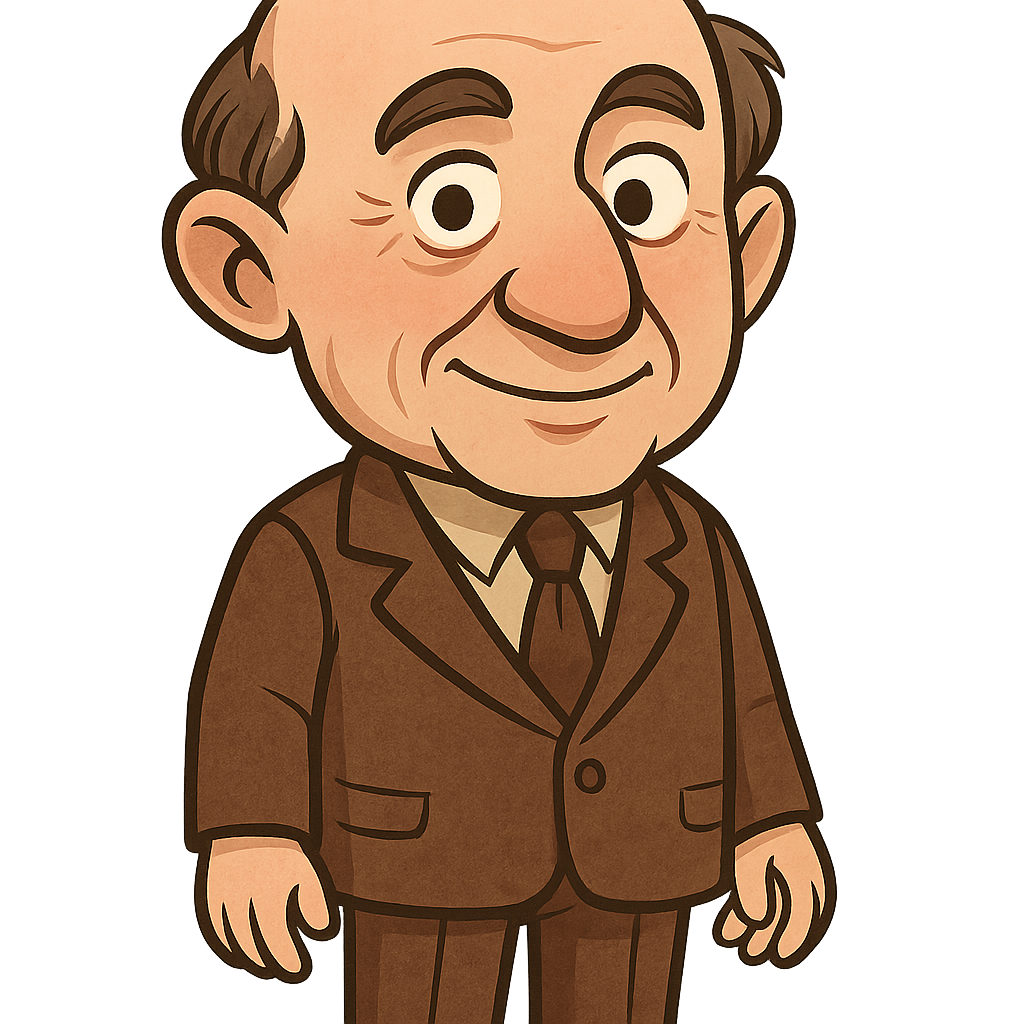
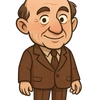
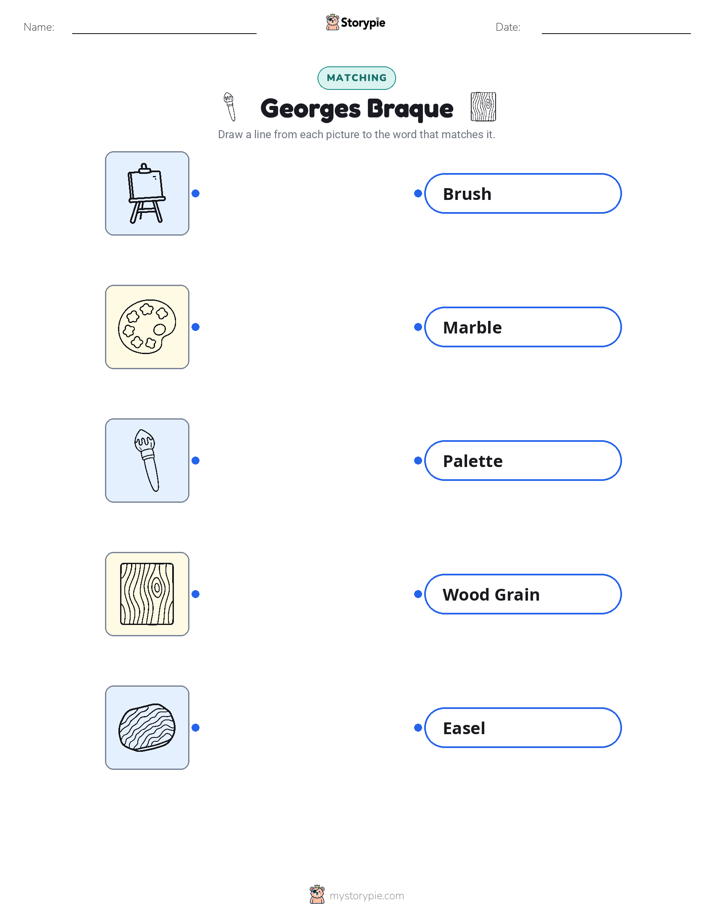
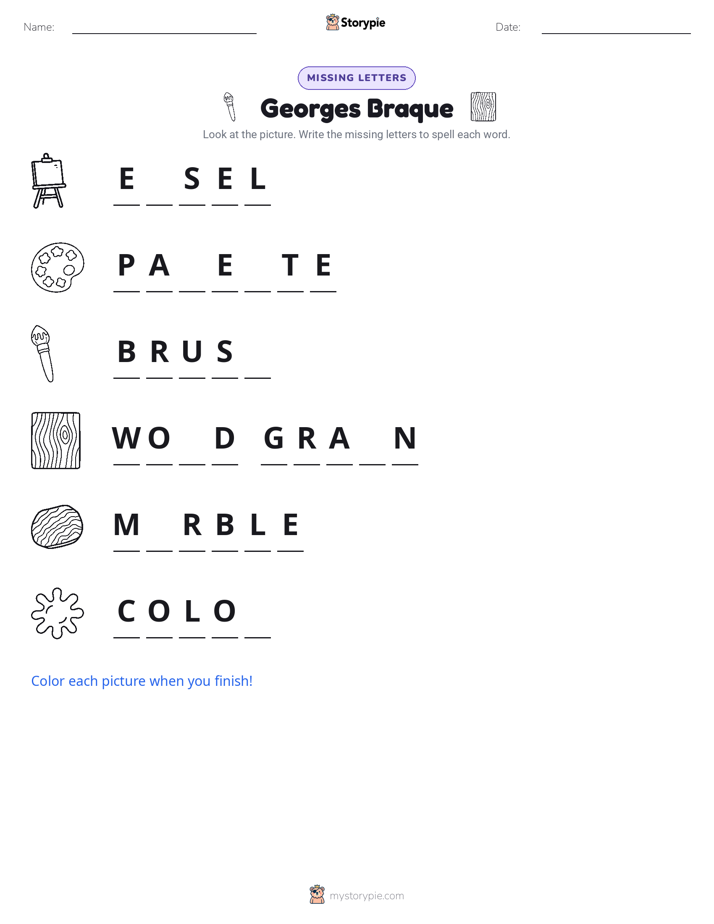
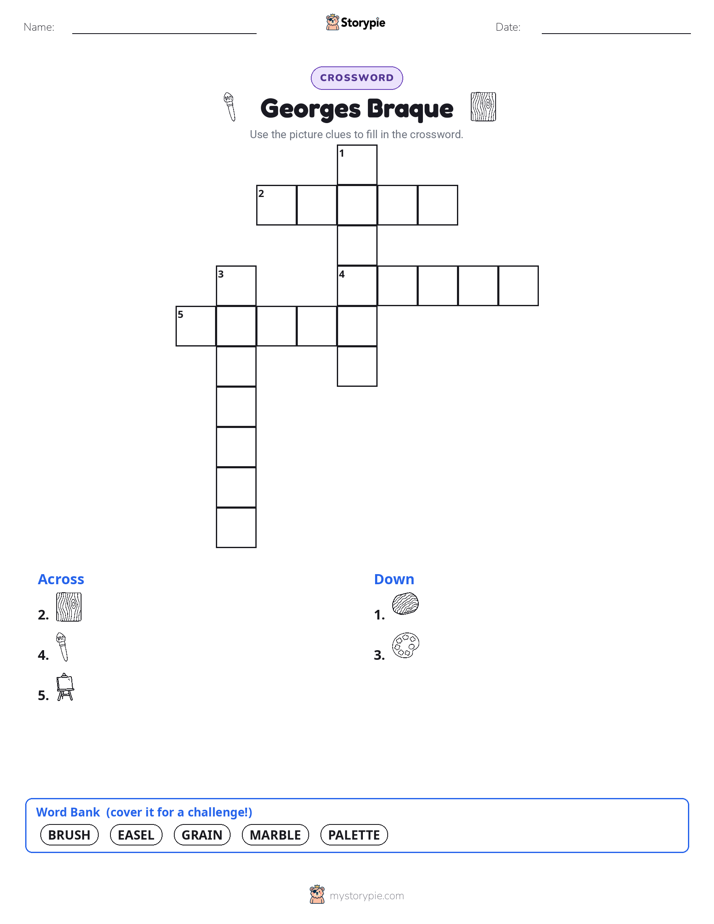
Hello, my name is Georges Braque, and I was a painter who helped change the way people see the world. I was born on May 13th, 1882, in Argenteuil, France, a town along the Seine river that was already famous for being a subject for other painters. Art was in my blood, but not in the way you might think. My father and grandfather were both house painters and decorators, and they taught me their trade from a young age. They showed me special techniques, like how to paint lines that perfectly imitated the grain of wood or the veins in marble. I didn't know it then, but these skills would become very important in my most famous artworks years later. Around 1890, my family moved to the port city of Le Havre. It was there, in 1897, that I began my formal art education at the local École des Beaux-Arts in the evenings, all while continuing my apprenticeship as a painter and decorator during the day.
By 1902, I knew my future was in creating art, so I moved to Paris to become a full-time painter. The city was buzzing with new ideas, and I enrolled at the Académie Humbert to sharpen my skills. At first, I was captivated by a group of artists known as the Fauves, which means 'wild beasts'. Their name was a perfect description for their style. They used shockingly bright, bold colors that seemed to leap off the canvas, ignoring the natural colors of things. For a short time, I was inspired by their freedom and painted in this vibrant style myself. In 1906, I was proud to have some of my Fauvist works shown at the important Salon des Indépendants. It was an encouraging step in my career, but I felt a pull toward something different. I knew I was still searching for a new visual language, something entirely my own.
Georges Braque
Hello, my name is Georges Braque, and I was a painter who helped change the way people see the world. I was born on May 13th, 1882, in Argenteuil, France, a town along the Seine river that was already famous for being a subject for other painters. Art was in my blood, but not in the way you might think. My father and grandfather were both house painters and decorators, and they taught me their trade from a young age. They showed me special techniques, like how to paint lines that perfectly imitated the grain of wood or the veins in marble. I didn't know it then, but these skills would become very important in my most famous artworks years later. Around 1890, my family moved to the port city of Le Havre. It was there, in 1897, that I began my formal art education at the local École des Beaux-Arts in the evenings, all while continuing my apprenticeship as a painter and decorator during the day.
By 1902, I knew my future was in creating art, so I moved to Paris to become a full-time painter. The city was buzzing with new ideas, and I enrolled at the Académie Humbert to sharpen my skills. At first, I was captivated by a group of artists known as the Fauves, which means 'wild beasts'. Their name was a perfect description for their style. They used shockingly bright, bold colors that seemed to leap off the canvas, ignoring the natural colors of things. For a short time, I was inspired by their freedom and painted in this vibrant style myself. In 1906, I was proud to have some of my Fauvist works shown at the important Salon des Indépendants. It was an encouraging step in my career, but I felt a pull toward something different. I knew I was still searching for a new visual language, something entirely my own.
Everything changed in 1907. That was the year I met another young painter who was also searching for a new way to represent the world: Pablo Picasso. We quickly became very close friends and collaborators. I often said we were like two mountain climbers, roped together, scaling a new peak that no one had ever attempted before. Together, we began to challenge every established rule of painting. We asked ourselves, why should a painting show an object from only one point of view, as if frozen in a single moment? Our answer was a revolutionary new style that would later be called Cubism. We decided to show objects from many different angles all at once, breaking them down into geometric shapes like cubes, cylinders, and cones. In 1908, I had an exhibition of my new work, and an art critic, trying to describe it, dismissively mentioned 'cubes'. The name stuck, and Cubism was born.
Our artistic adventure went through different phases. The first, which lasted from about 1909 to 1912, is known as Analytic Cubism. During this period, Picasso and I used a very limited palette of colors—mostly browns, grays, and muted greens. We did this on purpose to take the focus away from color and place it entirely on the structure and form of the objects we were painting. We were analyzing the world, piece by piece. Then, in 1912, I had an exciting breakthrough that pushed our ideas even further. In my studio, I took a piece of wallpaper printed with a wood-grain pattern—a nod to the skills my father taught me—and pasted it directly onto a charcoal drawing. I called this technique 'papier collé', or pasted paper. This was the invention of collage, a radical idea that forever changed art by mixing real, everyday materials with the traditional materials of fine art.
My intense and productive collaboration with Picasso came to an abrupt halt in 1914 with the start of World War I. I was called to serve in the French army, and our shared journey in art was put on hold. The war was a difficult and life-altering experience. In 1915, I suffered a severe head injury in battle that even caused me to be temporarily blind. When I was finally able to paint again in 1917, the world had changed, and so had I. My close partnership with Picasso was over, as we had both moved in different directions. I began to work on my own, developing a more personal style that was still rooted in Cubism but was also calmer and more focused. My art became more about exploring color, rich textures, and serene subjects, especially still lifes featuring musical instruments, tables, and fruit.
I dedicated my entire life to art, continuing to explore, create, and refine my vision for many decades. It was a great honor when, in 1961, I became the first living artist to have a solo exhibition at the famous Louvre museum in Paris. I lived to be 81 years old, and my life's journey came to an end on August 31st, 1963. I hope I am remembered not just for the paintings I created, but for helping to show the world a new way of seeing. My ideas about Cubism and collage opened the door for countless artists who came after me, giving them the courage to be brave, to break the rules, and to express their own unique vision of the world around them.
Wow facts
About
Georges Braque was a major 20th-century French painter, collagist, and sculptor, best known for co-founding the art movement Cubism with Pablo Picasso.
Take a Quiz
Question 1 of 5
What is the main idea of this story?
Explore next




Want to do even more?
Go beyond exploring. Unlock tools that turn every story into real learning.

Storypie Plus for families
Full stories, quizzes, and printables. Nights and car rides, sorted.
- Unlimited audio stories
- Create Mode: your child stars in the story
- Offline downloads
- Printable worksheets & coloring pages

Why Storypie for Schools
Students engaged. Prep in seconds. Evenings back to you.
- Worksheets & Quizzes
- Classroom Management
- Formative Assessment
- Custom Curriculum & Lesson Plans
- 27 Languages

Why Storypie for Homeschool
Curriculum done. They'll ask for more. Hours back in your day.
- Worksheet Generator
- First-Person Audio Stories
- Built-in Comprehension Quizzes
- Custom Curriculum & Lesson Plans
- Print & Go Activities