English

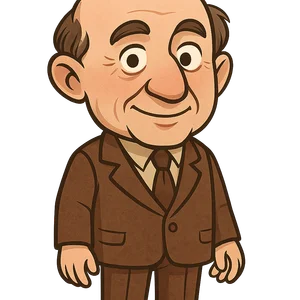
Georges Braque
Georges Braque was a major 20th-century French painter, collagist, and sculptor…
Reads at Grades 3–5 Listens at Grades 1–5
Print & create
Answer keys·No prep·Free with an account
28 worksheets · answer keys · full story · quiz · Ages 8-10 · CEFR B1
Plus adds 208,000+ more stories in 27 languages, audio for every one, and printables for all of them.
Just want Georges Braque?
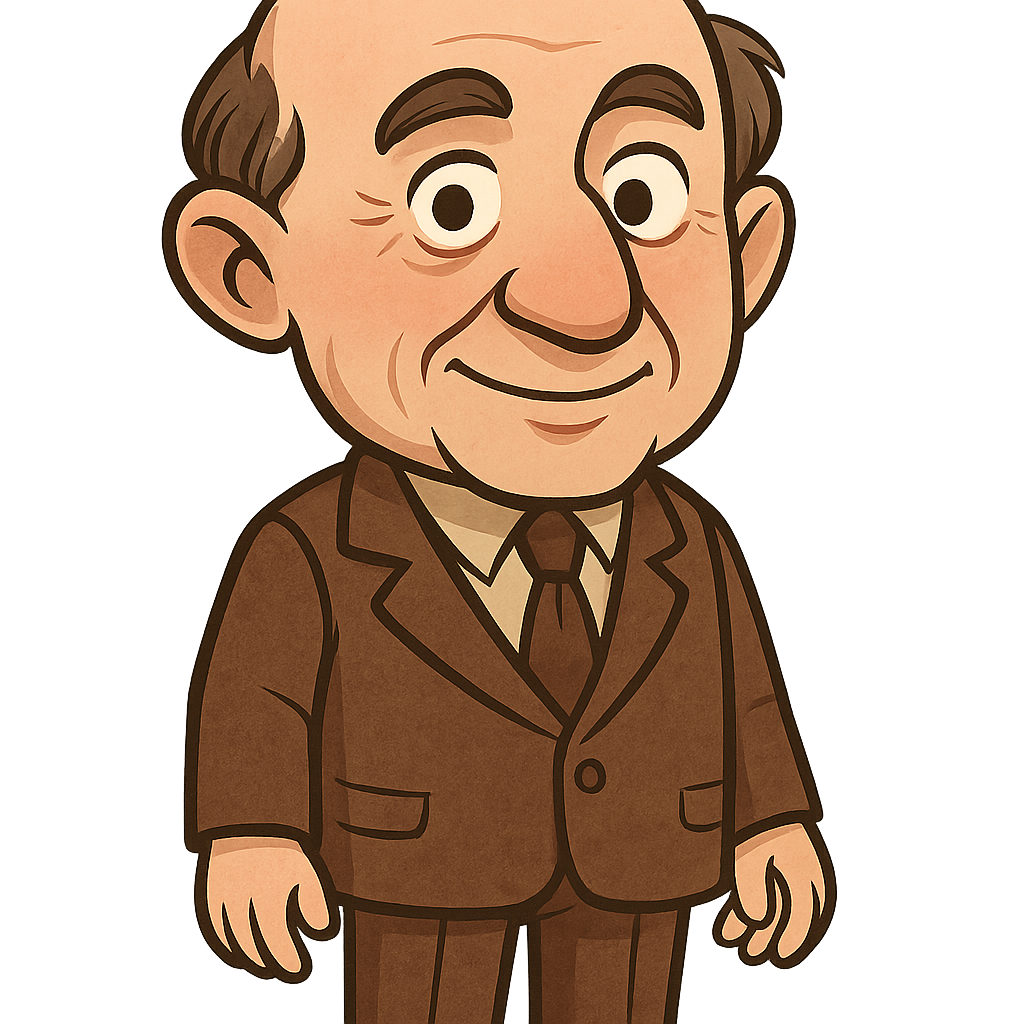
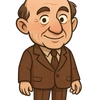
Hello! My name is Georges Braque, and I was an artist who loved to paint. I was born on May 13th, 1882, in a town near Paris, France, called Argenteuil. My father and grandfather were house painters and decorators, so you could say painting was in my blood! I loved watching them work, and they even taught me special tricks, like how to paint wood to look like fancy marble. When I was a boy, in 1890, my family moved to the port city of Le Havre. I spent my days learning the family trade, but in the evenings, I went to art school because I dreamed of becoming a different kind of painter.
When I was a young man, around the year 1902, I moved to the exciting city of Paris to study art. At first, my paintings were full of bright, bold, and wild colors! I painted sunny landscapes and boats in the harbor using dazzling reds, blues, and yellows. This style of painting was called Fauvism, which is French for 'wild beasts,' because our colors were so untamed and exciting. I and my friends, like Henri Matisse, were known as the Fauves. But in 1907, I saw an exhibition of paintings by an artist named Paul Cézanne. His work made me stop and think. He painted things using simple shapes and showed them in a way that felt solid and real, almost like you could walk around them. Seeing his art changed my life and set me on a brand new path.
Soon after, I met a new friend who was also thinking about art in a new way. His name was Pablo Picasso. Starting around 1908, Pablo and I became great partners in art. We were like two mountain climbers, roped together, exploring a new, undiscovered peak. Together, we invented a style called Cubism. Instead of painting a guitar or a fruit bowl from just one angle, we wanted to show it from all sides at once—the front, the back, and the sides, all in one picture! We broke objects down into simple geometric shapes, like cubes and cylinders, and put them back together on the canvas. Our colors were often simple browns, grays, and greens so that people would focus on the shapes. We even started adding new things to our paintings, like stenciled letters, numbers, and pieces of real newspaper. This was called collage, and it was another way to make people see the world differently.
Georges Braque: A New Way of Seeing
Hello! My name is Georges Braque, and I was an artist who loved to paint. I was born on May 13th, 1882, in a town near Paris, France, called Argenteuil. My father and grandfather were house painters and decorators, so you could say painting was in my blood! I loved watching them work, and they even taught me special tricks, like how to paint wood to look like fancy marble. When I was a boy, in 1890, my family moved to the port city of Le Havre. I spent my days learning the family trade, but in the evenings, I went to art school because I dreamed of becoming a different kind of painter.
When I was a young man, around the year 1902, I moved to the exciting city of Paris to study art. At first, my paintings were full of bright, bold, and wild colors! I painted sunny landscapes and boats in the harbor using dazzling reds, blues, and yellows. This style of painting was called Fauvism, which is French for 'wild beasts,' because our colors were so untamed and exciting. I and my friends, like Henri Matisse, were known as the Fauves. But in 1907, I saw an exhibition of paintings by an artist named Paul Cézanne. His work made me stop and think. He painted things using simple shapes and showed them in a way that felt solid and real, almost like you could walk around them. Seeing his art changed my life and set me on a brand new path.
Soon after, I met a new friend who was also thinking about art in a new way. His name was Pablo Picasso. Starting around 1908, Pablo and I became great partners in art. We were like two mountain climbers, roped together, exploring a new, undiscovered peak. Together, we invented a style called Cubism. Instead of painting a guitar or a fruit bowl from just one angle, we wanted to show it from all sides at once—the front, the back, and the sides, all in one picture! We broke objects down into simple geometric shapes, like cubes and cylinders, and put them back together on the canvas. Our colors were often simple browns, grays, and greens so that people would focus on the shapes. We even started adding new things to our paintings, like stenciled letters, numbers, and pieces of real newspaper. This was called collage, and it was another way to make people see the world differently.
My work with Pablo was interrupted in 1914 when I had to go and serve as a soldier in World War I. I was seriously injured in 1915 and it took me a long time to recover and start painting again. When I did, my art had changed. The sharp angles of Cubism softened into gentle curves. I still loved painting everyday objects, which is called still life. I painted many pictures of fruit bowls, musical instruments, and especially birds, which became a special symbol for me, representing freedom and peace. I spent the rest of my life exploring colors, textures, and shapes, always trying to find new ways to share what I saw with the world.
I lived a long and very full life, always with a paintbrush in my hand. I lived to be 81 years old and passed away in my beloved Paris on August 31st, 1963. Today, people remember me and my friend Pablo Picasso for creating Cubism, an idea that completely changed art in the 20th century. My paintings hang in famous museums all over the world, inviting everyone to look closely at the world around them and see the beauty in ordinary things from a whole new angle.
Wow facts
About
Georges Braque was a major 20th-century French painter, collagist, and sculptor, best known for co-founding the art movement Cubism with Pablo Picasso.
Take a Quiz
Question 1 of 5
In the story, I said my partnership with Picasso was like two 'mountain climbers, roped together.' What does this mean?
Explore next




Want to do even more?
Go beyond exploring. Unlock tools that turn every story into real learning.

Storypie Plus for families
Full stories, quizzes, and printables. Nights and car rides, sorted.
- Unlimited audio stories
- Create Mode: your child stars in the story
- Offline downloads
- Printable worksheets & coloring pages

Why Storypie for Schools
Students engaged. Prep in seconds. Evenings back to you.
- Worksheets & Quizzes
- Classroom Management
- Formative Assessment
- Custom Curriculum & Lesson Plans
- 27 Languages

Why Storypie for Homeschool
Curriculum done. They'll ask for more. Hours back in your day.
- Worksheet Generator
- First-Person Audio Stories
- Built-in Comprehension Quizzes
- Custom Curriculum & Lesson Plans
- Print & Go Activities