English

Gottfried Wilhelm Leibniz
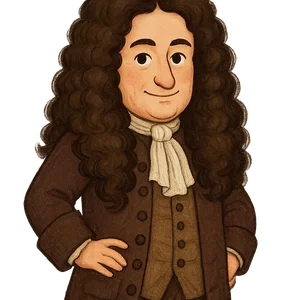
Gottfried Wilhelm Leibniz was a German polymath, philosopher…
Reads at Grades 3–5 Listens at Grades 1–5
Print & create
Answer keys·No prep·Free with an account
28 worksheets · answer keys · full story · quiz · Ages 8-10 · CEFR B1
Plus adds 164,000+ more stories in 27 languages, audio for every one, and printables for all of them.
Just want Gottfried Wilhelm Leibniz?
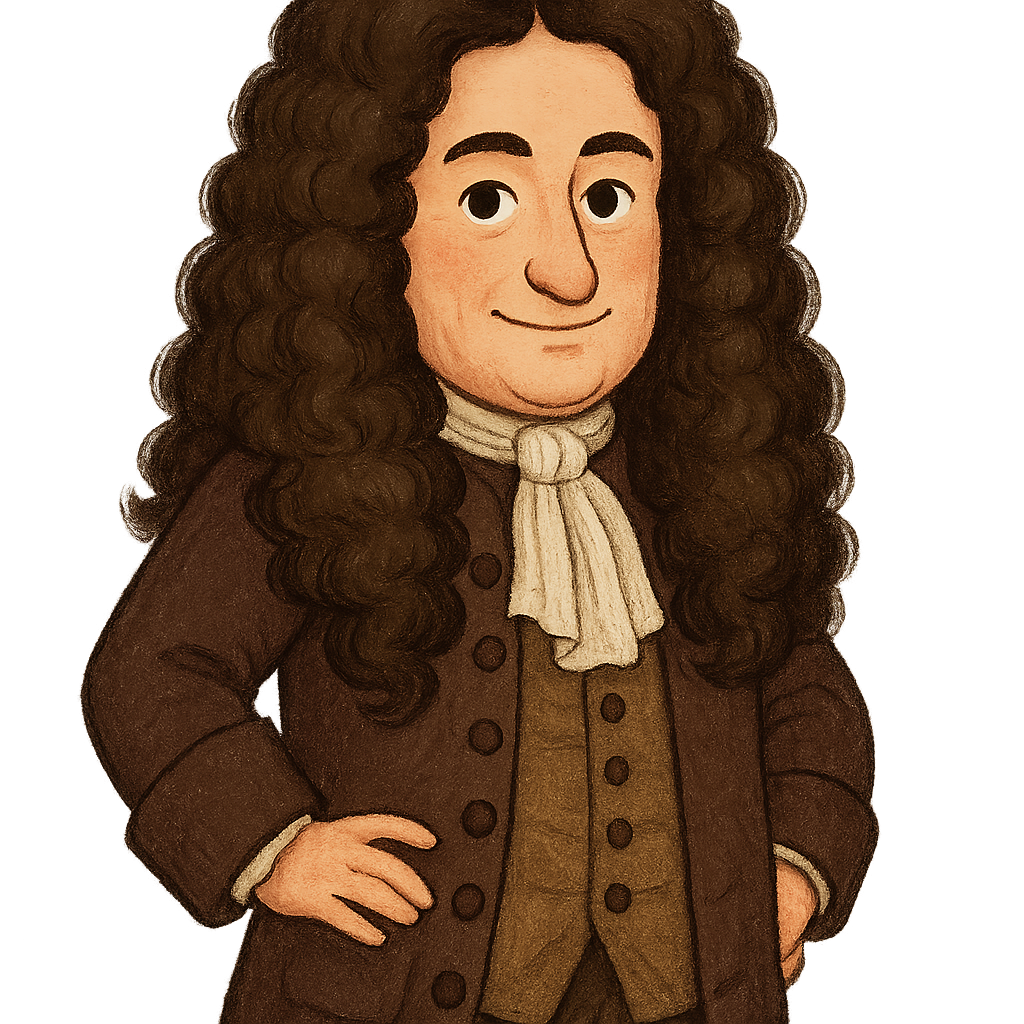
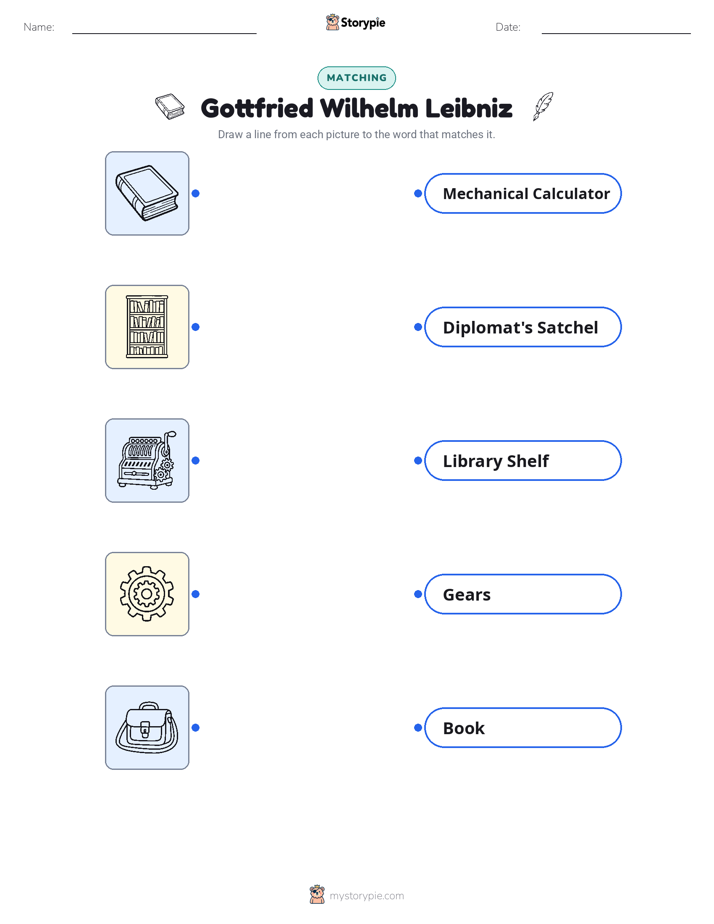
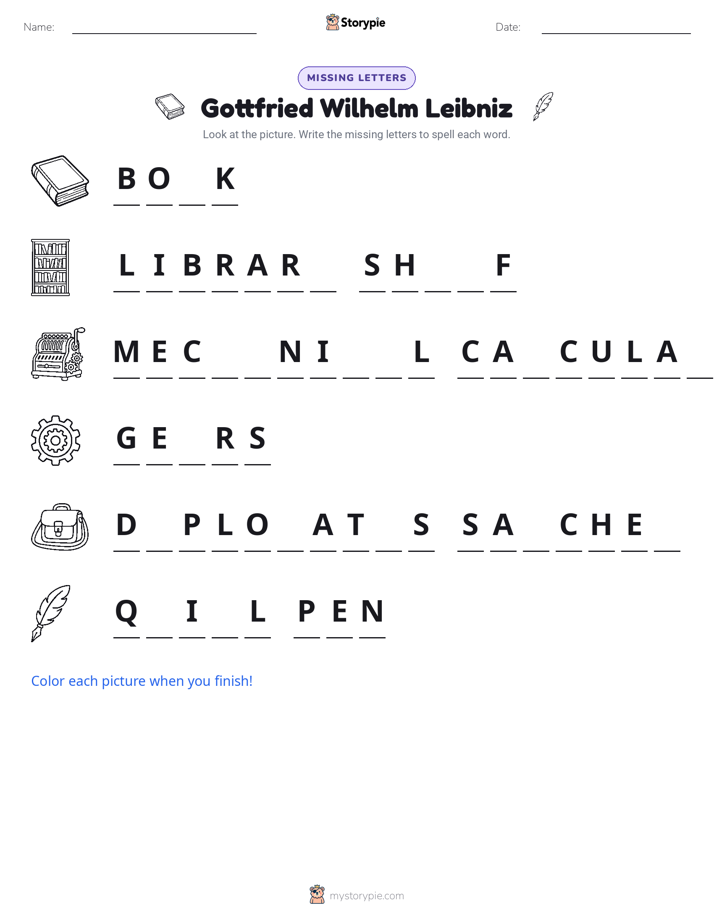
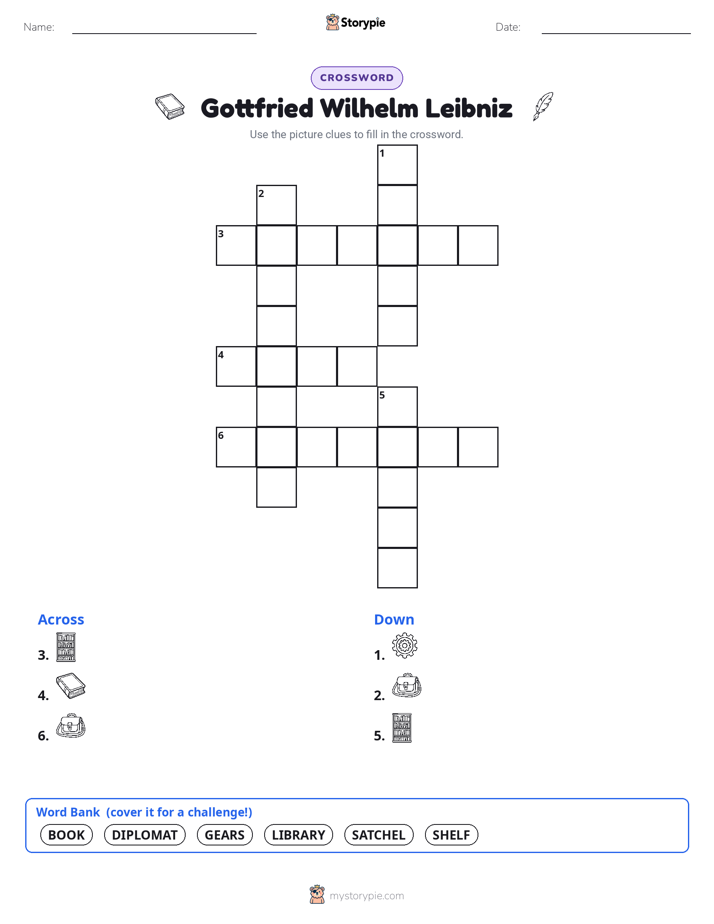
Hello! My name is Gottfried Wilhelm Leibniz. I was born on July 1st, 1646, in a city called Leipzig, in what is now Germany. My father was a professor and had a huge library filled with books. When I was just six years old, my father passed away, but he left me the greatest gift I could imagine: his library. While other children played outside, I played among the towering shelves of books. It was my favorite playground. I loved the smell of old paper and the feeling of discovering a new idea on every page. I taught myself to read Latin and Greek just so I could understand all the amazing stories and ideas hidden in those pages. By the time I was 15, in 1661, I felt I was ready for university, and my life of learning began.
As I grew up, I realized I didn't just love learning things; I loved inventing things to make life easier. I thought, 'Wouldn't it be great if we had a machine that could do difficult math problems for us?' So, around the year 1673, I designed one! I called it the Stepped Reckoner. It was a special calculating machine made of polished brass gears and oak cylinders. While other machines could only add and subtract, mine was one of the very first that could also multiply and divide. I wanted to build tools that could help free our minds from boring calculations to think about even bigger ideas.
One of my biggest ideas was a new kind of math called calculus. Imagine trying to describe how a fast-moving ball changes its speed at every single instant. It’s tricky! Calculus is a special language of math that helps us understand change. I wasn't the only one with this idea; a brilliant scientist in England named Isaac Newton was thinking about it too. We both worked on it separately. I was the first to publish my work, in 1684, and I created special symbols for it that mathematicians still use today. But I had another, even simpler idea. What if you could write any number using only two digits: 0 and 1? I called this the binary system. I wrote about it in 1703, and little did I know, this simple 'on' and 'off' code would become the language for all computers hundreds of years later! It showed me that sometimes the simplest ideas can be the most powerful.
Gottfried Wilhelm Leibniz: A Mind Full of Ideas
Hello! My name is Gottfried Wilhelm Leibniz. I was born on July 1st, 1646, in a city called Leipzig, in what is now Germany. My father was a professor and had a huge library filled with books. When I was just six years old, my father passed away, but he left me the greatest gift I could imagine: his library. While other children played outside, I played among the towering shelves of books. It was my favorite playground. I loved the smell of old paper and the feeling of discovering a new idea on every page. I taught myself to read Latin and Greek just so I could understand all the amazing stories and ideas hidden in those pages. By the time I was 15, in 1661, I felt I was ready for university, and my life of learning began.
As I grew up, I realized I didn't just love learning things; I loved inventing things to make life easier. I thought, 'Wouldn't it be great if we had a machine that could do difficult math problems for us?' So, around the year 1673, I designed one! I called it the Stepped Reckoner. It was a special calculating machine made of polished brass gears and oak cylinders. While other machines could only add and subtract, mine was one of the very first that could also multiply and divide. I wanted to build tools that could help free our minds from boring calculations to think about even bigger ideas.
One of my biggest ideas was a new kind of math called calculus. Imagine trying to describe how a fast-moving ball changes its speed at every single instant. It’s tricky! Calculus is a special language of math that helps us understand change. I wasn't the only one with this idea; a brilliant scientist in England named Isaac Newton was thinking about it too. We both worked on it separately. I was the first to publish my work, in 1684, and I created special symbols for it that mathematicians still use today. But I had another, even simpler idea. What if you could write any number using only two digits: 0 and 1? I called this the binary system. I wrote about it in 1703, and little did I know, this simple 'on' and 'off' code would become the language for all computers hundreds of years later! It showed me that sometimes the simplest ideas can be the most powerful.
My mind was always buzzing with questions about everything, not just numbers. For many years, I worked for a noble family called the House of Hanover. It was a very important job with many different tasks. I was their librarian, a historian, and even a diplomat. As a diplomat, I traveled across Europe, meeting with important leaders to help them solve disagreements peacefully. I also spent a lot of time thinking like a philosopher, asking big questions like, 'Why are we here?' and 'How does the world work?' I believed that everything in the universe had a reason and a purpose. I wrote many books about my ideas, always trying to find the logic and order in everything.
I lived a long and very busy life, always following my curiosity wherever it led. I lived to be 70 years old, and my journey ended in 1716. Even though I'm no longer here, my ideas live on. The calculus I helped create is used by scientists and engineers every day to design everything from bridges to spaceships. And my simple binary system? It's the secret code that powers every computer, tablet, and smartphone in your world. I hope my story inspires you to ask big questions and to see that even the simplest ideas, like a 0 and a 1, can change the world.
Wow facts
About
Gottfried Wilhelm Leibniz was a German polymath, philosopher, and mathematician who independently developed calculus and created the binary system, which is the foundation of all modern digital computers.
Take a Quiz
Question 1 of 5
What does the story mean when it says Gottfried's playground was a library?
Explore next






Want to do even more?
Go beyond exploring. Unlock tools that turn every story into real learning.

Storypie Plus for families
Full stories, quizzes, and printables. Nights and car rides, sorted.
- Unlimited audio stories
- Create Mode: your child stars in the story
- Offline downloads
- Printable worksheets & coloring pages

Why Storypie for Schools
Students engaged. Prep in seconds. Evenings back to you.
- Worksheets & Quizzes
- Classroom Management
- Formative Assessment
- Custom Curriculum & Lesson Plans
- 27 Languages

Why Storypie for Homeschool
Curriculum done. They'll ask for more. Hours back in your day.
- Worksheet Generator
- First-Person Audio Stories
- Built-in Comprehension Quizzes
- Custom Curriculum & Lesson Plans
- Print & Go Activities