English

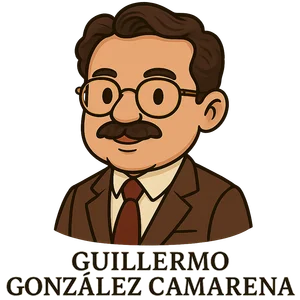
Guillermo González Camarena
Guillermo González Camarena was a Mexican engineer and inventor who was a pioneer in developing early color…
Reads at Grades 6–8 Listens at Grades 4–8
Print & create
Answer keys·No prep·Free with an account
28 worksheets · answer keys · full story · quiz · Ages 10-12 · CEFR B2
Plus adds 164,000+ more stories in 27 languages, audio for every one, and printables for all of them.
Just want Guillermo González Camarena?
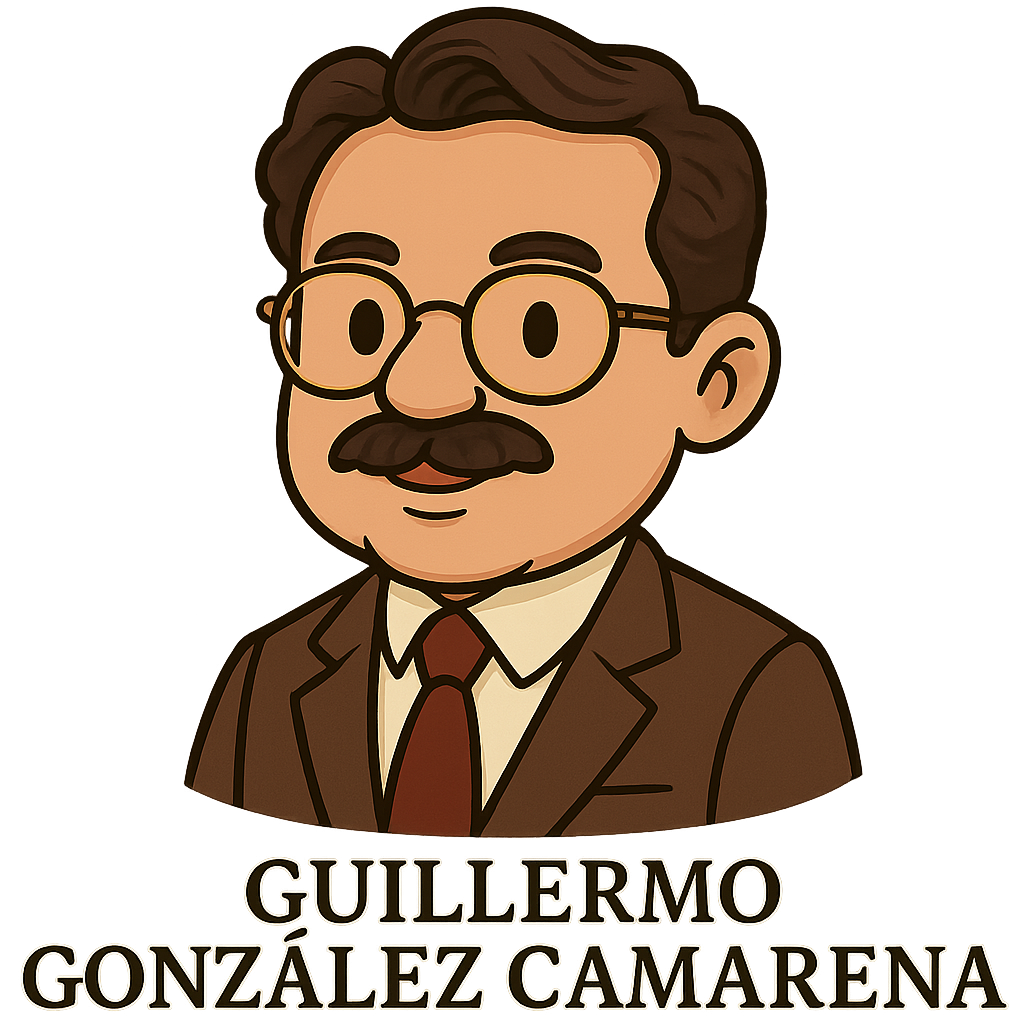
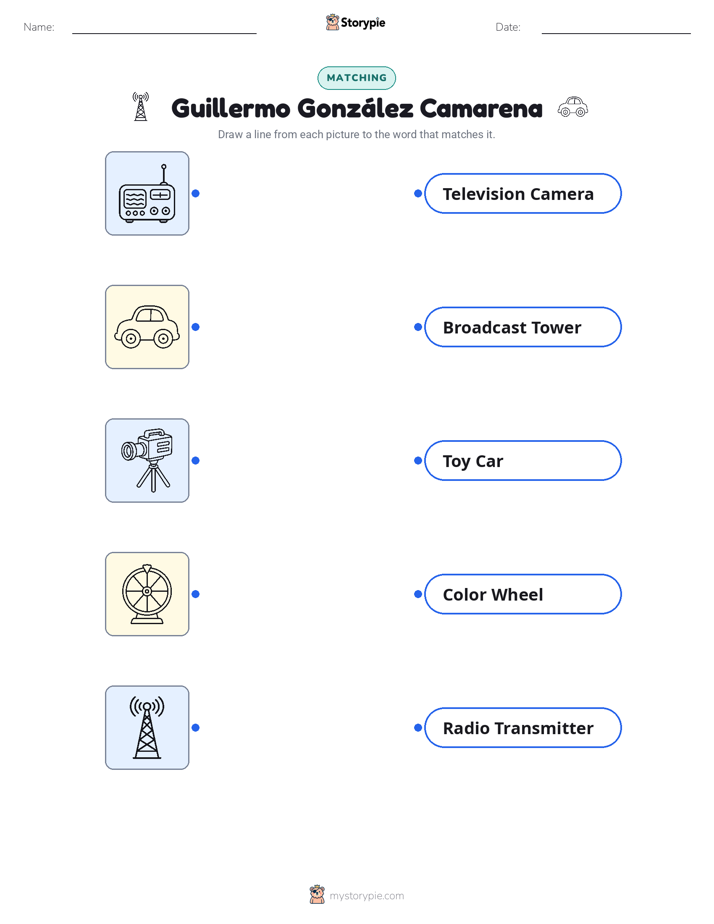
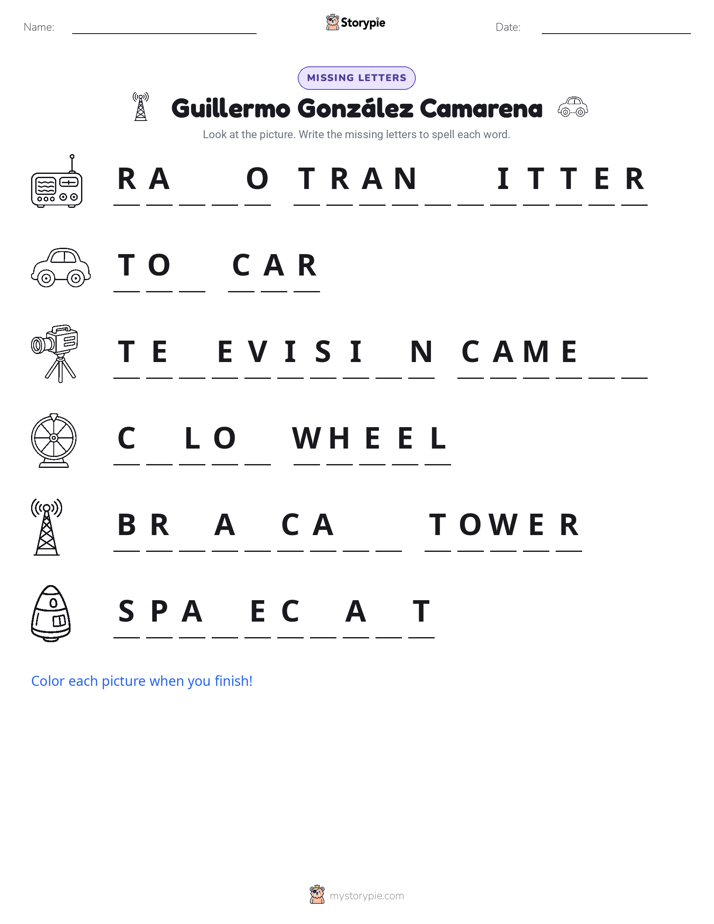
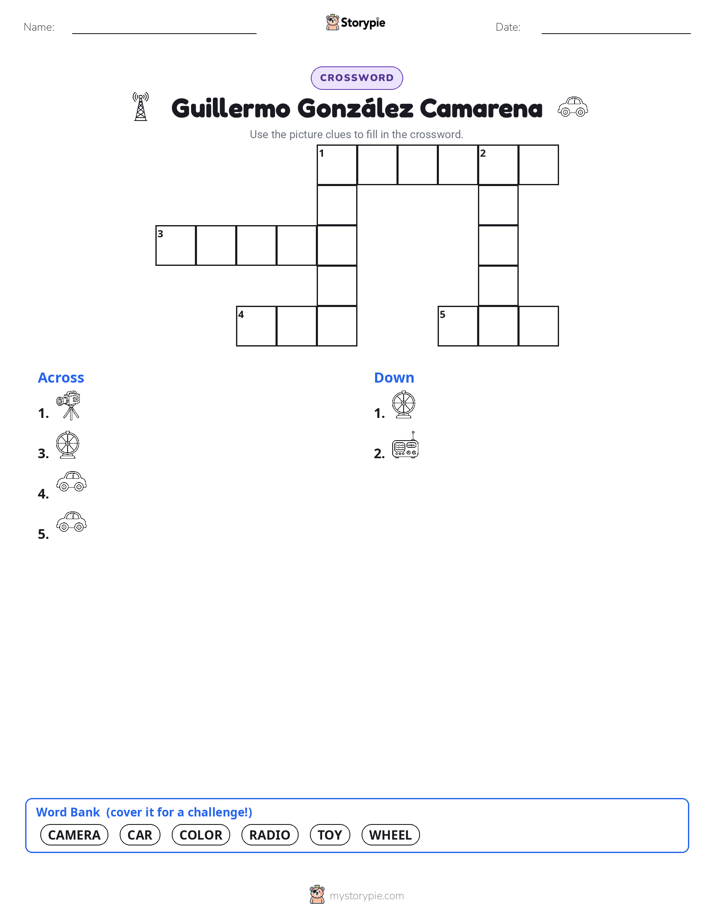
Hello! My name is Guillermo González Camarena. I want to tell you the story of how I helped bring color to the world of television. I was born on February 17th, 1917, in Guadalajara, Mexico. Even as a little boy, I was fascinated by how things worked. While other kids played with store-bought toys, I built my own! I made electric toys, and by the time I was just seven years old, I built my first radio transmitter. My family moved to Mexico City in 1929, and my curiosity only grew. I loved spending hours in the basement, taking apart radios, building generators, and dreaming of what I could create next.
As a teenager, I became obsessed with a new invention called television. It was magical, but I saw a big problem: everything was in black and white. The world is so full of beautiful colors, and I thought television should be, too. I started studying engineering at the National Polytechnic Institute in Mexico City. While working at a radio station in 1934 to pay for my studies, I spent all my free time reading books about electronics and television. In 1939, when I was only 22, I built my very own television camera in my laboratory. This was the first big step toward my dream of filling the screen with color.
My big idea was something I called the 'Chromoscopic Adapter for Television Equipment.' It sounds complicated, but the idea was simple. I designed a special spinning wheel with three color filters: red, green, and blue. When this wheel spun in front of a black-and-white camera, it captured the color information from a scene. A similar wheel on the television set would then put those colors back, creating a full-color picture. It took a lot of work and many experiments, but in 1940, I finished my invention. I was so proud when I received the patent for it in Mexico that year, and then in the United States on September 15th, 1942.
Guillermo González Camarena
Hello! My name is Guillermo González Camarena. I want to tell you the story of how I helped bring color to the world of television. I was born on February 17th, 1917, in Guadalajara, Mexico. Even as a little boy, I was fascinated by how things worked. While other kids played with store-bought toys, I built my own! I made electric toys, and by the time I was just seven years old, I built my first radio transmitter. My family moved to Mexico City in 1929, and my curiosity only grew. I loved spending hours in the basement, taking apart radios, building generators, and dreaming of what I could create next.
As a teenager, I became obsessed with a new invention called television. It was magical, but I saw a big problem: everything was in black and white. The world is so full of beautiful colors, and I thought television should be, too. I started studying engineering at the National Polytechnic Institute in Mexico City. While working at a radio station in 1934 to pay for my studies, I spent all my free time reading books about electronics and television. In 1939, when I was only 22, I built my very own television camera in my laboratory. This was the first big step toward my dream of filling the screen with color.
My big idea was something I called the 'Chromoscopic Adapter for Television Equipment.' It sounds complicated, but the idea was simple. I designed a special spinning wheel with three color filters: red, green, and blue. When this wheel spun in front of a black-and-white camera, it captured the color information from a scene. A similar wheel on the television set would then put those colors back, creating a full-color picture. It took a lot of work and many experiments, but in 1940, I finished my invention. I was so proud when I received the patent for it in Mexico that year, and then in the United States on September 15th, 1942.
Having an invention is one thing, but sharing it with the world is another. On August 31st, 1946, I made history. From my laboratory at my home in Mexico City, I made the very first color television broadcast in Mexico. A few years later, in 1952, I was able to start my own television station. I called it XHGC-TV, using my initials, 'GC,' in the name. It became known as Canal 5, and it was one of the first stations in the world dedicated to broadcasting in color. It was thrilling to see my dream come to life and share it with families across my country.
My work didn't stop in Mexico. My color system was simple and reliable, which made it very useful. Scientists at NASA, the American space agency, even used a version of my technology to broadcast color pictures from space during their Apollo missions to the Moon. It was incredible to think that an idea I had in my basement workshop was helping to show the world images from beyond our planet. My main goal, however, was always to make color television accessible and affordable for everyone, especially for use in education.
My life was filled with exciting projects, but it ended suddenly after a car accident in 1965. I lived to be 48 years old. Though my time was shorter than I would have liked, my dream of a colorful world on screen came true. Today, when you watch your favorite shows in vibrant color, you are seeing the result of a dream that started with a curious boy in Mexico who loved to build things. In my home country, February 17th, my birthday, is celebrated as Inventor's Day to honor the power of curiosity and creation.
Wow facts
About
Guillermo González Camarena was a Mexican engineer and inventor who was a pioneer in developing early color television systems, notably the 'chromoscopic adapter' or trichromatic system. He developed an early color television transmission system, the 'chromoscopic adapter,' which was influential in Mexico.
Take a Quiz
Question 1 of 5
Based on the story, what was Guillermo González Camarena's main motivation for his work?
Explore next




Want to do even more?
Go beyond exploring. Unlock tools that turn every story into real learning.

Storypie Plus for families
Full stories, quizzes, and printables. Nights and car rides, sorted.
- Unlimited audio stories
- Create Mode: your child stars in the story
- Offline downloads
- Printable worksheets & coloring pages

Why Storypie for Schools
Students engaged. Prep in seconds. Evenings back to you.
- Worksheets & Quizzes
- Classroom Management
- Formative Assessment
- Custom Curriculum & Lesson Plans
- 27 Languages

Why Storypie for Homeschool
Curriculum done. They'll ask for more. Hours back in your day.
- Worksheet Generator
- First-Person Audio Stories
- Built-in Comprehension Quizzes
- Custom Curriculum & Lesson Plans
- Print & Go Activities