English

Gustav Klimt
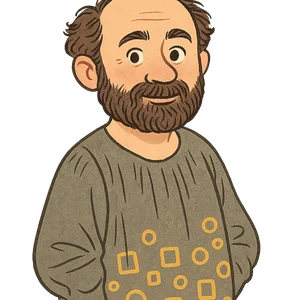
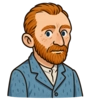
Gustav Klimt was an Austrian symbolist painter and a prominent member of the Vienna Secession movement.
Reads at Grades 6–8 Listens at Grades 4–8
Print & create
Answer keys·No prep·Free with an account
28 worksheets · answer keys · full story · quiz · Ages 10-12 · CEFR B2
Plus adds 279,000+ more stories in 27 languages, audio for every one, and printables for all of them.
Just want Gustav Klimt?
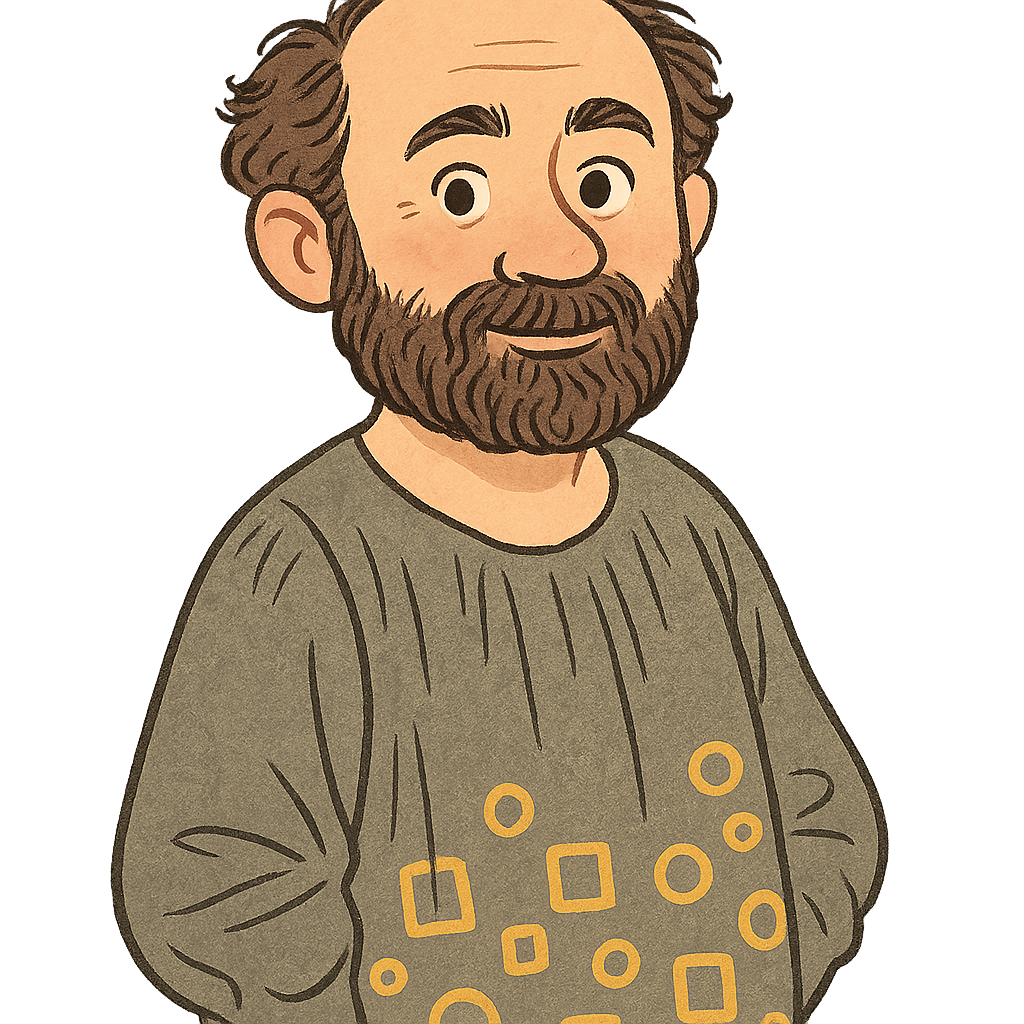
Hello! My name is Gustav Klimt, and I want to tell you the story of my life, a life filled with color, patterns, and lots and lots of gold. I was born on July 14th, 1862, in a town called Baumgarten, which is very close to the grand city of Vienna, Austria. My family didn't have much money, but our home was rich with creativity. My father, Ernst, was a gold engraver, and from the time I was a little boy, I was fascinated watching him work his magic on metal. Seeing him transform simple objects into shimmering treasures sparked my own imagination. I think that's where my lifelong love for all things shiny began, and it stayed with me for my entire career.
I knew from a young age that I wanted to be an artist. When I was just 14 years old, in 1876, I earned a scholarship to the Vienna School of Arts and Crafts. It was a very special place where I learned how to paint in the traditional, realistic style that everyone admired at the time. My teachers saw my talent, and I worked very hard to master the skills they taught me. A few years later, my brother Ernst and our friend Franz Matsch started our own 'Company of Artists.' We worked as a team and became quite successful, receiving commissions to paint beautiful murals inside some of Vienna's most important buildings. In 1888, we completed paintings for the famous Burgtheater. It was exciting, and we were proud of our work, but a part of me felt that I had a different kind of art inside me, waiting to come out.
As I grew older, I felt that the old, strict rules of art were like a cage. I wanted to paint in a new way, to express feelings and ideas that weren't just perfect copies of reality. In 1897, I joined with a group of other artists who felt the same way, and together we started a movement we called the Vienna Secession. I was honored to be chosen as its first president. Our goal was to break away—or 'secede'—from the old art world and create something modern and new. Our motto was 'To every age its art, to every art its freedom.' We wanted to show Vienna, and the world, art that was bold, imaginative, and different. It was a risky move, but we believed that art needed to change with the times.
Gustav Klimt: A Life in Gold and Color
Hello! My name is Gustav Klimt, and I want to tell you the story of my life, a life filled with color, patterns, and lots and lots of gold. I was born on July 14th, 1862, in a town called Baumgarten, which is very close to the grand city of Vienna, Austria. My family didn't have much money, but our home was rich with creativity. My father, Ernst, was a gold engraver, and from the time I was a little boy, I was fascinated watching him work his magic on metal. Seeing him transform simple objects into shimmering treasures sparked my own imagination. I think that's where my lifelong love for all things shiny began, and it stayed with me for my entire career.
I knew from a young age that I wanted to be an artist. When I was just 14 years old, in 1876, I earned a scholarship to the Vienna School of Arts and Crafts. It was a very special place where I learned how to paint in the traditional, realistic style that everyone admired at the time. My teachers saw my talent, and I worked very hard to master the skills they taught me. A few years later, my brother Ernst and our friend Franz Matsch started our own 'Company of Artists.' We worked as a team and became quite successful, receiving commissions to paint beautiful murals inside some of Vienna's most important buildings. In 1888, we completed paintings for the famous Burgtheater. It was exciting, and we were proud of our work, but a part of me felt that I had a different kind of art inside me, waiting to come out.
As I grew older, I felt that the old, strict rules of art were like a cage. I wanted to paint in a new way, to express feelings and ideas that weren't just perfect copies of reality. In 1897, I joined with a group of other artists who felt the same way, and together we started a movement we called the Vienna Secession. I was honored to be chosen as its first president. Our goal was to break away—or 'secede'—from the old art world and create something modern and new. Our motto was 'To every age its art, to every art its freedom.' We wanted to show Vienna, and the world, art that was bold, imaginative, and different. It was a risky move, but we believed that art needed to change with the times.
This was the time when I truly found my own voice as an artist. Remembering my father's work with gold, I began to use real gold leaf in my paintings. The gold made my work shimmer and glow, making the figures I painted look like they were from a beautiful dream. This became known as my 'Golden Phase.' During this time, I created some of my most famous pieces. You might have seen my painting The Kiss, which I finished around 1908. It shows two people wrapped in a golden embrace, covered in beautiful patterns. Another famous one is the Portrait of Adele Bloch-Bauer I from 1907, where a woman seems to be made of gold and jewels. In my art, I loved to use symbols and patterns to tell stories about life, love, and the dreams we all share. My dear friend, a talented fashion designer named Emilie Flöge, was also a great inspiration to me during these years.
I continued painting for my entire life, always exploring new ideas. Life had its sadness, like in 1892 when I lost both my father and my brother Ernst, which was a very difficult time for me. I eventually had a long career, but my health failed me later on. On February 6th, 1918, I passed away after having a stroke. I lived to be 55 years old. Even though my life ended, my art has lived on. Today, people from all over the world come to see my paintings. They are remembered for their dazzling gold, intricate patterns, and the powerful feelings they express. I hope that when people look at my work, they feel a sense of wonder and remember the importance of finding your own unique way to make the world a more beautiful place.
Wow facts
About
Gustav Klimt was an Austrian symbolist painter and a prominent member of the Vienna Secession movement. He is renowned for his highly decorative paintings, murals, and sketches, particularly those from his 'Golden Phase' which incorporated gold leaf.
Take a Quiz
Question 1 of 5
Based on the story, describe the main stages of Gustav Klimt's artistic career in your own words.
Explore next


Want to do even more?
Go beyond exploring. Unlock tools that turn every story into real learning.

Storypie Plus for families
Full stories, quizzes, and printables. Nights and car rides, sorted.
- Unlimited audio stories
- Create Mode: your child stars in the story
- Offline downloads
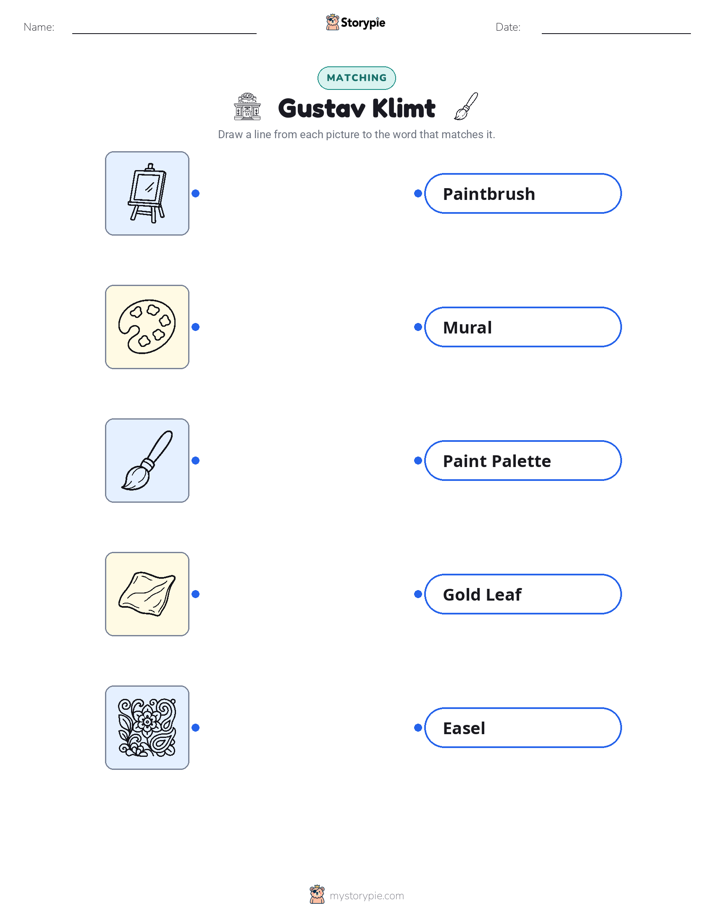
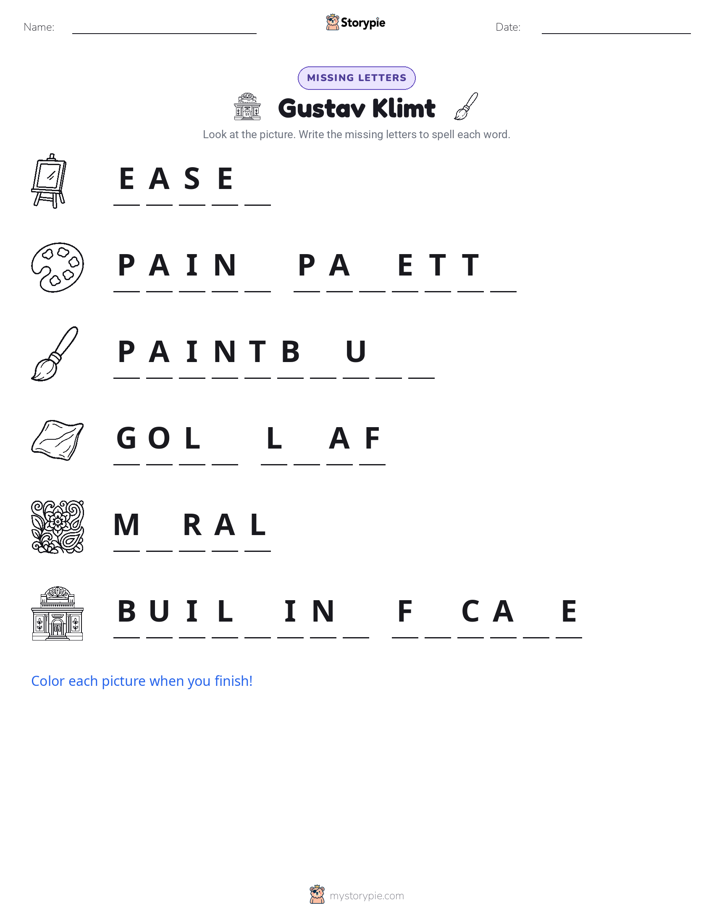
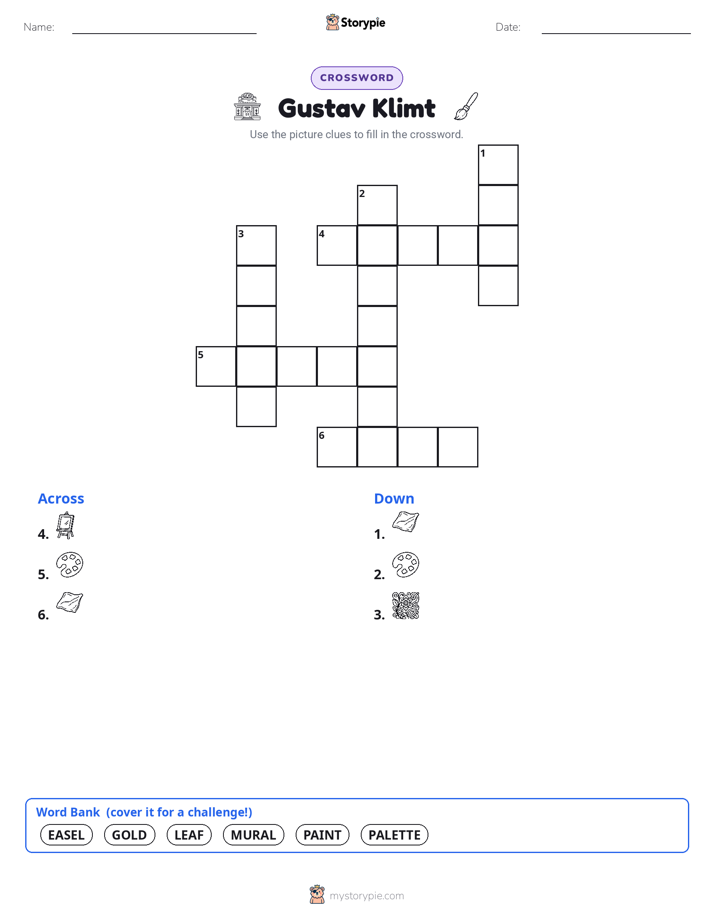
- Printable worksheets & coloring pages

Why Storypie for Schools
Students engaged. Prep in seconds. Evenings back to you.
- Worksheets & Quizzes
- Classroom Management
- Formative Assessment
- Custom Curriculum & Lesson Plans
- 27 Languages

Why Storypie for Homeschool
Curriculum done. They'll ask for more. Hours back in your day.
- Worksheet Generator
- First-Person Audio Stories
- Built-in Comprehension Quizzes
- Custom Curriculum & Lesson Plans
- Print & Go Activities