English

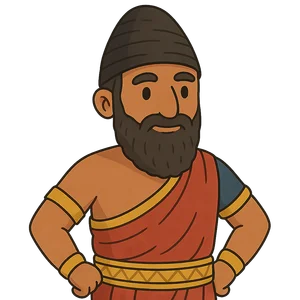
Hammurabi
Hammurabi was the sixth king of the First Babylonian Dynasty, reigning from about 1792 BCE to about 1750 BCE…
Reads at Grades 6–8 Listens at Grades 4–8
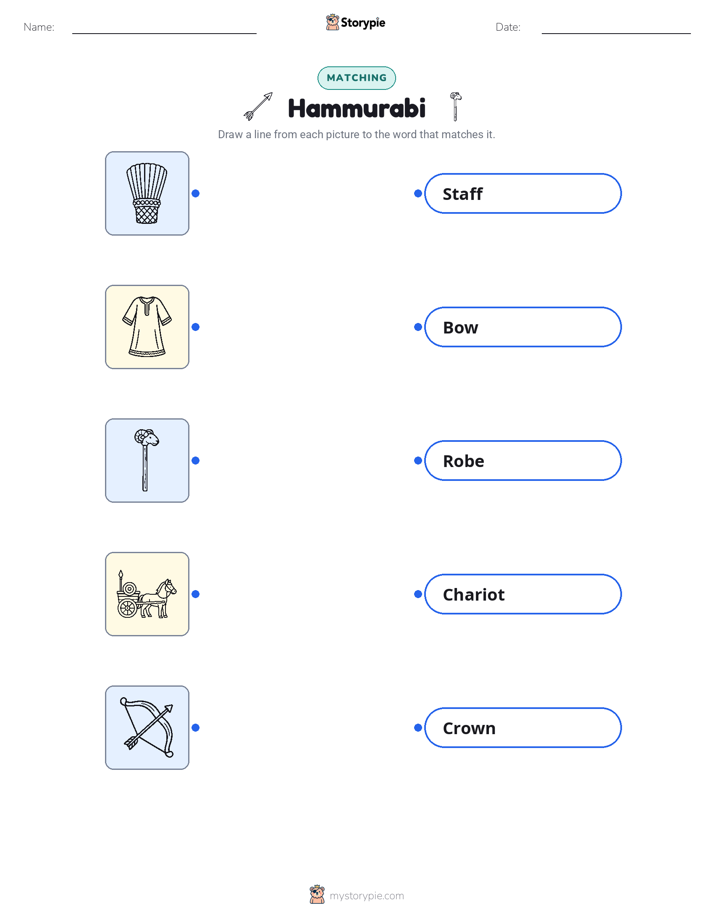
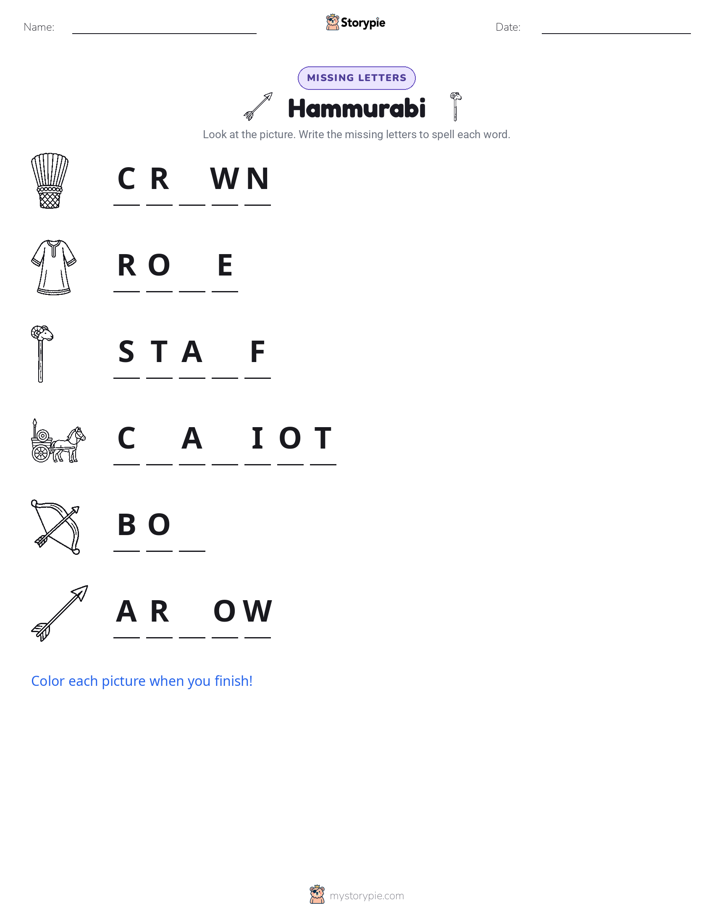
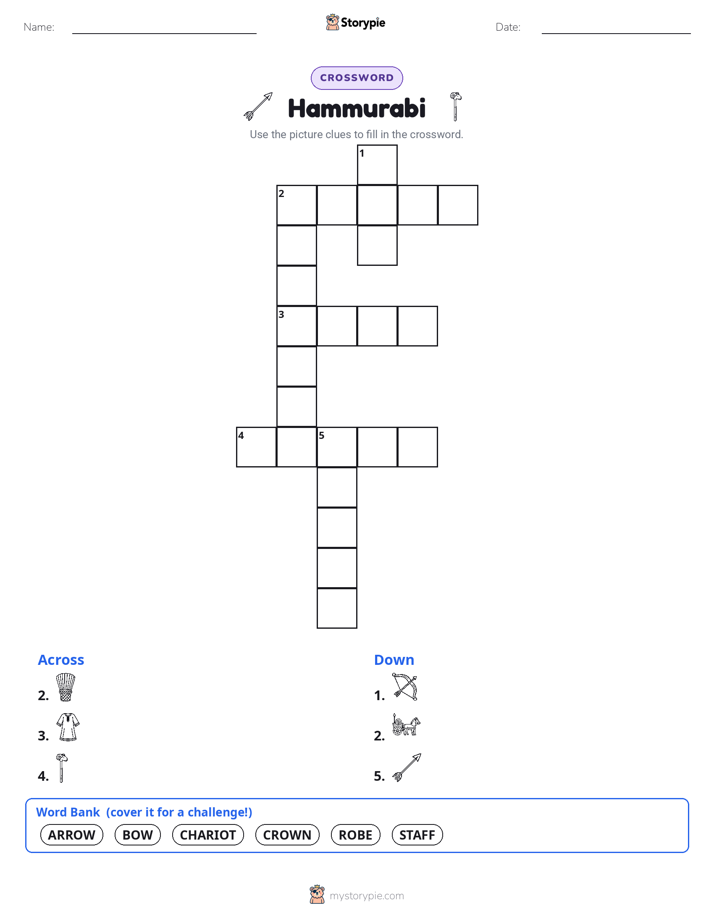
Print & create
Answer keys·No prep·Free with an account
28 worksheets · answer keys · full story · quiz · Ages 10-12 · CEFR B2
Plus adds 102,000+ more stories in 27 languages, audio for every one, and printables for all of them.
Just want Hammurabi?
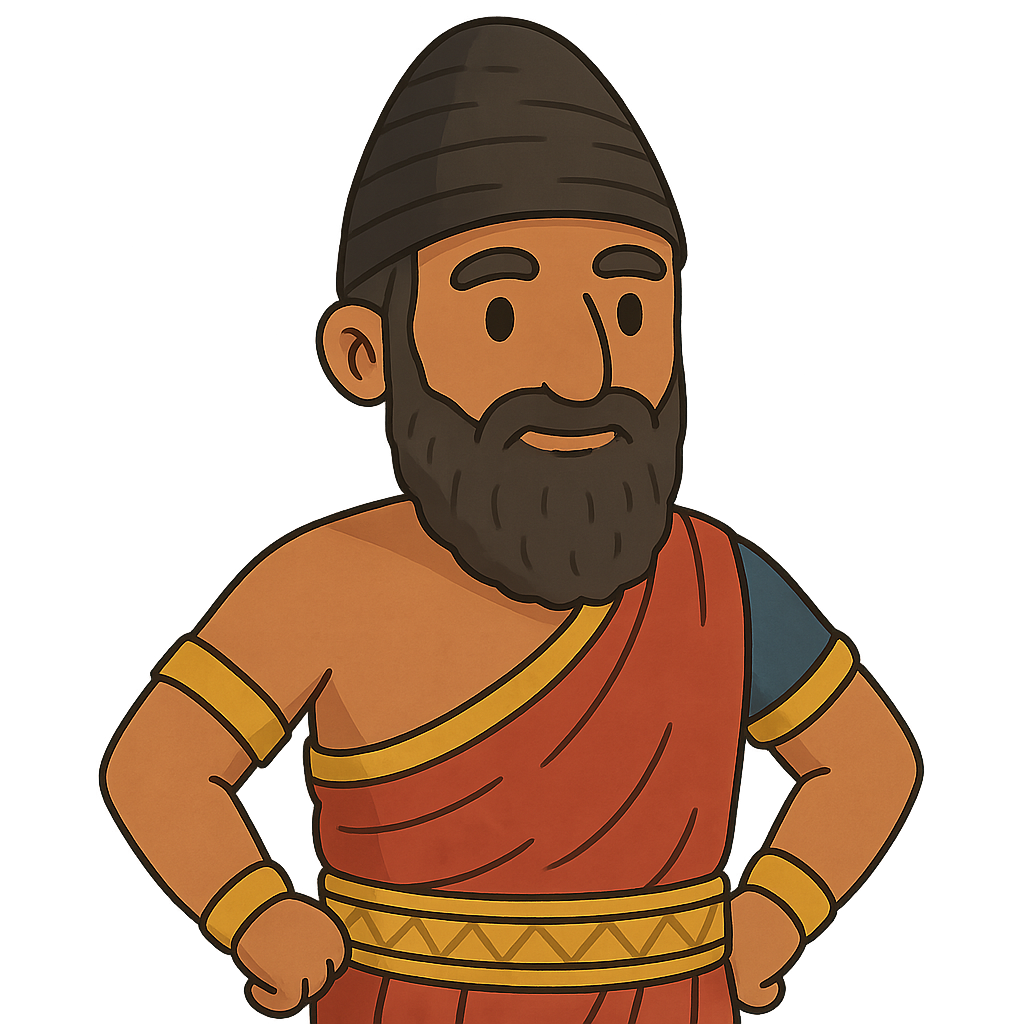
Hello, my name is Hammurabi, a name you might know from your history books. I was born into a world very different from yours, around the year 1810 BCE, in the great city of Babylon. Imagine a bustling city built of mud bricks, standing proudly in a land called Mesopotamia. This land was nestled between two mighty rivers, the Tigris and the Euphrates, which gave life to our farms and cities. My father, Sin-Muballit, was the king of Babylon, and from the time I was a young prince, I was prepared to one day take his place. I spent my youth learning not just about battles and armies, but about how to lead a great people. I studied how to manage the complex system of canals that brought water from the rivers to our fields, ensuring our people had food. I learned about our powerful gods and the importance of building temples to honor them. When my father’s health began to decline, the responsibility of the throne passed to me. In the year 1792 BCE, I became the king of Babylon, ready to lead my people into a new era.
When I first became king, Babylon was strong, but it was just one of many city-states in Mesopotamia. Other powerful kings ruled cities like Larsa and Mari, and there was often conflict between us. For the first several years of my reign, I focused my energy on improving my own kingdom. I commanded my workers to build the city walls taller and stronger to protect us from invaders. I ordered magnificent new temples to be constructed to show our devotion to the gods. Most importantly, I expanded and improved our canals, which were the lifeblood of our civilization, making our farmlands more productive than ever before. But my ambition reached beyond the walls of my own city. I held a greater dream: to unite all the diverse peoples of Mesopotamia under a single, peaceful rule. This was a monumental task. Starting around 1787 BCE, I began a series of military campaigns that would last for decades. Through a combination of warfare and clever alliances, I began to bring other cities under my control. It was a long and difficult process, but my armies were successful. In 1763 BCE, I achieved a major victory by defeating the powerful rival kingdom of Larsa. A few years later, in 1761 BCE, the great city of Mari also fell to my forces. After nearly thirty years of constant effort, my dream had finally become a reality. I was no longer just the king of Babylon; I was the ruler of a united Babylonian Empire.
Hammurabi: The Lawgiver of Babylon
Hello, my name is Hammurabi, a name you might know from your history books. I was born into a world very different from yours, around the year 1810 BCE, in the great city of Babylon. Imagine a bustling city built of mud bricks, standing proudly in a land called Mesopotamia. This land was nestled between two mighty rivers, the Tigris and the Euphrates, which gave life to our farms and cities. My father, Sin-Muballit, was the king of Babylon, and from the time I was a young prince, I was prepared to one day take his place. I spent my youth learning not just about battles and armies, but about how to lead a great people. I studied how to manage the complex system of canals that brought water from the rivers to our fields, ensuring our people had food. I learned about our powerful gods and the importance of building temples to honor them. When my father’s health began to decline, the responsibility of the throne passed to me. In the year 1792 BCE, I became the king of Babylon, ready to lead my people into a new era.
When I first became king, Babylon was strong, but it was just one of many city-states in Mesopotamia. Other powerful kings ruled cities like Larsa and Mari, and there was often conflict between us. For the first several years of my reign, I focused my energy on improving my own kingdom. I commanded my workers to build the city walls taller and stronger to protect us from invaders. I ordered magnificent new temples to be constructed to show our devotion to the gods. Most importantly, I expanded and improved our canals, which were the lifeblood of our civilization, making our farmlands more productive than ever before. But my ambition reached beyond the walls of my own city. I held a greater dream: to unite all the diverse peoples of Mesopotamia under a single, peaceful rule. This was a monumental task. Starting around 1787 BCE, I began a series of military campaigns that would last for decades. Through a combination of warfare and clever alliances, I began to bring other cities under my control. It was a long and difficult process, but my armies were successful. In 1763 BCE, I achieved a major victory by defeating the powerful rival kingdom of Larsa. A few years later, in 1761 BCE, the great city of Mari also fell to my forces. After nearly thirty years of constant effort, my dream had finally become a reality. I was no longer just the king of Babylon; I was the ruler of a united Babylonian Empire.
Ruling such a large and diverse empire brought a new kind of challenge. My subjects came from many different cities, each with its own customs and traditions. I realized that to keep the empire strong and peaceful, it had to be fair. All people, whether they were wealthy nobles or poor farmers, needed to know the rules and believe that justice was possible for them. To achieve this, I decided to create one set of laws for all my people. Around the year 1754 BCE, I commanded my most skilled scribes to gather all the existing laws of the land. We organized them, clarified them, and added new ones to create a single, complete code. These 282 laws were then carefully carved onto a massive stone pillar, called a stele, so that anyone who could read could see them. At the very top of this monument, there is a carving showing me standing before Shamash, the sun god and the god of justice, as he gives me the authority to enact these laws. My code addressed nearly every aspect of daily life, from business contracts and property rights to family issues like marriage and inheritance. It set rules for farmers, builders, and doctors. One of its most well-known principles was the idea of 'an eye for an eye,' which meant that a punishment should be equal to the crime committed. My stated goal was 'to cause justice to prevail in the land' and to ensure that the strong could not oppress the weak.
I ruled as king for a total of 42 years, and my life came to an end around the year 1750 BCE. I lived to be about 60 years old. In time, the great empire I built eventually faded, as all empires do. However, my most important contribution to history has endured for thousands of years. The Code of Laws I created was one of the earliest and most complete sets of written laws in all of human history. It introduced the powerful idea that a society could be governed by clear, consistent rules and that justice should be the foundation of a kingdom. For centuries, my laws were forgotten, buried beneath the sands of time. But in 1901, archaeologists rediscovered the stone stele. Today, you can see it in a museum, a silent testament to an ancient vision of order. I am remembered not simply as a conqueror who built an empire, but as a lawgiver who sought to create a fair and just world for his people.
Wow facts
About
Hammurabi was the sixth king of the First Babylonian Dynasty, reigning from about 1792 BCE to about 1750 BCE, according to some historians. He is most famous for creating the Code of Hammurabi, one of the earliest and most complete written legal codes in history.
Take a Quiz
Question 1 of 5
Based on the story, what was Hammurabi's main motivation for creating his code of laws?
Explore next




Want to do even more?
Go beyond exploring. Unlock tools that turn every story into real learning.

Storypie Plus for families
Full stories, quizzes, and printables. Nights and car rides, sorted.
- Unlimited audio stories
- Create Mode: your child stars in the story
- Offline downloads
- Printable worksheets & coloring pages

Why Storypie for Schools
Students engaged. Prep in seconds. Evenings back to you.
- Worksheets & Quizzes
- Classroom Management
- Formative Assessment
- Custom Curriculum & Lesson Plans
- 27 Languages

Why Storypie for Homeschool
Curriculum done. They'll ask for more. Hours back in your day.
- Worksheet Generator
- First-Person Audio Stories
- Built-in Comprehension Quizzes
- Custom Curriculum & Lesson Plans
- Print & Go Activities