English

Babylonians
The Babylonians were an ancient Mesopotamian civilization known for establishing an influential empire under…
Reads at Grades K-2 Listens at K–3
Print & create
Answer keys·No prep·Free with an account
28 worksheets · answer keys · full story · quiz · Ages 6-8 · CEFR A2
Plus adds 116,000+ more stories in 27 languages, audio for every one, and printables for all of them.
Just want Babylonians?
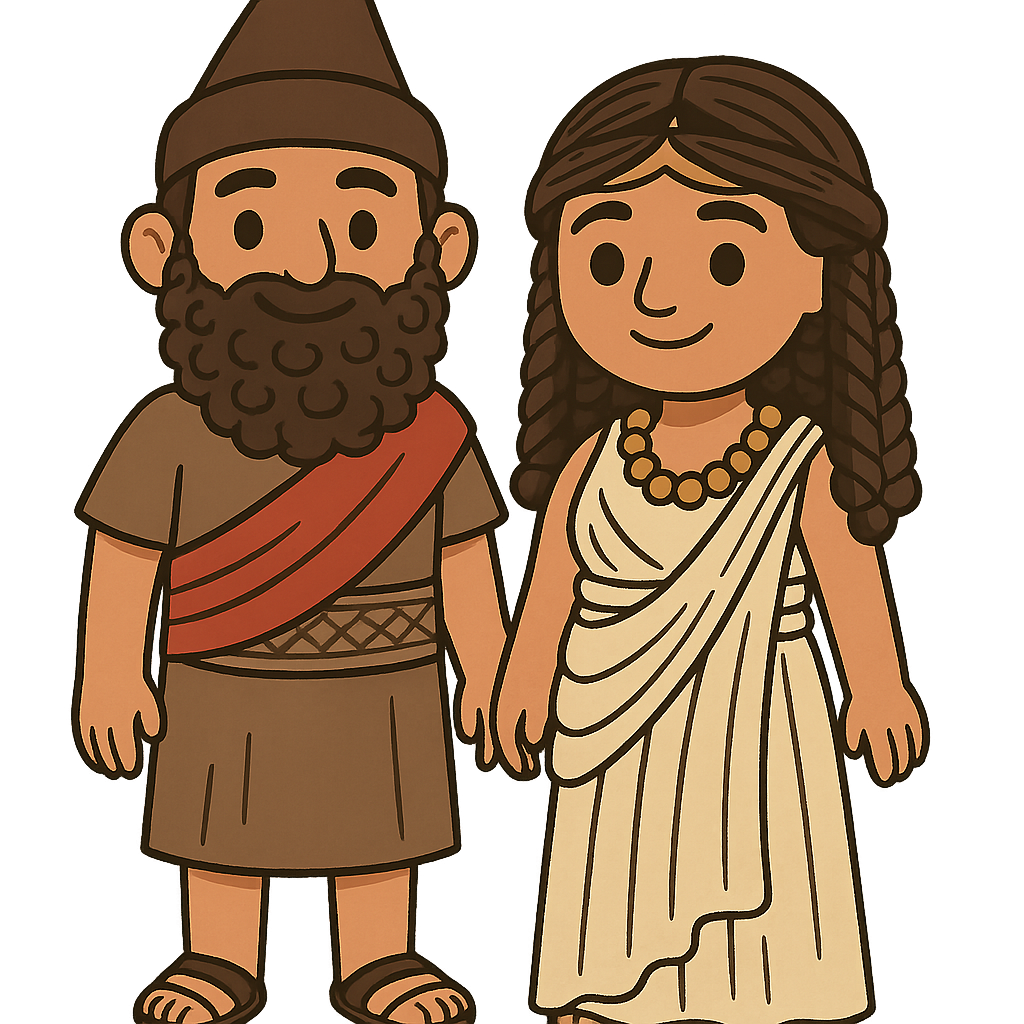
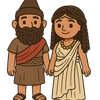
Hello! We are the Babylonians, and we want to share our story with you. We lived a very long time ago in a land called Mesopotamia. Our home was nestled between two great rivers, the Tigris and the Euphrates, which made the land good for growing food. Our main city was called Babylon. We were very proud of it and built strong, high walls all around to keep everyone safe. To enter our city, you would pass through beautiful gates that were famous in the ancient world.
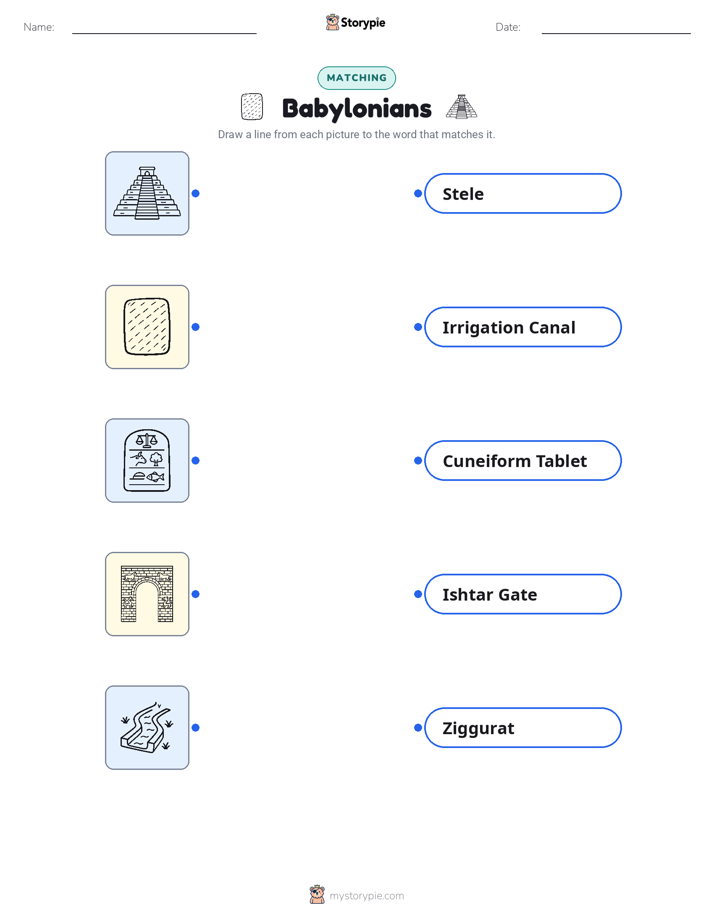
One of our most important leaders was a king named Hammurabi, who ruled almost 4,000 years ago. He wanted to make sure that everyone in our kingdom was treated with fairness. To help with this, he created a set of laws for all the people to follow. This collection of rules was called the Code of Hammurabi. So that no one could say they did not know the rules, he had them carved onto a tall, heavy stone and placed in a public spot where everyone could see it.
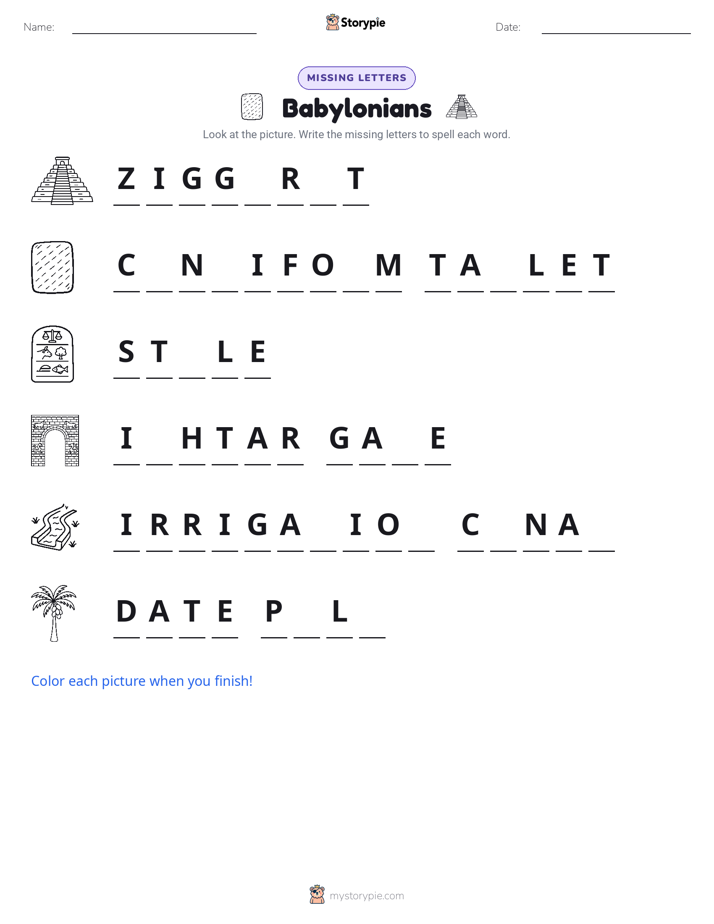
We had our own special way of writing things down. We didn't use an alphabet with letters like A, B, and C. Instead, our writing system was called cuneiform, which was made of wedge-shaped marks. People called scribes were trained to write. They used a special tool, like a pen, to press the shapes carefully into tablets made of soft, wet clay. When they were finished writing a story or a record, they would leave the clay tablet out to dry in the hot sun. The sun baked the clay until it was hard, preserving our writing for thousands of years.
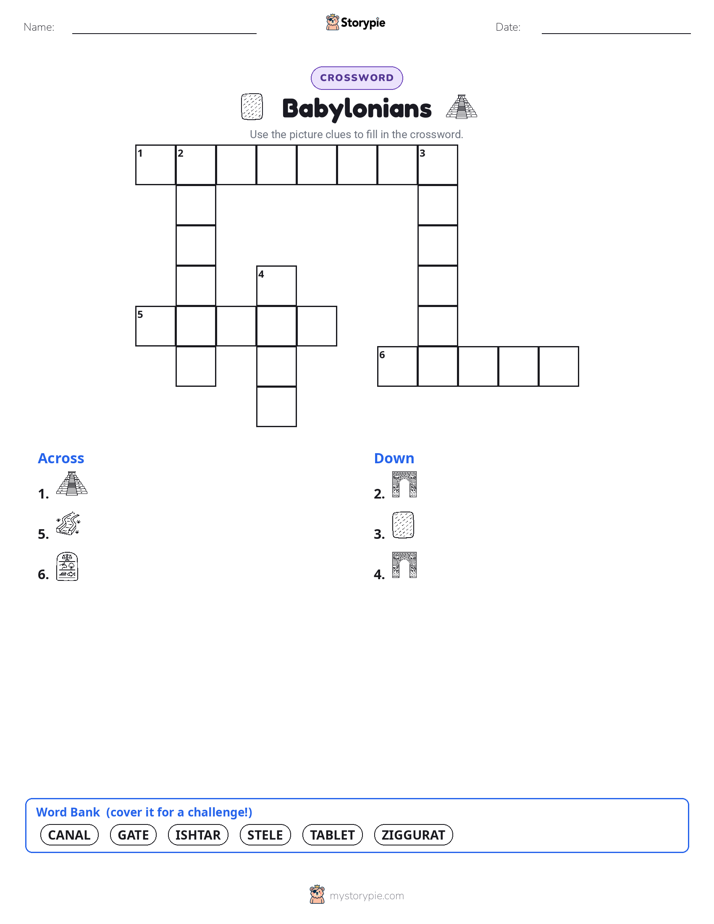
We were also skilled builders and sky-watchers. To honor our gods, we built massive temple towers called ziggurats. These were not ordinary buildings. They were huge structures that looked like giant staircases reaching up into the sky, with steps on the outside. Besides building, we were also talented astronomers who studied the night sky. We watched the patterns of the stars and planets, which helped us create calendars. We also came up with an important idea you still use every day: we were the ones who decided that an hour should have 60 minutes.
We Are the Babylonians
Hello! We are the Babylonians, and we want to share our story with you. We lived a very long time ago in a land called Mesopotamia. Our home was nestled between two great rivers, the Tigris and the Euphrates, which made the land good for growing food. Our main city was called Babylon. We were very proud of it and built strong, high walls all around to keep everyone safe. To enter our city, you would pass through beautiful gates that were famous in the ancient world.
One of our most important leaders was a king named Hammurabi, who ruled almost 4,000 years ago. He wanted to make sure that everyone in our kingdom was treated with fairness. To help with this, he created a set of laws for all the people to follow. This collection of rules was called the Code of Hammurabi. So that no one could say they did not know the rules, he had them carved onto a tall, heavy stone and placed in a public spot where everyone could see it.
We had our own special way of writing things down. We didn't use an alphabet with letters like A, B, and C. Instead, our writing system was called cuneiform, which was made of wedge-shaped marks. People called scribes were trained to write. They used a special tool, like a pen, to press the shapes carefully into tablets made of soft, wet clay. When they were finished writing a story or a record, they would leave the clay tablet out to dry in the hot sun. The sun baked the clay until it was hard, preserving our writing for thousands of years.
We were also skilled builders and sky-watchers. To honor our gods, we built massive temple towers called ziggurats. These were not ordinary buildings. They were huge structures that looked like giant staircases reaching up into the sky, with steps on the outside. Besides building, we were also talented astronomers who studied the night sky. We watched the patterns of the stars and planets, which helped us create calendars. We also came up with an important idea you still use every day: we were the ones who decided that an hour should have 60 minutes.
Our empire ended a long time ago, but our ideas and discoveries did not disappear. Many of the things we learned, especially about telling time and understanding the stars, were passed on to other cultures that came after us. Today, people learn about our history by studying the ruins of our cities and the thousands of clay tablets we left behind. By reading our cuneiform writing, they can understand our laws, our stories, and how we saw the world so long ago.
Wow facts
About
The Babylonians were an ancient Mesopotamian civilization known for establishing an influential empire under Hammurabi, but it was short-lived, declining rapidly after his death. They also created advanced legal codes like the Code of Hammurabi and made significant contributions to astronomy and mathematics.
Take a Quiz
Question 1 of 4
What was the name of the Babylonians' main city?
Explore next



Want to do even more?
Go beyond exploring. Unlock tools that turn every story into real learning.

Storypie Plus for families
Full stories, quizzes, and printables. Nights and car rides, sorted.
- Unlimited audio stories
- Create Mode: your child stars in the story
- Offline downloads
- Printable worksheets & coloring pages

Why Storypie for Schools
Students engaged. Prep in seconds. Evenings back to you.
- Worksheets & Quizzes
- Classroom Management
- Formative Assessment
- Custom Curriculum & Lesson Plans
- 27 Languages

Why Storypie for Homeschool
Curriculum done. They'll ask for more. Hours back in your day.
- Worksheet Generator
- First-Person Audio Stories
- Built-in Comprehension Quizzes
- Custom Curriculum & Lesson Plans
- Print & Go Activities