English

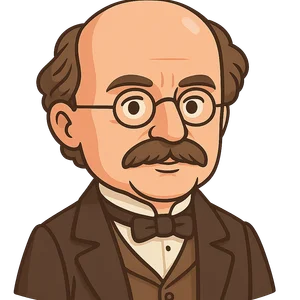
Hermann von Helmholtz
A German physician and physicist who made foundational contributions to physiology, optics, acoustics…
Reads at Grades 3–5 Listens at Grades 1–5
Print & create
Answer keys·No prep·Free with an account
28 worksheets · answer keys · full story · quiz · Ages 8-10 · CEFR B1
Plus adds 244,000+ more stories in 27 languages, audio for every one, and printables for all of them.
Just want Hermann von Helmholtz?
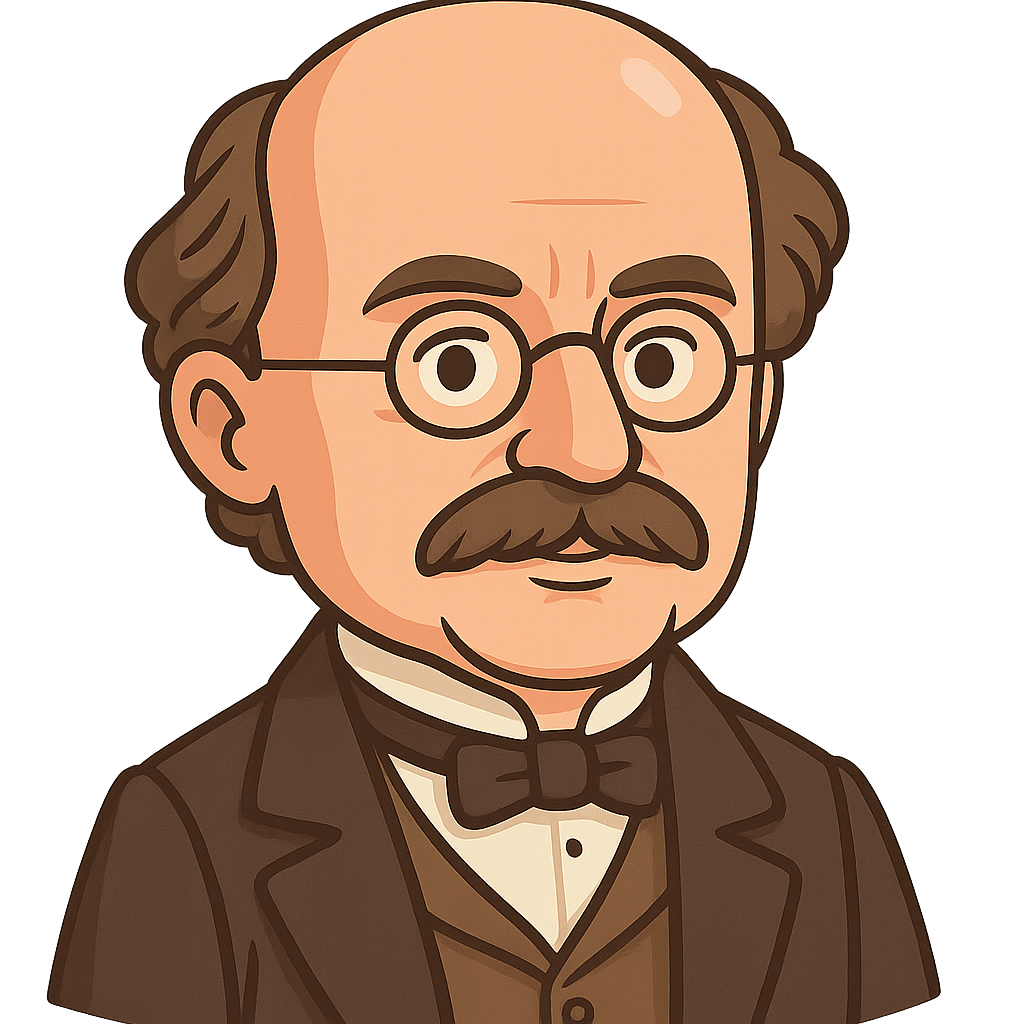
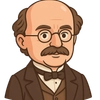
Hello. My name is Hermann von Helmholtz. I was born on August 31st, 1821, in a town called Potsdam, which was part of a kingdom called Prussia, now known as Germany. My father was a school teacher who loved learning, and he filled our home with books and ideas. From a very young age, I was fascinated by everything around me. I loved music and art, but my greatest passion was science. I wanted to understand how the world worked, from the way light bounces to how our own bodies move. My family didn't have a lot of money, so I couldn't go to a university just to study physics. But I found another way to follow my dreams.
When I was 17, around the year 1838, I received a special scholarship to study medicine in the city of Berlin. The deal was that after I graduated, I would serve as a doctor in the army. I learned all about the human body, but I never stopped thinking about physics. In my army barracks, I even set up a tiny, secret laboratory to do my own experiments. It was during this time that I had a huge idea. I realized that energy is never really lost—it just changes form. For example, the energy in the food you eat is turned into energy to run and play. In 1847, I wrote a paper about this idea, which scientists now call the law of conservation of energy. It's one of the most important rules in all of science.
My work on energy became famous, and soon I was able to leave the army and become a professor. I decided to use my knowledge of both medicine and physics to study our senses. I wondered, how do we see? How do we hear? To answer the first question, I needed to see inside a living eye. So, in 1851, I invented a device called the ophthalmoscope. It used mirrors and a light to let doctors look right at the back of the eye for the first time ever. It was like opening a tiny window into the human body. This invention changed how we understand and treat eye diseases forever.
Hermann von Helmholtz: A Journey Through Science
Hello. My name is Hermann von Helmholtz. I was born on August 31st, 1821, in a town called Potsdam, which was part of a kingdom called Prussia, now known as Germany. My father was a school teacher who loved learning, and he filled our home with books and ideas. From a very young age, I was fascinated by everything around me. I loved music and art, but my greatest passion was science. I wanted to understand how the world worked, from the way light bounces to how our own bodies move. My family didn't have a lot of money, so I couldn't go to a university just to study physics. But I found another way to follow my dreams.
When I was 17, around the year 1838, I received a special scholarship to study medicine in the city of Berlin. The deal was that after I graduated, I would serve as a doctor in the army. I learned all about the human body, but I never stopped thinking about physics. In my army barracks, I even set up a tiny, secret laboratory to do my own experiments. It was during this time that I had a huge idea. I realized that energy is never really lost—it just changes form. For example, the energy in the food you eat is turned into energy to run and play. In 1847, I wrote a paper about this idea, which scientists now call the law of conservation of energy. It's one of the most important rules in all of science.
My work on energy became famous, and soon I was able to leave the army and become a professor. I decided to use my knowledge of both medicine and physics to study our senses. I wondered, how do we see? How do we hear? To answer the first question, I needed to see inside a living eye. So, in 1851, I invented a device called the ophthalmoscope. It used mirrors and a light to let doctors look right at the back of the eye for the first time ever. It was like opening a tiny window into the human body. This invention changed how we understand and treat eye diseases forever.
After exploring sight, I turned my attention to hearing. As someone who loved music, I wanted to understand the science behind it. Why do some notes sound good together and others don't? How do our ears turn vibrations in the air into the beautiful sounds of a song? I studied sound waves and the parts of the inner ear. In 1863, I wrote a famous book called 'On the Sensations of Tone' to share everything I had learned. I also taught many students at universities across Germany, including at the great University of Berlin starting in 1871. I loved sharing my curiosity and helping young scientists begin their own journeys of discovery.
I spent my life asking questions and trying to find the answers, whether I was studying weather, electricity, or the way our minds work. I lived to be 73 years old. Today, people remember me as a scientist who built bridges between different fields like medicine, physics, and even music. The ophthalmoscope I invented is still used by eye doctors all over the world to help people see clearly. My work on energy is a cornerstone of physics, and my studies on sight and sound helped us understand our own senses. I hope my story inspires you to stay curious and explore the many wonders of our world.
Wow facts
About
A German physician and physicist who made foundational contributions to physiology, optics, acoustics, and thermodynamics. He is celebrated for formulating the principle of conservation of energy and for inventing the ophthalmoscope.
Take a Quiz
Question 1 of 5
What problem did I have when I was young that made it hard to study physics at a university?
Explore next



Want to do even more?
Go beyond exploring. Unlock tools that turn every story into real learning.

Storypie Plus for families
Full stories, quizzes, and printables. Nights and car rides, sorted.
- Unlimited audio stories
- Create Mode: your child stars in the story
- Offline downloads
- Printable worksheets & coloring pages

Why Storypie for Schools
Students engaged. Prep in seconds. Evenings back to you.
- Worksheets & Quizzes
- Classroom Management
- Formative Assessment
- Custom Curriculum & Lesson Plans
- 27 Languages

Why Storypie for Homeschool
Curriculum done. They'll ask for more. Hours back in your day.
- Worksheet Generator
- First-Person Audio Stories
- Built-in Comprehension Quizzes
- Custom Curriculum & Lesson Plans
- Print & Go Activities