English

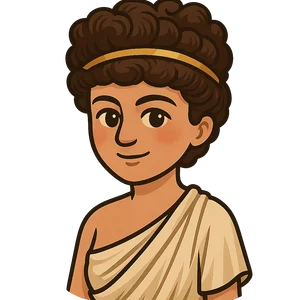
Hypatia of Alexandria
Hypatia of Alexandria was a Greek Neoplatonist philosopher, astronomer, and mathematician in Alexandria…
Reads at Grades 6–8 Listens at Grades 4–8
Print & create
Answer keys·No prep·Free with an account
28 worksheets · answer keys · full story · quiz · Ages 10-12 · CEFR B2
Plus adds 244,000+ more stories in 27 languages, audio for every one, and printables for all of them.
Just want Hypatia of Alexandria?
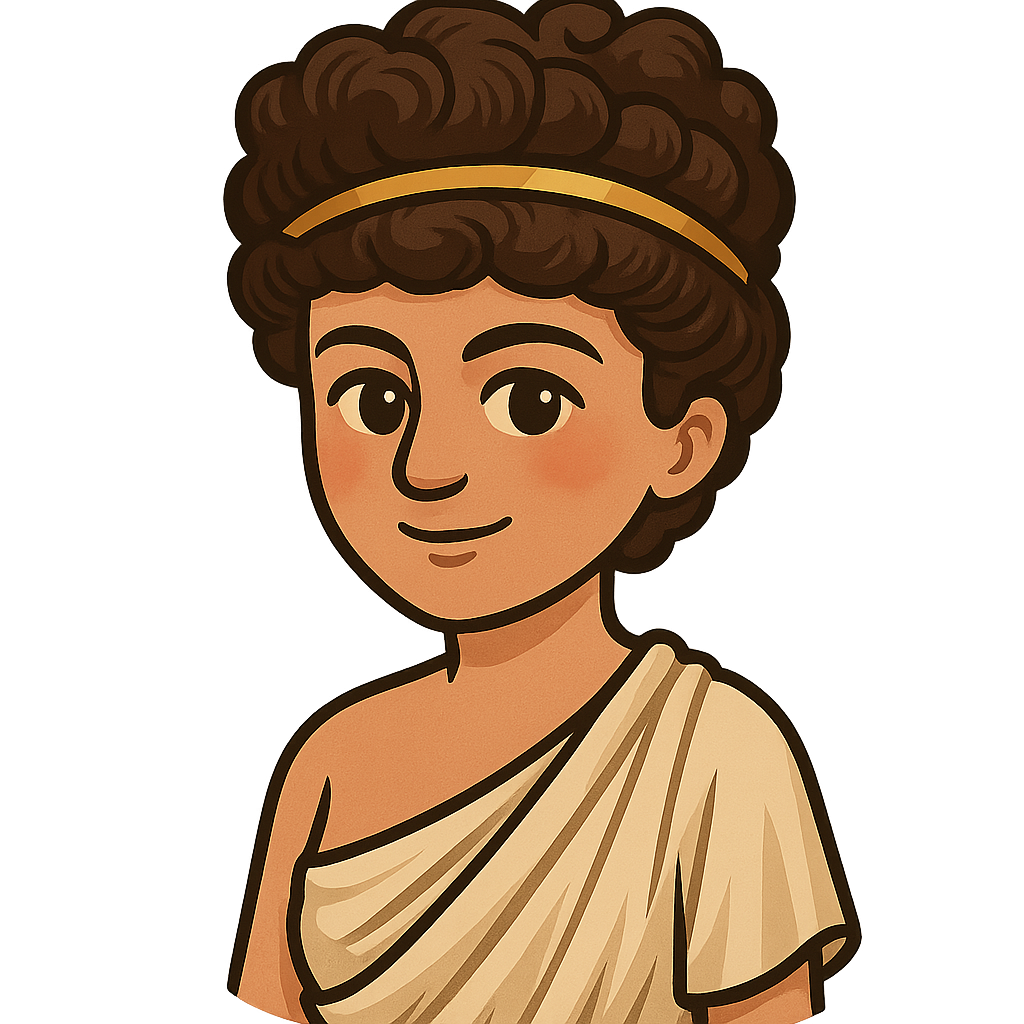
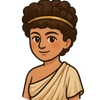
Hello. My name is Hypatia, and I want to welcome you to my home, the incredible city of Alexandria. In my time, it was a jewel of ancient Egypt, a place where the world’s greatest minds came to learn and share ideas. I was born here around the year 355, a time when the air itself seemed to hum with the energy of discovery. My father was Theon, a brilliant mathematician and astronomer who was known throughout the city for his sharp mind. He was also my greatest teacher. He didn't just teach me formulas and facts; he taught me to be curious, to ask questions, and to never be satisfied with simple answers. We lived near the great Museum of Alexandria, which was not a museum like you might imagine today, but a university and library, the largest in the world. Growing up, I was surrounded by towering shelves of scrolls, the quiet scratch of pens, and the constant buzz of conversation as scholars debated the mysteries of the universe. It was there, in that city of knowledge, that I fell in love with learning. I wanted to understand everything, from the smallest number to the most distant star.
As I grew older, my love for learning turned into a passion for teaching. Around the year 400, I became the head of the Platonist school in Alexandria, a great honor and responsibility. I taught philosophy, which means “the love of wisdom.” In my classroom, we didn't just memorize facts; we explored big ideas about how to live a good and meaningful life. We wondered about justice, truth, and our place in the cosmos. One of the things I was most proud of was that my classroom was open to everyone. Students came from faraway lands, and they held many different beliefs. It didn't matter to me what gods they worshipped or where they came from; all that mattered was their desire to learn and their commitment to using logic and reason. Together, we would read and discuss the works of the great thinkers who came before us, like Plato and Aristotle. We used their ideas as a starting point for our own investigations, always pushing to understand the world more clearly and deeply through careful thought and respectful debate.
Hypatia: The Star of Alexandria
Hello. My name is Hypatia, and I want to welcome you to my home, the incredible city of Alexandria. In my time, it was a jewel of ancient Egypt, a place where the world’s greatest minds came to learn and share ideas. I was born here around the year 355, a time when the air itself seemed to hum with the energy of discovery. My father was Theon, a brilliant mathematician and astronomer who was known throughout the city for his sharp mind. He was also my greatest teacher. He didn't just teach me formulas and facts; he taught me to be curious, to ask questions, and to never be satisfied with simple answers. We lived near the great Museum of Alexandria, which was not a museum like you might imagine today, but a university and library, the largest in the world. Growing up, I was surrounded by towering shelves of scrolls, the quiet scratch of pens, and the constant buzz of conversation as scholars debated the mysteries of the universe. It was there, in that city of knowledge, that I fell in love with learning. I wanted to understand everything, from the smallest number to the most distant star.
As I grew older, my love for learning turned into a passion for teaching. Around the year 400, I became the head of the Platonist school in Alexandria, a great honor and responsibility. I taught philosophy, which means “the love of wisdom.” In my classroom, we didn't just memorize facts; we explored big ideas about how to live a good and meaningful life. We wondered about justice, truth, and our place in the cosmos. One of the things I was most proud of was that my classroom was open to everyone. Students came from faraway lands, and they held many different beliefs. It didn't matter to me what gods they worshipped or where they came from; all that mattered was their desire to learn and their commitment to using logic and reason. Together, we would read and discuss the works of the great thinkers who came before us, like Plato and Aristotle. We used their ideas as a starting point for our own investigations, always pushing to understand the world more clearly and deeply through careful thought and respectful debate.
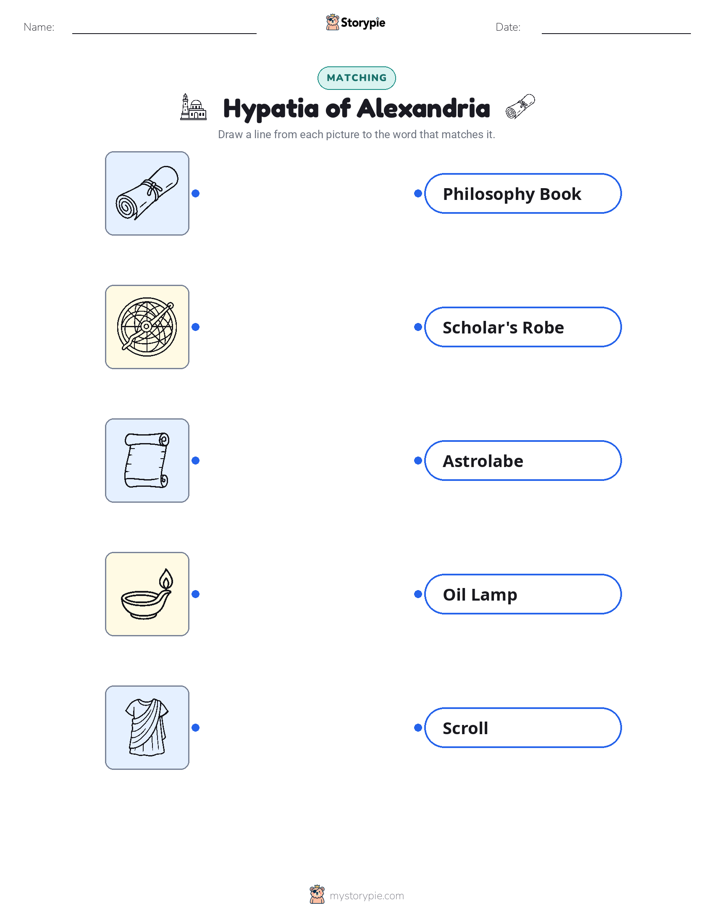
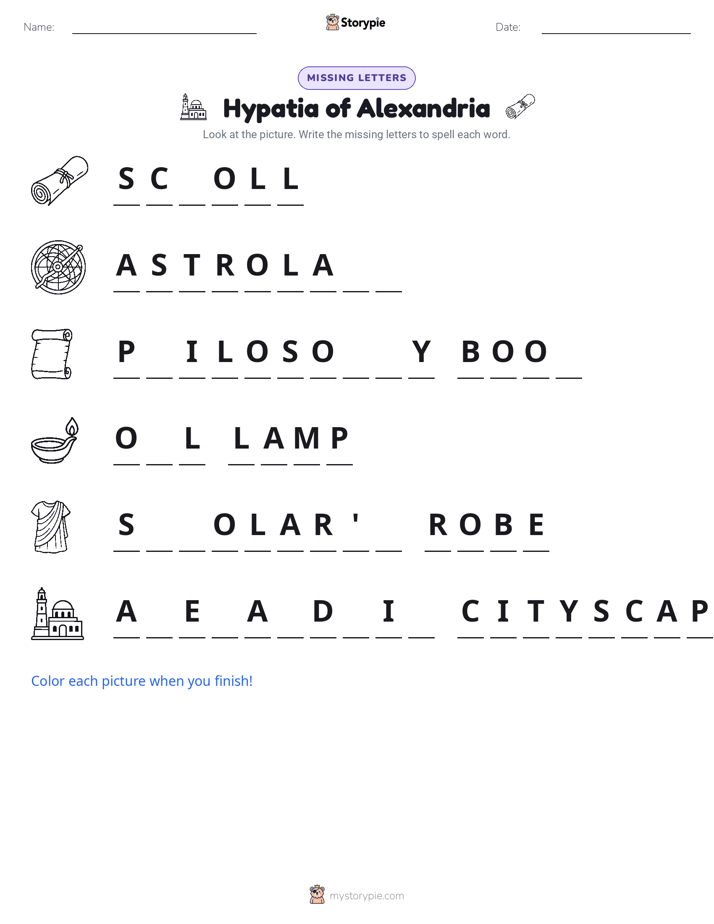
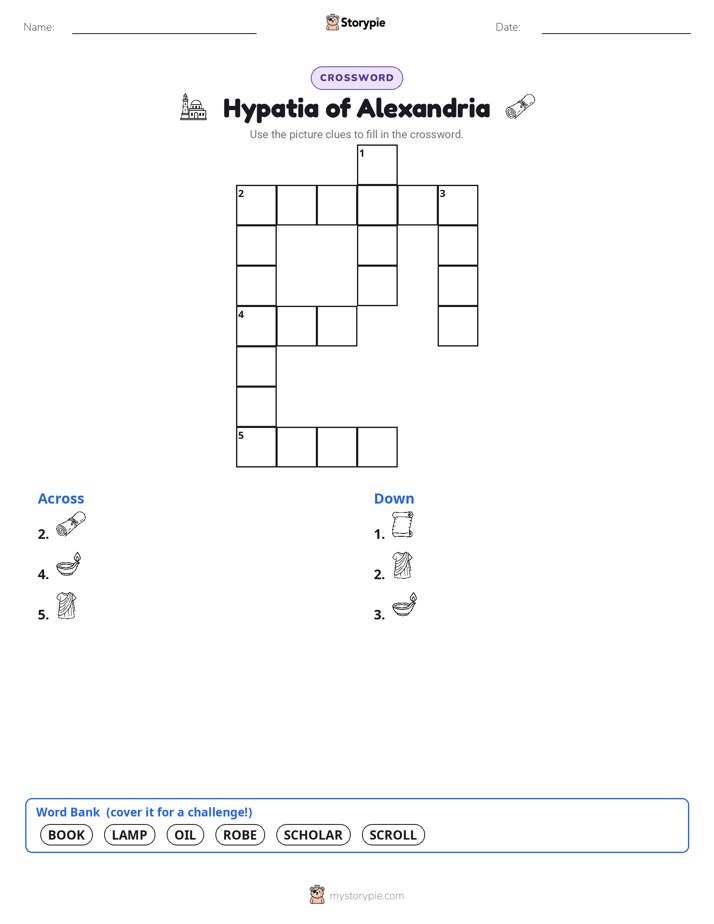
While I loved philosophy, my heart truly soared when I studied mathematics and astronomy. To me, numbers were the language of the universe, and the stars held the secrets of its design. I spent much of my time writing commentaries on important scientific and mathematical books. For example, I worked on Diophantus's 'Arithmetica,' a very advanced book about numbers. My goal wasn't to change the original work, but to add my own explanations and clarifications to make its complex ideas easier for my students to understand. I wanted to build a bridge between the great minds of the past and the curious minds of the present. We also used amazing tools to study the heavens. I was an expert in the astrolabe, a device that looked like a complex metal disc. While I did not invent it, I was skilled in building and using it to map the positions of the stars and planets. Holding an astrolabe, I could measure the sky and feel a connection to the vast, orderly cosmos that stretched out above us.
The world outside my classroom was not as orderly as the stars. Alexandria in the early 5th century was a city in turmoil. It was a time of great change, and with change often comes conflict. There were deep and bitter arguments between different groups living in the city. This tension was especially strong between the Roman governor, a man named Orestes, and the powerful Christian Bishop, Cyril. Orestes was a friend of mine, and as an influential teacher known for my wisdom, he often sought my advice on how to lead the city. However, I was not a Christian; I followed the older Greek philosophies that celebrated reason and science. Because of my friendship with the governor and my position as a respected non-Christian thinker, I found myself caught in the middle of their dangerous political struggle. My influence became a threat to some, and my name was soon tangled up in their fight for power.
I lived to be about 60 years old. The conflicts in my city grew worse, and in March of 415, a mob, angered by the political situation and the false rumors spreading about me, attacked and killed me. Though my life ended tragically, my story and my ideas lived on. I am remembered as one of the last great thinkers of ancient Alexandria, a city that was once the world's center of learning. More importantly, I am remembered as one of the first women in history to be celebrated for her contributions to mathematics, astronomy, and philosophy. I hope my story inspires you to always stay curious, to think for yourself, and to be brave in your search for knowledge, no matter the challenges you face.
Wow facts
About
Hypatia of Alexandria was a Greek Neoplatonist philosopher, astronomer, and mathematician in Alexandria, Egypt. She was a prominent teacher and a well-known female mathematician whose life and work are well documented.
Take a Quiz
Question 1 of 5
According to the story, what was Hypatia's main goal when writing commentaries on books like Diophantus's 'Arithmetica'?
Explore next




Want to do even more?
Go beyond exploring. Unlock tools that turn every story into real learning.

Storypie Plus for families
Full stories, quizzes, and printables. Nights and car rides, sorted.
- Unlimited audio stories
- Create Mode: your child stars in the story
- Offline downloads
- Printable worksheets & coloring pages

Why Storypie for Schools
Students engaged. Prep in seconds. Evenings back to you.
- Worksheets & Quizzes
- Classroom Management
- Formative Assessment
- Custom Curriculum & Lesson Plans
- 27 Languages

Why Storypie for Homeschool
Curriculum done. They'll ask for more. Hours back in your day.
- Worksheet Generator
- First-Person Audio Stories
- Built-in Comprehension Quizzes
- Custom Curriculum & Lesson Plans
- Print & Go Activities