English

Ibn Sina
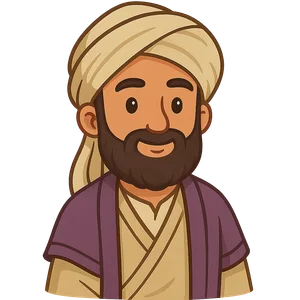
A Persian polymath who was one of the most significant physicians, thinkers…
Reads at Grades 6–8 Listens at Grades 4–8
Print & create
Answer keys·No prep·Free with an account
28 worksheets · answer keys · full story · quiz · Ages 10-12 · CEFR B2
Plus adds 164,000+ more stories in 27 languages, audio for every one, and printables for all of them.
Just want Ibn Sina?
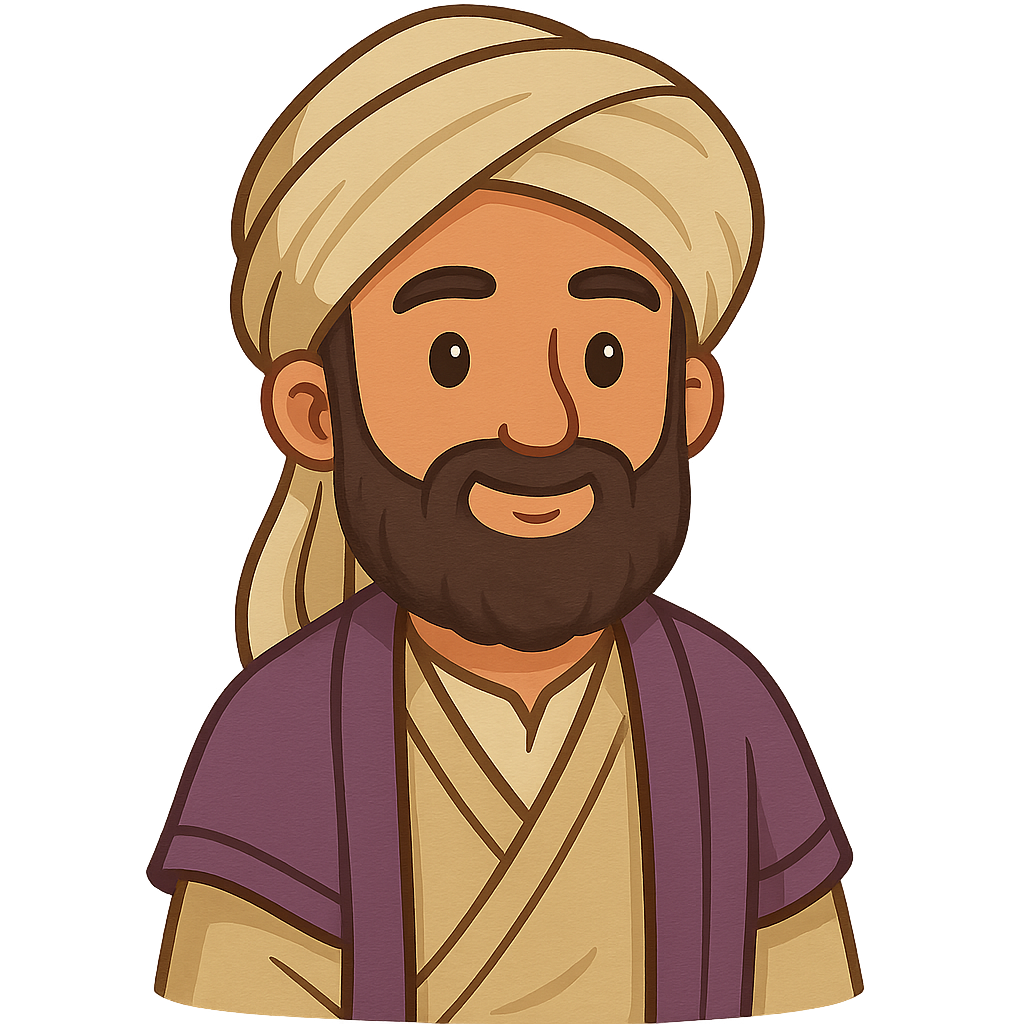
Hello, my name is Al-Husayn ibn Abd Allah ibn Sina, but you might know me by my Latin name, Avicenna. I was born around the year 980 in a small village called Afshana, near the city of Bukhara. This was a remarkable time in history known as the Islamic Golden Age, a period when science, art, and philosophy were flourishing. My childhood was filled with an insatiable curiosity about the world. By the time I was only 10 years old, I had committed the entire Quran to memory. But my quest for knowledge didn't end there. I immersed myself in the study of mathematics, logic, and the works of the great Greek philosopher, Aristotle. I felt a deep drive to understand the fundamental principles that governed the world.
Of all the subjects I studied, medicine captivated me the most. The complexity of the human body felt like a great mystery I was determined to unravel. I began my formal study of medicine at the age of 16, and I absorbed the knowledge of my teachers very quickly. My big opportunity arrived around the year 997. The ruler of the Samanid Empire, Nuh ibn Mansur, was suffering from a serious illness that his own court physicians could not cure. Even though I was just a teenager, my growing reputation led to me being summoned to the palace. I examined the emir, applied my knowledge to diagnose his condition, and prescribed a treatment that led to his full recovery. As a reward, he offered me something more precious than gold: unlimited access to the Royal Library. It was a treasure trove of learning, and I spent every moment I could there, reading ancient scrolls and texts from around the globe.
Ibn Sina: The Doctor Who Wrote the Book on Medicine
Hello, my name is Al-Husayn ibn Abd Allah ibn Sina, but you might know me by my Latin name, Avicenna. I was born around the year 980 in a small village called Afshana, near the city of Bukhara. This was a remarkable time in history known as the Islamic Golden Age, a period when science, art, and philosophy were flourishing. My childhood was filled with an insatiable curiosity about the world. By the time I was only 10 years old, I had committed the entire Quran to memory. But my quest for knowledge didn't end there. I immersed myself in the study of mathematics, logic, and the works of the great Greek philosopher, Aristotle. I felt a deep drive to understand the fundamental principles that governed the world.
Of all the subjects I studied, medicine captivated me the most. The complexity of the human body felt like a great mystery I was determined to unravel. I began my formal study of medicine at the age of 16, and I absorbed the knowledge of my teachers very quickly. My big opportunity arrived around the year 997. The ruler of the Samanid Empire, Nuh ibn Mansur, was suffering from a serious illness that his own court physicians could not cure. Even though I was just a teenager, my growing reputation led to me being summoned to the palace. I examined the emir, applied my knowledge to diagnose his condition, and prescribed a treatment that led to his full recovery. As a reward, he offered me something more precious than gold: unlimited access to the Royal Library. It was a treasure trove of learning, and I spent every moment I could there, reading ancient scrolls and texts from around the globe.
My life was set against a backdrop of political change, and the world I lived in was often turbulent. These shifts in power meant I had to move from one city to another throughout my life. I found work in various courts across Persia, serving not only as a doctor but sometimes as a vizier, which is a high-ranking political advisor. My path was not always smooth; I was even imprisoned at one point due to political conflicts. Despite these challenges, my passion for learning and writing never faded. I would often work late into the night by lamplight, determined to record everything I had learned. During this time, I wrote a vast philosophical and scientific encyclopedia called 'The Book of Healing.' However, my most famous work is a medical encyclopedia that I finished around the year 1025, which I titled 'Al-Qanun fi'l-Tibb,' or 'The Canon of Medicine.'
My vision for 'The Canon of Medicine' was ambitious. I wanted to gather all existing medical knowledge—from the ancient Greeks to the scholars of my own time—and combine it with my own observations as a practicing physician into a single, organized work. The result was a massive five-volume book. Within its pages, I provided detailed descriptions of hundreds of different diseases. I emphasized the importance of diet and hygiene in maintaining good health. I put forward the revolutionary idea that some diseases might be spread by tiny organisms, invisible to the naked eye. Based on this, I also explained the concept of quarantine as a method to prevent contagious illnesses from spreading. Furthermore, I outlined systematic ways to test new medicines for safety and effectiveness. 'The Canon of Medicine' was so comprehensive that it was translated into Latin and used as the standard medical textbook in universities throughout the Islamic world and Europe for over 600 years.
I dedicated my entire life to my work as a physician and scholar, always driven by a deep passion for discovery and understanding. I lived to be about 57 years old, spending my final years in the city of Hamadan where I passed away in the year 1037. My purpose was to apply reason and knowledge to comprehend the world and to help others lead healthier, more fulfilling lives. Today, I am remembered as a philosopher, scientist, and physician whose ideas created a bridge of knowledge connecting different cultures and historical eras. My writings, especially 'The Canon of Medicine,' were instrumental in shaping the course of modern science and medicine, and I hope my story encourages you to always remain curious and never stop learning.
Wow facts
About
A Persian polymath who was one of the most significant physicians, thinkers, and writers of the Islamic Golden Age, best known for his medical encyclopedia 'The Canon of Medicine' and made notable contributions to astronomy, though his work in this field was less prominent than in medicine and philosophy.
Take a Quiz
Question 1 of 5
Which of the following best summarizes my early life and the start of my medical career?
Explore next





Want to do even more?
Go beyond exploring. Unlock tools that turn every story into real learning.

Storypie Plus for families
Full stories, quizzes, and printables. Nights and car rides, sorted.
- Unlimited audio stories
- Create Mode: your child stars in the story
- Offline downloads
- Printable worksheets & coloring pages

Why Storypie for Schools
Students engaged. Prep in seconds. Evenings back to you.
- Worksheets & Quizzes
- Classroom Management
- Formative Assessment
- Custom Curriculum & Lesson Plans
- 27 Languages

Why Storypie for Homeschool
Curriculum done. They'll ask for more. Hours back in your day.
- Worksheet Generator
- First-Person Audio Stories
- Built-in Comprehension Quizzes
- Custom Curriculum & Lesson Plans
- Print & Go Activities