English

Ignaz Semmelweis
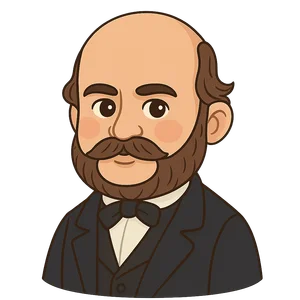
Ignaz Semmelweis was a Hungarian physician and scientist, known as an early pioneer of antiseptic procedures.
Reads at Grades 6–8 Listens at Grades 4–8
Print & create
Answer keys·No prep·Free with an account
28 worksheets · answer keys · full story · quiz · Ages 10-12 · CEFR B2
Plus adds 208,000+ more stories in 27 languages, audio for every one, and printables for all of them.
Just want Ignaz Semmelweis?
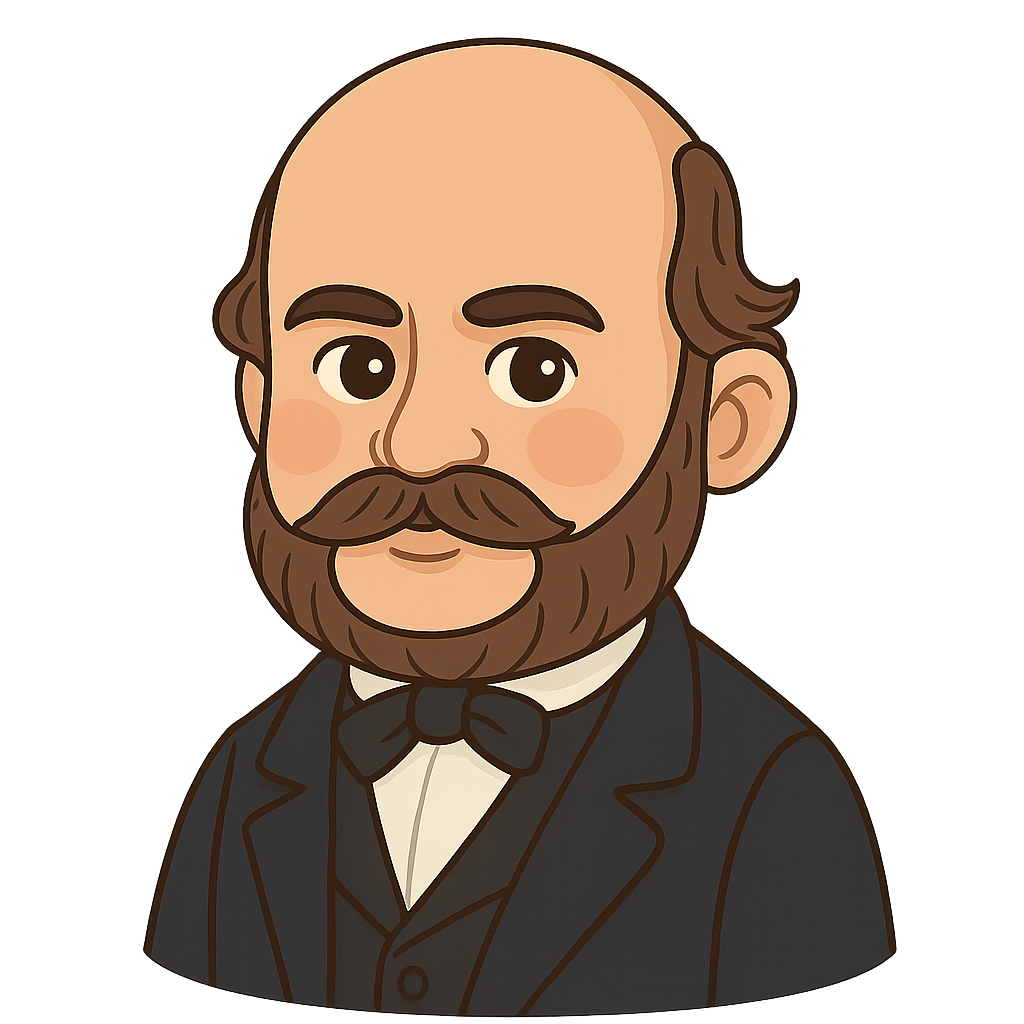
Hello! My name is Ignaz Semmelweis. My story begins on July 1st, 1818, when I was born in Buda, part of the great city of Budapest in Hungary. As a young man, I traveled to Austria to study at the famous University of Vienna. I wasn't sure what I wanted to do at first, but I soon found my calling in medicine. I wanted to understand the human body and, most importantly, I wanted to help people who were sick. In 1846, I began working at the Vienna General Hospital, one of the biggest and most modern hospitals in the world. I was assigned to the maternity clinic, where I would help deliver babies and care for new mothers. I was excited to begin my work, but I soon discovered a terrible and heartbreaking mystery that I knew I had to solve.
Our hospital had two separate clinics for mothers giving birth. In the First Clinic, where I worked, the patients were cared for by doctors and medical students. In the Second Clinic, they were cared for by women called midwives. A strange and frightening pattern emerged. The mothers in my clinic were getting sick and dying from a terrible illness called childbed fever at a much, much higher rate than the mothers in the Second Clinic. It was a tragedy. These women had just brought new life into the world, only to have their own lives taken away. I couldn't sleep. I couldn't stop thinking about it. Why was this happening? I looked at everything. Was it the air? The food? The way the mothers lay in their beds? Nothing seemed to explain the difference. The doctors in charge had many theories, but none of them made sense. I knew the answer was there somewhere, and I was determined to find it for the sake of all the mothers.
Ignaz Semmelweis: The Doctor Who Saved Mothers
Hello! My name is Ignaz Semmelweis. My story begins on July 1st, 1818, when I was born in Buda, part of the great city of Budapest in Hungary. As a young man, I traveled to Austria to study at the famous University of Vienna. I wasn't sure what I wanted to do at first, but I soon found my calling in medicine. I wanted to understand the human body and, most importantly, I wanted to help people who were sick. In 1846, I began working at the Vienna General Hospital, one of the biggest and most modern hospitals in the world. I was assigned to the maternity clinic, where I would help deliver babies and care for new mothers. I was excited to begin my work, but I soon discovered a terrible and heartbreaking mystery that I knew I had to solve.
Our hospital had two separate clinics for mothers giving birth. In the First Clinic, where I worked, the patients were cared for by doctors and medical students. In the Second Clinic, they were cared for by women called midwives. A strange and frightening pattern emerged. The mothers in my clinic were getting sick and dying from a terrible illness called childbed fever at a much, much higher rate than the mothers in the Second Clinic. It was a tragedy. These women had just brought new life into the world, only to have their own lives taken away. I couldn't sleep. I couldn't stop thinking about it. Why was this happening? I looked at everything. Was it the air? The food? The way the mothers lay in their beds? Nothing seemed to explain the difference. The doctors in charge had many theories, but none of them made sense. I knew the answer was there somewhere, and I was determined to find it for the sake of all the mothers.
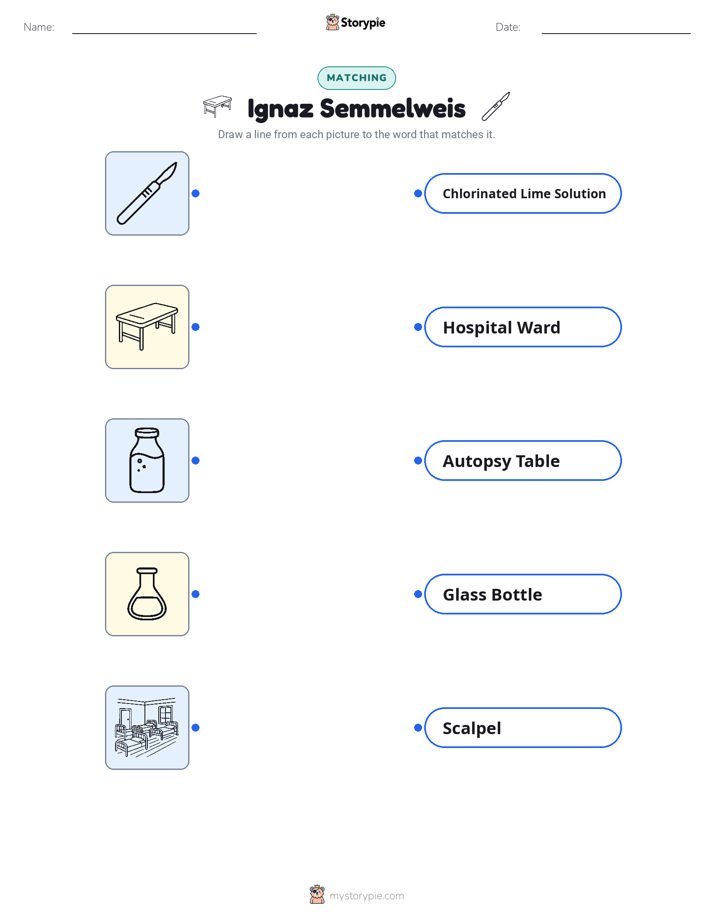
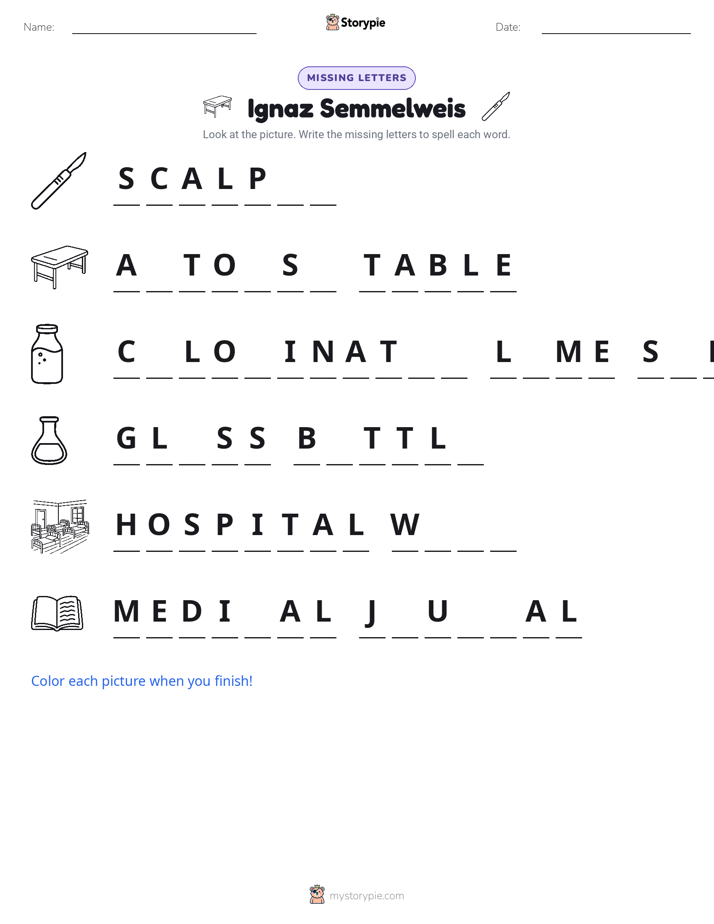
My breakthrough came from a moment of great sadness. In 1847, my dear friend and fellow doctor, Jakob Kolletschka, passed away. During an autopsy—which is the medical study of a body to find out why a person died—a student accidentally cut my friend's finger with a scalpel. Soon after, he developed a sickness with the very same symptoms as the mothers who were dying from childbed fever. A thought struck me like lightning. The doctors and students in my clinic, the First Clinic, regularly performed autopsies. The midwives in the Second Clinic did not. Could it be that we were carrying something from the autopsy room to the mothers on our hands? Something invisible that was making them sick? It was a radical idea. At the time, no one knew about germs or bacteria. The thought that doctors, who were there to heal, could be unknowingly harming their patients was shocking.
I had to test my theory. I called the invisible things on our hands 'cadaverous particles.' I decided we needed a way to clean them off completely before we touched any patients. Soap and water wasn't enough. I ordered a powerful cleaning agent, a chlorinated lime solution, and in May of 1847, I made a new rule: every doctor and student had to wash their hands in this solution until they were perfectly clean before entering the maternity ward. The results were immediate and astounding. The death rate in my clinic dropped dramatically. It fell from as high as 18 percent to just around 1 percent, the same low rate as the midwives' clinic. I had found the answer! By simply washing our hands, we were saving lives. It was the most incredible feeling to see mothers surviving and going home with their healthy babies.
You might think everyone would have celebrated this discovery, but they did not. Many of the important doctors in Vienna were insulted. They couldn't believe that their own hands could be the source of disease. They mocked my ideas and refused to follow my rules. It was deeply frustrating. They couldn't see the proof that was right in front of them. In 1850, I was forced to leave my job in Vienna. I returned to my home country of Hungary and continued my work, again proving that handwashing saved mothers' lives. In 1861, I published a book with all of my findings, hoping the world would finally listen. But still, the medical community was slow to change.
My ideas about hygiene were not widely accepted during my lifetime. I lived to be 47 years old and passed away in 1865. But a story doesn't end when a life does. Years later, scientists like Louis Pasteur and Joseph Lister would prove the existence of germs, and the world finally understood what I had seen all those years ago. My simple idea of handwashing became one of the most important rules in all of medicine. Today, I am remembered as the 'savior of mothers,' and every time a doctor or nurse washes their hands before treating a patient, my work lives on, protecting people and saving countless lives.
Wow facts
About
Ignaz Semmelweis was a Hungarian physician and scientist, known as an early pioneer of antiseptic procedures. He discovered that the incidence of puerperal fever could be drastically cut by the use of hand disinfection in obstetrical clinics.
Take a Quiz
Question 1 of 5
Why did the death rate in my clinic drop so dramatically in May of 1847?
Explore next






Want to do even more?
Go beyond exploring. Unlock tools that turn every story into real learning.

Storypie Plus for families
Full stories, quizzes, and printables. Nights and car rides, sorted.
- Unlimited audio stories
- Create Mode: your child stars in the story
- Offline downloads
- Printable worksheets & coloring pages

Why Storypie for Schools
Students engaged. Prep in seconds. Evenings back to you.
- Worksheets & Quizzes
- Classroom Management
- Formative Assessment
- Custom Curriculum & Lesson Plans
- 27 Languages

Why Storypie for Homeschool
Curriculum done. They'll ask for more. Hours back in your day.
- Worksheet Generator
- First-Person Audio Stories
- Built-in Comprehension Quizzes
- Custom Curriculum & Lesson Plans
- Print & Go Activities