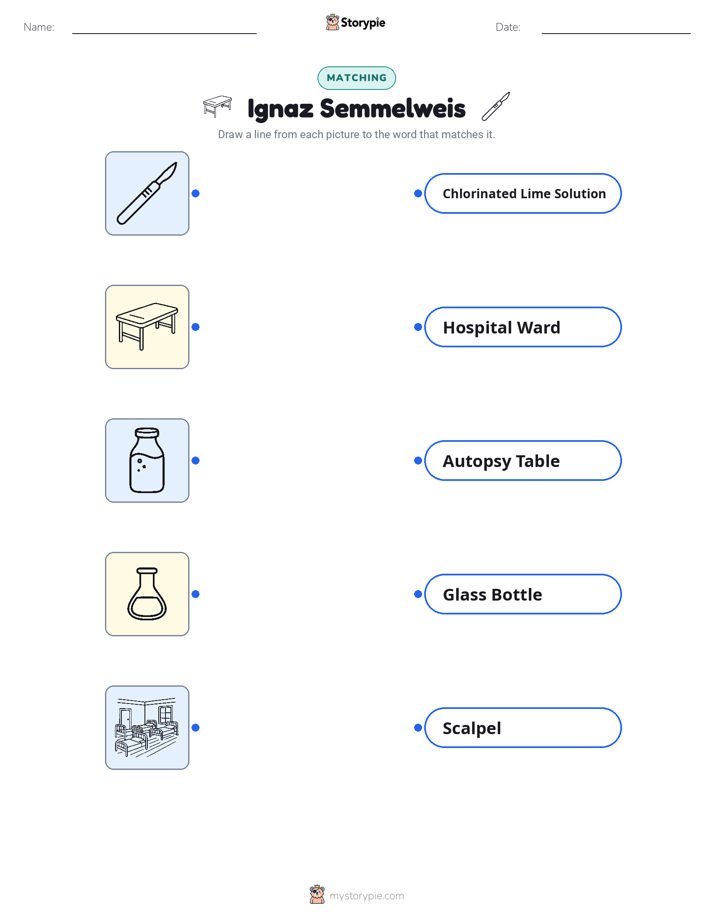
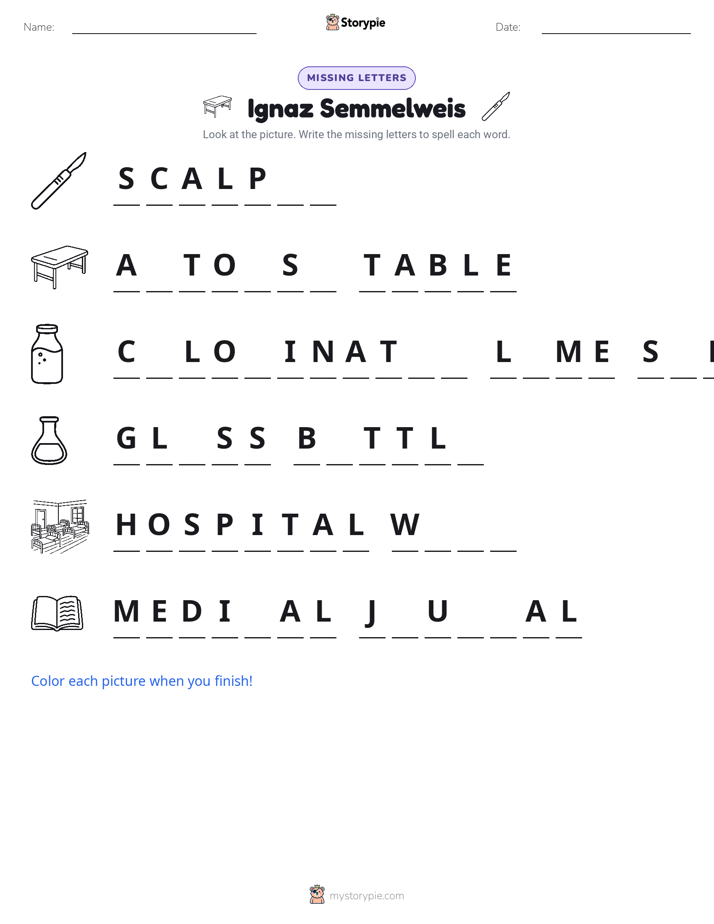
English

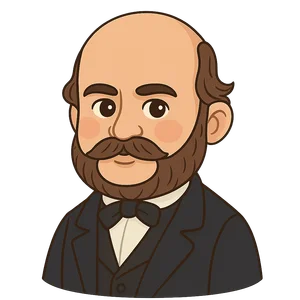
Ignaz Semmelweis
Ignaz Semmelweis was a Hungarian physician and scientist, known as an early pioneer of antiseptic procedures.
Reads at Grades 3–5 Listens at Grades 1–5
Print & create
Answer keys·No prep·Free with an account
28 worksheets · answer keys · full story · quiz · Ages 8-10 · CEFR B1
Plus adds 208,000+ more stories in 27 languages, audio for every one, and printables for all of them.
Just want Ignaz Semmelweis?
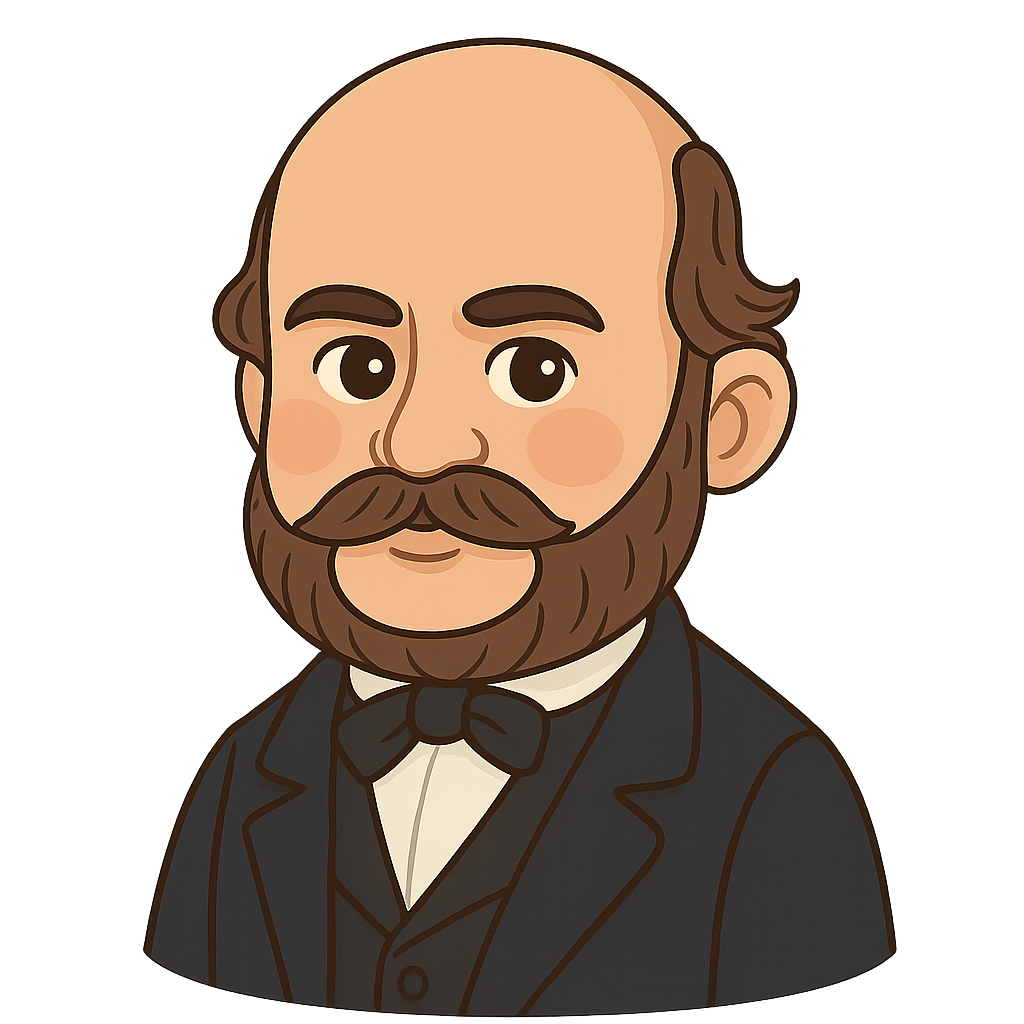
Hello! My name is Ignaz Semmelweis. I’d like to tell you my story. I was born a long time ago, on July 1st, 1818, in a part of Budapest, Hungary. Growing up, my family thought I would become a lawyer, but my heart was set on something else. When I went to the University of Vienna, I discovered my true passion: medicine. I wanted to understand the human body and help people who were sick. I studied very hard, and in 1844, I officially became a doctor. I was so excited to start my journey of healing and discovery, never imagining the important mystery I was about to uncover.
In 1846, I began working at the Vienna General Hospital. It was a very big and busy place. I was put in charge of a maternity clinic, where mothers came to have their babies. But I soon noticed something terribly sad and puzzling. The hospital had two separate clinics for delivering babies. In my clinic, the First Clinic, doctors and medical students helped the mothers. In the Second Clinic, women called midwives did the same job. The puzzle was this: many mothers in my clinic were getting a dangerous illness called childbed fever right after giving birth. But in the Second Clinic, very few mothers got sick. Why was this happening? It broke my heart to see so many families suffer, and I promised myself I would find the answer to protect these mothers.
I spent months trying to solve the mystery. I checked everything—the air, the food, the way mothers were cared for—but nothing seemed to explain the difference. Then, in 1847, a sad event gave me a clue. My good friend, a fellow doctor, passed away after accidentally cutting his finger while examining the body of someone who had died from an illness. When I learned about his sickness, I realized it was almost exactly the same as the childbed fever that was hurting the new mothers. That’s when my big idea struck me. The doctors and students in my clinic often came straight from working with dead bodies to helping deliver babies, without washing their hands properly. What if they were carrying tiny, invisible 'particles' from their work that were making the mothers sick? The midwives in the Second Clinic didn't do this work, so their hands were cleaner.
Ignaz Semmelweis: The Doctor Who Discovered Handwashing
Hello! My name is Ignaz Semmelweis. I’d like to tell you my story. I was born a long time ago, on July 1st, 1818, in a part of Budapest, Hungary. Growing up, my family thought I would become a lawyer, but my heart was set on something else. When I went to the University of Vienna, I discovered my true passion: medicine. I wanted to understand the human body and help people who were sick. I studied very hard, and in 1844, I officially became a doctor. I was so excited to start my journey of healing and discovery, never imagining the important mystery I was about to uncover.
In 1846, I began working at the Vienna General Hospital. It was a very big and busy place. I was put in charge of a maternity clinic, where mothers came to have their babies. But I soon noticed something terribly sad and puzzling. The hospital had two separate clinics for delivering babies. In my clinic, the First Clinic, doctors and medical students helped the mothers. In the Second Clinic, women called midwives did the same job. The puzzle was this: many mothers in my clinic were getting a dangerous illness called childbed fever right after giving birth. But in the Second Clinic, very few mothers got sick. Why was this happening? It broke my heart to see so many families suffer, and I promised myself I would find the answer to protect these mothers.
I spent months trying to solve the mystery. I checked everything—the air, the food, the way mothers were cared for—but nothing seemed to explain the difference. Then, in 1847, a sad event gave me a clue. My good friend, a fellow doctor, passed away after accidentally cutting his finger while examining the body of someone who had died from an illness. When I learned about his sickness, I realized it was almost exactly the same as the childbed fever that was hurting the new mothers. That’s when my big idea struck me. The doctors and students in my clinic often came straight from working with dead bodies to helping deliver babies, without washing their hands properly. What if they were carrying tiny, invisible 'particles' from their work that were making the mothers sick? The midwives in the Second Clinic didn't do this work, so their hands were cleaner.
I had to test my idea. In May of 1847, I put a new rule in place in my clinic. I ordered every single doctor and student to wash their hands carefully with a special chlorine solution before they could touch any patient, especially the mothers. The chlorine solution was strong enough to get rid of the invisible particles. At first, some of the doctors grumbled about the extra work because it was a new step they weren't used to, but they followed the rule. The results were amazing! Almost overnight, the number of mothers getting sick in my clinic dropped dramatically. Soon, it was just as safe as the midwives' clinic. My simple idea was working! We were saving lives, just by washing our hands.
You might think everyone would have celebrated this discovery, but they didn't. Many important doctors at the time felt insulted. They couldn't believe that their own hands could carry something deadly. The idea of germs—tiny living things that cause disease—was not yet understood. They made fun of my ideas and refused to listen. It was very frustrating because I knew how many lives could be saved if every hospital just adopted my simple handwashing rule. Despite the proof, I struggled to convince the medical world to change.
I lived to be 47 years old. For a long time after I was gone, my work was mostly ignored. But then, other scientists like Louis Pasteur proved that germs were real, and suddenly, everyone understood that I had been right all along. My simple idea about handwashing became one of the most important rules in all of medicine. Today, I am often called the 'savior of mothers' and remembered as the doctor who showed the world that clean hands save lives. Every time you see a doctor or nurse wash their hands, you are seeing my discovery at work, keeping people safe.
Wow facts
About
Ignaz Semmelweis was a Hungarian physician and scientist, known as an early pioneer of antiseptic procedures. He discovered that the incidence of puerperal fever could be drastically cut by the use of hand disinfection in obstetrical clinics.
Take a Quiz
Question 1 of 5
What new rule did Ignaz Semmelweis make for the doctors in his clinic in May of 1847?
Explore next





Want to do even more?
Go beyond exploring. Unlock tools that turn every story into real learning.

Storypie Plus for families
Full stories, quizzes, and printables. Nights and car rides, sorted.
- Unlimited audio stories
- Create Mode: your child stars in the story
- Offline downloads
- Printable worksheets & coloring pages

Why Storypie for Schools
Students engaged. Prep in seconds. Evenings back to you.
- Worksheets & Quizzes
- Classroom Management
- Formative Assessment
- Custom Curriculum & Lesson Plans
- 27 Languages

Why Storypie for Homeschool
Curriculum done. They'll ask for more. Hours back in your day.
- Worksheet Generator
- First-Person Audio Stories
- Built-in Comprehension Quizzes
- Custom Curriculum & Lesson Plans
- Print & Go Activities