English

Imhotep
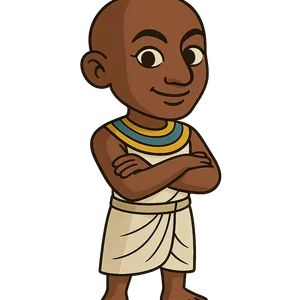
Imhotep was an ancient Egyptian polymath who served as chancellor to Pharaoh Djoser.
Reads at Grades 6–8 Listens at Grades 4–8
Print & create
Answer keys·No prep·Free with an account
28 worksheets · answer keys · full story · quiz · Ages 10-12 · CEFR B2
Plus adds 244,000+ more stories in 27 languages, audio for every one, and printables for all of them.
Just want Imhotep?
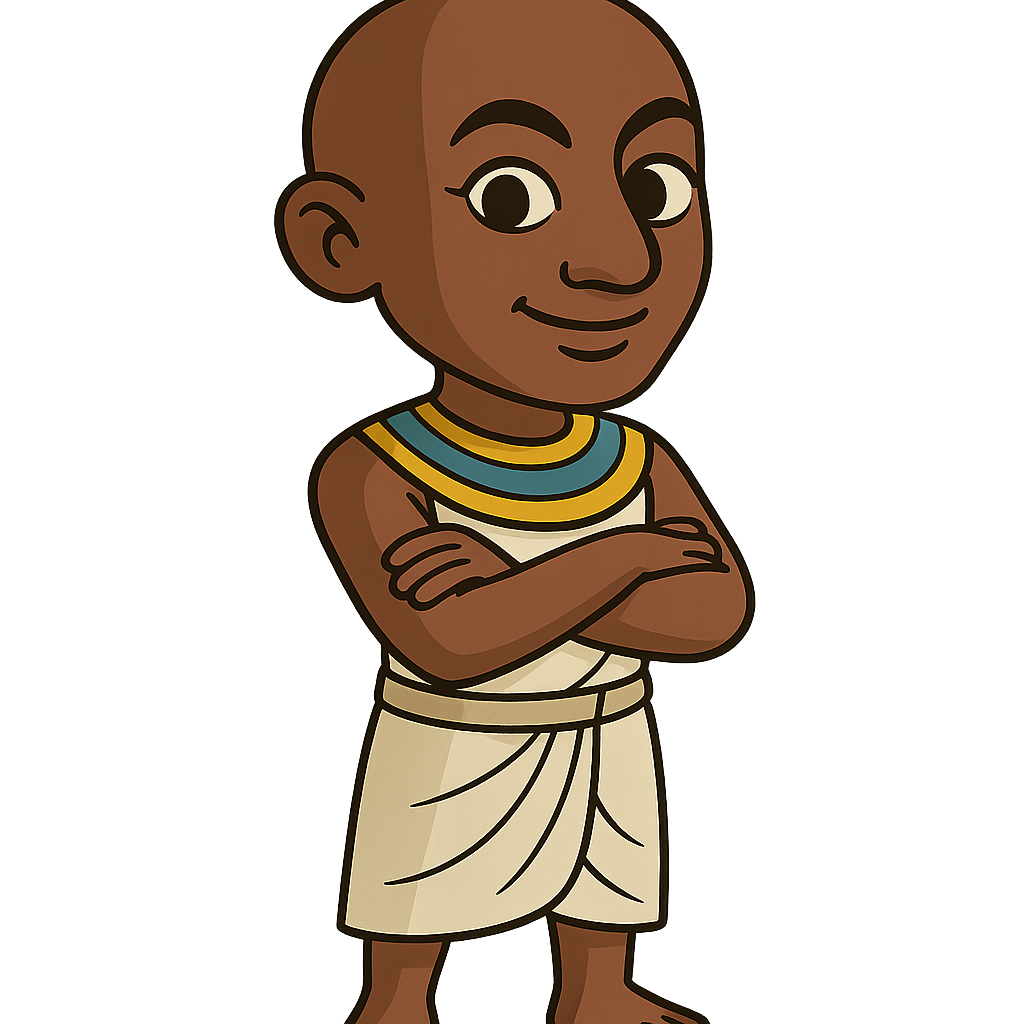
Greetings. I am Imhotep, and I welcome you to my story from the ancient land of Egypt, a place of golden sands and the life-giving Nile River. I was born around the year 2667 BCE, not as a prince or a pharaoh, but as a commoner. From my earliest days, I was filled with a great passion for learning. While other children played, I was fascinated by the world of knowledge. I loved to study our beautiful written language, the sacred pictures you know as hieroglyphs. I spent countless hours learning to read and write them, understanding that each symbol held a story and a piece of our history. My greatest dream was to use this knowledge not just for myself, but to build and create amazing things that would serve my people and honor our pharaoh for all time.
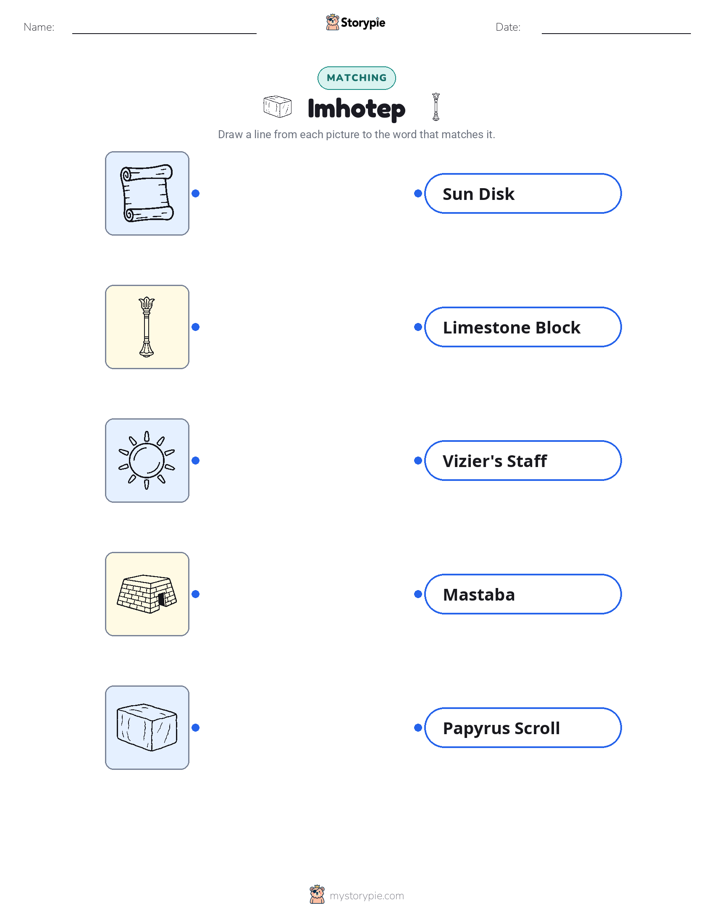
My dedication to my studies did not go unnoticed. Through hard work and a deep understanding of the world, I gained a reputation for my wisdom. Around 2650 BCE, a great honor was given to me when I was chosen by the great Pharaoh Djoser to be his vizier. A vizier is the chief minister, the pharaoh’s most trusted advisor. This was an incredibly important job, as it meant I was responsible for helping the pharaoh govern all of Egypt, from the fertile lands along the Nile to the vast deserts beyond. My duties were many, but my service did not end there. I was also appointed as the High Priest of the sun god Ra, our most powerful deity. This meant I was a leader not only in our government but also in our religion, guiding my people in both earthly and spiritual matters.
Imhotep: The World's First Architect
Greetings. I am Imhotep, and I welcome you to my story from the ancient land of Egypt, a place of golden sands and the life-giving Nile River. I was born around the year 2667 BCE, not as a prince or a pharaoh, but as a commoner. From my earliest days, I was filled with a great passion for learning. While other children played, I was fascinated by the world of knowledge. I loved to study our beautiful written language, the sacred pictures you know as hieroglyphs. I spent countless hours learning to read and write them, understanding that each symbol held a story and a piece of our history. My greatest dream was to use this knowledge not just for myself, but to build and create amazing things that would serve my people and honor our pharaoh for all time.
My dedication to my studies did not go unnoticed. Through hard work and a deep understanding of the world, I gained a reputation for my wisdom. Around 2650 BCE, a great honor was given to me when I was chosen by the great Pharaoh Djoser to be his vizier. A vizier is the chief minister, the pharaoh’s most trusted advisor. This was an incredibly important job, as it meant I was responsible for helping the pharaoh govern all of Egypt, from the fertile lands along the Nile to the vast deserts beyond. My duties were many, but my service did not end there. I was also appointed as the High Priest of the sun god Ra, our most powerful deity. This meant I was a leader not only in our government but also in our religion, guiding my people in both earthly and spiritual matters.
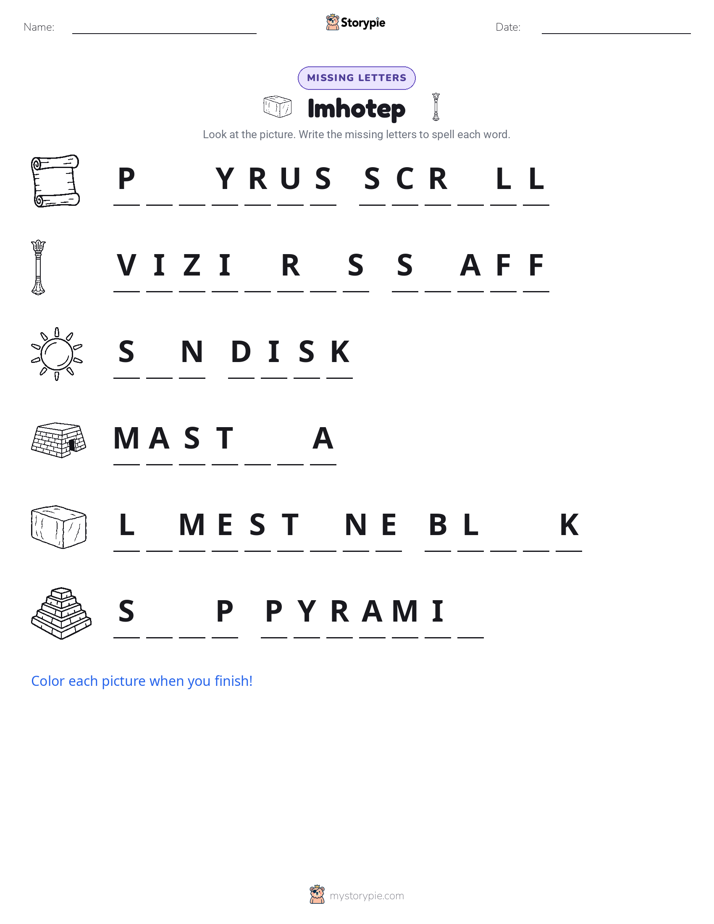
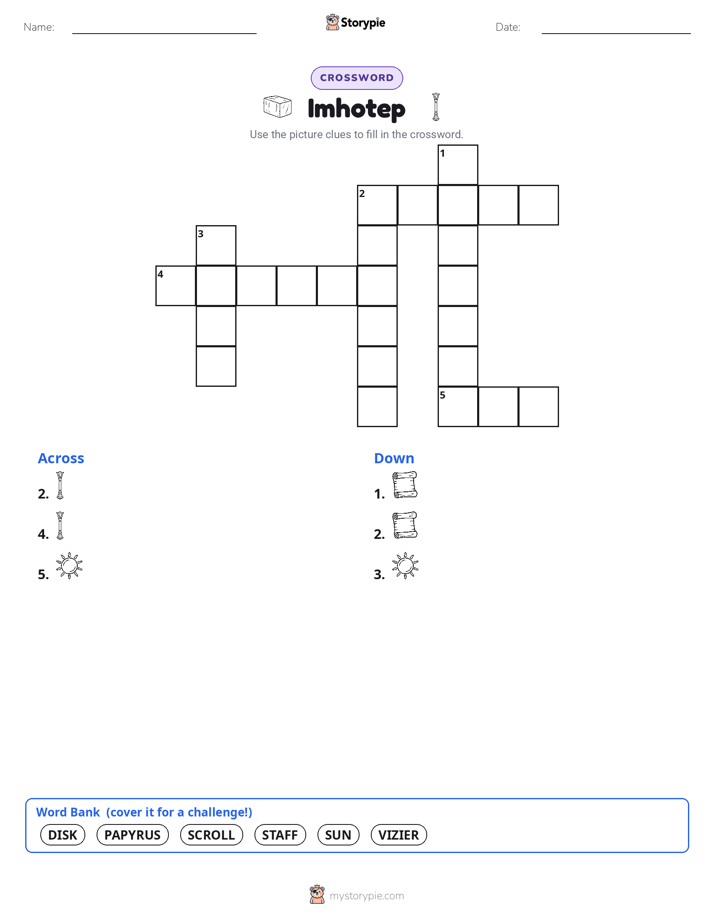
My most famous project, the one for which I am remembered across millennia, began around 2630 BCE. Pharaoh Djoser asked me to design his tomb, a final resting place for his journey into the afterlife. In those days, royal tombs were simple, flat-roofed buildings made of mud-brick, which we called mastabas. They were impressive, but I knew we could do something more—something that would truly reach for eternity. I had a revolutionary idea. What if, instead of just one mastaba, we stacked them on top of one another? I imagined six mastabas, each one smaller than the one below it, rising from the desert floor to create a giant stairway to the heavens. This had never been done before. To make this vision a reality, I also made another groundbreaking decision: we would use massive blocks of carved limestone instead of mud-brick. The challenge was immense, but the excitement of creating the first monumental stone building in history filled me with purpose. This structure became known as the Step Pyramid at Saqqara, a testament to what a new idea could achieve.
While building was my most visible work, another of my great passions was the art of healing. In my time, most people believed that sickness was caused by angry gods or evil spirits, and treatments often involved prayers and magic. I believed there was another way. I was convinced that by looking closely at the human body, we could understand how it worked and what went wrong when it was injured or ill. I studied wounds, broken bones, and diseases, carefully writing down my observations. I focused on practical treatments and logical solutions based on what I could see and learn. Though many of my original writings have been lost to time, scholars today believe that my work formed the basis for a famous medical text called the Edwin Smith Papyrus. This remarkable document is one of the oldest in the world to treat medicine like a science, diagnosing and treating illnesses with a logical approach.
My life on Earth came to an end around 2648 BCE, but my story was far from over. I was remembered by the Egyptian people for thousands of years, not just as a vizier or an architect, but as a great thinker and healer. The honor they gave me was unlike any other. About 2,000 years after my death, the people of Egypt began to worship me as the god of medicine and healing, a protector for all who were sick. My work showed that a single person, even one born a commoner, could use their ideas to change the world. The stone pyramid I designed has stood for over four thousand years, a lasting symbol that knowledge and imagination can truly build a legacy for eternity.
Wow facts
About
Imhotep was an ancient Egyptian polymath who served as chancellor to Pharaoh Djoser. He is renowned as the architect of the Step Pyramid at Saqqara and is considered one of the earliest known physicians, architects, and engineers in history.
Take a Quiz
Question 1 of 5
What was Imhotep's revolutionary idea for Pharaoh Djoser's tomb that differed from the traditional mastabas?
Explore next





Want to do even more?
Go beyond exploring. Unlock tools that turn every story into real learning.

Storypie Plus for families
Full stories, quizzes, and printables. Nights and car rides, sorted.
- Unlimited audio stories
- Create Mode: your child stars in the story
- Offline downloads
- Printable worksheets & coloring pages

Why Storypie for Schools
Students engaged. Prep in seconds. Evenings back to you.
- Worksheets & Quizzes
- Classroom Management
- Formative Assessment
- Custom Curriculum & Lesson Plans
- 27 Languages

Why Storypie for Homeschool
Curriculum done. They'll ask for more. Hours back in your day.
- Worksheet Generator
- First-Person Audio Stories
- Built-in Comprehension Quizzes
- Custom Curriculum & Lesson Plans
- Print & Go Activities